
相关资源
探索丰富的全球公民教育资源,深化理解,促进研究、倡导、教学与学习。
共找到3,126条结果
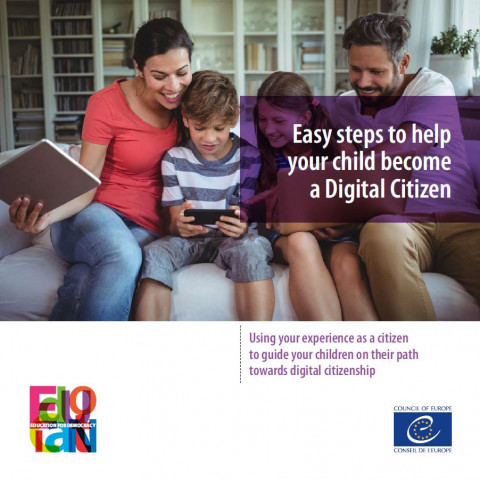 Étapes simples pour aider votre enfant à devenir un citoyen numérique 出版年份: 2020 作者: Janice Richardson | Veronica Samara 机构作者: Conseil de l'Europe Un guide pour vous aider à utiliser votre expérience en tant que citoyen pour guider vos enfants sur la voie de la citoyenneté numérique.Les jeunes habitent aujourd'hui un monde qui a été transformé par des technologies numériques, permettant la connexion sans effort via les médias sociaux et l'accès à de vastes quantités d'informations. Etre capable de décortiquer cette information hyper riche et s’engager de manière efficace et responsable pose toute une série de nouveaux défis pour les éducateurs dans la mesure où ils cherchent à préparer les jeunes en tant que citoyens, à exercer leurs droits et à participer efficacement aux affaires de la communauté.Les parents et les grands-parents (même les profanes en technologie), peuvent aider les enfants à devenir des citoyens numériques. Dans ce guide, nous présentons quelques étapes faciles à suivre afin d’aider les enfants à maîtriser l’essentiel pour agir de façon responsable et respectueuse en ligne.
  A Report on Education for Democratic Citizenship and Human Rights Education Policy and Practice in Six Eastern Partnership Countries: Promoting Human Rights Education and Democratic Citizenship in Eastern Partnership Countries 出版年份: 2017 作者: Ralph Edward Huddleston | Karine Harutyunyan | Ulviyya Mikayilova | Irina Fursa | Shorena Gharibashvili | Cezar Gavriliuc | Polina Verbytska 机构作者: Council of Europe This report has been produced within the framework of the EU/CoE Joint Programme “Supporting Education Policies in Democratic Citizenship and Human Rights Education in 6 Eastern Partnership countries”. The Programme embraces the six countries of the EU’s Eastern Partnership: Armenia, Azerbaijan, Belarus, Georgia, Moldova and Ukraine. Its aim is to support integration and/or further develop of education for democratic citizenship and human rights education in national education systems (including school curriculum) in Eastern Partnership countries, in accordance with the Council of Europe Charter on Education for Democratic Citizenship and Human Rights Education. The report draws on the results of a research exercise designed to map the most important initiatives and priorities in the area of Education for Democratic Citizenship and Human Rights Education (EDC/HRE) in the six countries. The research exercise was carried out 2015-16 by local experts within each country. It resulted in six individual country reports outlining the current situation in relation to the integration of the principles of EDC/HRE within the national education system, and identifying opportunities for further development.
  Inclusive Schools: Making a Difference for Roma Children (Inschool) 机构作者: European Union (EU) | Council of Europe This leaflet presents a joint project of the European Union and the Council of Europe on “Inclusive schools: making a difference for Roma children” targeting schools where Roma children learn, in the Czech Republic, Hungary, Romania, Slovak Republic and United Kingdom. The project aims at enhancing social inclusion of Roma by promoting inclusive education policies and practices in Europe.
 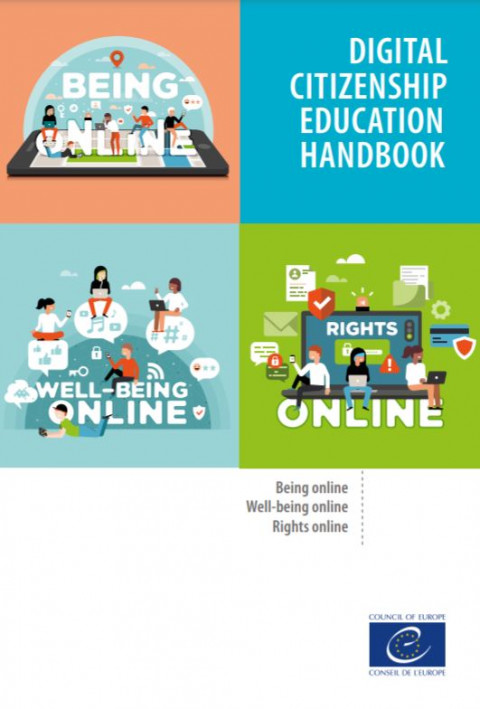 Digital Citizenship Education Handbook 出版年份: 2019 作者: Janice Richardson | Elizabeth Milovidov 机构作者: Council of Europe Digital citizenship and engagement involves a wide range of activities, from creating, consuming, sharing, playing and socialising, to investigating, communicating, learning and working. Competent digital citizens are able to respond to new and everyday challenges related to learning, work, employability, leisure, inclusion and participation in society, respecting human rights and intercultural differences.This Digital citizenship education handbook is designed to help educators and other interested adults understand and deal with them. It builds on the Council of Europe’s Reference Framework of Competences for Democratic Culture and the achievements of our longstanding Education for Democratic Citizenship programme, and complements the Internet literacy handbook as part of a coherent approach to educating citizens for the society of the future.
 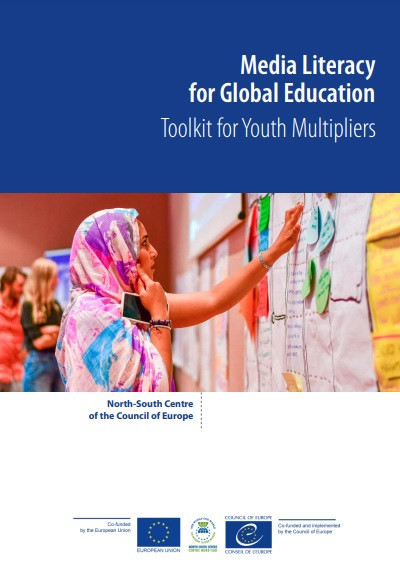 Media Literacy for Global Education: Toolkit for Youth Multipliers 出版年份: 2022 机构作者: North-South Centre of the Council of Europe | Council of Europe | European Union (EU) This toolkit targets youth multipliers and educators and gathers practical and contextual information about Media Literacy (ML) and its contribution to the field of Global Education (GE). Its activities and fact sheets are focused on non-formal learning contexts, but they can also be implemented in schools since the toolkit combines the most recent developments in GE, ML and Digital Citizenship Education useful to enrich formal school curricula. All the practical activities proposed in the toolkit are in line with the Competences for Democratic Culture and the Human Rights approach of the Council of Europe.The toolkit’s main aim is to empower practitioners on ML, but also to provide the wider public with the knowledge and tools to become more responsible and active citizens, offering activities focused on the critical analysis and production of media messages, analysis of algorithms, active participation in societies, maintenance of privacy, maintenance of well-being and management of e-identity.
 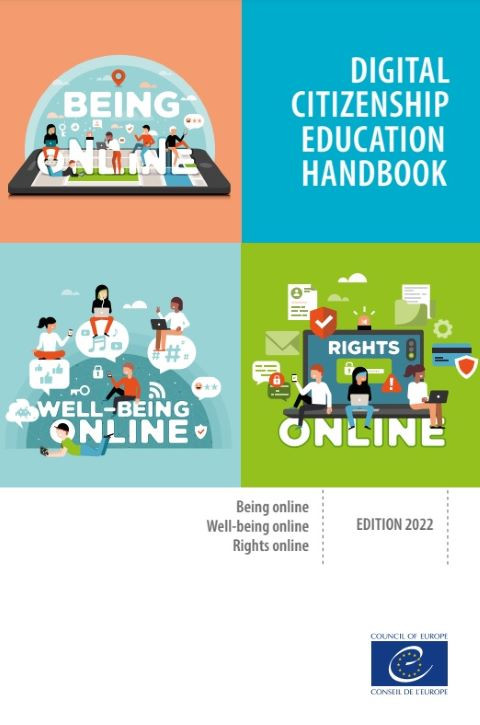 Digital Citizenship Education Handbook (Edition 2022) 出版年份: 2022 作者: Janice Richardson | Elizabeth Milovidov 机构作者: Council of Europe Digital citizenship competences define how we act and interact online. They comprise the values, attitudes, skills and knowledge and critical understanding necessary to responsibly navigate the constantly evolving digital world, and to shape technology to meet our own needs rather than to be shaped by it. The Digital citizenship education handbook offers information, tools and good practice to support the development of these competences in keeping with the Council of Europe’s vocation to empower and protect children, enabling them to live together as equals in today’s culturally diverse democratic societies, both on- and offline.The Digital citizenship education handbook is intended for teachers and parents, education decision makers and platform providers alike. It describes in depth the multiple dimensions that make up each of 10 digital citizenship domains, and includes a fact sheet on each domain providing ideas, good practice and further references to support educators in building the competences that will stand children in good stead when they are confronted with the challenges of tomorrow’s digital world. The Digital citizenship education handbook is consistent with the Council of Europe’s Reference Framework of Competences for Democratic Culture and compatible for use with the Internet literacy handbook.
 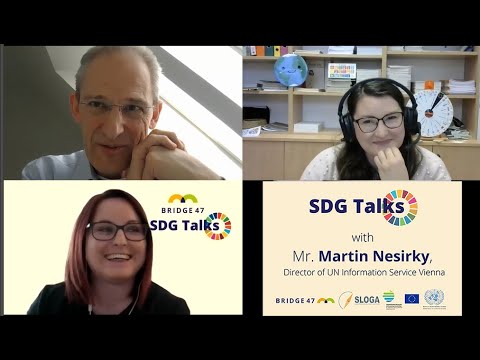 SDG Talk: Mr. Martin Nesirky 出版年份: 2021 作者: Martin Nesirky 机构作者: Sloga Platforma | Bridge 47 SDG Talk with Martin Nesirky, director of UN Information Service Vienna about Sustainable Development Goals, implication od COVID-19 pandemic on education, Global Citizenship Education and more.SDG Talks was prepared in cooperation with the UN Association for Slovenia, as part of the Bridge 47 - Building Global Citizenship project. The project is funded by the European Commission and the Ministry of Foreign Affairs of the Republic of Slovenia, and is implemented by the SLOGA Platform.Content does not reflect positions of the EU or Slovene MFA.
 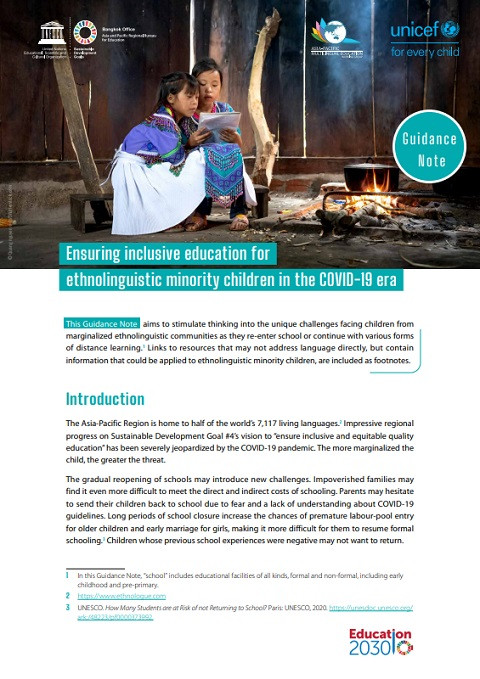 Ensuring Inclusive Education for Ethnolinguistic Minority Children in the COVID-19 Era: Guidance Note 出版年份: 2021 机构作者: UNESCO Bangkok This Guidance Note aims to stimulate thinking into the unique challenges facing children from marginalized ethnolinguistic communities as they re-enter school or continue with various forms of distance learning. Links to resources that may not address language directly, but contain information that could be applied to ethnolinguistic minority children, are included as footnotes.
  Measuring Intercultural Dialogue: A Conceptual and Technical Framework 出版年份: 2020 作者: Ciara Aucoin | Euan Mackway-Jones | Marcel Smits 机构作者: UNESCO | Institute for Economics and Peace The challenges of addressing growing diversity have amply demonstrated that this vision is needed now more than ever. We all have much to gain from more open and connected societies yet misunderstanding, exclusion and discrimination continue to push identity and culture-based grievances towards conflict and violence, challenging the very foundations of sustainable and inclusive development.This report represents a first step in the UNESCO-IEP joint initiative to strengthen the evidence-base on dialogue for peace and development. Through mobilizing better data on effective dialogue, it is our sincere hope that policymakers and practitioners can better support meaningful and transformative dialogue, holistically supporting the aspirations of the 2030 Agenda. Through this, we hope to elevate dialogue as a connecting enabler of all pillars of UN action, accelerating progress towards the Sustainable Development Goals and making good on the promise of ‘leaving no one behind’. Mesurer le dialogue interculturel: cadre conceptuel et technique 出版年份: 2020 作者: Ciara Aucoin | Euan Mackway-Jones | Marcel Smits 机构作者: UNESCO | Institute for Economics and Peace Les défis rencontrés pour tenir compte de la diversité croissante ont amplement démontré que cette vision était plus que jamais nécessaire. Nous avons tous beaucoup à gagner de sociétés plus ouvertes et plus connectées, mais l’incompréhension, l’exclusion et la discrimination continuent de nourrir les griefs identitaires et culturels conduisant au conflit et à la violence, en remettant en question les fondements mêmes du développement durable et inclusif.Ce rapport représente une première étape dans l’initiative conjointe UNESCO-IEP visant à renforcer la base de données factuelles sur le dialogue pour la paix et le développement. En favorisant la collecte de données de meilleure qualité sur un dialogue efficace, nous espérons sincèrement que les décideurs politiques et les spécialistes pourront mieux soutenir un dialogue constructif et transformateur, afin d’appuyer de manière globale les objectifs du Programme 2030. Ainsi, nous espérons faire du dialogue un élément essentiel commun à tous les piliers de l’action des Nations Unies, afin d’accélérer les progrès vers la réalisation des objectifs de développement durable et de la promesse de « ne laisser personne de côté ».