
相关资源
探索丰富的全球公民教育资源,深化理解,促进研究、倡导、教学与学习。
共找到3,158条结果
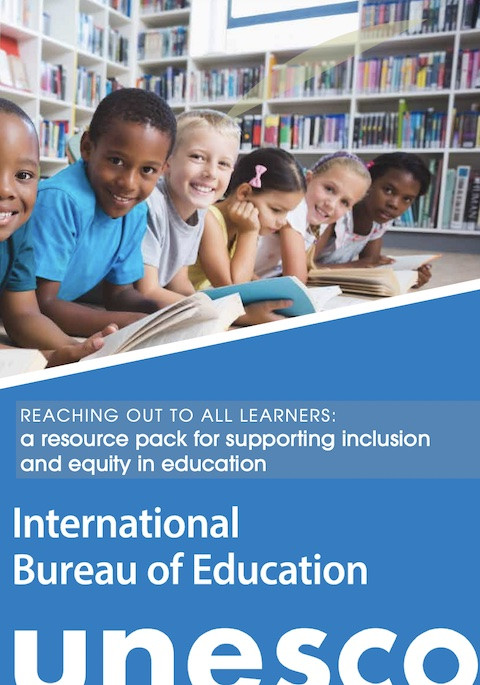 Reaching Out to All Learners: A Resource Pack for Supporting Inclusion and Equity in Education 出版年份: 2021 机构作者: UNESCO International Bureau of Education (IBE) The Reaching Out to All Learners resource materials tackle the practicalities of addressing these challenges in schools and other education centres, including early years and further education provision. More specifically, the materials focus on three strategic questions:How can schools be developed in order to respond positively to student diversity?How can classroom practices be developed that will ensure that lessons are inclusive?How can practitioners engage families, partner schools and the wider community in their efforts to become inclusive and equitable? Llegando a todos los estudiantes: Una caja de recursos de la UNESCO-OIE para apoyar la inclusión y la equidad en la educación 出版年份: 2021 机构作者: UNESCO International Bureau of Education (IBE) El material de recursos LLEGANDO A TODOS LOS ESTUDIANTES aborda los aspectos prácticos de la solución a estos problemas. En concreto, estos recursos se centran en tres cuestiones estratégicas:¿Cómo pueden crecer las escuelas para responder positivamente a la diversidad de los estudiantes?¿Cómo pueden desarrollarse prácticas docentes en el aula que garanticen que las lecciones sean inclusivas?¿Cómo pueden las escuelas involucrar a las familias, a las escuelas asociadas y a la comunidad en general en sus esfuerzos por ser inclusivas y equitativas? Atteindre tous les apprenants: Outils pour soutenir l’inclusion et l’équité dans l’éducation 出版年份: 2021 机构作者: UNESCO International Bureau of Education (IBE) Les supports de référence du dossier ouvert Atteindre tous les apprenants abordent les aspects pratiques de la résolution de ces problèmes dans les écoles et autres centres d’éducation, et notamment dans l’enseignement préscolaire et supérieur. Ces supports se concentrent plus précisément sur trois questions stratégiques :Comment développer les écoles afin de s’adapter positivement à la diversité des élèves ?Comment développer des pratiques de classe qui garantissent que les cours sont inclusifs ?De quelle manière les écoles peuvent-elles impliquer les familles, les écoles partenaires et la communauté au sens large dans leurs efforts pour devenir inclusives et équitables ?
 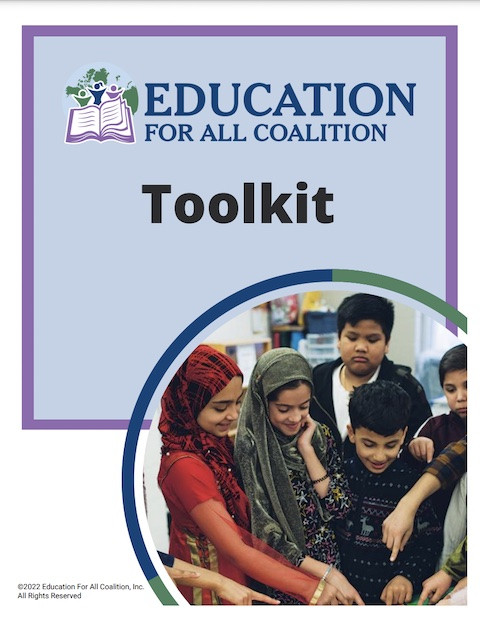 Education for All Coalition: Toolkit 出版年份: 2022 机构作者: Education for All Coalition (EFAC) Education for All Coalition (EFAC), Inc. is a global organization that is dedicated to creating education opportunities and finding solutions that empower displaced and disadvantaged children in emergency situations, refugee camps and settlements around the world. We focus on advocacy, capacity building, climate education, and social-emotional learning to enhance the overall well-being of children. We promote the physical, social, and cognitive development of all children. Fostering healthy life habits and environmental sustainability are integral parts of our programs to improve conditions for all children so they can become thriving global citizens with global competencies and unlimited potentialThe goal of the “Where Friendship Blooms” resource guide is to foster a fun-filled program for early learners up to age 8 that will result in evidence-based positive outcomes. The package includes: Lesson plans Coping strategies Activities and play Breathing exercises Classroom Growth Chart Tool Classroom Climate Scale Tool Student Goal Setting Chart Measurement & Evaluation
  The Role of the School in Dealing With Violent Radicalization: The Risks and Benefits of a Safe Approach (Éducation et francophonie; vol. 46, no. 2) 出版年份: 2018 作者: Victorine Michalon-Brodeur | Élise Bourgeois-Guérin | Jude Mary Cénat | Cécile Rousseau 机构作者: Association canadienne d’éducation de langue française Violent radicalization is a social phenomenon with vague contours and strong political investment. Those mainly at risk of becoming involved are young people. Several Western countries are dealing with this phenomenon by opting for a security response, encouraging close collaboration between education and law enforcement. This article explores issues related to strengthening connections between the school and law enforcement for the prevention of violent radicalization. While there is a lack of evidence that would be needed to paint a full picture of these relationships, some studies on the impact of the War on Terror on young people and securing American schools in response to school shootings call for restraint. In light of these studies, this article argues that clear boundaries must be established between the mandates of the school and the police. The importance of these firewalls must be emphasized in the training school personnel in the prevention of violent radicalization in order to preserve the school’s ability to be a place that promotes the development of critical thinking and awareness of the Other. Le rôle de l’école face à la radicalisation violente: Risques et bénéfices d’une approche sécuritaire (Éducation et francophonie; vol. 46, no. 2) 出版年份: 2018 作者: Victorine Michalon-Brodeur | Élise Bourgeois-Guérin | Jude Mary Cénat | Cécile Rousseau 机构作者: Association canadienne d’éducation de langue française La radicalisation violente est un phénomène social aux contours imprécis et au fort investissement politique, qui concerne principalement les jeunes en ce qui a trait au passage à l’acte. Plusieurs pays occidentaux composent avec ce phénomène en optant pour une réponse sécuritaire, dans laquelle une étroite collaboration entre le champ de l’éducation et les forces de l’ordre est encouragée. Cet article explore les enjeux liés au resserrement des liens entre l’école et les forces de sécurité en matière de prévention de la radicalisation violente. Bien que le recul et les données probantes manquent pour tirer un bilan complet de ces relations, certaines recherches, consacrées à l’impact de la guerre au terrorisme sur les jeunes et sur la sécurisation des écoles américaines en réponse aux fusillades scolaires, appellent à la retenue. À la lumière de ces travaux, le présent article soutient qu’il est nécessaire d’établir des frontières claires entre les mandats de l’école et ceux des forces de sécurité. L’importance de ces pare-feu doit être mise de l’avant dans la formation du personnel scolaire en prévention de la radicalisation violente, afin de préserver la capacité de l’école à se poser en espace qui favorise le développement d’une pensée critique et d’une conscience de l’Autre.
 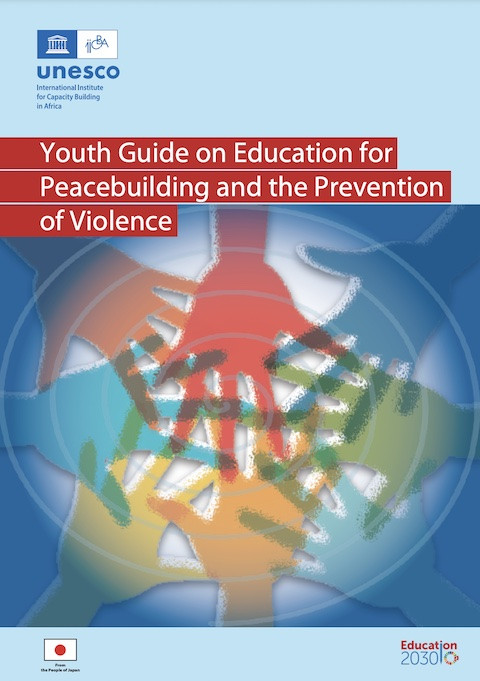 Youth Guide on Education for Peacebuilding and the Prevention of Violence 出版年份: 2022 机构作者: UNESCO International Institute for Capacity-Building in Africa (IICBA) This publication is a training guide for the youth in both formal or non-formal education. It is a resource to work with children and young people in various settings, including schools, non-formal educational program, community activities and other settings. The goal of the training guide is therefore the youth to become a facilitator with the disposition, knowledge, skills and commitment to support other youth in developing their full potential as peace-builders. It provides a foundation of conflict analysis, peacebuilding and describes a learner centered approach to peace education and community engagement. Guide jeunesse sur l’éducation pour la consolidation de la paix et de la prévention de la violence 出版年份: 2022 机构作者: UNESCO International Institute for Capacity-Building in Africa (IICBA) Cette publication est un guide de formation pour les jeunes de l’éducation formelle ou non formelle. Il s’agit d’une ressource pour travailler avec les enfants et les jeunes dans différents contextes, notamment dans les écoles, les programmes d’éducation non formelle, les activités communautaires et autres. L’objectif de ce guide de formation est donc de permettre aux jeunes de devenir des animateurs dotés de la disposition, des connaissances, des compétences et de l’engagement nécessaires pour aider d’autres jeunes à développer pleinement leur potentiel de bâtisseurs de paix. Il fournit les bases de l’analyse des conflits et de la construction de la paix et décrit une approache de l’éducation à la paix et de l’engagement communautaire centrée sur l’apprenant.
 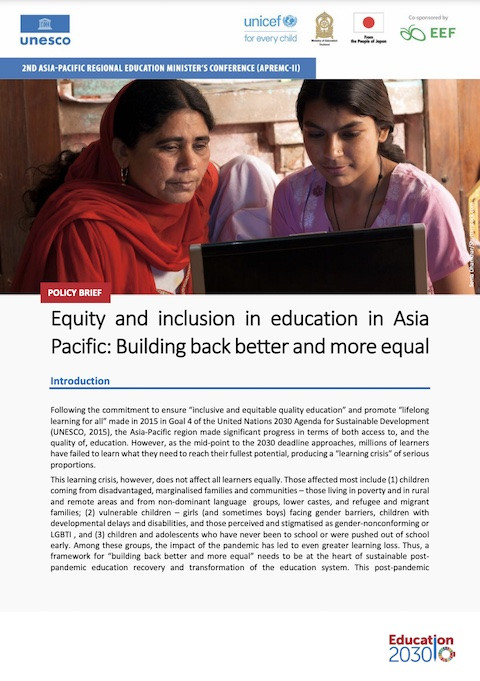 Equity and Inclusion in Education in Asia Pacific: Building Back Better and More Equal; Policy Brief 出版年份: 2022 机构作者: UNESCO Bangkok Following the commitment to ensure “inclusive and equitable quality education” and promote “lifelong learning for all” made in 2015 in Goal 4 of the United Nations 2030 Agenda for Sustainable Development (UNESCO, 2015), the Asia-Pacific region made significant progress in terms of both access to, and the quality of, education. However, as the mid-point to the 2030 deadline approaches, millions of learners have failed to learn what they need to reach their fullest potential, producing a “learning crisis” of serious proportions. This learning crisis, however, does not affect all learners equally. Those affected most include (1) children coming from disadvantaged, marginalised families and communities – those living in poverty and in rural and remote areas and from non-dominant language groups, lower castes, and refugee and migrant families; (2) vulnerable children – girls (and sometimes boys) facing gender barriers, children with developmental delays and disabilities, and those perceived and stigmatised as gender-nonconforming or LGBTI , and (3) children and adolescents who have never been to school or were pushed out of school early. Among these groups, the impact of the pandemic has led to even greater learning loss. Thus, a framework for “building back better and more equal” needs to be at the heart of sustainable postpandemic education recovery and transformation of the education system. This post-pandemic framework calls for decisive action to protect the right to education of good quality and for measures – as spelled out below – to improve learning outcomes, especially for marginalized children made more vulnerable because of the pandemic.
  Guide to Educational Resources on Climate Change 出版年份: 2020 作者: Rosario Toril Moreno | Teresa Antolín García | Carmen García Valcárcel | Gema Herranz Aparicio | Isabel Matesanz Miguel y Antonio Moreno Rodríguez 机构作者: Spain. Ministry for Economic Transition and the Demographic Challenge This educational resource guide on climate change is organized according to the educational stages: infant, primary and secondary, a section for environmental educators has also been incorporated. Various resources have been included within each stage: books, magazines, games, websites, apps, videos, etc. When the resource is digital, the download link is provided and the rest can be found at the RECIDA centers and requested on loan, or purchased at bookstores or the corresponding publishers. In general, the documents that are included in the guide are published from 2015 to the present, although some of earlier dates have been maintained, considering that they have not lost their relevance and are of sufficient quality.