
相关资源
探索丰富的全球公民教育资源,深化理解,促进研究、倡导、教学与学习。
共找到3,126条结果
 Greening Education Partnership: Getting Every Learner Climate-Ready 出版年份: 2024 机构作者: UNESCO Bangkok The UN Secretary-General calls the climate crisis ‘a battle for our lives’, as we still struggle to transform our societies to reach the 1.5°C-degree path recommended by the Paris Agreement. Rapid and radical transformation at all levels and in many aspects of our life is required, with education as a central and powerful means to support the adaptation and strengthening of the resilience of learners and societies. It is also important to ensure that education systems become more resilient to climate change to create safe and climate-proof schools. Building off of the knowledge and practice accumulated in Education for Sustainable Development (ESD), a new Greening Education Partnership aims to deliver strong, coordinated and comprehensive action which will prepare every learner to acquire the knowledge, skills, values, and attitudes to tackle climate change and to promote sustainable development.
 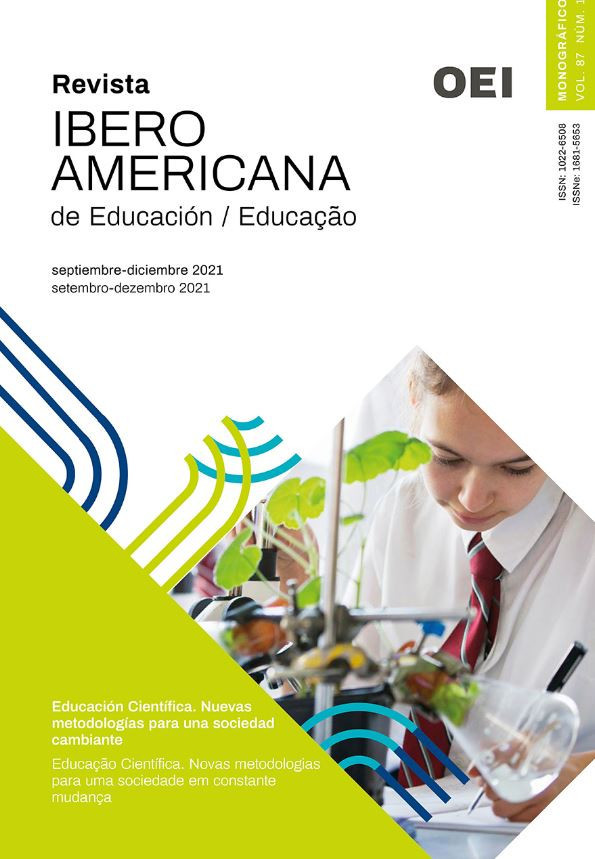 Scientific Education: New Methodologies for a Changing Society (Iberoamerican Journal of Education; vol. 87, no. 1) 出版年份: 2021 作者: F. Javier Perales | David Aguilera 机构作者: Organization of Ibero-American States for Education, Science and Culture (OEI) A society as changing as ours needs changes (innovations) and adaptations in the educational field that allow academics to be combined with social demands. We believe that this first monograph is representative of the richness and diversity of the proposals received which, in turn, constitute a sample of the strength of the community of teachers and researchers in their desire to make science education an attractive and efficient for new generations. Educación científica: Nuevas metodologías para una sociedad cambiante (Revista Ibero-americana de Educação; vol. 87, núm. 1) 出版年份: 2021 作者: F. Javier Perales | David Aguilera 机构作者: Organización de Estados Iberoamericanos para la Educación, la Ciencia y la Cultura (OEI) Una sociedad tan cambiante como la nuestra necesita de cambios (innovaciones) y adaptaciones en el ámbito educativo que permitan compaginar lo académico con las demandas sociales. Este primer monográfico estimamos que resulta representativo de la riqueza y diversidad de las propuestas recibidas que, a su vez, constituyen un muestrario de la pujanza de la comunidad de docentes e investigadores en su afán de hacer de la enseñanza de las ciencias una oferta atractiva y eficiente para las nuevas generaciones.
  Online Courses: Building Kinder Brains Through Accessible Digital Learning Course Brochure 出版年份: 2023 机构作者: Mahatma Gandhi Institute of Education for Peace and Sustainable Development (MGIEP) UNESCO MGIEP focuses on achieving the United Nations (UN) Sustainable Development Goal (SDG) 4, Target 7 towards education for building peaceful and sustainable societies across the world by developing programmes that promote social and emotional learning, innovate digital pedagogies and empower the youth. UNESCO MGIEP‘s Social Emotional Learning (SEL) courses are research and evidence based with built-in assessments. The courses are multi-modal, interactive and self-paced, and are designed to build intellectual and emotional intelligence among learners. Currently the courses are available in English and are being adapted to Hindi, Spanish and Russian.
 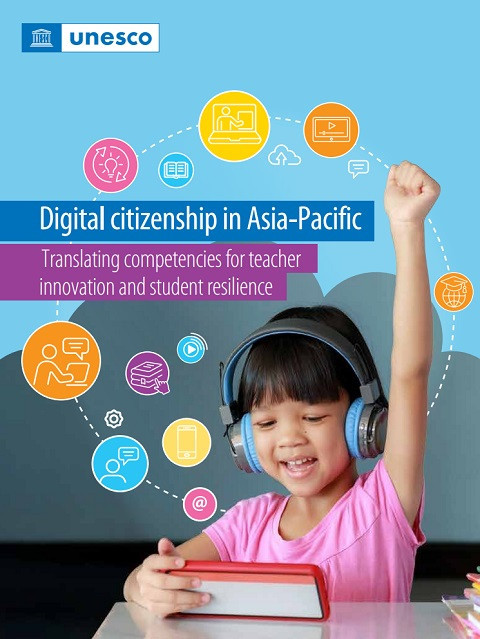 Digital Citizenship in Asia-Pacific: Translating Competencies for Teacher Innovation and Student Resilience 出版年份: 2023 机构作者: UNESCO Bangkok A digitally-equipped and competent teaching force is crucial for cultivating students' digital citizenship skills. This UNESCO report, consisting of a comprehensive analysis comprising 15 countries in the Asia-Pacific region, unveils compelling evidence pertaining to what factors influence teachers' Information and Communication Technology (ICT) skills and their impact on students’ digital citizenship competencies. Perhaps unsurprisingly, the findings of this report show that students are developing most of their digital citizenship competencies through self-directed learning and outside of school. Nevertheless, teachers still play an important role, particularly in coaching students to use technology safely and effectively. Thus as UNESCO reports, Digital Creativity and Innovation remains relatively underdeveloped in all participating research countries. Additionally, female students tend to benefit more from teachers' guidance and advice, especially in terms of Digital Safety and Resilience. Support for teachers in terms of access to ICT infrastructure and training on ICT and pedagogical skills will contribute towards improving their ability to effectively guide and mentor their students, ultimately leading to better outcomes in terms of digital citizenship competencies. To achieve this, it is important for education systems to develop comprehensive and contextualized approaches to enhance digital citizenship capacities in teachers. Education policymakers and leaders are encouraged to use the 10 recommendations herein as a ‘roadmap’ to ensure that teachers are equipped with the necessary skills and knowledge to effectively integrate digital citizenship education into their teaching practices. This will ultimately help prepare students for the digital world and ensure their safety and well-being online.
  A Study on the Influential Factors of E-learning Opportunity for Elementary School Students: Perspectives from Students, Parents and Schools (Educational Journal ; Vol.45, No.1) 出版年份: 2017 作者: 陈宇芃 | 林丰政 Based on the data from students, parents and schools of the 2013 Survey of Student Digital Ability and e-Learning Opportunity from the Academia Sinica’s Survey Research Data Archive, this article constructed a hierarchical linear model to analyze how students’ e-learning opportunity is related to the multilevel influence effects of school- and parent-level covariates. Quantile regression was also used to study different covariate effects at different quantile levels of student e-learning opportunity. Results indicate that: (1) Digital Level Area is a very important influential factor for students’ e-learning opportunity due to the reason that schools in higher Digital Level Area have more digital resources, and students are likely to have more opportunity for access to and frequent use of e-learning; (2) the more IT equipment or IT literacy students have can greatly affect their possession of e-learning opportunity; (3) parents should pay special attention to problems of their children resulting from overuse of e-learning resources which could cause harm to their children both mentally and physically; moreover, schools should widely promote the awareness of personal information security to students; (4) in order to eliminate the digital divide caused by Digital Level Area, schools need to strengthen the integration of software and information technology into instruction as far as possible. 国小学生数位学习机会影响因素之研究: 以学生、家长与学校观点探讨 (教育学报; Vol. 45, No.1) 出版年份: 2017 作者: 陈宇芃 | 林丰政 本研究以中央研究院学术调查研究资料库中「102年[2013年]学生数位学习及数位机会」的学生、家长、学校三方调查资料为基础,整合建立「学校给予学生数位学习机会」对「家庭数位学习机会影响学生数位学习机会」阶层线性模式,探讨当中的影响;亦进一步于学生数位学习机会的不同分量下,探究影响因素的变化。结果显示:(1)数位级区对于学生数位学习机会影响力极大,原因可能是数位级区愈高的学校可提供的数位资源较多,学生接触数位学习的机会亦较频繁;(2)学生拥有的设备愈齐全及对基本技能有一定素养,对其数位学习机会相对影响较大;(3)家长须留意学生的数位学习情形,防止因过度使用反而造成身心损害,学校亦应向学生加强宣导个人资料隐私的重要性;(4)学校应尽可能强化软体与科技融入教学,期能消弭因数位级区造成的差距。
  The Role of Digital Citizenship in the Use of Technology and Reducing the Risks Resulting from it (Alustath Journal for Human and Social Sciences; vol.59, no.3) 出版年份: 2020 作者: Amal Mohammed Abdullah Albado 机构作者: University of Baghdad. College of Education Ibn Rushd The current study aims to know the role of digital citizenship in the use of technology and reducing the risks resulting from it. The researcher uses the descriptive analytical approach and makes a questionnaire to know if there is a role for the digital citizenship in the use of technology and reducing the dangers caused by it. The study sample consists of (102) employees in the Ministry of Education Marka Brigade (the fourth Amman qasaba). The questionnaire consists of two main axes: the first axis, which is defined as the concept of digital citizenship, the second axis is the role of digital citizenship in the use of technology and reducing the dangers of technology. The results of the study show that the awareness of the sample of the study of the concept of digital citizenship is on a high level, on average that equals (3.887) of the Likert quinary scale and the standard deviation is equal to (0.97). The results also show a strong role for citizens in reducing the dangers caused by technology where the arithmetic mean equals (4.2) and the standard deviation was (0.94). دور المواطنة الرقمية في استخدام التكنولوجيا والتقليل من الاخطار الناجمة عنها (الاستاذ للعلوم الانسانية والاجتماعية; no.3, vol.59) 出版年份: 2020 作者: Amal Mohammed Abdullah Albado 机构作者: University of Baghdad. College of Education Ibn Rushd هدفت الدراسة الحالية الى معرفة دور المواطنة الرقمية في استخدام التكنولوجيا والتقليل من الاخطار الناجمة عنها، فقد استخدمت الباحثة المنهج الوصفي التحليلي، واستبانة لمعرفة هل هناك دور للمواطنة الرقمية في استخدام التكنولوجيا والتقليل من الاخطار الناجمة عنها، وتكونت عينة الدراسة من (102) موظف في وزارة التربية والتعليم لواء ماركا (قصبة عمان الرابعة). تكونت الاستبانة من محورين رئيسين، المحور الاول المعرفة بمفهوم المواطنة الرقمية، المحور الثاني دور المواطنة الرقمية في استخدام التكنولوجيا والتقليل من أخطار التكنولوجيا. ودلت نتائج الدراسة على أن معرفة عينة الدراسة لمفهوم المواطنة الرقمية بدرجة مرتفعة ؛ فقد كان الوسط الحسابي يساوي (3.887) على مقياس ليكرت الخماسي والانحراف المعياري يساوي(0.97). ودلت النتائج على أن وجود دور قوي للمواطنة في التقليل من الاخطار الناجمة عن التكنولوجيا ؛ فقد كان الوسط الحسابي يساوي (4.2) والانحراف المعياري يساوي (0.94).
  A Suggested Proposal for the Role of Universities in Developing Students’ Awareness of Digital Citizenship in Light of Requirements and Challenges of the Digital Age: A Case Study of Bisha University (Arts for Educational & Psychological Studies; vol.14, no.1) 出版年份: 2022 作者: Sheikha Abdullah Al-Briki Balabied 机构作者: Dhamar University The study aimed to measure the degree of students’ awareness of the digital citizenship at the University of Bisha, and to develop a proposed scenario in the light of the results of the study, which included a framework for activating the role of universities in developing their students' awareness of digital citizenship to meet the requirements and challenges of the digital age. The analytical descriptive method was used by conducting an exploratory study and designing a questionnaire to measure the degree of students' awareness of digital citizenship. The most prominent results were that the degree of students' awareness of digital citizenship was "very high" on the total digital citizenship awareness scale. There were no statistically significant differences between the average scores of males and females, nor between the average degrees of students of theoretical and practical colleges on the total digital citizenship awareness scale.