
相关资源
探索丰富的全球公民教育资源,深化理解,促进研究、倡导、教学与学习。
共找到3,500条结果
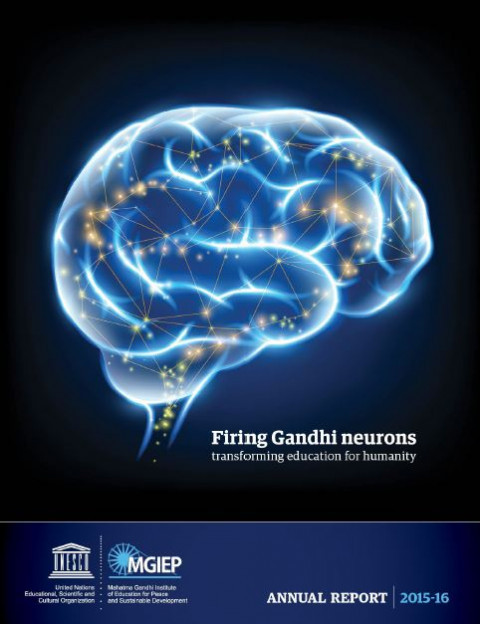 MGIEP Annual Report 2015-2016 出版年份: 2017 机构作者: Mahatma Gandhi Institute of Education for Peace and Sustainable Development (MGIEP) The Mahatma Gandhi Institute of Education for Peace and Sustainable Development (MGIEP) is UNESCO’s first Category I institute in the Asia-Pacific region, established with the generous support of the Government of India.UNESCO MGIEP focuses on transforming current education policies and practices by developing innovative teaching and learning methods. Their objective is to build generations of young people equipped to create peaceful and sustainable societies.This annual report describes MGIEP’s main works and various educational programmes for peace and sustainable development.
 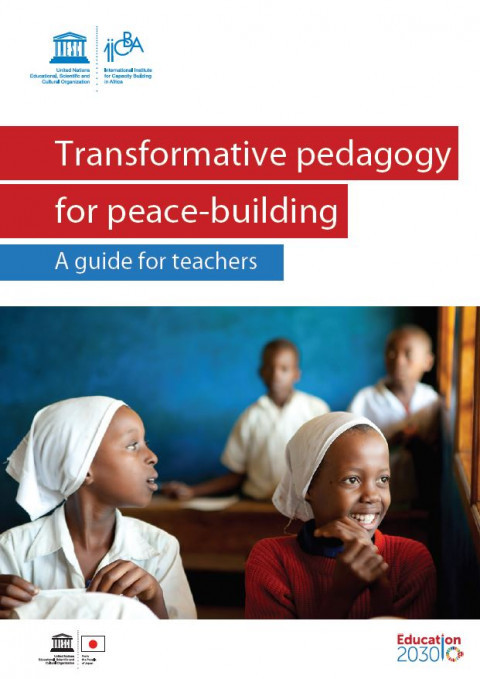 Transformative Pedagogy for Peace-building: A Guide for Teachers 出版年份: 2017 机构作者: UNESCO International Institute for Capacity-Building in Africa (IICBA) This publication is a guide for teachers and teacher trainers on transformative pedagogy so that they are able to empower youth with peace-building knowledge, skills and competencies necessary to develop into advocates and actors of peace.The guide particularly aims to introduce teachers to the foundation of conflict analysis and peace-building and to equip them with a learner-centered approach to peace education and community engagement.This guide is a resource for educators to engage and support youth in their journey to becoming active peace-builders and fostering transformation in the Horn of Africa and Surrounding Countries.
  Translating globalization theories into educational research : thoughts on recent shifts in Holocaust education Much educational research on globalization aims to prepare students to be successful citizens in a global society. We propose a set of three concepts, drawing on systems theory (Nassehi, Stichweh) and theories of the subject (Butler, Foucault), to think the global which enables educational research to step back from hegemonic discourses and reflect on current practices. Globalization is understood in this approach as referring to: (1) a cognitive shift; (2) expanding relevancy spaces; and (3) new forms of subjectivation. The framework is illustrated with examples from educational policy and learning materials, with an extended look at how globalization is articulated in recent shifts in Holocaust education. (By the author)
  The Elusive and Exclusive Global Citizen 出版年份: 2015 作者: Jill Koyama 机构作者: Mahatma Gandhi Institute of Education for Peace and Sustainable Development (MGIEP) In this paper, the author interrogate the notion of global citizenship, both as an aspiration and an improbable practice, by situating it within contemporary understandings of citizenship and globalization.It is a conceptualization that suffers from the dangers inherent in the term “citizenship” and misconceptions of the terms “global,” and it is rooted in the West’s long engagement in normative undertakings in non-Western countries. The writer refute ideas of the autonomous and agentic global citizen. he encourage a rethinking of global citizenship and global citizenship education (GCE) and offer recommendations for redirecting attention to contemporary global stratifications and issues of human rights to address the issues of social justice and inequality that, due to the problematic definition of global citizenship, are currently inadequately covered in existing GCE curricula.
 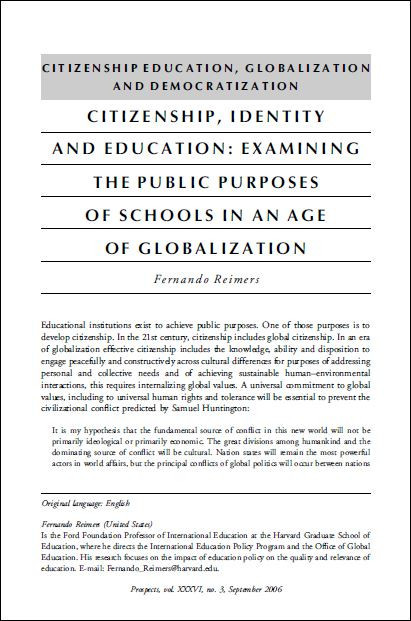 Citizenship, Identity, and Education: Examining the Public Purposes of Schools in an Age of Globalization 出版年份: 2006 作者: Fernando Reimers 机构作者: UNESCO International Bureau of Education (IBE) One of the purposes of educational institutions is to develop citizenship. In the 21st century, citizenship includes global citizenship. Addressing the challenges of globalization will require making citizenship education and the development of global values an explicit objective of efforts to improve quality throughout the world, critically examining theories and evidence about the effectiveness of various approaches to developing citizenship and global citizenship and supporting activities aligned with this public purpose. In this article, the author does not argue for an exclusive effort to focus schools on civic education, but rather for a balanced effort to elevate educational quality making it more relevant to address global challenges and opportunities, of which civic education and global education are components, much neglected at present. The author also does not suggest making civic education the only purpose of the curriculum or making it a priority to the expense of science, math, arts or physical and health education, but he thinks that helping students develop a sense of purpose, situated within broader civic and global purposes, would also facilitate high level engagement with science, mathematical and artistic pursuits.
  Get Global!: Steps Worksheets 出版年份: 2003 作者: Joanne Price 机构作者: ActionAid | Oxfam Get Global! is a teachers' guide on how to facilitate active global citizenship. It allows learners to move from thinking about issues that are important to them, to planning and participating in action, and to reflect on their performance, and assess their work. Although aimed at 11-16 year olds, some of the activities could easily be adapted for use with younger learners.
  Get Global!: Assessment & Evaluation Worksheets 出版年份: 2003 作者: Joanne Price 机构作者: ActionAid | Oxfam Get Global! is a teachers' guide on how to facilitate active global citizenship. It allows learners to move from thinking about issues that are important to them, to planning and participating in action, and to reflect on their performance, and assess their work. Although aimed at 11-16 year olds, some of the activities could easily be adapted for use with younger learners.
  Get Global!: A Skills-based Approach to Active Global Citizenship 出版年份: 2003 作者: Joanne Price 机构作者: ActionAid | Oxfam Get Global! is a teachers' guide on how to facilitate active global citizenship. It allows learners to move from thinking about issues that are important to them, to planning and participating in action, and to reflect on their performance, and assess their work. Although aimed at 11-16 year olds, some of the activities could easily be adapted for use with younger learners.
  Beyond COVID-19: A Feminist Plan for Sustainability and Social Justice 出版年份: 2021 机构作者: United Nations Entity for Gender Equality and the Empowerment of Women (UN Women) As the world learns to live with COVID-19, to emerge from the current crisis, and to “build back better”, UN Women’s new Feminist Plan for Sustainability and Social Justice is a visionary but practical roadmap for putting gender equality, social justice, and sustainability at the centre of the recovery. The Feminist Plan maps the ambitious and transformative policies – on livelihoods, care, and the environment – that are needed to build a more equal and sustainable future. To get there, calls for context-specific policy pathways, tailored political strategies, and financing. The plan identifies key levers that can create change and the actors at global, national, local levels that need to take action to move towards this vision. Au-delà du COVID-19 : Un plan féministe de durabilité et de justice sociale 出版年份: 2021 机构作者: United Nations Entity for Gender Equality and the Empowerment of Women (UN Women) Alors que le monde apprend à vivre avec le COVID-19, à « reconstruire en mieux » et est mobilisé pour sortir de la crise actuelle, le nouveau « Plan féministe » d’ONU Femmes fournit une feuille de route visionnaire mais concrète visant à placer l’égalité des sexes, la justice sociale et la durabilité au centre de la relance. Le « Plan féministe » cartographie les politiques ambitieuses et transformatrices relatives aux moyens de subsistance, aux soins et à l'environnement qui sont nécessaires pour construire un avenir plus équitable et durable. Pour y parvenir, il appelle à des approches politiques spécifiques au contexte, à des stratégies politiques adaptées et à un financement. Le plan identifie les leviers clés qui peuvent créer un changement ainsi que les actrices et acteurs aux niveaux mondial, national et local qui doivent prendre des mesures pour avancer vers cette vision.