
相关资源
探索丰富的全球公民教育资源,深化理解,促进研究、倡导、教学与学习。
共找到3,559条结果
 Capacity Building Workshop on the Prevention of Violent Extremism through Education in West Africa and the Sahel: Final Report 出版年份: 2017 机构作者: UNESCO Dakar | Institut de la Francophonie pour l'éducation et la formation (IFEF) The capacity building workshop for the countries of West Africa and the Sahel, was organized in close collaboration with IICBA and APCEIU from 9 to 11 May 2017 in Dakar. The following countries participated in the meeting: Côte d’Ivoire, Cameroon, Guinea‐Bissau, Liberia, Mali, Mauritania, Niger, Senegal, Sierra Leone and The Gambia.This workshop was organized on the basis of a long‐standing partnership between UNESCO and the International Organization of La Francophonie (OIF), which strengthens its action on PVE. The regional workshop on capacity building for the prevention of violent extremism through education mainly used UNESCO materials and those for youth promoted by OIF. This workshop is a follow‐up to a similar initiative for education stakeholders of East and Southern Africa, organized in Addis Ababa in February 2017 by UNESCO through its International Institute for Capacity Building in Africa (IICBA).The overall objective of the workshop was to guide the countries of West Africa and the Sahel towards the Prevention of Violent Extremism (PVE). This includes familiarization with key issues, challenges, and opportunities identified to implement and further stimulate the implementation of the PVE strategy at the country level.
  Ocean Literacy for All: A Toolkit (IOC Manuals and Guides, 80) 出版年份: 2017 作者: Francesca Santoro | Selvaggia Santin | Gail Scowcroft | Géraldine Fauville | Peter Tuddenham 机构作者: UNESCO Venice Ocean literacy programs and projects, until now, have been mainly focusing on developing resources, lesson plans and activities targeting Science, Technology, Engineering and Mathematics (STEM) education. Currently, and in particular after the adoption of the Sustainable Development Goal (SDG) 14, we have assisted to a shift in the focus towards the inclusion of approaches closer to those developed under the UNESCO framework of Education for Sustainable Development (ESD).ESD aims to improve access to quality education on sustainable development at all levels and in all social contexts, to transform society by reorienting education and help people develop knowledge, skills, values and behaviors needed for sustainable development. Individuals are encouraged to be responsible actors who resolve challenges, respect cultural diversity and contribute to creating a more sustainable world. This publication is made of two parts. The first part presents the history of ocean literacy, and describes its framework made of 7 essential principles, and connects them to international ocean science programs that contributes to enhancing ocean knowledge and observations. Moreover, marine scientists and educators were interviewed to share their professional experiences on ocean literacy as well as their views on its future. The last chapter of part 1 describes the existing challenges to marine education, as well as the path for the development of successful ocean literacy activities in the context of the 2030 Agenda. One of the most important factors identified is related to the creation of multi-sector partnerships among the education, government, and private sector that have jointly built ocean literacy programs for all formal educational levels from the primary school to the university level as well as for non-formal learners. Worldwide examples of such programs are presented. The second part, after introducing the methodological approach based on the multi-perspective framework for ESD developed by UNESCO, presents 14 activities that could provide tested examples and support for the implementation of marine education initiatives. The aim is not to provide a one size-fits-all ready to use collection, but rather to offer support and examples of what could be then adapted for different geographical and cultural contexts. The resources are designed to be relevant for all learners of all ages worldwide and to find their application in many learning settings, while in their concrete implementation they will, naturally, have to be adapted to the national or local context. Cultura oceánica para todos: kit pedagógico (COI Manuales y guías, 80) 出版年份: 2017 作者: Francesca Santoro | Selvaggia Santin | Gail Scowcroft | Géraldine Fauville | Peter Tuddenham 机构作者: UNESCO Venice Más que un concepto, la cultura oceánica es una herramienta fundamental para mejorar el conocimiento sobre el océano y estimular la participación activa de los ciudadanos y de las partes interesadas en la implementación de acciones sostenibles. Es también una manera de promover prácticas de producción sostenible, formular sólidas políticas públicas marinas, promover una ciudadanía más responsable, y animar a los jóvenes a iniciar una carrera en la economía azul o en las ciencias oceánicas. Esta publicación pretende describir y revisar los actuales enfoques, iniciativas, programas y proyectos sobre cultura oceánica. La primera parte ilustra los principios esenciales de la cultura oceánica y evidencia el conocimiento científico subyacente a través de estudios de casos, datos históricos e información cultural. Asimismo, muestra los esfuerzos actuales que realiza la cultura oceánica desde una perspectiva multidisciplinaria mediante entrevistas a expertos, educadores y científicos que trabajan y estudian en todo el mundo. La segunda parte presenta catorce actividades que proporcionan herramientas y buenas prácticas basadas en las competencias clave necesarias para que alumnos de todas las edades conozcan y se comprometan activamente con los temas sobre el desarrollo sostenible. Estas actividades pueden ser adaptadas a las necesidades y a los recursos disponibles. Las referencias adicionales que se proporcionan sirven para ampliar la información de los temas propuestos. Con este manual, la UNESCO y su Comisión Oceanográfica Intergubernamental (COI) pretenden que los países y las partes interesadas participen en el desarrollo de actividades interdisciplinarias y culturalmente diversas sobre cultura oceánica a escala mundial.
  Education and Disability: Analysis of Data from 49 Countries (UIS Information Paper No. 49) 出版年份: 2018 机构作者: UNESCO Institute for Statistics (UIS) Sustainable Development Goal (SDG) 4 calls for “inclusive and quality education for all”. Persons with a disability are among the population groups most likely to suffer from exclusion from education but data that permit an analysis of the links between disability and education remain scarce.This paper examines educational disparities linked to disability based on data from 49 countries and territories for five education indicators: Proportion of 15- to 29-year-olds who ever attended school Out-of-school rate (primary school age, lower secondary school age) Completion rate (primary education, lower secondary education) Mean years of schooling of the population 25 years and older Adult literacy rate (population 15 years and older)
 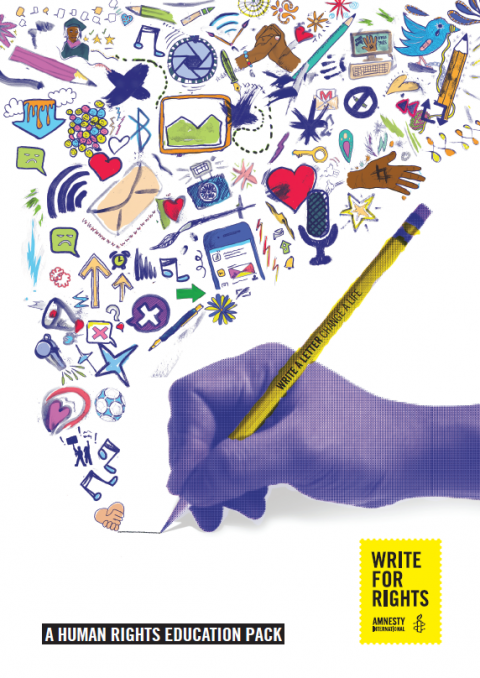 The Write for Rights: A Human Rights Education Pack 出版年份: 2015 机构作者: Amnesty International This education pack contains five activities on human rights for young people. It can be used as an introduction to human rights, to global solidarity, to campaigning and activism, and to the wider work of Amnesty International. The activities provide a broad perspective on these issues and others.They are useful in opening young people’s minds to global concerns and involving them in actions which can have a real impact on people’s lives.The activities can be run at any time, but will be most effective either before or during the time of Amnesty International’s ‘Write for Rights’ campaign, which this year runs from 4 to 17 December. By working on these cases and taking part in the campaign, young people will know that they are part of a massive global movement of people. They – and you – can bring about a real improvement in the lives of the people featured in the following pages. Escribe por los derechos: Conjunto de materiales para la educacion ed derechos humanos 出版年份: 2015 机构作者: Amnesty International This education pack contains five activities on human rights for young people. It can be used as an introduction to human rights, to global solidarity, to campaigning and activism, and to the wider work of Amnesty International. The activities provide a broad perspective on these issues and others.They are useful in opening young people’s minds to global concerns and involving them in actions which can have a real impact on people’s lives.The activities can be run at any time, but will be most effective either before or during the time of Amnesty International’s ‘Write for Rights’ campaign, which this year runs from 4 to 17 December. By working on these cases and taking part in the campaign, young people will know that they are part of a massive global movement of people. They – and you – can bring about a real improvement in the lives of the people featured in the following pages. Écrire pour les droits: Dossier pour l’éducation aux droits humains 出版年份: 2015 机构作者: Amnesty International This education pack contains five activities on human rights for young people. It can be used as an introduction to human rights, to global solidarity, to campaigning and activism, and to the wider work of Amnesty International. The activities provide a broad perspective on these issues and others.They are useful in opening young people’s minds to global concerns and involving them in actions which can have a real impact on people’s lives.The activities can be run at any time, but will be most effective either before or during the time of Amnesty International’s ‘Write for Rights’ campaign, which this year runs from 4 to 17 December. By working on these cases and taking part in the campaign, young people will know that they are part of a massive global movement of people. They – and you – can bring about a real improvement in the lives of the people featured in the following pages.
 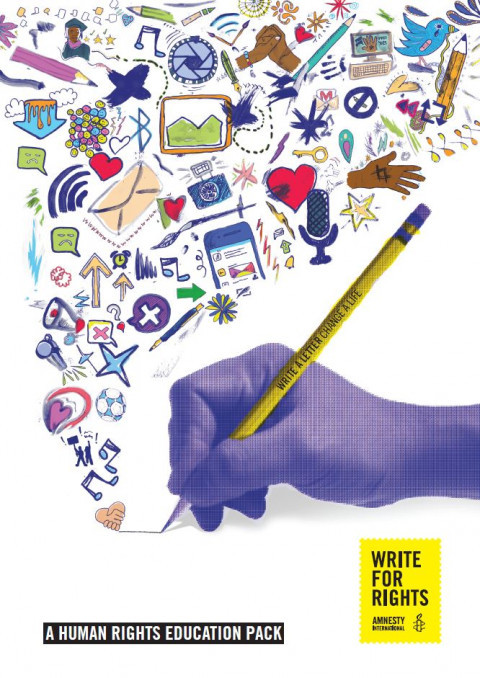 The Write for Rights: A Human Rights Education Pack 出版年份: 2015 机构作者: Amnesty International This education pack contains five activities on human rights for young people. It can be used as an introduction to human rights, to global solidarity, to campaigning and activism, and to the wider work of Amnesty International. The activities provide a broad perspective on these issues and others.They are useful in opening young people’s minds to global concerns and involving them in actions which can have a real impact on people’s lives.The activities can be run at any time, but will be most effective either before or during the time of Amnesty International’s ‘Write for Rights’ campaign, which this year runs from 4 to 17 December. By working on these cases and taking part in the campaign, young people will know that they are part of a massive global movement of people. They – and you – can bring about a real improvement in the lives of the people featured in the following pages.
  Educating Students about the Holocaust: A Survey of Teaching Practices More than half a century has passed since the horrific events of the Holocaust took place, but images of the state-sponsored, systematic persecution and annihilation of European Jewry by Nazi Germany are no less shocking than they were 60 years ago. Any discussion of the Holocaust inevitably leads to questions of not only how and why this event occurred in the modern era but, more importantly, how the legacy of the Holocaust can continue to raise international awareness of human rights abuses and genocide. One way of achieving this awareness is by providing holocaust education to the nation's young people. While this objective has obtained widespread support, there has been an absence of reliable nationwide information on how the Holocaust is actually taught in U.S. schools. This article attempts to fill that gap by presenting the results of a yearlong study commissioned by the United States Holocaust Memorial Museum of teaching practices in Holocaust education in the nation's secondary public schools in 2003-04. The study assessed secondary teaching practices in middle and high schools in the field of Holocaust education, and investigated teachers' rationales for teaching about the Holocaust. (By the publisher) Menschenrechtsbildung in NS-Gedenkstätten. Neue pädagogische Überlegungen zum Lernen aus der Geschichte des Nationalsozialismus Learning from history means acting with historical awareness in both the present and future, making decisions and taking knowledge of the past into account and developing greater sensitivity for current processes in light of what has gone before. The contemporary relevance and subject relations are decisive prerequisites for learning about history. Without integrating the addressee's identity within the learning process, without any reference to facts of significance of subjective importance to the learner, all educational efforts will fail to bear fruit. This problem is more relevant than ever as far as historico-political education at memorial sites for Holocaust victims is concerned. The pedagogical approach to Holocaust memorial sites is currently facing an educational challenge in the light of the increasing chronological distance to the historical events and their multi-ethnic audience. Although a discussion of National Socialist history continues to constitute an important focus in both schools and the public domain, the results of empirical studies attest to significant gaps in knowledge. Furthermore, in an international comparison, German teenagers demonstrate considerably less interest in the National Socialist era than those from other countries. Instead of displaying an interest in this aspect of history, they react defensively and state that they are "sick and tired" of the topic. In the face of such developments, the question of the direction which the pedagogical approach to holocaust memorial sites will take in future arises. In order to integrate connections between past and present more deliberately, those involved in running Holocaust memorial sites are considering placing a stronger focus on human rights education. The fusion of both disciplines is designed to provoke more intense contemporary historical discussion and thus prompt a subjectively significant learning process. The present research project concentrates on the question of the extent to which this approach can be implemented and on the areas of tension which may arise in the practice of memorial site education as a result. Human rights education at holocaust memorial sites ‒ the concept sounds promising. The terms reflect precisely what one would expect of the historico-political education at Holocaust memorial sites offered by a free and democratic constitution: the opportunity to learn lessons for the present from past crimes. This research project seeks to close a gap. Its aim is to develop a comprehensive model of human rights education at Holocaust memorial sites, analyse areas of tension and potential and, finally provide suggestions for the further development of educational practice. In consequence, the research project is located firmly within practical research. In order to answer the question posed in an adequate manner, diverse qualitative methods were required. It follows that results obtained via participatory observation, expert interviews and group discussion processes form the basis of my deliberations. (By the author)