
相关资源
探索丰富的全球公民教育资源,深化理解,促进研究、倡导、教学与学习。
共找到3,502条结果
 Руководство по использованию генеративного искусственного интеллекта в образовании и научных исследованиях 出版年份: 2023 作者: Fengchun Miao | Wayne Holmes 机构作者: UNESCO Данное руководство направлено на поддержку разработки соответствующих правил, политик и программ развития человеческого потенциала с целью обеспечения того, чтобы генеративный искусственный интеллект (ИИ) стал инструментом, действительно приносящим пользу и расширяющим возможности учителей, учащихся и исследова телей. В нем объясняются методы искусственного интеллекта, используемые в генеративном ИИ, а также приводится список моделей СРТ, которые становятся общедоступными, особенно модели с открытым исходным кодом. Руководство также открывает обсуждение о появлении ЕсІСРТ - моделей генеративного ИИ, обученных на конкретных данных для образовательных целей. Кроме того, в нем суммируются некоторые ключевые противоречия вокруг генеративного ИИ - от ухудшения цифрового неравенства до гомогенизации мнений, от более сложных дипфейков до вопросов авторского права. Исходя из гуманистического подхода, руководство предлагает ключевые шаги по регулированию инструментов генеративного ИИ, включая обязательную защиту конфиденциальности данных и установку возрастных ограничений для самостоятельного взаимодействия с платформами генеративного ИИ. Для обеспечения правильного использования инструментов в сфере образования и исследований, в руководстве затронуты вопросы этики и проектирования педагогического процесса и заложен подход, ориентированный на человека и учитывающий возрастные особенности.
  دليل ومجموعة أدوات المدارس السعيدة رافد ومصدر للسعادة ورفاه المتعلم والتعلم الاجتماعي والعاطفي في منطقة آسيا والمحيط الهادئ 出版年份: 2021 机构作者: UNESCO | UNESCO Bangkok تم إعداد هذا الدليل بــهدف دعم المعــلمين والقــادة فــي مجالــي التعــليم األساســي والثــانوي فــي جميــع مناطــق آسيــا والمحيط الهــادئ فــي التــفكير فــي كيفيــة إنشــاء مدرســة ســعيدة، وهو بذلك يستند علــى عدة ركائز إلطــار عمل المدارس الســعيدة. وفــي حين أن دليل المدارس الســعيدة يستــهدف قــادة المدارس والمعــلمين فيمــا يتعلــق بــالمستوى اإلداري وتطوير عــلوم التربيــة، فــإن مجموعــة أدوات المدرســة الســعيدة قد صممت للمعــلمين علــى مستوى الصف الدراســي. Happy Schools Guide and Toolkit: A Resource for Happiness, Learners’ Well-Being and Social and Emotional Learning 出版年份: 2021 机构作者: UNESCO | UNESCO Bangkok The Happy Schools Guide and Toolkit is designed to support teachers and school leaders in primary and secondary schools across the Asia-Pacific region, in thinking about how they can create their own Happy School. It has therefore drawn from aspects of the Happy Schools Framework, which can be most readily addressed at the school level. While the Happy Schools Guide is targeted towards school leaders and teachers at the school level of administration and pedagogy development, the Happy Schools Toolkit is conceived for teachers at the classroom level. ارشادات استخدام الذكاء الاصطناعي التوليدي في التعليم والبحث 出版年份: 2023 作者: Fengchun Miao | Wayne Holmes 机构作者: UNESCO تهدف هذه الإرشادات إلى دعم تخطيط اللوائح والسياسات وبرامج تنمية القدرات البشرية المناسبة ً لضمان أن يصبح الذكاء الاصطناعي التوليدي أداة تفيد المعلمين والمتعلمين والباحثين وتمكنهم حقا. وهو يشرح تقنيات الذكاء الاصطناعي التي يستخدمها الذكاء الاصطناعي التوليدي ويرسم قائمة بنماذج ً المحولات التوليدية المدربة مسبقا المتاحة للجمهور، خاصة تلك التي تخضع لترخيص مفتوح المصدر. كما ً ً حول ظهور نماذج المحولات التوليدية التعليمية المدربة مسبقا - التي يتم تدريبها باستخدام يفتح نقاشا بيانات محددة لخدمة الأغراض التعليمية. علاوة على ذلك، فهو يلخص بعض الخلافات الرئيسية حول ً الذكاء الاصطناعي التوليدي، بدءا من تفاقم الفقر الرقمي إلى تجانس ً الآراء، ومن التزييف العميق إلى قضايا حقوق الطبع والنشر. واستنادا إلى رؤية إنسانية، تقترح الإرشادات خطوات أساسية لتنظيم أدوات الذكاء الاصطناعي التوليدي، بما في ذلك فرض حماية خصوصية البيانات ووضع حد عمري للمحادثات المستقلة مع منصات الذكاء الاصطناعي التوليدي. ً لتوجيه الاستخدام السليم للأدوات في التعليم والبحث، تقترح هذه الإرشادات نهج ً ا مناسبا للعامل البشري والعمر للتحقق من الصحة الأخلاقية وعمليات التصميم التربوي. Guidance for Generative AI in Education and Research 出版年份: 2023 作者: Fengchun Miao | Wayne Holmes 机构作者: UNESCO This Guidance aims to support the planning of appropriate regulations, policies and human capacity development programmes to ensure that generative artificial intelligence (GenAI) becomes a tool that genuinely benefits and empowers teachers, learners and researchers. It explains the Al techniques used by GenAI and maps out a list of GPT models that are made publicly available, especially those under open-source licences. It also opens a discussion on the emergence of EdGPT - GenAI models that are trained with specific data to serve educational purposes. Furthermore, it summarizes some of the key controversies around GenAI, from worsening digital poverty to the homogenization of opinions, and from deeper deepfakes to issues of copyright. Based on a humanistic vision, the Guidance proposes key steps for the regulation of GenAI tools, including mandating the protection of data privacy and setting an age limit for independent conversations with GenAI platforms. To guide the proper use of the tools in education and research, this Guidance proposes a human-agent and age-appropriate approach to the ethical validation and pedagogical design processes.
 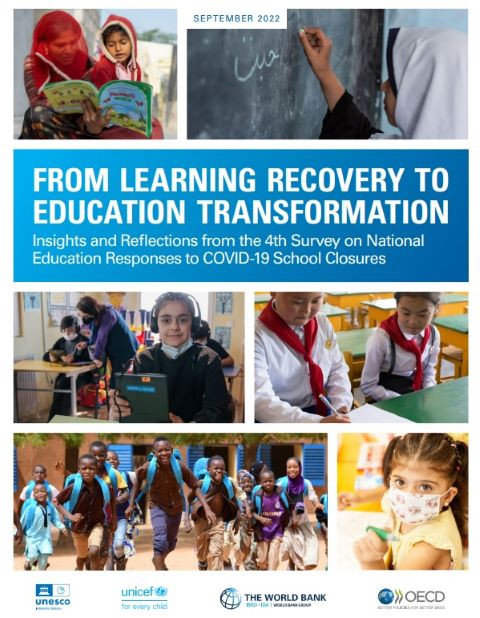 From Learning Recovery to Education Transformation: Insights and Reflections from the 4th Survey on National Education Responses to COVID-19 School Closures 出版年份: 2022 机构作者: UNESCO | UNESCO Institute for Statistics (UIS) | United Nations Children's Fund (UNICEF) | World Bank | Organisation for Economic Co-operation and Development (OECD) From Learning Recovery to Education Transformation, a new joint report by UNESCO, UNESCO Institute for Statistics (UIS), UNICEF, The World Bank and The OECD, presents findings from the fourth round of the Survey on National Education Responses to COVID-19 School Closures, administered between April–July 2022 with responses from Ministries of Education in 93 countries. It explores how countries are progressing in the RAPID actions to recover learning: Reach every child and keep them in school; Assess learning levels regularly; Prioritize teaching the fundamentals; Increase the efficiency of instruction; and Develop psychosocial health and wellbeing.
  2017 International Conference on Education and the Holocaust: Progress Report and Follow-up 出版年份: 2018 机构作者: UNESCO | United States Holocaust Memorial Museum (USHMM) From December 4-8 2017, UNESCO and the United States Holocaust Memorial Museum (USHMM) jointly organized the second International Conference on Education and the Holocaust (ICEH) in Washington, DC. The conference brought together 26 participants from 10 countries with the goal of strengthening their capacities to advance education about the Holocaust and genocide in their respective countries. Of great importance was the relevance of this education within the teams’ national contexts. The conference ultimately led to the development of 10 country-specific initiatives. The 2017 ICEH cohort comprises representatives of institutions from Argentina, Colombia, India, Indonesia, Kenya, Mexico, Namibia, South Africa, Tunisia and Ukraine.
 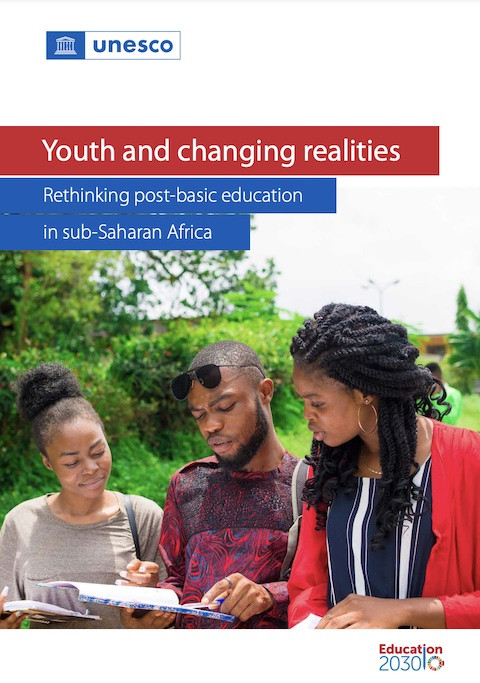 Youth and Changing Realities: Rethinking Post-basic Education in Sub-Saharan Africa 出版年份: 2022 机构作者: Организация Объединенных Наций по вопросам образования, науки и культуры (UNESCO) Education should empower young people for full participation in their societies and education systems should be responsive to their voices, aspirations and actions. At this time of upheaval, it is more important than ever that youth voices are heard. This synthesis report analyses the perspectives of post-basic education of some young people from 20 countries in sub-Saharan Africa. Their voices express diverse experiences, aspirations and expectations. They describe ‘changing realities’ in which education and training opportunities often seem unable to meet their aspirations and new demands of the world of work and society. It focusses on four crucial themes for post-basic education, with reference to youth’s experiences: financing, socio-cultural barriers, skills for work and life, and educators’ capacities.The Education 2030 Framework for Action calls for youth, learners and their organizations to be full partners in the realization of SDG4; to encourage governments and other stakeholders to develop education programmes in consultation with young people; and to help shape policies for relevant and responsive education systems. This synthesis report makes an important contribution towards rethinking post-basic education in sub-Saharan Africa.
  5th UNESCO Forum on Transformative Education for Sustainable Development, Global Citizenship, Health and Well-Being: Recommendations for Action Towards Transformative Education 出版年份: 2022 机构作者: UNESCO In light of contemporary and emerging challenges such as climate change, violent and hateful ideologies, conflicts and risks of global pandemics, education must teach young people the knowledge, skills, values and attitudes to live cooperatively, be flexible, think critically, respect diversity, care for the environment, and be actively involved in finding solutions, both locally and globally. Transformative education – as enshrined in Target 4.7 of Sustainable Development Goal 4 – is critical in supporting individuals to develop these competencies. Transformative education involves teaching and learning that motivates and empowers learners to make informed decisions and actions at the individual, community and global levels. With a focus on sustainability, global citizenship, health and well-being for all, transformative education implies ensuring that curriculum, pedagogy, learning materials, schools and learning environments are meaningful for the social, political, economic, cultural and environmental contexts. To better understand concrete progress in transformative education, UNESCO and the Asia Pacific Centre of Education for International Understanding (APCEIU) co-organized the 5th UNESCO Forum on Transformative Education for Sustainable Development, Global Citizenship, Health and Well-being (29 November – 1 December 2021).The conference enabled a productive dialogue among a diverse range of actors from the fields of education for sustainable development (ESD), global citizenship education (GCED), education for health and wellbeing under the broader “banner” of transformative education. 5ème Forum de l’UNESCO sur l’éducation transformatrice pour le développement durable, la citoyenneté mondiale, la santé et le bien-être: Recommandations pour l’action en vue d’une éducation transformatrice 出版年份: 2022 机构作者: UNESCO À la lumière des défis contemporains et émergents tels que le changement climatique, les idéologies violentes et haineuses, les conflits et les risques de pandémies mondiales, l'éducation doit enseigner aux jeunes les connaissances, les compétences, les valeurs et les attitudes nécessaires pour vivre en coopération, être flexibles, penser de manière critique, respecter la diversité, prendre soin de l'environnement et participer activement à la recherche de solutions, tant au niveau local que mondial.L'éducation transformatrice - telle qu'énoncée dans la cible 4.7 de l'objectif de développement durable 4 - est essentielle pour aider les individus à développer ces compétences. L'éducation transformatrice implique un enseignement et un apprentissage qui motivent et habilitent les apprenants à prendre des décisions et des actions éclairées aux niveaux individuel, communautaire et mondial. En mettant l'accent sur la durabilité, la citoyenneté mondiale, la santé et le bien-être pour tous, l'éducation transformatrice implique de veiller à ce que les programmes, la pédagogie, le matériel d'apprentissage, les écoles et les environnements d'apprentissage soient significatifs pour les contextes social, politique, économique, culturel et environnemental.Pour mieux comprendre les progrès concrets de l'éducation transformatrice, l'UNESCO et le Centre Asie-Pacifique d'éducation pour la compréhension internationale (APCEIU) ont co-organisé le 5e Forum de l'UNESCO sur l'éducation transformatrice pour le développement durable, la citoyenneté mondiale, la santé et le bien-être (29 novembre - 1er décembre 2021).La conférence a permis un dialogue productif entre un large éventail d'acteurs des domaines de l'éducation au développement durable (EDD), de l'éducation à la citoyenneté mondiale (ECM), de l'éducation pour la santé et le bien-être sous la « bannière » plus large de l'éducation transformatrice.