
相关资源
探索丰富的全球公民教育资源,深化理解,促进研究、倡导、教学与学习。
共找到2,813条结果
 한국의 유네스코 가입 70년 회고와 전망 연구 出版年份: 2019 作者: 김기헌 | 박환보 | 정준영 | 조두원 | 한유진 机构作者: 유네스코한국위원회 2020년 한국의 유네스코 가입 70주년을 기념하여 지난 70년간 교육, 자연과학, 청년, 인문사회과학, 문화, 커뮤니케이션, 국제협력 등 유네스코 관련 분야별 국내외 자료목록과 해제를 엮은 자료집이다.
 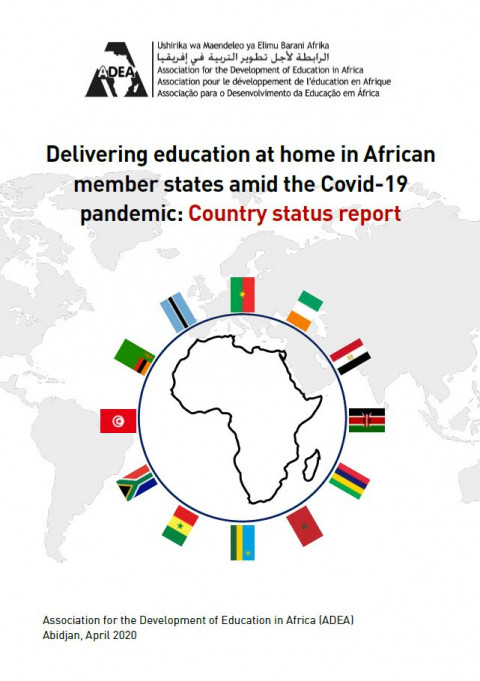 Delivering Education at Home in African Member States Amid the Covid-19 Pandemic: Country Status Report 出版年份: 2020 机构作者: Association for the Development of Education in Africa (ADEA) Since its emergence in late 2019, the coronavirus disease 2019 (COVID-19) has evolved into a pandemic, heavily affecting the lives of billions of people across the world with an anticipated huge impact on the global economy and Africa in particular. Education is one of the sectors heavily affected, with the closure of learning institutions in many African countries likely to negatively affect the education quality.In order to obtain a clearer view of the status of learning during this period, and to better support countries in the immediate, short and long term, ADEA engaged some of the most affected African countries in March 2020 to map the national situation in the education sector. The foregoing is a synopsis of the feedback from Burkina Faso, Côte d’Ivoire, Egypt, Ghana, Kenya, Mauritius, Morocco, Rwanda, Senegal, South Africa, Tunisia, and Zambia in terms of national strategies, platforms and tools or applications, gaps and challenges, partner engagement, good practices and lessons learnt with some recommendations.
  Lifelong Education: Continuous Education for Sustainable Development; The Collection of the 15th International Conference 出版年份: 2017 机构作者: National Academy for Education (NAE) This edition of the proceedings of international cooperation presents the reports of the participants of the first stage of the 15th (anniversary) international conference “Education Throughout Life: Continuing Education for Sustainable Development”, which was held in Astana, Republic of Kazakhstan. The conference participants focused on the issues of training competent specialists, models, methods, technologies and organizational forms of continuing education used in pedagogical practice. The authors paid special attention to new pedagogical and organizational strategies for continuing education of adults, people with disabilities and the "third age", as well as spiritual, moral, ethical and democratic values in the context of upbringing in continuing education. Образование через всю жизнь: непрерывное образование в интересах устойчивого развития; Сборник материалов 15-й международной конференции 出版年份: 2017 机构作者: National Academy for Education (NAE) В настоящем выпуске трудов международного сотрудничества представлены доклады участников первого этапа 15-й (юбилейной) международной конференции «Образование через всю жизнь: Непрерывное образование в интересах устойчивого развития», которая проходила в Астане, Республика Казахстан. В центре внимания участников конференции были вопросы подготовки компетентных специалистов, применяемые в педагогической практике модели, методики, технологии и организационные формы непрерывного образования. Особое внимание авторы уделили новым педагогическим и организационным стратегиям непрерывного образования взрослых, людей с ограниченными возможностями и «третьего возраста», а также вопросам духовно-нравственных, этических и демократических ценностей в контексте воспитания в непрерывном образовании.
 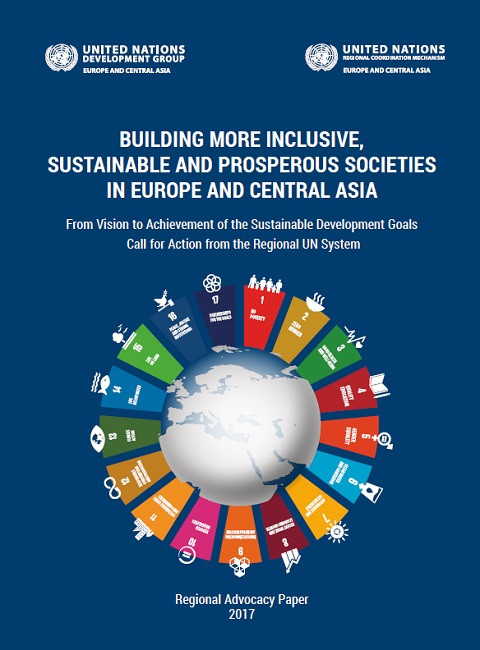 Building More Inclusive, Sustainable and Prosperious Societies in Europe and Central Asia: From Vision to Achievement of the Sustainable Development Goals Call for Action from the Regional UN System (Regional Advocacy Paper 2017) 出版年份: 2017 机构作者: United Nations Development Group (UNDG) This regional advocacy paper provides key policy recommendations that can help countries of Europe and Central to overcome the existing development bottlenecks and boost the implementation of the 2030 Agenda, leaving no one behind. На пути к устойчивости и всеобщему процветанию в Европе и Центральной Азии: Переход от видения к реализации Целей в области у стойчивого развития Призыв к действию от региональной системы ООН (Региональный консультационный документ 2017) 出版年份: 2017 机构作者: United Nations Development Group (UNDG) Этот региональный консультационный документ содержит ключевые политические рекомендации, которые могут помочь странам Европы и Центральной Азии преодолеть существующие узкие места в области развития и ускорить реализацию Повестки дня на период до 2030 года, не оставив никого позади.
 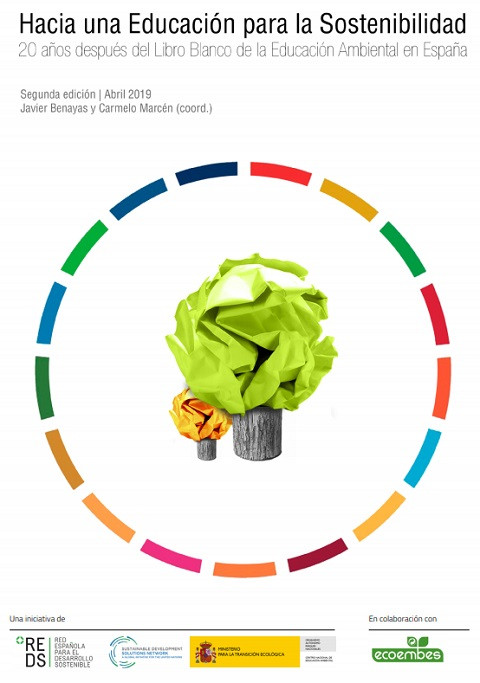 Hacia una Educación para la Sostenibilidad: 20 años después del Libro Blanco de la Educación Ambiental en España 出版年份: 2019 作者: Javier Benayas | Carmelo Marcén 机构作者: Red Española para el Desarrollo Sostenible (REDS) | Centro Nacional de Educación Ambiental (CENEAM) | Ecoembes El document presenta las luces y sombras de la multiforme intervención de la Educación Ambiental en los últimos 30 años; a la vez identifica pautas para recorrer el camino hacia la sostenibilidad de una forma más eficaz y segura pero sobre todo con la implicación de toda la sociedad.
 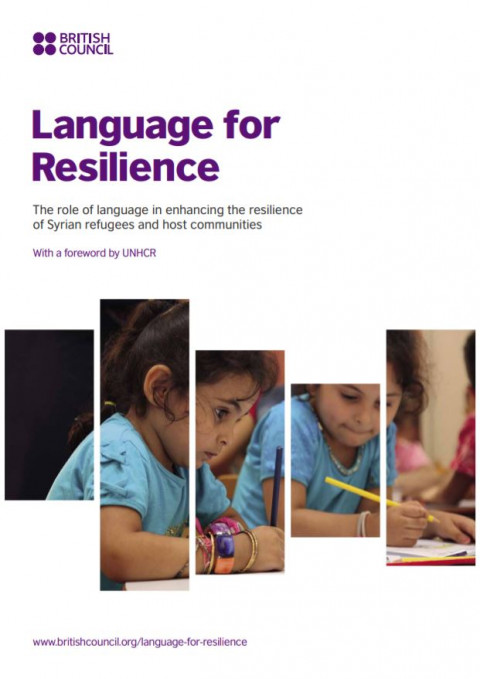 اللغة لتعزيز القدرة على مواجهة الأزمات: فهم الدور الذي تؤديه اللغة في تعزيز قدرة اللاجئين السوريين والمجتمعات المستضيفة لهم على مواجهة الأزمات 出版年份: 2018 作者: Tony Capstick | Marie Delaney 机构作者: British Council | UN. Office of the United Nations High Commissioner for Refugees (UNHCR) يستند التقرير الى دروس مستفادة من برامج اللغة الانجليزية التي يقدمها المجلس الثقافي البريطاني، ويستخدم كمرجع في تطوير البرامج المستقبلية الخاصة بتعليم اللغات للمتأثرين بالأزمة السورية. Language for Resilience: The Role of Language in Enhancing the Resilience of Syrian Refugees and Host Communities 出版年份: 2018 作者: Tony Capstick | Marie Delaney 机构作者: British Council | UN. Office of the United Nations High Commissioner for Refugees (UNHCR) The Language for Resilience report examines the impact of language on refugees and host communities affected by the Syrian crisis, identifying the different ways that language skills enhance resilience and providing suggestions for programme responses that address key needs.The report shows that for children and young people attending schools or post-school education, and for educators in host communities handling influxes of refugee students, quality language learning improves attainment and attendance and builds safer and more inclusive classrooms. It also illustrates how creative approaches to language education can support the development of life skills and help meet psycho-social needs.
  Cosmopolitan Sidestep: University Life, Intimate Geopolitics and the Hidden Costs of “Global” Citizenship (Area; Vol. 51, No. 4) 出版年份: 2018 作者: Mike Dimpfl | Sara Smith 机构作者: Royal Geographical Society | Wiley In higher education in the US today, particular practices of global engagement are positioned as essential to student learning. Institutional stakeholders foreground the potential of outward‐facing orientation to the globe while sidestepping local connections to racial inequality and injustice foregrounded by student and waged‐worker activism. Faculty and student composition, course content and hierarchies of waged work have been targeted by activists from within and without. In this example, relations between labour, students and administrators at a large southern research university in the USA reveal the mechanisms by which especially neoliberal cosmopolitanisms require an intentional and narrow rendering of what and who counts in the production of campus life. A discussion of student activism and changes to housekeeping work practices reveal how power is produced and divided by controlling and corralling particular kinds of social reproductive labour. In light of the redistribution and erasure of this labour, we argue that US universities are geopolitical in nature, shaping young people's orientations to an imagined global citizenship to create a specific form of cosmopolitanism that centres whiteness and makes claim to a globally oriented generosity rather than a justice‐oriented framework with explicit connections to the breadth of waged work undergirding university life and practice. To create this possibility, the university frequently side‐steps complex interconnections between student life and systems of racialised, ethnicised and gendered exploitation in local spaces in favour of a focus of similar inequalities in the world “out there.”