
相关资源
探索丰富的全球公民教育资源,深化理解,促进研究、倡导、教学与学习。
共找到2,769条结果
 생애주기 맞춤형 환경교육프로그램 개발방안 연구 최종 보고서 出版年份: 2020 作者: 장미정 | 김문옥 | 유영초 | 이다현 | 임수정 | 우영미 | 전푸름 机构作者: 모두를위한환경교육연구소 본 연구보고서의 목적은 생애주기에 따른 대상 맞춤형 환경교육 프로그램 개발방안을 도출하고 환경 학습 사각지대에 있는 수요자 요구 중심의 프로그램을 전략적으로 개발하기 위한 방안을 마련하고자 함이다.본 저작물은 대한민국 환경부에서 2020년 작성하여 공공누리 제 4유형으로 개방한 ‘생애주기 맞춤형 환경교육프로그램 개발방안 연구최종 보고서(장미정 외)’ 를 이용하였으며 해당 저작물은 환경교육포털 (www.keep.go.kr)에서 무료로 다운받으실 수 있습니다.
  2020 세계시민윤리 콘텐츠: 세계시민으로 성장하는 학습 꾸러미 出版年份: 2021 作者: 배성호 | 임재민 | 최유정 | 정미선 | 승현아 | 홍윤빈 | 강방식 | 윤상철 | 박범철 机构作者: 서울특별시교육청 세계시민으로 성장하는 학습 꾸러미(2020 세계시민윤리 콘텐츠)는 초등학교, 중학교, 고등학교의 학교급 대상으로 각각 구성되어 있으며 각각 나에서 우리, 그리고 사회 및 세계로 학생들이 바라보는 영역을 확장할 수 있도록 하였으며 학생 중심의 수업에서 교사와 학생 모두가 관심을 가질 만한 내용으로 구성되었다. 학습 주제와 관련된 교과목에서 직접 수업을 운영할 수도 있지만 창체나 자유학년제 프로그램 혹은 학년말의 전환기 프로그램에서도 사용할 수 있고 관련 동아리 수업에서도 활용이 가능하도록 하였다.
  Policy Brief: Talking Across Generations on Education; #TAGe Bujumbura: Youth, Social and Emotional Education and the Prevention of Violent Extremism 出版年份: 2020 机构作者: Mahatma Gandhi Institute of Education for Peace and Sustainable Development (MGIEP) With the aim to mainstream the voices of Burundi youth and include them in the policymaking process in the areas of education for peace, sustainable development and global citizenship, UNESCO MGIEP, YELI-Burundi (Youth Empowerment and Leadership Initiative Burundi) and the Government of Burundi organised a series of high-level #TAGeBujumbura dialogues. These were an integral part of the Annual Prevention of Violent Extremism (PVE) Youth Blast, which was organised by YELI-Burundi on September 16-17, 2019 in Bujumbura, Burundi. H.E Everlyne Butoyi, Minister of Youth, IT and Posts, inaugurated the event. The theme of the main TAGe plenary was The Place of the Youth and Social and Emotional Learning for the Prevention of Violent Extremism – within the broader context of United Nations Security Council Resolution 2250.This unique UNESCO MGIEP TAGe modality for actionable dialogue comprised the following components – month-long online discussions, live TAGe and actionable outputs. The preceding online discussion had over 1,000 participants, and witnessed rich discussion threads being compressed into insightful, actionable ideas. Subsequently, based on the online engagement and the on-ground work done, six representatives were chosen from these participants to represent the collective voices of the youth. They were joined by three distinguished senior decision-makers (from the Government of Burundi and civil society) in a live TAGe exchange, where they delved into issues and unearthed creative solutions in front of an audience of over 200.
 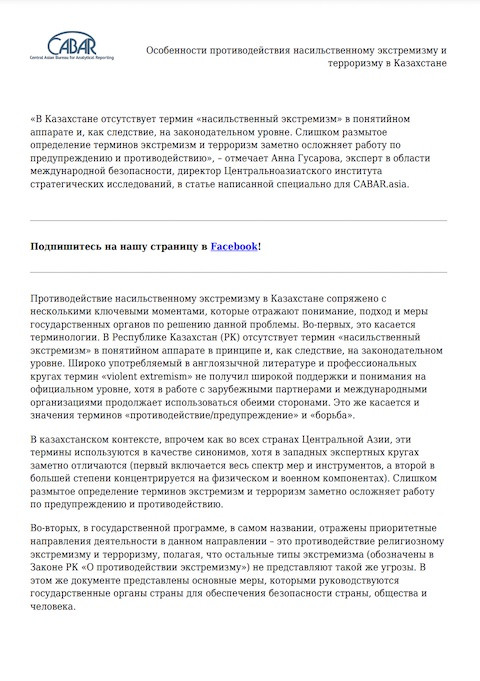 Features of Countering Violent Extremism and Terrorism in Kazakhstan 出版年份: 2019 作者: Anna Gusarova 机构作者: Central Asian Bureau for Analytical Reporting (CABAR) | Institute for War and Peace Reporting (IWPR) «In Kazakhstan there is no term as “violent extremism” in the conceptual construct, and as a result at the legislative level. Too vague definition of the terms extremism and terrorism significantly complicates the work on prevention and counteraction», – said Anna Gusarova, an expert in international security, director of the Central Asian Institute for Strategic Studies, in her article written specifically for CABAR.asia. Особенности противодействия насильственному экстремизму и терроризму в Казахстане 出版年份: 2019 作者: Anna Gusarova 机构作者: Central Asian Bureau for Analytical Reporting (CABAR) | Institute for War and Peace Reporting (IWPR) «В Казахстане отсутствует термин «насильственный экстремизм» в понятийном аппарате и, как следствие, на законодательном уровне. Слишком размытое определение терминов экстремизм и терроризм заметно осложняет работу по предупреждению и противодействию», – отмечает Анна Гусарова, эксперт в области международной безопасности, директор Центральноазиатского института стратегических исследований, в статье написанной специально для CABAR.asia.
  Back to Basics: Quality in Digital Learning 出版年份: 2021 作者: Alejandra Acosta | Iris Palmer | Lupita Romo-González 机构作者: New America | Bill and Melinda Gates Foundation The pandemic was, in some ways, a sneak preview of higher education’s future, one in which technology-mediated and -enabled education is ubiquitous, but with the potential for deep inequities in access to high-quality learning. This report describes some of the ways in which higher education succeeded and fell short during the remarkable 2020–21 year of distance learning. It proposes a trio of federal policy changes to build the ecosystem needed for online learning to ensure it is more equitable for students of color and low-income students, and to improve the quality for everyone (Acosta et al., 2021, p. 6).
  Advantages and Risks of Introducing the “Multilingual and Multicultural Education” Program in Kyrgyzstan 出版年份: 2019 作者: Kanzada Zayirbekova 机构作者: Central Asian Bureau for Analytical Reporting (CABAR) | Institute for War and Peace Reporting (IWPR) «Multilingual education makes it possible to simultaneously master the state and official languages, along with one of the foreign ones. It also creates social cohesion, enhances the culture of interethnic communication, and all this in total strengthens interethnic relations,» notes Kanzada Zayirbekova, a participant of the CABAR.asia School of Analytics, in her article. Преимущества и риски внедрения программы «Многоязычного и поликультурного образования» в Кыргызстане 出版年份: 2019 作者: Kanzada Zayirbekova 机构作者: Central Asian Bureau for Analytical Reporting (CABAR) | Institute for War and Peace Reporting (IWPR) «Многоязычное образование дает возможность одновременно овладеть государственным, официальным и одним из иностранным языком. Также создает сплоченность в обществе и повышение культуры межнационального общения и все это укрепляет межнациональные отношения», – отмечает участница Школы аналитики CABAR.asia Канзада Зайырбекова в своей статье.
 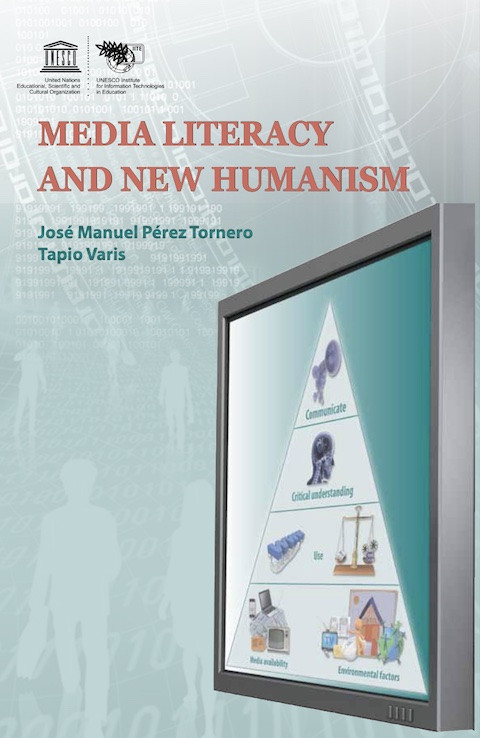 Media Literacy and New Humanism 出版年份: 2010 作者: José Manuel Pérez Tornero | Tapio Varis 机构作者: UNESCO Institute for Information Technologies in Education (IITE) The authors consider the opportunities that media literacy opens in the world of global education and communication in the context of new humanism.Being applied to education, the concept of new humanism, a new UNESCO credo, suggests the creation of a more inclusive society in which all humans have a chance to access knowledge and quality education and every word being heard in the universal dialogue. In the authors’ opinion, the new humanism in the global society must prioritize a new sense of respect for multiplicity and cultural diversity and must support media development with the goal of consolidating the new culture of peace.The book is aimed at educators, researchers, policy-makers, the media and civil society.
  AI in Education: Change at the Speed of Learning 出版年份: 2020 作者: Steven Duggan 机构作者: UNESCO Institute for Information Technologies in Education (IITE) The policy brief “AI in Education: Change at the Speed of Learning” published by the UNESCO Institute for Information Technologies in Education (UNESCO IITE) opens a new series of publications “Digital Transformation of Education”. The new publication describes the advancements in technology, including data, analytics and personalized learning, Artificial Intelligence (AI), cloud computing and machine learning, and explores the promises of AI for students, teachers, school leaders, parents and education administrators. The publication also highlights the ethical aspects of AI implementation and challenges that it might bring.