
相关资源
探索丰富的全球公民教育资源,深化理解,促进研究、倡导、教学与学习。
共找到1,951条结果
 Rapport mondial de suivi sur l'éducation 2024/5, Leadership dans l'éducation : diriger pour apprendre 出版年份: 2025 机构作者: Global Education Monitoring Report Team Le Rapport mondial de suivi sur l'éducation 2024/5 évalue les progrès accomplis dans la réalisation des objectifs du Programme 2030 et montre que, si le nombre d'enfants scolarisés et achevant l'enseignement secondaire n'a jamais été aussi élevé, de nombreux domaines connaissent une stagnation. Le leadership joue un rôle central pour y remédier. Aucune école n’améliore les résultats des élèves sans un bon leader pour montrer la voie. Sur la base d’un examen des lois et politiques concernant la sélection, la préparation et les conditions de travail des chefs d'établissement de 211 systèmes éducatifs, le rapport analyse les leviers stratégiques permettant d'attirer et de retenir des leaders de talent.Les possibilités d’exercer un leadership ne se limitent pas aux dirigeants des écoles, elles s’étendent à des personnes qui occupent d’autres postes dans le système éducatif et en dehors de celui-ci, telles que les directeurs adjoints, les enseignants et les élèves lorsque le leadership est partagé, les responsables politiques, la société civile, les organisations internationales, les syndicats et les médias, qui contribuent à définir les objectifs en matière d’éducation.Le rapport préconise que des efforts soient faits pour former des leaders dans quatre dimensions essentielles : fixer des objectifs, donner la priorité à l’apprentissage, encourager la collaboration et faire évoluer les personnes. Pour que ces dimensions se concrétisent, il faut faire confiance aux personnes occupant des postes de direction et leur donner les moyens d’agir ; il faut les recruter grâce à des pratiques d’embauche équitables ; les soutenir dans leur évolution ; et les encourager à mettre en place une culture de collaboration. Le rapport appelle également à investir dans la capacité des responsables de l'éducation à jouer un rôle de leader au sein du système, en mettant particulièrement l'accent sur la direction pédagogique et l'assurance qualité
  Informe de seguimiento de la educación en el mundo, 2024/5: Liderazgo en la educación: liderar por el aprendizaje 出版年份: 2025 机构作者: Global Education Monitoring Report Team El Informe de seguimiento de la educación en el mundo 2024-2025 evalúa los avances hacia el logro de las metas de 2030 y muestra que, aunque hay más niños escolarizados y que finalizan la educación secundaria que nunca, en muchos ámbitos hay estancamientos. El liderazgo es fundamental para abordar esta cuestión. Ninguna escuela puede mejorar los resultados de los alumnos sin un buen líder que muestre el camino a seguir. Partiendo de un examen de la legislación y las políticas relativas a la selección, preparación y condiciones laborales de los directores de escuela de 211 sistemas educativos, el informe analiza instrumentos de política para atraer y retener a líderes talentosos.El potencial de liderazgo no se limita a los líderes escolares, sino que abarca también a las personas que ocupan otros puestos en el sistema educativo, así como fuera de él, desde subdirectores, docentes y alumnos, cuando el liderazgo es compartido, hasta líderes políticos, la sociedad civil, organizaciones internacionales, sindicatos y medios de comunicación, que contribuyen a definir los objetivos de la educación.El informe insta a adoptar medidas para que los líderes desarrollen sus capacidades en las cuatro dimensiones fundamentales del liderazgo: establecer expectativas, centrarse en el aprendizaje, fomentar la colaboración y favorecer el perfeccionamiento personal. Para llevar a la práctica estas dimensiones, es esencial confiar en quienes ocupan puestos de liderazgo y empoderarlos; reclutarlos mediante prácticas de contratación justas; brindarles apoyo para que se perfeccionen; y motivarlos a fomentar culturas de colaboración. Asimismo, el informe pide que se invierta en fortalecer las capacidades de los funcionarios de educación para que actúen como líderes del sistema, especialmente en el liderazgo pedagógico y la garantía de la calidad.
  [Summary] Global Education Monitoring Report Summary 2024/5: Leadership in Education; Lead for Learning 出版年份: 2024 机构作者: Global Education Monitoring Report Team The 2024/5 Global Education Monitoring Report assesses progress towards the 2030 targets and shows that, while more children are in school and completing secondary education than ever before, there is stagnation in many areas. Leadership is central to addressing this. There are no schools that improve student outcomes without a good leader showing the way. Building on a review of legislation and policies on the selection, preparation and working conditions of school principals in 211 education systems, the report discusses policy levers to attract and retain talented leaders.Leadership’s potential is not limited to school leaders: it extends to individuals in positions elsewhere in the education system as well as outside of it, from assistant principals, teachers and students, when leadership is shared, to political leaders, civil society, international organizations, unions and the media, who help shape education goals.The report calls for efforts to develop leaders in four key leadership dimensions so that they can set expectations, focus on learning, foster collaboration and develop people. For these dimensions to be realized, people in leadership positions should be trusted and empowered; recruited through fair hiring practices; supported to grow; and encouraged to develop collaborative cultures. The report also calls for investment in education officials’ capacity to serve as system leaders, with a particular emphasis on instructional leadership and quality assurance.
  Global Education Monitoring Report 2023, Southeast Asia: Technology in Education; A Tool on Whose Terms? 出版年份: 2023 机构作者: Global Education Monitoring Report Team | Southeast Asian Ministers of Education Organization (SEAMEO) Developed in partnership with the Southeast Asia Ministers of Education Organization (SEAMEO), and with the contribution of EdTech Hub, the fifth regional report focuses on technology in education in Southeast Asia. Characterized by a variety of contexts and resources, Southeast Asia has experienced a rapid growth in digital technology applications. In education, digital technologies have been identified for their potential to transform education and meet the region’s development aspirations. The regional report investigates both challenges and potentials, which technology as a tool and as a process can potentially contribute to, across and within countries, and education levels. The regional report on Southeast Asia covers 11 countries, Brunei Darussalam, Cambodia, Lao PDR, Indonesia, Malaysia, Myanmar, Philippines, Singapore, Thailand, Timor-Leste and Viet Nam. Extensive background research informs the regional analysis: 9 country case-studies compiled by local research teams and independent experts; 5 thematic studies produced by SEAMEO centers on open and distance learning, technology for students with disabilities, integration of technology in teaching practices, key policies issues in ICT in education; technology in technical and vocational education and training, and 3 research inputs on ICT in education practices produced by SEAMEO affiliate members and partners.
 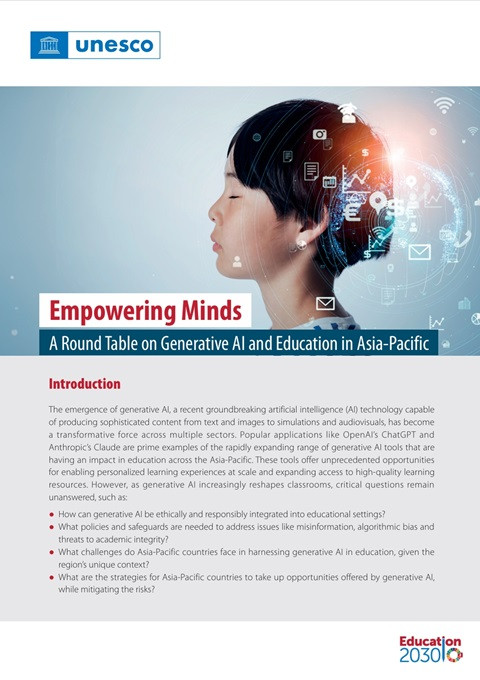 Empowering Minds: A Round Table on Generative AI and Education in Asia-Pacific 出版年份: 2023 机构作者: UNESCO Bangkok The emergence of generative AI, a recent groundbreaking artificial intelligence (AI) technology capable of producing sophisticated content from text and images to simulations and audiovisuals, has become a transformative force across multiple sectors. Popular applications like OpenAI’s ChatGPT and Anthropic’s Claude are prime examples of the rapidly expanding range of generative AI tools that are having an impact in education across the Asia-Pacific. These tools offer unprecedented opportunities for enabling personalized learning experiences at scale and expanding access to high-quality learning resources. However, as generative AI increasingly reshapes classrooms, critical questions remain unanswered, such as:- How can generative AI be ethically and responsibly integrated into educational settings?- What policies and safeguards are needed to address issues like misinformation, algorithmic bias and threats to academic integrity?- What challenges do Asia-Pacific countries face in harnessing generative AI in education, given the region’s unique context?- What are the strategies for Asia-Pacific countries to take up opportunities offered by generative AI, while mitigating the risks? In response to these questions and emerging challenges in the region, the UNESCO Regional Office in Bangkok (UNESCO Bangkok), in collaboration with The Southeast Asian Ministers of Education Organization (SEAMEO), organized the regional experts meeting on 7-9 November 2023 in Bangkok, Thailand. This hybrid meeting, titled ‘Empowering Minds: A Round Table on Generative AI and Education in Asia-Pacific’, explored the implications of generative AI for teacher training and development. It served as an important platform to leverage opportunities and mitigate risks of generative AI in education across the Asia-Pacific region.
 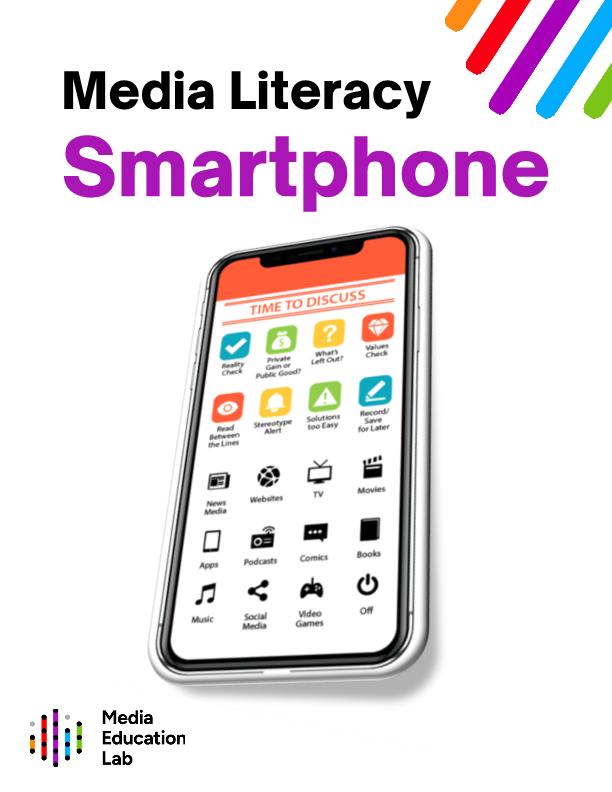 Media Literacy Smartphone 出版年份: 2020 作者: Renee Hobbs | Pam Steager 机构作者: Media Education Lab Learn how to use the Media Literacy Smartphone with learners of all ages! Download the free Learning Guide to bring the power of media literacy analysis to your learners!These easy-to-use cards, shaped exactly in the size of a smartphone, are available to educators for classroom use. You can use these simple paper cards to introduce a structured approach that helps students learn to critically analyze any media text --- web sites, books, advertising, news, TV shows, movies, video games, magazines and music. One side of the smartphone displays the various "apps" for analyzing a media text and the other side displays the "five critical questions" of media literacy developed by Renee Hobbs.Pair the smart phone with the LOVE IT OR HATE IT cards for a dynamic and fun learning experience.
  How to Understand Misinformation, Disinformation and Malinformation 出版年份: 2020 机构作者: Shout Out UK | U.S. Embassy London | Association for Citizenship Teaching (ACT) We live in a world where information is very easy to fabricate. Now more than ever, media literacy (the ability to critically analyse information) is critical for us as citizens and for our democracy to function. This video explains the difference between Misinformation, Disinformation and Malinformation and presents you with some examples! This video is part of a resource pack created and designed by Shout Out UK, supported by the US Embassy in London and in collaboration with the Association For Citizenship Teaching.For more info: https://www.shoutoutuk.org/media-literacy/
 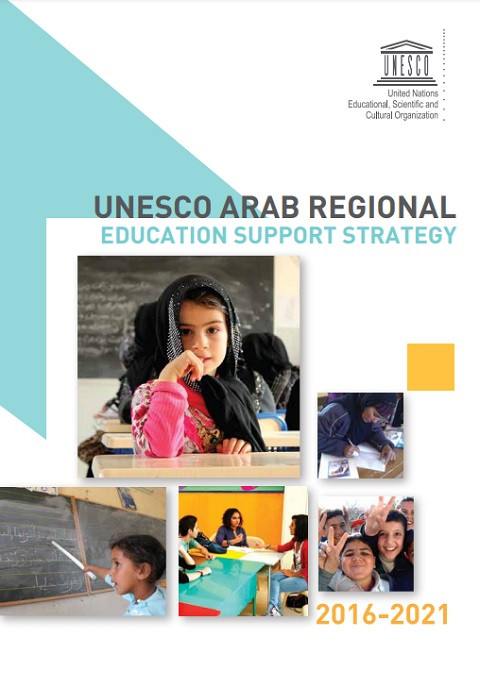 UNESCO Arab Regional Education Support Strategy: 2016-2021 出版年份: 2016 机构作者: UNESCO Beirut Covering the period of 2016-2021, this strategy document aims to provide tangible support for each Member State in the Arab Region, taking into account national needs and priorities and thus employing nationally relevant approaches based on the Agenda 2030 for Sustainable Development.
 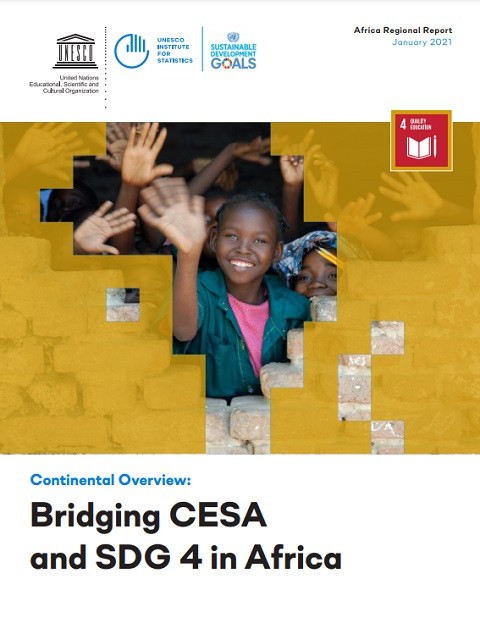 Continental Overview: Bridging CESA and SDG 4 in Africa; Africa Regional Report 出版年份: 2021 机构作者: UNESCO Institute for Statistics (UIS) Monitoring progress toward Sustainable Development Goal 4 for education (SDG 4) is crucial to ensuring that children around the world have access to a quality education where they can learn and gain the skills they need to meet their full potential. SDG 4 indicators are organized with a view to global, thematic, regional and national targets.This report by the UNESCO Institute for Statistics (UIS) is the first in a series intended to bring a regional focus to SDG 4 monitoring, highlight the work being done in the regions and compare SDG 4 targets with those established by regional bodies.This new series of regional reports serve two purposes. Firstly, to map regional and SDG 4 targets to provide an overview of the symmetries between the two. Continental Overview: Bridging CESA and SDG 4 in Africa looks at how the strategic objectives of the Continental Education Strategy for Africa (CESA) compares with SDG 4 targets. Secondly, it analyses progress towards these objectives by African sub-regions.
  ‘Hate Speech’ Explained: A Toolkit 出版年份: 2015 机构作者: ARTICLE 19 In this toolkit, ARTICLE 19 provides a guide to identifying ’hate speech‘ and how effectively counter it, while protecting the rights to freedom of expression and equality. It responds to a growing demand for clear guidance on identifying “hate speech,” and for responding to the challenges ‘hate speech’ poses within a human rights framework.The toolkit is guided by the principle that coordinated and focused action taken to promote the rights to freedom of expression and equality is essential for fostering a tolerant, pluralistic and diverse democratic society in which all human rights can be realised for all people.As such, it addresses three key questions: How do we identify ‘hate speech’ that can be restricted, and distinguish it from protected speech?What positive measures can States and others take to counter ‘hate speech’? Which types of ‘hate speech’ should be prohibited by States, and under which circumstances? The toolkit is guided by the principle that coordinated and focused action taken to promote the rights to freedom of expression and equality is essential for fostering a tolerant, pluralistic and diverse democratic society in which all human rights can be realised for all people. It is informed by, and builds upon, ARTICLE 19’s existing policy work in this field.In Part I, we outline that there is no uniform definition of ‘hate speech’ under international human rights law, rather, it is a broad concept which captures a wide range of expression. The toolkit advances a typology for identifying and distinguishing different forms of ‘hate speech’ according to their severity, guided by states’ international human rights law obligations. In Part II, we provide guidance on what policy measures State and non-state actors can undertake to create an enabling environment for freedom of expression and equality that addresses the underlying causes of ‘hate speech’ while maximising opportunities to counter it.Finally, in Part III, we outline the exceptional circumstances in which the State is obliged by international law to prohibit the most severe forms of ‘hate speech’, and where also States may under international law place other restrictions on ‘hate speech’. This includes guidance on ensuring that such prohibitions are not abused, and to ensure that where sanctions are imposed they are appropriate and proportionate, as well as ensuring support and redress for victims.ARTICLE 19 believes that ensuring that responses to ‘hate speech’ comply with international human rights law is crucial. Prohibitions that censor offensive viewpoints are often counter-productive to the aim of promoting equality, as they fail to address the underlying social roots of the kinds of prejudice that drive ‘hate speech’. In most instances, equality is better-promoted through positive measures which increase understanding and tolerance, rather than through censorship.This toolkit is not a definitive version, and will be continuously updated to reflect the developing case law and best practices in this area.