
相关资源
探索丰富的全球公民教育资源,深化理解,促进研究、倡导、教学与学习。
共找到1,951条结果
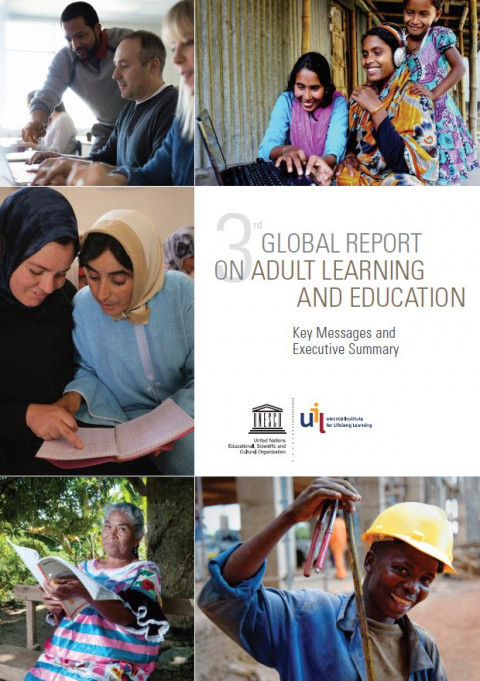 [Résumé] 3e rapport mondial sur l'apprentissage et l'éducation des adultes: l'impact de l'apprentissage et l'éducation des adultes sur la santé et le bien-être, l'emploi et le marché du travail, et la vie sociale, civique et communautaire, points à retenir et résumé exécutif 出版年份: 2016 机构作者: UNESCO Institute for Lifelong Learning (UIL) Le troisième Rapport mondial sur l’apprentissage et l’éducation des adultes (GRALE III) s’appuie sur les réponses de 139 Etats membres de l’UNESCO à l’enquête de suivi GRALE III et brosse un tableau nuancé de la situation de l’apprentissage et de l’éducation des adultes dans le monde. Le rapport évalue les progrès accomplis par les pays dans la mise en oeuvre des engagements qu’ils ont pris dans le Cadre d’action de Belém, document adopté lors de la sixième Conférence internationale sur l’éducation des adultes (CONFINTEA VI) en 2009.En outre, le rapport examine l’impact de l’apprentissage et de l’éducation des adultes sur trois domaines majeurs : la santé et le bien-être ; l’emploi et le marché du travail ; et la vie sociale, civique et communautaire. GRALE III fournit aux décideurs politiques, chercheurs et praticiens des preuves irréfutables des bénéfices élargis de l’apprentissage et l’éducation des adultes dans tous ces domaines et éclaire, de ce fait, les contributions essentielles qu’ils peuvent apporter à la réalisation du Programme de développement durable à l’horizon 2030.Ce rapport répond à trois objectifs : premièrement, analyser les résultats d’un suivi des États membres de l’UNESCO et établir si les pays remplissent les engagements pris à CONFINTEA VI ; deuxièmement, promouvoir l’apprentissage et l’éducation des adultes par des preuves de leurs effets positifs sur la santé et le bien-être, l’emploi et le marché du travail, ainsi que la vie sociale, civique et communautaire ; et troisièmement fournir une plate-forme de débat et d’action aux niveaux national, régional et international. [Resumen] 3do Informe mundial sobre el aprendizaje y la educación de adultos: el impacto del aprendizaje y la educación de adultos sobre la salud y el bienestar, el empleo y el mercado de trabajo, y la vida social, cívica y comunitaria, mensajes clave y resumen ejecutivo 出版年份: 2016 机构作者: UNESCO Institute for Lifelong Learning (UIL) El tercer Informe mundial sobre el aprendizaje y la educación de adultos (GRALE III) se funda en los estudios de monitoreo completados por 139 Estados Miembros de la UNESCO a fin de producir una visión diferenciada sobre el estado global del aprendizaje y la educación de adultos (AEA). Evalúa el progreso de los países en lo que respecta al cumplimiento de los compromisos que hicieron en el Marco de acción de Bélem, aprobado en la VI Conferencia Internacional de Educación de Adultos (CONFINTEA VI) en 2009.Además, el informe examina el impacto del AEA en tres áreas importantes: salud y bienestar; empleo y mercado de trabajo, así como vida cívica y comunitaria. El GRALE III brinda a los responsables de la formulación de política, investigadores y practicantes pruebas convincentes de los más amplios beneficio del AEA en todas estas áreas. Al hacerlo, destaca algunas de las contribuciones más importantes que el AEA puede hacer para realizar los objetivos de la Agenda 2030 para el Desarrollo Sostenible.El presente informe responde a tres objetivos: en primer lugar, analizar los resultados de una encuesta de seguimiento realizada entre los Estados Miembros de la UNESCO y determinar si los países están cumpliendo los compromisos que contrajeron en CONFINTEA VI; en segundo lugar, reforzar los argumentos en favor del aprendizaje y la educación de adultos con datos fehacientes sobre los beneficios que reportan en los ámbitos de la salud y el bienestar, el empleo y el mercado de trabajo y la vida social, cívica y comunitaria; y en tercer lugar, proporcionar un referente a partir del cual debatir y pasar a la acción a escala nacional, regional e internacional.
  Curriculum GlobALE: Competency Framework for Adult Educators 出版年份: 2021 机构作者: DVV International | German Institute for Adult Education, Leibniz Centre for Lifelong Learning | International Council for Adult Education | UNESCO Institute for Lifelong Learning (UIL) This publication introduces Curriculum globALE, a basic com- petence framework for the training of adult educators worldwide. By providing a modular, competency-based framework and cross-curricular approach, Curriculum globALE is unique in its aim to professionalize adult learning and education (ALE) on an international scale, via the competencies that support adult educators to work in any educational setting, field or form.It strives to ensure that educators’ knowledge, competencies, skills and attitudes are of a professional standard.Curriculum globALE is suitable to different contexts and its character and structure enables its inclusion in diverse national education systems.Curriculum globALE aims to: enhance the professionalization of ALE by providing a common reference framework for adult learning programmes and a suggested standard of competencies for adult educators; support ALE providers in the design and implementation of ‘train-the-trainer’programmes; foster knowledge exchange and mutual understanding between adult educators worldwide. Curriculum GlobALE: Un curriculum mondial sur l’apprentissage et l’éducation des adultes 出版年份: 2021 机构作者: DVV International | German Institute for Adult Education, Leibniz Centre for Lifelong Learning | International Council for Adult Education | Institut de l’UNESCO pour l’apprentissage tout au long de la vie (UIL) Cette publication présente Curriculum globALE, un cadre de compétences de base pour la formation des éducateurs d'adultes dans le monde. En fournissant un cadre modulaire basé sur les compétences et une approche interdisciplinaire, Curriculum globALE est unique dans son objectif de professionnaliser l'apprentissage et l'éducation des adultes (ALE) à l'échelle internationale, via les compétences qui aident les éducateurs d'adultes à travailler dans n'importe quel cadre éducatif, champ ou formulaire. Il s'efforce de veiller à ce que les connaissances, les compétences, les aptitudes et les attitudes des éducateurs soient d'un niveau professionnel. Curriculum globALE est adapté à différents contextes et son caractère et sa structure permettent son inclusion dans divers systèmes éducatifs nationaux. Curriculum globALE vise à : améliorer la professionnalisation de l'AEA en fournissant un cadre de référence commun pour les programmes d'apprentissage des adultes et une proposition de norme de compétences pour les éducateurs d'adultes soutenir les prestataires d'AEA dans la conception et la mise en œuvre de programmes de « formation des formateurs » favoriser l'échange de connaissances et la compréhension mutuelle entre les éducateurs d'adultes du monde entier.
  Learning Cities and the SDGs: A Guide to Action 出版年份: 2017 机构作者: UNESCO Institute for Lifelong Learning (UIL) This document is a Guide to Action for mainstreaming lifelong learning as a key driver to achieve the 17 Sustainable Development Goals (SDGs). The document seeks to facilitate the process of transforming global goals into local actions by showing concrete steps, which members of the UNESCO Global Network of Learning Cities (GNLC) have taken to promote green and healthy environments, equity and inclusion as well as decent work and entrepreneurship. This Guide to Action is closely linked to the Cork Call to Action for Learning Cities, adopted by the participants of the third International Conference on Learning Cities, which took place from 18–20 September 2017 in Cork, Ireland. Обучающиеся города и ЦУР: Руководство к действию 出版年份: 2017 机构作者: UNESCO Institute for Lifelong Learning (UIL) Документ «Обучающиеся города и ЦУР» является руководством к повсеместному внедрению обучения на протяжении всей жизни в качестве одного из основных факторов достижения 17 целей в области устойчивого развития (ЦУР). Данный документ призван содействовать преобразованию этих глобальных целей в практические действия на местном уровне путем демонстрации конкретных мер, принятых членами Глобальной сети обучающихся городов ЮНЕСКО (ГСОГ) для поддержки формирования «зеленой» и здоровой среды, обеспечения равноправия и социальной интеграции, а также создания возможностей для получения достойной работы и предпринимательской деятельности. Данное руководство к действию тесно связано с Коркским призывом к действиям в интересах создания обучающихся городов, принятым участниками третьей Международной конференции по обучающимся городам, которая прошла 18-20 сентября 2017 года в Корке (Ирландия).
  미래교육 전망: UNESCO 교육의 미래와 OECD 교육 2030을 중심으로 出版年份: 2022 作者: 김미경 机构作者: 한국교육과정평가원 본 연구는 변화하는 미래 사회를 대비하기 위해 UNESCO 교육의 미래와 OECD 교육 2030을 비교하여 미래 교육을 전망하고, 이에 따른 향후 우리나라 교육의 방향을 모색하고 정책을 제언하는 것을 목적으로 한다. 이를 위해 2021년 발간된 UNESCO 교육의 미래 보고서의 주요 내용을 살펴보고, OECD 교육 2030과 미래 학교교육 시나 리오에서 제시한 미래 교육 내용을 UNESCO 교육의 미래와 비교 분석하여 시사점을 도출하였다. 또한 이를 토대로 한국의 미래 교육이 나아가야 할 방향과 제언을 제시하였다.
 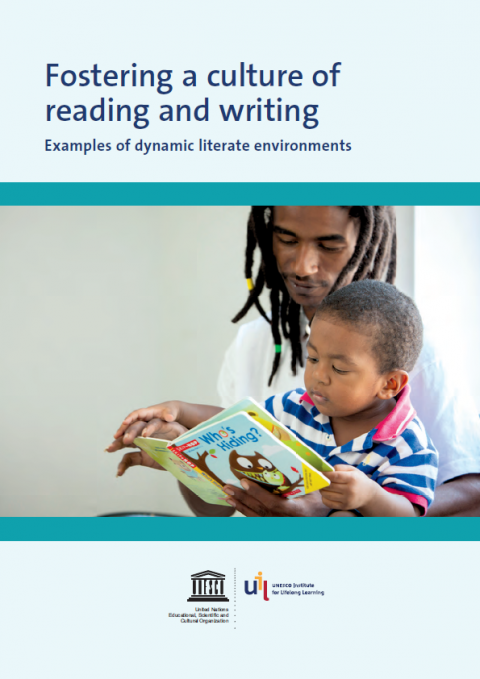 Fostering a culture of reading and writing: examples of dynamic literate environments 出版年份: 2017 作者: Hanemann, Ulrike | Krolak, Lisa 机构作者: UNESCO Institute for Lifelong Learning (UIL) The examples of literacy programmes showcased and analysed in this publication confirm the critical role of literate environments. They have been selected from UNESCO’s Effective Literacy and Numeracy Practises Database (LitBase), which UIL develops on a continuous basis. They demonstrate first and foremost how the development of literate environments can positively influence people’s motivation to (re-)engage in literacy and learning and how they can practise their newly acquired skills in their daily activities to reach sustainable skills levels. In addition, they reveal successful strategies towards a culture of reading, writing and learning in the family, community or wider society. The examples reflect different contexts, such as families, libraries and prisons, to illustrate the potential of ICTs, intergenerational approaches, and community, mobile and prison libraries to engage young people and adults in literacy and learning. Créer des cultures de la lecture, de l'écriture et de l'apprentissage 出版年份: 2017 作者: Hanemann, Ulrike | Krolak, Lisa 机构作者: UNESCO Institute for Lifelong Learning (UIL) Les exemples de programmes d'alphabétisation présen-tés et analysés dans cette publication confirment le rôle déterminant des environnements alphabétisés. Ils sont tirés de la base de données Pratiques efficaces d'alpha-bétisation (LitBase) de l'UNESCO, que UIL développe en permanence. Ils démontrent, d'abord et avant tout, com-ment la mise en place d'environnements alphabétisés peut influencer positivement une personne et la pousser à se (re)mettre à l'alphabétisation et à l'apprentissage, mais aussi comment l'apprenant peut pérenniser ses acquis en les appliquant à ses activités quotidiennes. En outre, ils révèlent des stratégies efficaces pour créer une culture de la lecture, de la lecture et de l'apprentissage au sein de la famille, de la communauté ou de la société. Les exemples incluent divers contextes – familles, biblio-thèques et prisons – pour illustrer la capacité des TIC, des approches intergénérationnelles et des bibliothèques communautaires, mobiles et carcérales à encourager jeunes et adultes à s'alphabétiser et à apprendre.
 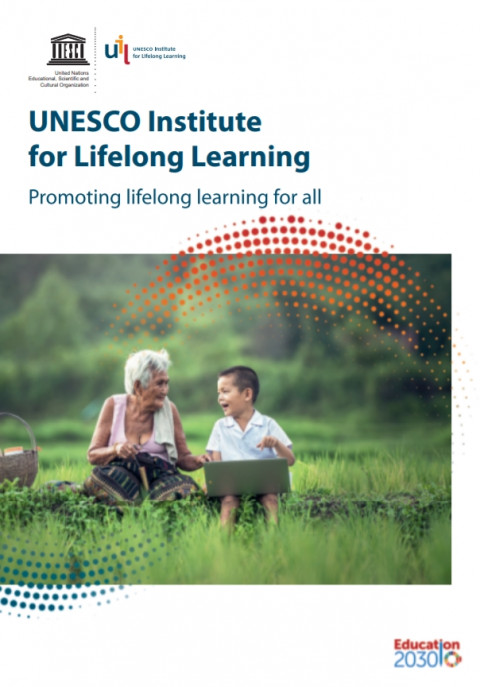 UNESCO Institute for Lifelong Learning: promoting lifelong learning for all 出版年份: 2019 机构作者: UNESCO Institute for Lifelong Learning (UIL) The UN’s 2030 Agenda for Sustainable Development is our guide to action. Leaving no one behind is at the centre of this global planof action for people, planet and prosperity. The 2030 Agenda for Sustainable Development consists of 17 Sustainable Development Goals (SDGs). UIL has a special responsibility for supporting countries to ‘ensure inclusive and equitable quality education and promote lifelong learning opportunities for all’ (SDG 4). But we are also charged with realizing the potential contribution of lifelong learning to the other 16 SDGs. In today’s fast-changing world, where social, economic and political contexts are being constantly reshaped, learning must be continuous and lifelong, for everyone.