
相关资源
探索丰富的全球公民教育资源,深化理解,促进研究、倡导、教学与学习。
共找到1,983条结果
 Multiculturalism and the Concept of Multi-Dimensional Identity 出版年份: 2009 作者: Mohamed Ben Jemaa 机构作者: King Saud University A conference paper discussing multiculturalism and contains two parts, where the first part discusses multiculturalism policies in 6 countries. While the second part shows the multi-dimensional identity.
  Global Citizenship Education: Critical and International Perspectives 出版年份: 2020 作者: Abdeljalil Akkari | Kathrine Maleq 机构作者: Springer Nature | Swiss National Science Foundation This open access book takes a critical and international perspective to the mainstreaming of the Global Citizenship Concept and analyses the key issues regarding global citizenship education across the world. In that respect, it addresses a pressing need to provide further conceptual input and to open global citizenship agendas to diversity and indigeneity.Social and political changes brought by globalisation, migration and technological advances of the 21st century have generated a rise in the popularity of the utopian and philosophical idea of global citizenship. In response to the challenges of today’s globalised and interconnected world, such as inequality, human rights violations and poverty, global citizenship education has been invoked as a means of preparing youth for an inclusive and sustainable world.In recent years, the development of global citizenship education and the building of students’ global citizenship competencies have become a focal point in global agendas for education, international educational assessments and international organisations. However, the concept of global citizenship education still remains highly contested and subject to multiple interpretations, and its operationalisation in national educational policies proves to be challenging.This volume aims to contribute to the debate, question the relevancy of global citizenship education’s policy objectives and to enhance understanding of local perspectives, ideologies, conceptions and issues related to citizenship education on a local, national and global level. To this end, the book provides a comprehensive and geographically based overview of the challenges citizenship education faces in a rapidly changing global world through the lens of diversity and inclusiveness.
  What Does Peace Sound Like? Reconciliation, an Exercise for Everyone 出版年份: 2015 作者: Leonel Narváez | Magda López | María Angéliza Bueno 机构作者: Center for Research and Popular Education / Program for Peace (CINEP/PPP) This podcast analyzes the concept of reconciliation and the challenges that Colombia faces in a possible post-agreement scenario with the FARC guerrilla. What contributions should be made from public policy to continue seeking paths for reconciliation? What is the role of citizens to carry out this process successfully? Are we ready to reconcile? ¿A qué suena la paz? La reconciliación, un ejercicio de todos 出版年份: 2015 作者: Leonel Narváez | Magda López | María Angéliza Bueno 机构作者: Center for Research and Popular Education / Program for Peace (CINEP/PPP) En este podcast se analiza el concepto de reconciliación y los retos que enfrenta Colombia de cara a un posible escenario de posacuerdo con las FARC. ¿Qué aportes se deben hacer desde la política pública para continuar procurando caminos para la reconciliación? ¿Cuál es el papel de los ciudadanos y las ciudadanas para llevar a cabo este proceso satisfactoriamente? ¿Estamos listos para reconciliarnos?
  Human Rights Defense in Colombia: A Bet in the Midst of Adversity 出版年份: 2015 作者: Petrit Baquero | Nancy Arévalo | Claudia Erazo 机构作者: Center for Research and Popular Education / Program for Peace (CINEP/PPP) This podcast analyzes the panorama of human rights in Colombia and the protection of its defenders, in a context full of challenges and threats to their lives. Defensa de los DD. HH. en Colombia: Una apuesta en medio de la adversidad 出版年份: 2015 作者: Petrit Baquero | Nancy Arévalo | Claudia Erazo 机构作者: Center for Research and Popular Education / Program for Peace (CINEP/PPP) This podcast analyzes the panorama of human rights in Colombia and the protection of its defenders, in a context full of challenges and threats to their lives.
  Basic Elements of Forgiveness and Reconciliation Theory 出版年份: 2018 作者: Leonel Narváez Gómez 机构作者: Fundación para la Reconciliación This text presents the theoretical bases for forgiveness and reconciliation that support the pedagogy and actions of the Foundation for Reconcilation. Elementos básicos de la teoría del Perdón y la Reconciliación 出版年份: 2018 作者: Leonel Narváez Gómez 机构作者: Fundación para la Reconciliación En este texto se presentan las bases teóricas para el perdón y la reconciliación que sustentan la pedagogía y acciones de la Fundación para la Reconcliación.
 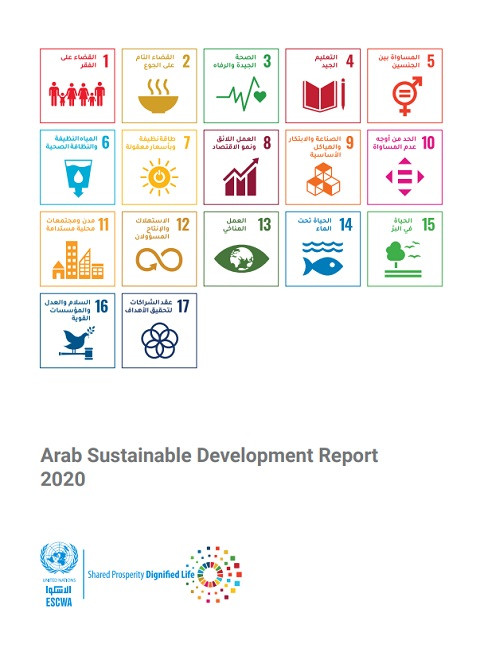 Arab Sustainable Development Report 2020 出版年份: 2020 机构作者: United Nations Economic and Social Commission for Western Asia (ESCWA) The 2030 Agenda calls for transformative change and paradigm shifts. Mobilizing domestic and external resources is a pressing challenge in the Arab region, and the pace of efforts on the SDGs must accelerate. However, transformative change not only requires financial resources and an acceleration of efforts but, above all, demands a shift in orientation and approach towards policy integration, environmental sustainability, and universal human rights with their emphasis on equality, justice, inclusion, fundamental freedoms and participatory politics.The story of the SDGs in the Arab region, therefore, is also a story of human rights, gender equality, sustainability and integrated development. The gravity of the task, and the scale of the ambition, are greater than measuring progress at goal, target and indicator level. Five years into the era of the 2030 Agenda and the SDGs, the present report is a reminder that the starting point for implementation and the horizon for achievement must be aligned for change to be transformative. It is only through the alignment of policies and other interventions with the overarching framework of the 2030 Agenda that the region, and the world, can hope to achieve the 2030 Agenda. How close, or how far, the Arab region is from this alignment is the story the present report aims to tell.
  Assurer à tous une éducation équitable, inclusive et de qualité: Objectif de développement durable 4 au Canada 出版年份: 2020 机构作者: Council of Ministers of Education, Canada (CMEC) Ce rapport fournit un cadre pour communiquer l’information aux échelons pancanadien et international au sujet du travail en cours au Canada sur la réalisation de l’ODD 4. Il tire parti des données et des indicateurs liés à l’ODD 4 et inclut, dans la mesure du possible, les données provinciales et territoriales.