
相关资源
探索丰富的全球公民教育资源,深化理解,促进研究、倡导、教学与学习。
共找到1,983条结果
 Together Alberta: Mapping Alberta’s Contribution to the Sustainable Development Goals Project 出版年份: 2019 机构作者: Alberta Council for Global Cooperation (ACGC) Together Alberta: Mapping Alberta’s Contribution to the Sustainable Development Goals project (Together Alberta) is a public engagement initiative conducted by ACGC to bring together Albertans who are contributing to the Sustainable Development Goals (SDGs), communicate their efforts, and drive further action.
  Global Citizenship and Multimedia: Guidelines for Teachers and Educators 出版年份: 2019 作者: Giorgia Bailo | Mirca Ognisanti | Simona Bruni | Adriana Aralica | Sandra Oliveira | Fernando Catarino | Celia Quico | Maria Leonida | Dimitra Deroyiannis | Alessandro Soriani | Charlot Cassar 机构作者: WeWorld Onlus | European Union (EU) The objective of this book is to strengthen and systematize the effectiveness of global citizenship education through the use of new technologies, within and outside the school context. The aim is to provide theoretical basis and specific tools that can be used directly in educational activities, to promote critical thinking and the active involvement of young people in topics such as human rights, migration, climate change and the Sustainable Development Goals. Both the theoretical and practical sections have been laid out starting from the good practices already tested in several European countries, and the proposed educational methodologies intend to foster technology as an inclusive tool, therefore as an incentive for participation and dialogue between different cultures.
  Éducation à la citoyenneté mondiale: Vers une citoyenneté active grâce à l’éducation politique avec une perspective globale dans les secteurs non formels et informels; Policy Brief Commission suisse pour l’UNESCO 2019 出版年份: 2019 作者: Janine Dahinden | Marco Stricker | Corinne Wild | Siegfried Seeger 机构作者: Commision suisse pour l’UNESCO La Commission suisse pour l’UNESCO a défini l’éducation à la citoyenneté mondiale dans les secteurs non formel et informel comme thème important pour ces prochaines années. Avec ce focus, elle souhaite devenir pionnière en la matière afin de renforcer l’éducation à la citoyenneté mondiale en Suisse, encourager les compétences correspondantes et renforcer les partenariats.
  Research on Digital Competence of EU Citizens: A Comparative Analysis Based on the Dig Comp1.0, 2.0 and 2.1 (International and Comparative Education; No. 6) 出版年份: 2020 作者: Zheng Xudong | Fan Xiaoyu 机构作者: Beijing Normal University The explosive development of digital technology has revolutionized the competences of social citizens. In 2006, EU proposed digital competence, based on it, EU established A Framework for Developing and Understanding Digital Competence in Europe (Dig Comp 1.0). After releasing two revisions of Dig Comp 1.0, the Digital Competence Framework for Citizens (Dig Comp 2.1) was officially released in 2017. Compared with the former versions, Dig Comp 2.1 expanded digital competences areas, revised the competences names, no longer described the specific competences from KSA (knowledge, skill and attitude) perspective, and the proficiency of the competences were divided into more detailed 8 proficiency level. The Dig Comp 2.1 contained the following values: a. the transformation of the concept of digital citizenship education; b. paying attention to the competences of complex problem solving and innovation; c. looking forward to the future development of intelligent society; d. supporting the development of lifelong learning and developing qualified digital citizens. Dig Comp 2.1 has enlightenment for building a learning society in China, and that of improving the digital competences of Chinese citizens. 欧盟公民数字胜任力研究: 基于三版欧盟公民数字胜任力框架的比较分析 (比较教育研究; No. 6) 出版年份: 2020 作者: Zheng Xudong | Fan Xiaoyu 机构作者: Beijing Normal University 数字科技的爆发式发展对公民的能力素养产生了革命性影响。欧盟在 2006 年 提出数字胜任力的基础上,于 2013 年制定了欧盟公民数字胜任力框架 1.0,在经过连续两 次修订后,于 2017 年正式发布了欧盟公民数字胜任力框架 2.1。与旧版相比,新版框架对 胜任力域进行了拓展,修订了具体能力的名称,不再从知识、技能和态度方面描述具体能 力,能力熟练度也划分成更详细的 8 个水平。新版框架体现了欧盟数字公民教育的理念转 变,对复杂问题解决与创新创造能力培养的重视,对终身学习能力和合格数字公民培养的 关注,以及对未来智能社会发展需求的前瞻,对我国建设学习型社会、构建全民终身学习 体系和提升国民数字胜任力具有借鉴意义。
 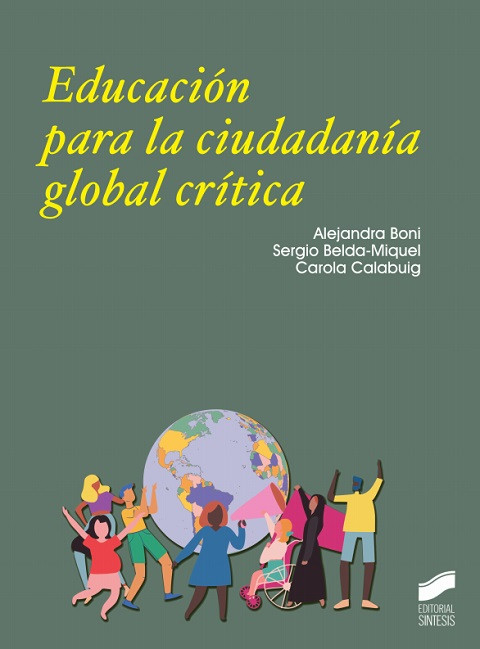 Educación para la ciudadanía global crítica 出版年份: 2020 作者: Alejandra Boni | Sergio Belda-Miquel | Carola Calabuig-Tormo 机构作者: Editorial Síntesis Este libro presenta la propuesta de la educación para la ciudadanía global crítica. Se trata de una invitación a articular una educación transformadora que resulte adecuada para generar una ciudadanía consciente, activa, movilizada, capaz de autoorganizarse, de oponer resistencias, de proponer alternativas y de encontrar caminos distintos ante la actual crisis multidimensional que ataca las bases de la convivencia y las propias condiciones que permiten la vida en el planeta.Las autoras y el autor del presente libro pretenden que este texto sirva, precisamente, para adquirir esa conciencia y para descubrir caminos para ponerla en práctica. Aunque se centra sobre todo en el ámbito educativo formal, ofrece también propuestas y reflexiones para el ámbito no formal y el informal e, incluso, para el diseño de políticas públicas.
 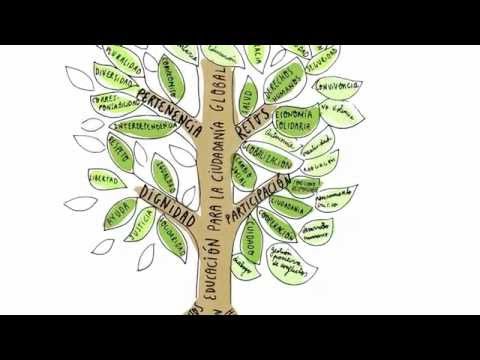 Educación para la Ciudadanía Global 出版年份: 2015 作者: AM Ketterer 机构作者: Universitat de Barcelona | Agencia Española de Cooperación Internacional para el Desarrollo (AECID) La Educación para la Ciudadanía Global orienta los aprendizajes hacia unas finalidades que están presentes en el currículo:- Promover el sentimiento de pertenencia a una comunidad planetaria.- Descubrir la interdependencia de los derechos humanos en la globalización.- Generar una cultura de la solidaridad.- Capacitar para la acción por un desarrollo humano y sostenible.Estos aprendizajes pueden relacionarse con los intereses del alumnado y, de hecho, muchos de ellos conectan con sus vivencias de la globalización.
 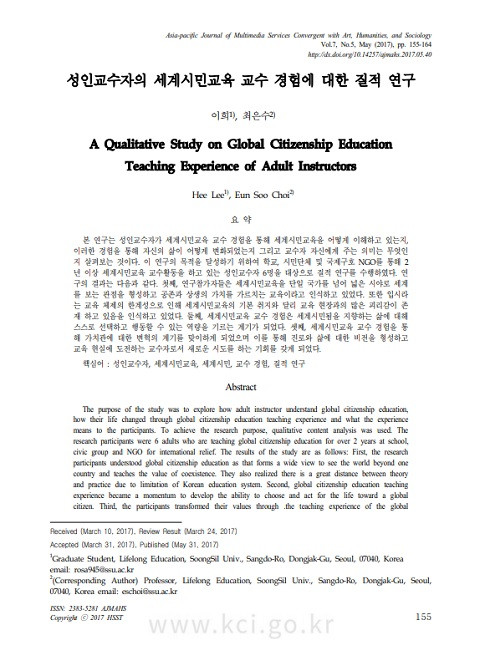 A Qualitative Study on Global Citizenship Education Teaching Experience of Adult Instructors (Asia-pacific Journal of Multimedia Services Convergent with Art, Humanities, and Sociology; Vol. 7, No.5) 出版年份: 2017 作者: Hee Lee | Eunsoo Choi 机构作者: Convergent Research Society Among Humanities, Sociology, Science, and Technology The purpose of the study was to explore how adult instructor understand global citizenship education, how their life changed through global citizenship education teaching experience and what the experience means to the participants. To achieve the research purpose, qualitative content analysis was used. The research participants were 6 adults who are teaching global citizenship education for over 2 years at school, civic group and NGO for international relief. The results of the study are as follows: First, the research participants understood global citizenship education as that forms a wide view to see the world beyond one country and teaches the value of coexistence. They also realized there is a great distance between theory and practice due to limitation of Korean education system. Second, global citizenship education teaching experience became a momentum to develop the ability to choose and act for the life toward a global citizen. Third, the participants transformed their values through .the teaching experience of the global citizenship education. They turned themselves into a teacher who challenges educational obstacles and had an opportunity to form a vision for career and life through global citizenship education teaching experience. 성인교수자의 세계시민교육 교수 경험에 대한 질적 연구 (예술인문사회 융합 멀티미디어 논문지; Vol. 7, No. 5) 出版年份: 2017 作者: Hee Lee | Eunsoo Choi 机构作者: Convergent Research Society Among Humanities, Sociology, Science, and Technology 본 연구는 성인교수자가 세계시민교육 교수 경험을 통해 세계시민교육을 어떻게 이해하고 있는지, 이러한 경험을 통해 자신의 삶이 어떻게 변화되었는지 그리고 교수자 자신에게 주는 의미는 무엇인지 살펴보는 것이다. 이 연구의 목적을 달성하기 위하여 학교, 시민단체 및 국제구호 NGO를 통해 2년 이상 세계시민교육 교수활동을 하고 있는 성인교수자 6명을 대상으로 질적 연구를 수행하였다. 연구의 결과는 다음과 같다. 첫째, 연구참가자들은 세계시민교육을 단일 국가를 넘어 넓은 시야로 세계를 보는 관점을 형성하고 공존과 상생의 가치를 가르치는 교육이라고 인식하고 있었다. 또한 입시라는 교육 체제의 한계성으로 인해 세계시민교육의 기본 취지와 달리 교육 현장과의 많은 괴리감이 존재 하고 있음을 인식하고 있었다. 둘째, 세계시민교육 교수 경험은 세계시민됨을 지향하는 삶에 대해 스스로 선택하고 행동할 수 있는 역량을 기르는 계기가 되었다. 셋째, 세계시민교육 교수 경험을 통해 가치관에 대한 변혁의 계기를 맞이하게 되었으며 이를 통해 진로와 삶에 대한 비전을 형성하고 교육 현실에 도전하는 교수자로서 새로운 시도를 하는 기회를 갖게 되었다.
  The Future of Education in Europe with Brikena Xhomaqi (LLLP) 出版年份: 2020 作者: Brikena Xhomaqi 机构作者: Bridge 47 Brikena Xhomaqi is the director of the Life Long Learning Platform (LLLP), an organisation that promotes life long learning and advocates for access to quality education for all. In this episode, Brikena discusses the future of education in Europe and the challenges and possibilities for global citizenship education.