
相关资源
探索丰富的全球公民教育资源,深化理解,促进研究、倡导、教学与学习。
共找到948条结果
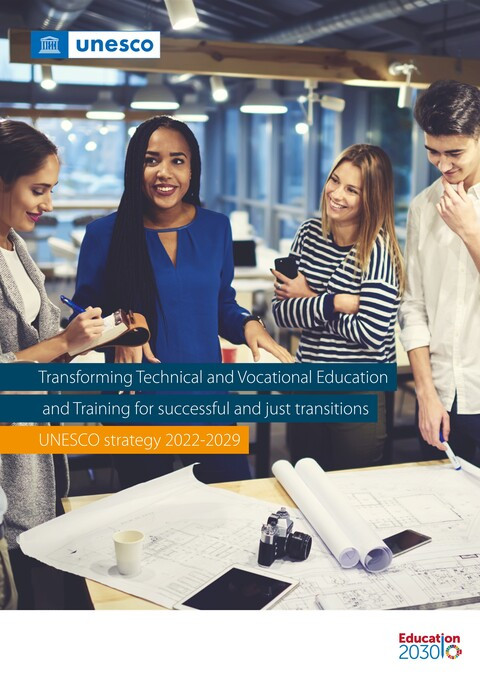 تحويل التعليم والتدريب في المجال التقني والمهني من أجل عملية انتقالية ناجحة وعادلة : استراتيجية اليونسكو 2022-2029 出版年份: 2022 机构作者: UNESCO نطاق ّ زمني يمتد من 2022 إلى 2029 ،تُ ّ رشد هذه االستراتيجية مساعي ّ منظ ّ مة األمم المت ّ حدة للتربية والعلم والثقافة )اليونسكو( لتعزيز تطوير ّ المهارات الر ّ امية لتحقيق الت ّ مكين، والت ُ وظيف الم ِنتج، والعمل الكريم، فضًاًل ً أشمل وأكثر رقمية ٍ عن تيسير انتقال المجتمعات واالقتصادات إلى واقع ّ ٍ ومراعاة للبيئة. اتساق ّ ا وأهداف التنمية المستدامة، وأجندة 2030 ّ للتعليم، وتوصيات قمة ّ تحويل الت ّ عليم، ستعكف اليونسكو على دعم تحويل الت ّ عليم والت ّ دريب التقني ّ والمهني في كاف ّ ة الد ٍ ول األعضاء والعمل عبر شراكات ّ ثنائي ّ ة ومتعددة ّ األطراف ومع المؤس ّ سات، والحكومات والقطاع الخاص، والكوادر الت ّ ربوية ّ والت ّ عليمي ّ ة في كاف ّ ة أرجاء العالم لوضع الت ّ عليم والت ّ دريب التقني والمهني على ّ رأس أجندة التعليم. لقد بات جلي ّ ا وجوب بذل جهود جمعي ّ ة لرفد الشباب والبالغات والبالغين ّ بمهارات جديدة تعينهم على إطالق عنان مكامنهم الجتياز الت ّغيرات ّ االجتماعي ّ ة، واالقتصادي ّ ة، والبيئي ّ ة ال ّ تي يمر بها العالم. Transforming Technical and Vocational Education and Training for Successful and Just Transitions: UNESCO Strategy 2022–2029 出版年份: 2022 机构作者: UNESCO This strategy covering 2022 to 2029 guides UNESCO to promote skills development for empowerment, productive employment and decent work, and facilitate the transition to more digital, green and inclusive economies and societies. In alignment with the Sustainable Development Goals, the Education 2030 Agenda, and the recommendations of the Transforming Education Summit, UNESCO will support the transformation of Technical and Vocational Education and Training in all Member States and will work alongside bilateral and multilateral partners, institutions, governments, the private sector and educators from all over the world to put TVET at the top of the education agenda. It is evident that collective efforts must be met to equip youth and adults in acquiring new skills, helping them unlock their potential to successfully navigate the social, economic, and environmental changes which the world is undergoing. Transformar la educación y formación técnica y profesional (EFTP) para transiciones exitosas y justas: Estrategia de la UNESCO 2022-2029 出版年份: 2022 机构作者: UNESCO Esta estrategia que abarca del 2022 al 2029, guía a la UNESCO para promover el desarrollo de competencias para el empoderamiento, empleo productivo y trabajo decente, y facilitar la transición hacia economías y sociedades más digitales, verdes e inclusivas. En línea con los Objetivos de Desarrollo Sostenible, la Agenda Educación 2030, y las recomendaciones de la Cumbre sobre la Transformación de la Educación, la UNESCO apoyará la transformación de la educación y formación técnica y profesional en todos los Estados Miembros y trabajara con socios bilaterales y multilaterales, instituciones, gobiernos, el sector privado y educadores de todo el mundo para posicionar a la EFTP como máxima prioridad en la agenda educativa. Es evidente que deben realizarse esfuerzos colectivos para preparar a los jóvenes y adultos en la adquisición de nuevas habilidades, ayudándolos a desarrollar su potencial para afrontar de manera exitosa los cambios sociales, económicos y medioambientales que el mundo está atravesando.
 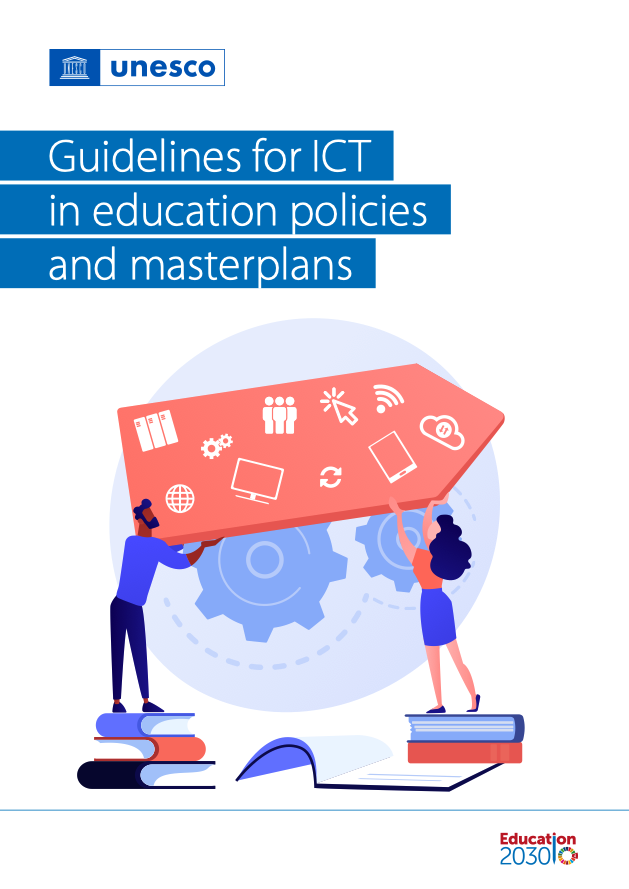 教育信息化政策和总体规划论纲 出版年份: 2022 作者: Fengchun Miao | Juan Enrique Hinostroza | Molly Lee | Shafika Isaacs | Dominic Orr | Fabio Senne | Ana-Laura Martinez | Ki-Sang Song | Alexander Uvarov | Wayne Holmes | Benjamin Vergel de Dios 机构作者: UNESCO 几十年来,全球各国都在尝试利用信息与通信技术(Information and Communication Technologies,ICTs)促进教育发展。这些由公共 机构推动并涉及商业技术公司的行动计划却产生了诸如数字不平等 进一步加剧以及高质量数字学习机会不均衡等矛盾。新冠疫情危机 加剧了这一趋势:在2020年新冠疫情危机最严峻的时期,全球至少 三分之一的学生无法获得远程教育。本出版物旨在引导政策制定者在采用技术时提供人 权保障;将包容、公平和性别平等视为解决方案的 核心;将技术创新视为共同利益。 基于以上原则, 本出版物采用以人为本的视角, 审视从低带宽技术到人工智能和互联网3.0或“元宇宙”等新兴技术的潜能。本出版物倡导国家政策应保护教师和学生的数字健康, 减少和中和数字碳排放足迹,并避免“技术解决方案主义”。本出版物提出了一个教育信息化政策规划框架以及 迭接式政策规划路线图,以引导对各地教育系统的数字化准备状态 的评估、对学习者和教师的需求分析,进而规划有充足的配套资源 支持的国家教育信息化方案。随后,本出版物还深入剖析了在教育 的不同领域实施教育信息化的国家总体规划的典型范例。
  Recommendation on Education for Peace and Human Rights, International Understanding, Cooperation, Fundamental Freedoms, Global Citizenship and Sustainable Development 出版年份: 2023 机构作者: UNESCO Building more peaceful, just, and sustainable societies starts with education. It influences all aspects of our daily lives and our overall prospects while being impacted by our health and environment. In the global landscape of worsening climate change, democratic backsliding, persistent inequalities, rising discrimination, hate speech, violence and conflict, it can be a tool to address and prevent these problems in the future. And it can also be a long-term investment with increasing returns if shaped and deployed effectively. The new UNESCO Recommendation on Education for Peace and Human Rights, International Understanding, Cooperation, Fundamental Freedoms, Global Citizenship and Sustainable Development, which is commonly referred to as the Recommendation on Education for Peace, Human Rights and Sustainable Development is a landmark guidance document that defines what needs to evolve in and through education to accomplish these goals. 평화, 인권, 국제이해, 협력, 기본적 자유, 세계시민성, 지속가능발전을 위한 교육 권고 出版年份: 2023 机构作者: 유네스코 이 권고는 ‘국제이해, 협력, 평화를 위한 교육과 인권, 기본적 자유에 관한 교육 권고(1974)’를 개정하여 2023년 제42차 유네스코 총회가 채택한 것이다.
 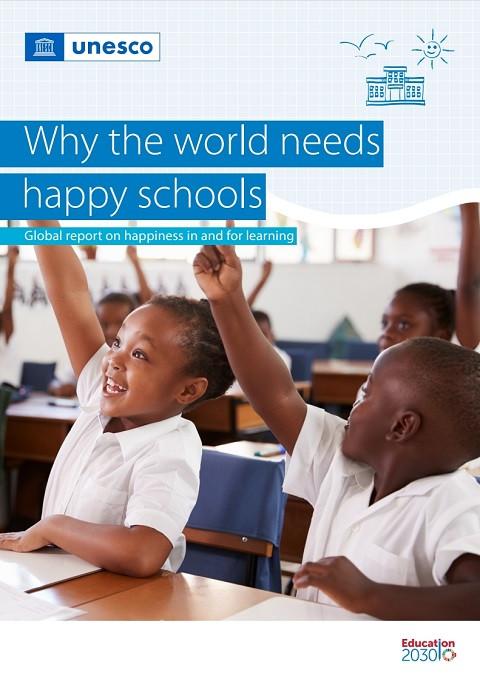 Why the World Needs Happy Schools: Global Report on Happiness In and For Learning 出版年份: 2024 机构作者: UNESCO Seeing a teacher smile. Hearing students laugh. Feeling a hug from a friend. Smelling fresh air. Tasting a nutritious school meal. These five senses can stimulate happiness at school and improve the learning experiences, outcomes and well-being of students. Through the ‘Happy Schools’ initiative, UNESCO is placing happiness at the core of the transformation of education. It encourages education systems to recognize happiness as both a means to and a goal of quality learning. The initiative is informed by a growing evidence base linking happiness with better learning, teaching, well-being and overall system resilience. This report presents the UNESCO global Happy Schools framework consisting of 4 pillars – people, process, place and principles – and 12 high-level criteria to guide the transformation of learning. It offers a holistic model for embedding happiness into education policies and cultivating it in schools through systemic changes. The report illustrates how the ‘Happy Schools’ initiative aims to create top-down and bottom-up transformation, encouraging governments to recognize happiness as a core objective of education. It supports the scaling of promising practices of joyful learning from the school to the policy level.
  Enhancing TVET through Digital Transformation in Developing Countries 出版年份: 2023 机构作者: UNESCO Technological advancements and digitalization are profoundly reshaping our work and lifestyle, business models and operations, and government policy choices. Digital transformation in technical and vocational education and training (TVET) is the planned and structured introduction of automated and streamlined processes within institutions and national technical and vocational education and training (TVET) systems through digital technology, with the goal of enhancing their scope, scale, efficiency and effectiveness and ultimately, driving their more sustainable development. This document provides overall perspective and five country case studies on digital transformation in TVET. Most countries studied face similar enabling factors: the digital infrastructure available; legal and policy frameworks; focused institutional change to improve the acquisition of digital skills; and the promotion of equality and inclusivity. To understand how digital transformation in TVET is occurring, the report analyses it at four levels: technical and technological development; curriculum and qualifications; teaching and learning using technology; and its contribution to the sustainability and resilience of societies.
  Global Education Monitoring Report 2024, Pacific: Technology in Education; A Tool on Whose Terms? 出版年份: 2024 机构作者: UNESCO | Global Education Monitoring Report Team | Commonwealth of Learning Information transmission and connectivity is crucial in the Pacific, a region characterized by high geographic dispersion. While the application of ICT in education has significant potentials, it is hindered by the region's limited and costly infrastructure. This edition accompanies the 2023 Global Education Monitoring Report, which acknowledges technology as a useful tool but invites the education community to question on whose terms it is deployed. The report considered four key policy areas of the Pacific Regional Education Framework (PacREF) (2018–2030): In terms of quality and relevance, mobile technology has offered an affordable and flexible approach to learning, and social media have improved communication between institutions, parents and learners. Moodle is the most widely used digital platform in the region. Textbooks are being digitalised and digital resources made available. Yet content is not always developed or adapted to local languages and cultural contexts. Open and distance learning has historically expanded learning pathways in the Pacific, specially in higher education and as a response to natural hazards. The University of South Pacific is a leading example of open and distance learning connecting campus across 12 countries. With the aim to enhance student outcomes and well-being, efforts have been made to incorporate digital skills into curricula and initiatives have increased outside formal education. Yet regulations do not adequately address threats from the use of technology to privacy, safety and well-being. With a focus on the teaching profession, countries leverage technology to provide training opportunities and transform the teaching profession. However, ICT training varies greatly across the region and limited digital infrastructure hinders technology integration into classrooms and teacher training. Three conditions need to be met for technology's potential to be fulfilled: equitable access to technology, appropriate governance and regulation, and sufficient teacher capacity. Supporting this publication is seven background thematic studies that provide a comprehensive overview of education technology issues; Commonwealth of Learning’s short case studies on some of its projects; a survey administered to key informed respondents from the region; and a series of country profiles on PEER, a policy dialogue resource describing policies and regulations related to technology in the region’s education systems.
  Global Education Monitoring Report 2024: Gender Report; Technology on Her Terms 出版年份: 2024 机构作者: UNESCO | Global Education Monitoring Report Team The 2024 Gender Report tells the increasingly positive story of girls’ education access, attainment and achievement, which is helping reverse decades of discrimination. But there is much more to say on gender equality in and through education. A companion to the 2023 GEM Report, this report looks at the interaction between education and technology with a gender lens. First, it looks at the impact of technology on girls’ education opportunities and outcomes. Although many instances are seen of radio, television and mobile phones providing a learning lifeline for girls, particularly in crisis contexts, gender divides exist globally in both access to technology and in digital skills, although the latter are smaller among youth compared to among adults. Biased social and cultural norms inhibit equitable access to and engagement with technology in and outside of school, with girls always left on the wrong side of the divide. While technology offers many girls opportunities to access important education content in safe environments, for instance on comprehensive sexuality education, technology in practice often exacerbates negative gender norms or stereotypes. Social media usage impacts learners’ and particularly girls’ well-being and self-esteem. The ease with which cyberbullying can be magnified through the use of online devices in the school environment is a cause of concern, as is the biased design of artificial intelligence algorithms. Second, the report looks into the role of education on the shape of future technological development. It shows that women struggle to pursue STEM careers, which manifests from an early age in the form of anxiety in mathematics and develops into a reluctance to study STEM subjects, ultimately resulting in a lack of women in the technology workforce. Women make up only 35% STEM graduates, and hold only a quarter of science, engineering and ICT jobs. Ensuring women participate on equal terms in shaping the world’s ongoing digital transformation will ensure that technology works for everyone and takes into consideration the needs of all humanity.