
相关资源
探索丰富的全球公民教育资源,深化理解,促进研究、倡导、教学与学习。
共找到2,255条结果
 Центральная Азия: устойчивое развитие и проблемы энергетического сотрудничества 出版年份: 2019 作者: Salygin V.I. | Petrova R.V. | Mustafinov R.K. Непрерывное усиление антропогенной деятельности приводит к ряду экологических дисбалансов и негативно отражается на несущей емкости биосферы. Синтез теоретических наработок глобальной экологической повестки и вопросов социально-экономического развития отражается в тезисах концепции устойчивого развития. В работе проведен детальный анализ оптимальных опций снижения экологических и социальных рисков в масштабе региона через адаптацию международного опыта к сложившейся фрагментированной гидроэнергетической системе Центральной Азии.
  Green Pack 出版年份: 2013 机构作者: Regional Environmental Center for Central and Eastern Europe Inspired by the political process “Environment for Europe”, in 2000 the Regional Environmental Center for Central and Eastern Europe (REC) launched a programme on education for sustainable development (ESD), sponsored by Toyota. This included the development and introduction of an innovative multimedia educational kit, the Green Pack, for school teachers and their students in Central and EasternEurope. Other ESD tools similar to the Green Pack have been developed and introduced in recent years to address different target groups. Currently, the main group of REC ESD tools includes:Green Pack, aimed at children aged between 11 and 15 and their teachersGreen Pack Junior, aimed at children aged between 7 and 10 and their teachersGreen Steps, aimed at citizens and families After 14 years of project implementation, REC ESD materials have been introduced in 19 countries in Europe and Asia. Since the Green Pack launch in 2001, around 40,000 teachers and over 4.5 million students have been educated, fundamentally changing the way in which the teaching of sustainability is approached. Each project has been developed in cooperation with businesses, governments, professional organisations and NGOs in order to foster community support across a broad spectrum of society. Many donors from the international, governmental, business and private communities have supported this process. URL:http://www.greenpackonline.org/english/menu.html Проект Зеленый покет 出版年份: 2013 机构作者: Regional Environmental Center for Central and Eastern Europe Регионaльный экологический центр для Центрaльной и Восточной Европы при поддержке Прогрaммы грaнтов в облaсти окружaющей среды «Тойоты» и Министерствa окружaющей среды Финляндии в 2000 году запустили программу по образованию в интересах устойчивого развития (ОУР), спонсируемой Toyota. Это включало разработку и внедрение инновационного мультимедийного образовательного набора «Зеленый пакет» для школьных учителей и их учеников в Центральной и Восточной Европе. В последние годы были разработаны и внедрены другие инструменты ОУР, аналогичные Green Pack, для охвата различных целевых групп. После 14 лет реализации проекта материалы ОЭЗ РЭЦ были внедрены в 19 странах Европы и Азии. Со времени запуска Green Pack в 2001 году было обучено около 40 000 учителей и более 4,5 миллионов студентов, что коренным образом изменило подход к обучению устойчивости. Каждый проект был разработан в сотрудничестве с предприятиями, правительствами, профессиональными организациями и НПО в целях содействия поддержке общин в широком спектре общества. Многие доноры из международных, правительственных, деловых и частных сообществ поддержали этот процесс. URL:http://education.rec.org/ru/main.php?lang=ru
 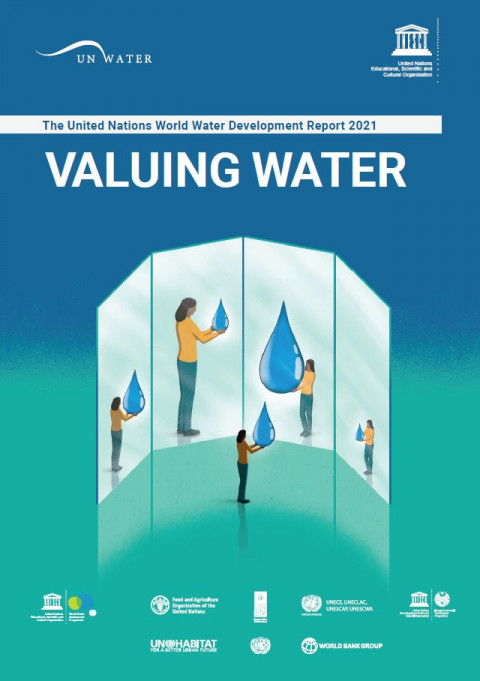 The United Nations World Water Development Report 2021: Valuing Water 出版年份: 2021 机构作者: UNESCO World Water Assessment Programme (WWAP) The 2021 edition of the United Nations World Water Development Report focuses on valuing water. There is enough water for all provided we use and manage it efficiently. But we don’t. We invest too little, and ineffectively. We use too much water, creating scarcities. Quality is suffering and so is the environment.The value we place on water varies, depending upon who is using it, and why. Value can be a guide to what our goals should be, what actions are needed, and where we should invest. Many of our problems arise because we don’t value water highly enough; all too often water is not valued at all.This report explains various approaches to valuing water for environmental considerations, water-related infrastructure, drinking water, sanitation and hygiene. It looks at valuation issues in food and agriculture, business, industry, energy and financing. And it highlights the perspectives of different value systems and cultures, and associated social and gender-based considerations.
  Bridge Zambia Project Report 出版年份: 2019 机构作者: Korean National Commission for UNESCO | Zambia National Commission for UNESCO The Bridge Zambia Project (the Project) has been implemented jointly between the Korean National Commission for UNESCO (KNCU) and its partners in Zambia since October 2010. In March 2019, KNCU’s involvement in the Project will come to an end and Zambia will take over full responsibility for the Project as it goes forward. The Project has supported grassroots activities through the establishment of a Community Learning Centre (CLC), which acts as a hub of community-led development activities in non-formal education. The Project has mobilized and empowered communities and local leadership to take charge of non-formal education programmes with the aim of assisting Zambia to attain UNESCO’s Education for All goals and UN Sustainable Development Goal 4 (SDG 4), concerning education quality.
 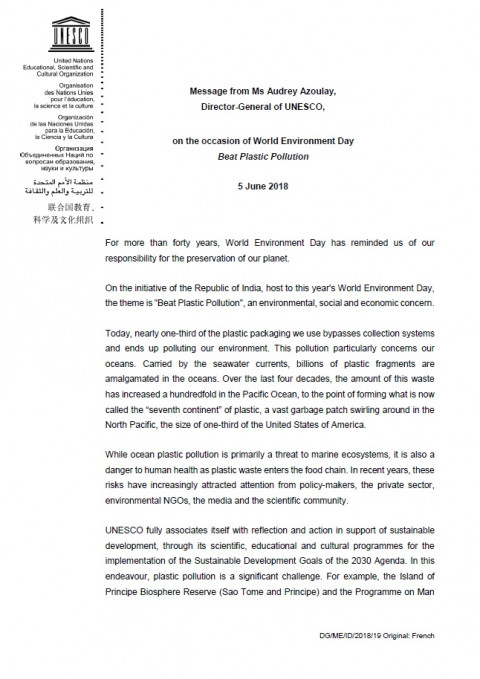 Message from Ms Audrey Azoulay, Director-General of UNESCO, on the occasion of World Environment Day, 5 June 2018 出版年份: 2018 机构作者: UNESCO. Director-General, 2017-2025 (Azoulay, A.) This message was delivered by Audrey Azoulay, Director-General of UNESCO, on the occasion of World Environment Day, on 5 June 2018. 联合国教科文组织总干事奥德蕾·阿祖莱 世界环境日致辞:“塑战速决” 出版年份: 2018 机构作者: UNESCO. Director-General, 2017-2025 (Azoulay, A.) 2018年6月5日, 联合国教科文组织总干事奥德蕾·阿祖莱世界环境日致辞
  2030 SDGs GAME 出版年份: 2016 机构作者: Imacocollabo The 2030 SDGs Game is a multiplayer, in-person, card-based game that simulates taking the “real world” into the year 2030. Designed in Japan in 2016, this experience has become a powerful and impactful social phenomenon in Japan, earning extensive media coverage and reaching over 12,000 participants last year. 2030 SDGs Game events are held in corporate, governmental, educational, and community settings, and now has over 100 trained facilitators in a rapidly growing community within Japan. Now, due to a growing demand to bring the game to the rest of the world, we have created an English edition and are beginning to introduce it to a wider audience overseas. The game is designed to be played with anywhere from 5 to 50 players. (That number can be expanded to a maximum of around 200 with multiple parallel ‘worlds’ operating at the same time.) Play time is approximately 1 hour; with the necessary explanation and reflection afterward, it requires a minimum of 90 minutes, and generally works best in a 2 ½ hour time frame.
  تقرير أهداف التنمية المستدامة 2017 出版年份: 2017 机构作者: United Nations (UN) يستعرض تقرير أهداف التنمية املستدامة لعام 2017 التقدم المحرز نحو تحقيق الأهداف السبعة عشر في السنة الثانية من تنفيذ خطة التنمية المستدامة لعام 2030 .ويستند التقرير إلى أحدث البيانات المتاحة. وهو يسلط الضوء على المكاسب والتحديات في الوقت الذي يتحرك فيه المجتمع الدولي صوب تحقيق الطموحات والمباديء التي تبناها في خطة عام 2030.
  Egyptian Youth Rethink the Future of Wellbeing in 2050: Report of the Futures Literacy Lab-novelty; Online, 21-24 July 2020 出版年份: 2020 机构作者: UNESCO Cairo The UNESCO (Cairo Office and Research, Policy and Foresight Section) and the Egyptian Ministry of Youth and Sport, with support of Bibliotheca Alexandrina, UNFPA and UN Women, organized a Futures Literacy Laboratory - Novelty (FLL-N) entitled “Egyptian Youth Rethink the Future of Wellbeing in 2050”. Held online during 21-24 July 2020, and deploying the latest advances in anticipatory systems thinking and collective intelligence processes, the Lab brought together around 30 persons from across Egypt for 8-hours intensive work spread over a week’s time.Thirty young participants explored the topic of ‘wellbeing’ in Egypt in 2050 using a tool called the Futures Literacy Lab-Novelty (FLL-N). Wellbeing is an open concept that invites many different ways of defining what it means to ‘live well’. The participants engaged in learning-by-doing activities that exercised their imaginations, exploring questions like, how do people in 2050 in Egypt describe ‘wellbeing’? What is daily life like such that people in 2050 believe that they have achieved ‘wellbeing’? By working together to imagine the future this Lab provided an opportunity to better understand the origins of what we imagine, why and how we create the images of the future, and crucially the powerful influence such images have on our fears and hopes, perceptions and choices.