
相关资源
探索丰富的全球公民教育资源,深化理解,促进研究、倡导、教学与学习。
共找到2,275条结果
 함께 그려보는 우리의 미래 - 교육을 위한 새로운 사회계약 出版年份: 2021 机构作者: International Commission on the Futures of Education | 유네스코 우리의 인류와 지구는 위협을 받고 있습니다. 전염병은 우리의 연약함과 상호 연결성을 증명하는 역할을 했을 뿐입니다. 이제 방향을 바꾸고 우리의 미래를 재창조하기 위해 함께 취하는 긴급 조치가 필요합니다. 국제미래교육위원회는 심오한 변화를 가져오는 교육의 힘을 인정합니다. 우리는 모든 어린이, 청소년 및 성인을 위한 양질의 교육에 대한 권리를 보장하고 지속 가능한 집합적 미래를 위한 경로로서 교육의 변혁적 잠재력을 완전히 실현하겠다는 약속을 이행해야 하는 이중 과제에 직면해 있습니다. 이를 위해서는 불의를 바로잡으면서 미래를 변화시킬 수 있는 교육을 위한 새로운 사회계약이 필요합니다.이 새로운 사회 계약은 인권에 기초해야 하고 비차별, 사회 정의, 생명 존중, 인간 존엄성 및 문화적 다양성의 원칙에 기초해야 합니다. 그것은 배려, 호혜주의, 연대의 윤리를 포함해야 합니다. 공공의 노력과 공동선으로서의 교육을 강화해야 합니다.작성 기간이 2년이고 약 100만 명이 참여하는 글로벌 협의 프로세스를 기반으로한 이 보고서는 우리가 모두를 위해 평화롭고 정의로우며 지속 가능한 미래를 건설하는 데 도움이 될 교육을 위한 새로운 사회 계약을 맺도록 전 세계의 정부, 기관, 조직 및 시민을 초대합니다.여기에 제시된 비전, 원칙 및 제안은 단지 출발점일 뿐입니다. 그것들을 번역하고 맥락화하는 것은 공동의 노력입니다. 많은 밝은 점이 이미 존재합니다. 이 보고서는 이를 캡처하고 구축하려고 시도합니다. 매뉴얼도 청사진도 아닌 중요한 대화의 시작입니다.
  Evaluation of UNESCO’s Action to Revitalize and Promote Indigenous Languages: Within the Framework of the International Year of Indigenous Languages 出版年份: 2021 作者: Claire Thomas | Lydia van de Fliert | Oliver Loode | Silvia Quattrini | Mihaela Cojocaru 机构作者: UNESCO To draw attention to the critical loss of indigenous languages and the urgent need to preserve, revitalize and promote them and to take further urgent steps at the national and international levels, in 2016 the United Nations General Assembly in its resolution 71/178 proclaimed the year beginning on 1 January 2019 the International Year of Indigenous Languages (hereafter the IYIL2019). UNESCO was invited to serve as the lead agency for the Year and the coordination role was internally assigned to the Communication and Information Sector. UNESCO requested an evaluation of its action within the IYIL2019 with a view to learning from its experience during 2019 and further strengthening its coordination and implementation role during the upcoming Decade of Indigenous Languages (2022-2032).As the lead agency for the IYIL2019, UNESCO played a key role raising awareness of not only the critical loss of indigenous languages, but also the positive value and meanings that indigenous languages provide to Indigenous Peoples and humanity at large. The evaluation found that UNESCO led the development of an ambitious and relevant Action Plan for the Year. It also succeeded in setting up an 18-member Steering Committee composed of representatives of Member States, Indigenous Peoples and the UN three-party indigenous mechanisms. UNESCO staff implemented more than 80 activities around the world, with three-quarters of these at the global level and the majority of national events in Latin America and the Caribbean region. It also maintained an interactive website, which registered more than 880 events around the world.Leading and coordinating the IYIL2019 was not without its challenges, particularly as UNESCO was asked to lead this effort within existing resources and relying on a very small core team. Its programme sectors found creative solutions for indigenous language programming, but without a budget for intersectoral activities, collaboration between sectors was limited to information sharing and activities in Africa and the Arab States were few. The evaluation also found that the Action Plan lacked a meaningful results framework and thereby did not facilitate the monitoring of the IYIL2019. Partnerships with UNESCO networks and the wider UN system were underutilized and many opportunities for future collaboration have been highlighted for the upcoming Decade.
  Mapping the Mainstreaming of Education for Sustainable Development Across SDG 4.7: A Comparative Analysis of the Mainstreaming of ESD in Cyprus, Greece, Malta and Turkey 出版年份: 2020 作者: Devonne Goad 机构作者: UNESCO The objective of the present report is to summarize the state of ESD implementation in Cyprus, Greece, Malta and Turkey. This report summarizes and shares the successes and challenges highlighted within National Implementation Reports, as such a summary could be an important contribution to UNESCO, as the organization is currently facilitating dialogues to establish the direction of the new global programme for ESD. For that reason, these four countries within the regional scope of the UNESCO Regional Bureau in Venice, Italy, were chosen for the preliminary study. For the purpose of this study, the binary data contained within the National Implementation reports of Cyprus, Greece, Malta and Turkey were extracted to summarize the state of ESD implementation.
  Caja de herramientas de educación ambiental para el desarrollo sostenible en Ecuador 出版年份: 2021 作者: Queenny López Alvarado | Sandy Paulette López 机构作者: Organización de las Naciones Unidas para la Educación, la Ciencia y la Cultura (UNESCO) El presente documento tiene como base conceptual los principios de la Educación para la Sostenibilidad formulados por organismos internacionales y los principios de Educación Ambiental contemplados en documentos nacionales. La Caja de herramientas de EADS en Ecuador es un instrumento complementario al amplio material que han desa- rrollado distintas instituciones; es, como su nombre lo indica, una guía de herramientas pedagógicas que busca incorporar los principios de conservación ambiental a todos los niveles de educación básica. Su elaboración se realizó a través de un proceso participativo de diálogo con varias instituciones y organizaciones del sector público y privado, la sociedad civil y organismos de cooperación.Este documento enfatiza temáticas sobre cambio climático, economía circular y estilos de vida sostenibles, que pueden ser trabajadas por niños, niñas y adolescentes entre tres y catorce años, mediante la aplicación de activi- dades que despierten y guíen su proceso de concienciación y sensibilización ambiental, no solo como parte del currículo académico, sino como una nueva forma de transformar su realidad, al convertirse en protagonistas de la nueva generación que protege y trabaja por el bien del planeta y de quienes lo habitamos.
  Caribbean Sheroes Initiative: Civil Society Organizations Advancing Gender Equality; Methods & Tools 出版年份: 2021 作者: Joan Andrea Hutchinson 机构作者: Institute for Gender and Development Studies (IGDS) | UNESCO This Toolkit recognizes the achievements and commitment of women activists that engage in Civil Society Organizations (CSOs). It documents the practice and lessons learned of twelve Jamaican Civil Society Organizations that have worked relentlessly to advance women’s rights and social justice, fostering a less violent society and more equal gender relations grounded on human rights.
 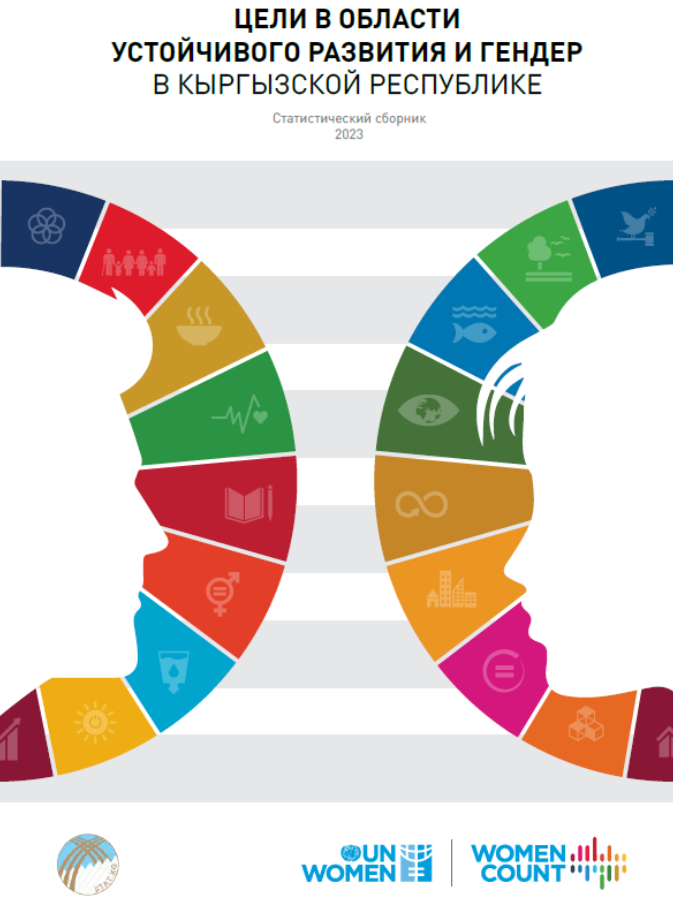 "Sustainable Development Goals and Gender in Kyrgyzstan" New Statistical Publication 出版年份: 2023 机构作者: National Statistical Committee of the Kyrgyz Republic | United Nations Entity for Gender Equality and the Empowerment of Women (UN Women) This publication is intended to inform the public and government officials about the current status and progress towards achieving sustainable development in Kyrgyzstan, promote informed policy and management decisions, and help identify further priority steps to achieve the SDGs and women’s empowerment. Статистический сборник "Цели в области устойчивого развития и гендер в Кыргызской Республике" 出版年份: 2023 机构作者: National Statistical Committee of the Kyrgyz Republic | United Nations Entity for Gender Equality and the Empowerment of Women (UN Women) Целью настоящего издания является информирование общественности и работников государственного управления о текущем состоянии и прогрессе в достижении устойчивого развития в Кыргызской Республике, а также для принятия обоснованных политических и управленческих решений и содействия в определении дальнейших приоритетных шагов для достижения успеха в реализации ЦУР и расширения прав и возможностей женщин.
 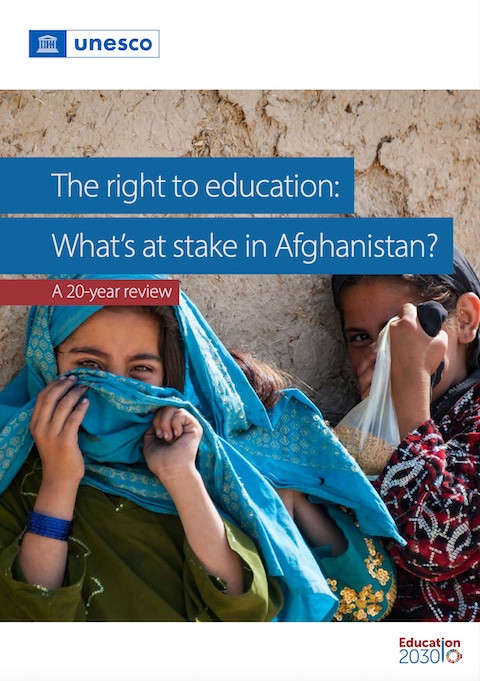 The Right to Education: What’s at Stake in Afghanistan?; A 20-Year Review 出版年份: 2021 机构作者: UNESCO This report takes stock of the achievements in education made by Afghanistan over the past 20 years and sets out immediate action to safeguard the right to education for all learners following deep political change in the country in 2021.Although Afghanistan lags far behind countries across South and West Asia on most development indicators, it has made impressive progress in education over two decades. Enrolment has increased ten-fold, with substantial gains for girls and female literacy. Female teachers have been hired. Steady efforts have been made to expand the school network across the country.The country has ratified key international normative instruments relating to the right to education; enshrined this right in the Constitution and adopted a wide range of policy measures to increase access, improve education quality and reduce gender, socio- economic and rural/urban disparities.But the challenges remain colossal, with half the primary school-aged children not enrolled in school and very low learning outcomes. The country is highly dependent on external aid to sustain its education system. It needs to uphold state obligations on the right to education without any discrimination and continue removing barriers that impede progress towards the Sustainable Development Goal on education to build the country’s future.
 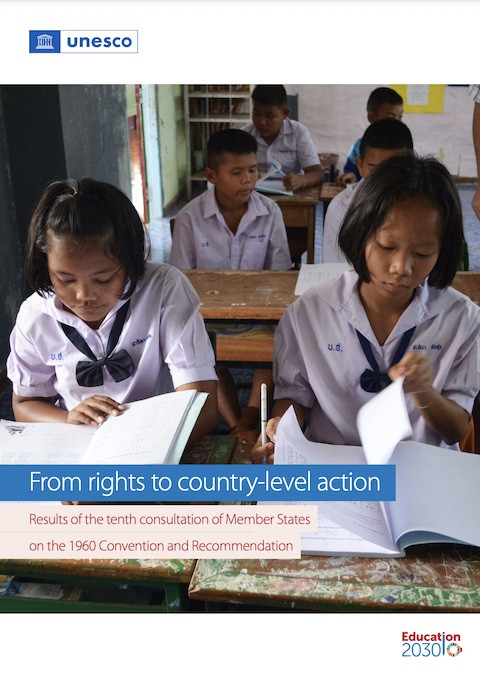 From Rights to Country-Level Action: Results of the Tenth Consultation of Member States on the 1960 Convention and Recommendation 出版年份: 2022 作者: Rolla Moumné | Sharlene Bianchi 机构作者: 유네스코 The year 2020 marked a turning point for education worldwide. The impact of the COVID-19 pandemic not only amplified the difficulties and revealed existing weaknesses, but also brought the unpreparedness and lack of resilience of national education systems to the fore.The tenth consultation on the 1960 Convention against Discrimination in Education was conducted in precisely this context.Providing a valuable opportunity for States to take stock of the progress made in implementing Convention and sharing interesting national practices, the Consultation revealed continuous and new challenges the education sector faces. The unique timing of the consultation also created an opportunity to report on actions taken to faceadverse effects of the pandemic. This report analyzes and presents the Consultation findings, draws trends, and provides guidance for action. It shows how, by implementing the provisions of the Consultation, States can accelerate progress towards achieving Sustainable Development Goal 4, while invites a reflection on possibly reviewing the framework of the right to education to further respond to new challenges and put an end to increased inequalities worldwide.
  Policy Review Report: Early Childhood Care and Education in Kazakhstan 出版年份: 2005 机构作者: UNESCO UNESCO launched a joint UNESCO/OECD Early Childhood Policy Review Project as a component of the 2004-2005 plan. The purpose is to provide selected countries with an opportunity to review their early childhood policies and identify concrete options and strategies for improvement. Four countries were chosen based on their expressed interest - Brazil, Indonesia, Kazakhstan and Kenya. This review was conducted as part of Kazakhstan's participation in the project, which is being implemented in collaboration with the OECD.