
相关资源
探索丰富的全球公民教育资源,深化理解,促进研究、倡导、教学与学习。
共找到3,433条结果
 Third Global Conference on Strengthening Synergies Between the Paris Agreement and the 2030 Agenda for Sustainable Development: Building the Evidence Base for Synergistic Action in Support of Raising Climate and SDGs Ambition 出版年份: 2022 机构作者: UN. Department of Economic and Social Affairs (UN. DESA) The Third Global Conference on Strengthening Synergies Between the Paris Agreement and the 2030 Agenda For Sustainable Development was co-convened by the United Nations Department of Economic and Social Affairs (UNDESA) and the Secretariat of the United Nations Framework Convention on Climate Change (UNFCCC), and it was hosted by the Ministry of the Environment of Japan, in partnership with the United Nations University (UNU) and the Institute for Global Environmental Strategies (IGES).
  Global Environment Outlook 4 (GEO-4): Environment for Development 出版年份: 2007 机构作者: United Nations Environment Programme (UNEP) The fourth Global Environment Outlook – environment for development ( GEO-4 ) places sustainable development at the core of the assessment, particularly on issues dealing with intra- and intergenerational equity. The analyses include the need and usefulness of valuation of environmental goods and services, and the role of such services in enhancing development and human well-being, and minimizing human vulnerability to environmental change. The GEO-4 temporal baseline is 1987, the year in which the World Commission on Environment and Development (WCED) published its seminal report, Our Common Future . The Brundtland Commission was established in 1983, under UN General Assembly resolution 38/161 to look at critical environment and development challenges. It was established at a time of an unprecedented rise in pressures on the global environment, and when grave predictions about the human future were becoming commonplace. تقرير التوقعات البيئية العالمية الرابع: البيئة من أجل التنمية المستدامة 出版年份: 2007 机构作者: United Nations Environment Programme (UNEP) تضع توقعات البيئة العالمية الرابعة - البيئة من أجل التنمية (GEO-4) التنمية المستدامة في صميم التقييم ، لا سيما فيما يتعلق بالقضايا التي تتناول المساواة بين الأجيال وبين الأجيال. تشمل التحليلات الحاجة والفائدة في تقييم السلع والخدمات البيئية ، ودور هذه الخدمات في تعزيز التنمية ورفاهية الإنسان ، وتقليل تعرض الإنسان للتغير البيئي. خط الأساس الزمني لتوقعات البيئة العالمية الرابع هو عام 1987 ، وهو العام الذي نشرت فيه اللجنة العالمية للبيئة والتنمية (WCED) تقريرها الأساسي ، مستقبلنا المشترك. تأسست لجنة برونتلاند في عام 1983 ، بموجب قرار الجمعية العامة للأمم المتحدة 38/161 للنظر في تحديات البيئة والتنمية الحرجة. تم تأسيسه في وقت ارتفاع غير مسبوق في الضغوط على البيئة العالمية ، وعندما أصبحت التنبؤات الخطيرة حول مستقبل الإنسان أمرًا شائعًا.
  환경과 국제협력 (해외환경정책동향 2021-04호) 出版年份: 2021 机构作者: 한국환경연구원 국제사회는 개발도상국의 재정·기술·역량개발에 지원함으로써 개발도상국이 더욱 적극적으로 저탄소 전환과 넷제로(Net-Zero) 달성에 동참하도록 협조할 필요가 있다. 어떤 국가의 탄소저감 노력으로 얻게 되는 혜택은 모든 국가가 함께 누릴 수 있다. 반대로 어떤 국가가 탄소저감 노력을 외면했을 때, 그로 인한 비용 또한 모든 국가가 같이 짊어져야 한다. 그래서 국제협력은 글로벌 넷제로 달성을 위해 필수적이며 공적개발원조(ODA: Official Development Assistance) 또한 필요한 역할을 해야만 한다. ODA, 특히 무상원조는 인도주의적인 목적으로 시행되기도 하지만 산업·경제협력 측면에서 ODA 외에 공적·민간 투자를 촉진할 수 있다는 점에서 중요하다. 본고에서는 현재 글로벌 탄소중립 ODA와 우리나라의 탄소중립 ODA 추진 현황을 살펴보고, 마지막으로 향후 탄소중립 ODA가 나아가야 할 방향에 대해 고찰해 보고자 한다. 본 저작물은 한국환경연구원에서 2021년 작성하여 공공누리 제4유형으로 개방한 '환경과 국제협력 (해외환경정책동향 2021-04호)'을 이용하였으며, 해당 저작물은 한국환경연구원 홈페이지(https://www.kei.re.kr/)에서 무료로 내려받으실 수 있습니다.
 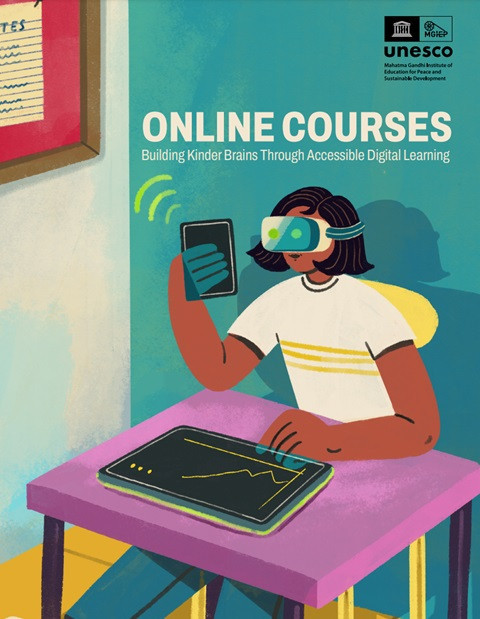 Online Courses: Building Kinder Brains Through Accessible Digital Learning Course Brochure 出版年份: 2023 机构作者: Mahatma Gandhi Institute of Education for Peace and Sustainable Development (MGIEP) UNESCO MGIEP focuses on achieving the United Nations (UN) Sustainable Development Goal (SDG) 4, Target 7 towards education for building peaceful and sustainable societies across the world by developing programmes that promote social and emotional learning, innovate digital pedagogies and empower the youth. UNESCO MGIEP‘s Social Emotional Learning (SEL) courses are research and evidence based with built-in assessments. The courses are multi-modal, interactive and self-paced, and are designed to build intellectual and emotional intelligence among learners. Currently the courses are available in English and are being adapted to Hindi, Spanish and Russian.
  Girls’ Education and Climate Change: Investing in Education for Resilience 出版年份: 2021 机构作者: Inter-agency Network for Education in Emergencies (INEE) This brief was developed to support dissemination of key messages in Mind the Gap 2: Seeking Safe and Sustainable Solutions for Girls’ Education in Crises. It provides an overview of evidence and gaps on the relationship between girls’ education and climate crises, and recommends actions to mitigate the impacts of climate change on girls’ education and promote resilience. تعليم الفتيات وتغيّر المناخ: الاستثمار في التعليم من أجل القدرة على التأقلم 出版年份: 2021 作者: Inter-agency Network for Education in Emergencies (INEE) 机构作者: Inter-agency Network for Education in Emergencies (INEE) تم تطوير هذا الملّخص لدعم نشر الرسائل الرئيسية في إدراك الفجوة 2: البحث عن حلول آمنة ومستدامة لتعليم الفتيات في الأزمات. يقدم نظرة عامة على الأدلة والثغرات في العلاقة بين تعليم الفتيات وأزمات المناخ ، ويوصي باتخاذ إجراءات للتخفيف من آثار تغيّر المناخ على تعليم الفتيات وتعزيز المرونة.
  The United Nations World Water Development Report 2020: Water and Climate Change 出版年份: 2020 机构作者: UNESCO World Water Assessment Programme (WWAP) The 2020 edition of the UN World Water Development Report addresses the critical linkages between water and climate change in the context of sustainable development. It also serves as a guide for concrete actions to address these challenges. It outlines actions, supported by examples from across the world, in three areas: first, enabling people to adapt to the impacts of climate change; second, improving the resilience of livelihoods; and, third, reducing the drivers of climate change. Critically, measures to improve the efficiency of water use in agriculture is inextricably linked to multiple SDGs. These include those related to zero hunger (SDG 2), availability and access to water (SDG 6), climate action (SDG 13), and promoting the sustainable use of ecosystem services (SDG 15).The Report concludes that reducing both the impacts and drivers of climate change will require substantial changes in the way we use and reuse the Earth’s limited water resources. The experience and expertise needed to achieve this goal are brought together in the Report through UN-Water’s Members and Partners. It will support policy makers in tackling the challenges of climate change by harnessing the wide-ranging opportunities that improved water management offers for adaptation, mitigation and resilience in a rapidly changing world. Rapport mondial des Nations Unies sur la mise en valeur des ressources en eau 2020: l'eau et les changements climatiques 出版年份: 2020 机构作者: UNESCO World Water Assessment Programme (WWAP) L’édition 2020 du Rapport mondial sur la mise en valeur des ressources en eau montre les liens essentiels entre l’eau et les changements climatiques dans le cadre du développement durable. Le rapport sert également de guide pour prendre des mesures concrètes et relever ces défis. Il présente des actions, illustrées par des exemples provenant du monde entier, liées à trois domaines : premièrement, permettre aux personnes de s’adapter aux effets des changements climatiques ; deuxièmement, renforcer la résilience des moyens de subsistance ; enfin, réduire les moteurs des changements climatiques. Les mesures visant à accroître l’efficacité de l’utilisation de l’eau dans le domaine agricole – tout en garantissant l’accès à l’eau de groupes vulnérables tels que les petits exploitants agricoles – sont incontestablement liées à de multiples ODD. Il s’agit de ceux liés à l’objectif zéro faim (ODD 2), à la disponibilité et l’accès à l’eau (ODD 6), à l’action climatique (ODD 13) et à la promotion de l’utilisation durable des services écosystémiques (ODD 15).Le rapport conclut sur le fait que réduire tant les effets que les facteurs des changements climatiques exigera des transformations importantes dans la manière dont nous utilisons et réutilisons les ressources en eau limitées de la planète. L’expérience et l’expertise nécessaires pour atteindre cet objectif sont rassemblées dans ce rapport par les membres et partenaires d’ONU-Eau. Il contribuera à aider les dirigeants à lutter contre les difficultés liées aux changements climatiques en saisissant les vastes opportunités qu’offrent l’amélioration de la gestion de l’eau pour l’adaptation, la mitigation et la résilience dans un monde en rapide évolution.
 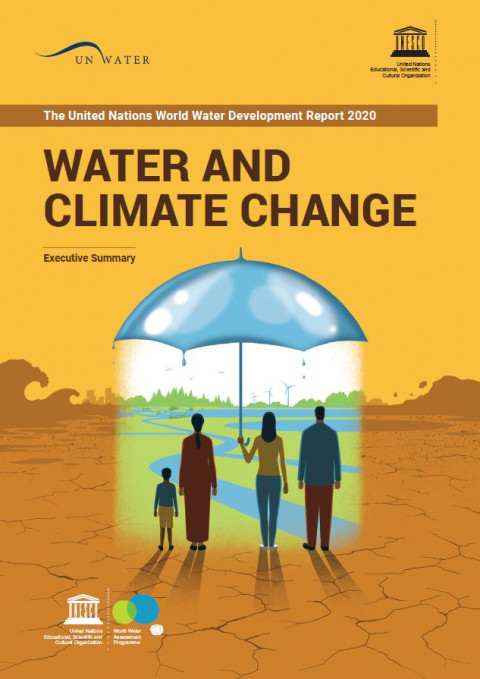 [Summary] The United Nations World Water Development Report 2020: Water and Climate Change; Executive Summary 出版年份: 2020 机构作者: UNESCO World Water Assessment Programme (WWAP) The 2020 edition of the United Nations World Water Development Report (WWDR) addresses the critical linkages between water and climate change in the context of the broader sustainable development agenda. The report is not meant to be a purely technical examination of the impacts of climate change on the hydrological cycle. Rather, the report focuses on the challenges, opportunities and potential responses to climate change – in terms of adaptation, mitigation and improved resilience – that can be addressed through improving how water resources are management and used, while providing water supply and sanitation services for all in a sustainable manner. In doing so, the report tackles two of the most critical crises the world will continue facing over the next several decades: Water (in)security and climate change.