
相关资源
探索丰富的全球公民教育资源,深化理解,促进研究、倡导、教学与学习。
共找到3,454条结果
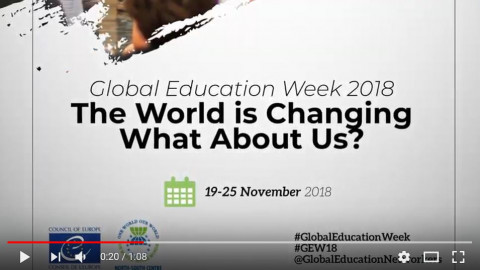 [Video] Global Education Week 2018 Highlights 出版年份: 2019 机构作者: North-South Centre of the Council of Europe This video clip shows some highlights from the 2018 edition (The world is changing: What about us?) of the Global Education Week (GEW).#GlobalEducationWeek#GEW18
 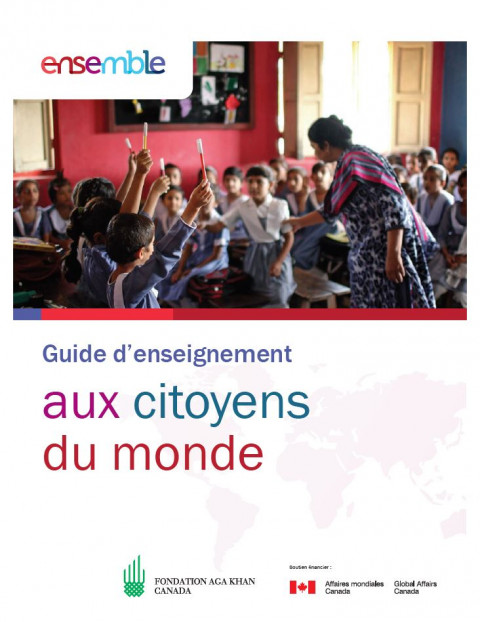 Guide d’enseignement aux citoyens du monde 出版年份: 2016 机构作者: La Fondation Aga Khan Cette ressource est destinée aux corps enseignant des niveaux intermédiaire et secondaire et a pour but d’instruire les jeunes sur le développement international et les thèmes qui y sont liés, notamment la citoyenneté mondiale. Les activités qui y sont présentées visent à approfondir les connaissances des élèves sur l’interdépendance des pays, les facteurs qui exacerbent les inégalités à l’échelle mondiale et les solutions efficaces et durables pour réduire la pauvreté dans le monde. Nous espérons que le contenu incitera les élèves à agir de façon concrète pour améliorer la vie des gens dans le monde entier.
 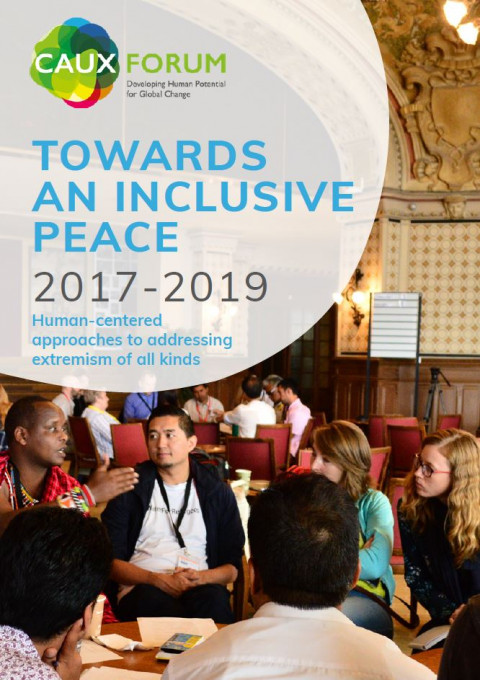 Towards an Inclusive Peace, 2017-2019: Human-centered Approaches to Addressing Extremism of All Kinds 出版年份: 2018 作者: Eliana Jimeno | Johannes Langer 机构作者: Initiatives of Change Switzerland Current approaches to violent extremism which excessively focus on counter terrorism and increasing military capacity, have failed to either stop violence or create peace. On the contrary, they have led to distrust in government institutions and alienation of large sections of the population.Doubling down on these past approaches will not resolve the issue. A new approach is needed and Towards an Inclusive Peace can offer it. Come and learn about human-centred approaches that prioritize sustainable peace, while dealing with root causes, advancing human rights, strengthening communities and enabling development.
 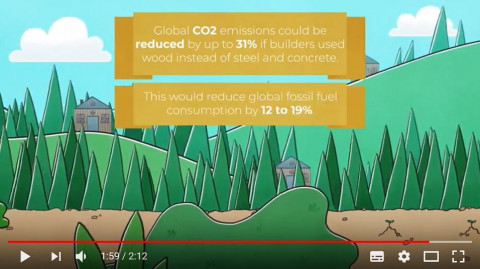 [Video] The Three Little Pigs and Climate Change: The Benefits of Wood as a Low-emission Construction Material 出版年份: 2018 机构作者: United Nations Economic Commission for Europe (UNECE) | Poland. Ministry of Environment | State Forests Poland Wood can play a crucial role in cutting down emissions when replacing more carbon-intensive materials in the construction sector. The cartoon entitled “The Three Little Pigs & Climate Change”, reminds us that carbon emissions of concrete and steel respectively are 40 and 30 percent higher than those of wood.This video was a joint production of the Forest, Land and Housing Division of the United Nations Economic Commission for Europe, the Polish Ministry of the Environment and State Forests Poland. The video was launched at the 24th Conference of the Parties to the UN Framework Convention on Climate Change (COP24), held in Katowice, Poland, from 2 to 14 December 2018, where global action to reduce emissions and keep global warming within the temperature limits of the Paris Agreement was discussed.UNECE works to promote sustainable solutions for climate neutral buildings:http://www.unece.org/housing.htmlTogether with FAO, it also works to promote the sustainable management of forests:http://www.unece.org/forests/welcome.html
  Intercultural Education : Special Issue : Holocaust Education : Promise, Practice, Power and Potential (Vol 24) Issue 1 & 2 出版年份: 2013 机构作者: International Association for Intercultural Education | Routledge "Intercultural Education is a global forum for the analysis of issues dealing with education in plural societies. It provides educational professionals with the knowledge and information that can assist them in contributing to the critical analysis and the implementation of intercultural education." This issue is about the promise, practice, power and potential of Holocaust Education.
  The Ecological Catastrophe Facing Democracy 出版年份: 2015 作者: Antoine Chollet | Romain Fell 机构作者: Université du Québec à Montréal (UQAM) | Éditions en environnement VertigO In this article we aim to analyze the specific temporal regimes associated with the discourses of environmental – and especially, climatic – catastrophe. By empirically describing and analyzing the images of the future used in catastrophist discourses, we seek to demonstrate that these discourses lead to anti-democratic political positions. Hence, we normatively argue for the replacement of these discourses by another understanding of the future, of temporality, and of time itself, and we theoretically define the lineaments of such an understanding. Finally, our aim is not to challenge the severity of the current ecological crises but rather, by way of reframing these crises in a present setting, and by pointing to their contradictory multiplicity, to contribute to a serious assessment of their nature. Only thus, is it possible to acknowledge the possibility of a democratic politics of socio-ecological relations. Le catastrophisme écologique contre la démocratie 出版年份: 2015 作者: Antoine Chollet | Romain Fell 机构作者: Université du Québec à Montréal (UQAM) | Éditions en environnement VertigO Il s’agit dans cet article d’interroger le régime temporel spécifique associé au catastrophisme écologique, et en particulier dans sa variante climatique. Nous cherchons à montrer que les images du futur qui sont utilisées dans les discours catastrophistes, que nous décrivons et dont nous analysons les différentes formes, produisent des positions politiques antidémocratiques. Dès lors, nous plaidons pour leur remplacement par une autre conception du futur, de la temporalité, et du temps lui-même dont nous esquissons les contours sur un plan théorique. Il ne s’agit nullement pour nous de contester la profondeur des crises écologiques que le monde expérimente actuellement, mais au contraire, en les ramenant dans le présent d’une part, et en montrant leur multiplicité contradictoire d’autre part, d’en faire prendre la mesure réelle. C’est ainsi que la possibilité d’une politique démocratique des rapports socio-écologiques peut être comprise.
  L’institutionnalisation nécessaire du renouvèlement démocratique des pratiques d’intervention et d’action sociales 出版年份: 2009 作者: Jules Duchastel 机构作者: Nouvelles pratiques sociales Pour mon énoncé préliminaire, je partirai de la question générale qui nous est adressée :Le renouvellement démocratique des pratiques est-il toujours possible dans un contexte global marqué par le néolibéralisme, la privatisation dans le domaine des services publics et la gestion technocratique des pratiques et des populations ?Il y a plusieurs prémisses implicites à cet énoncé :La première renvoie au thème du colloque, c’est-à-dire l’accent mis sur le fait que l’épithète démocratique s’accorde avec le mot « renouvellement » et non pas avec celui de « pratiques ». Cela indique que toutes les pratiques, pas seulement celles qui sont généralement associées aux institutions démocratiques, devraient être envisagées sous l’angle de la démocratie. Il s’agirait donc d’élargir la portée de l’idéal démocratique.La deuxième prémisse est qu’il y a des obstacles à cet élargissement. Ces obstacles seraient au nombre de trois :la prédominance du néolibéralisme, la privatisation des services publics, la gestion technocratique.Je vais tenter d’éclairer chacune de ces prémisses, dans un premier temps, de manière générale pour y revenir de manière plus spécifique à l’occasion des sous-questions posées par les organisateurs.
  [Summary] The United Nations World Water Development Report 2019: Leaving No One Behind; Executive Summary 出版年份: 2019 作者: Richard Connor | Stefan Uhlenbrook | Engin Koncagül 机构作者: UNESCO World Water Assessment Programme (WWAP) People from different groups are ‘left behind’ for different reasons. Discrimination, exclusion, marginalization, entrenched power asymmetries and material inequalities are among the main obstacles to achieving the human rights to safe drinking water and sanitation for all and realizing the water-related goals of the 2030 Agenda. Poorly designed and inadequately implemented policies, inefficient and improper use of financial resources, as well as policy gaps fuel the persistence of inequalities in access to safe drinking water and sanitation. Unless exclusion and inequality are explicitly and responsively addressed in both policy and practice, water interventions will continue to fail to reach those most in need and who are likely to benefit most.Improving water resources management and providing access to safe and affordable drinking water and sanitation for all is essential for eradicating poverty, building peaceful and prosperous societies, and ensuring that ‘no one is left behind’ on the road towards sustainable development. These goals are entirely achievable, provided there is a collective will to do so. [Resumen] Informe Mundial de las Naciones Unidas sobre el Desarrollo de los Recursos Hídricos 2019:no dejar a nadie atrás, resumen ejecutivo 出版年份: 2019 作者: Richard Connor | Stefan Uhlenbrook | Engin Koncagül 机构作者: UNESCO World Water Assessment Programme (WWAP) Personas de distintos grupos “se quedan atrás” por diferentes motivos. Discriminación, exclusión, marginación, asimetrías de poder arraigadas y desigualdades materiales se encuentran entre los principales obstáculos para lograr los derechos humanos al agua potable segura y al saneamiento para todos y para alcanzar los objetivos relacionados con el agua de la Agenda 2030. Las políticas mal diseñadas y aplicadas de manera inadecuada, un uso ineficaz e inadecuado de los recursos financieros, así como las brechas en las políticas, alimentan la persistencia de las desigualdades en el acceso al agua potable segura y al saneamiento. A menos que la exclusión y la desigualdad se aborden de forma explícita y responsable tanto en las políticas como en la práctica, las intervenciones sobre el agua seguirán fracasando a la hora de llegar a los más necesitados y a quienes probablemente beneficiarían más.Mejorar la gestión de los recursos hídricos y facilitar el acceso al agua potable y saneamiento seguros y asequibles para todo el mundo es esencial para erradicar la pobreza, construir sociedades pacíficas y prósperas y garantizar que “no dejar a nadie atrás” en el camino hacia un desarrollo sostenible. Estos objetivos son plenamente alcanzables, siempre que exista la voluntad colectiva de hacerlo.