
相关资源
探索丰富的全球公民教育资源,深化理解,促进研究、倡导、教学与学习。
共找到3,454条结果
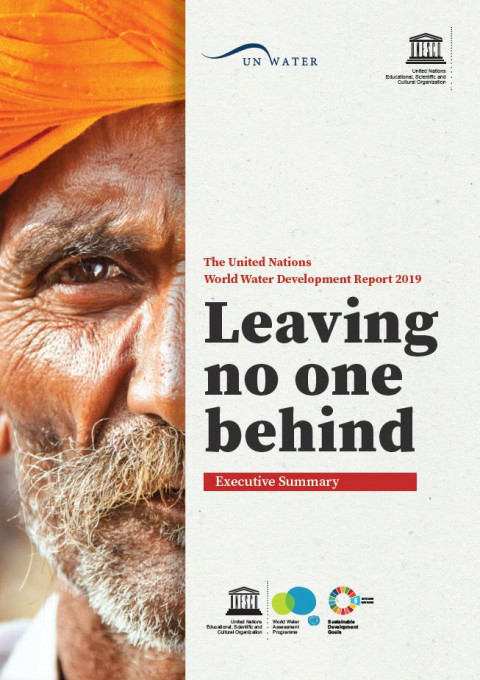 [Résumé] Rapport mondial des Nations Unies sur la mise en valeur des ressources en eau 2019: ne laisser personne pour compte; résumé 出版年份: 2019 作者: Richard Connor | Stefan Uhlenbrook | Engin Koncagül 机构作者: UNESCO World Water Assessment Programme (WWAP) Le fait que des personnes de différents groupes soient « laissées pour compte » s’explique par plusieurs facteurs. La discrimination, l’exclusion, la marginalisation, des rapports de force asymétriques et les inégalités matérielles figurent parmi les principaux obstacles à la réalisation des droits de l’homme à l’eau potable et à l’assainissement pour tous et aux objectifs du Programme 2030 relatifs à l’eau. En outre, la mauvaise conception des politiques et leur application insuffisante, l’utilisation inefficace et inadéquate des ressources financières, ainsi que les lacunes politiques, alimentent les inégalités dans l’accès à l’eau potable et à l’assainissement. Si l’exclusion et l’inégalité ne sont pas traitées de manière explicite et adaptée dans les politiques et les pratiques, les interventions dans le domaine de l’eau continueront de ne pas bénéficier à ceux qui en ont le plus besoin et qui sont susceptibles d’en tirer le plus profit.Améliorer la gestion des ressources en eau et garantir l’accès universel à une eau potable et à des installations sanitaires sécuritaires, à un coût abordable, sont essentiels pour éliminer la pauvreté, bâtir des sociétés pacifiques et prospères et assurer de « ne laisser personne pour compte » sur la voie du développement durable. Ces objectifs sont tout à fait réalisables, à condition qu’il y ait une volonté collective d’agir. [요약보고서] 2019년 UN 세계물개발보고서: 누구도 소외되지 않는 사회; 요약보고서 出版年份: 2019 作者: Richard Connor | Stefan Uhlenbrook | Engin Koncagül 机构作者: UNESCO World Water Assessment Programme (WWAP) 여러 그룹의 사람들은 다양한 이유로 ‘소외’되고 있다. 차별, 배제, 소외, 집권층 권력의 불균형 및 경제적 불평등은 안전한 식수 및 위생에 대한 인권을 달성하고, 2030 아젠다의 물 관련 목표를 실현하는 데 있어 걸림돌이 된다. 설계가 잘못되고, 부적절하게 구현된 정책, 비효율적이고 부당한 재정 자원 사용과 더불어 정책 격차는 안전한 식수 및 위생 시설 접근에 대한 불평등을 지속시킨다. 배제와 불평등 문제가 정책과 실행에서 분명하고, 신속하게 고려되지 않는다면, 물조정 노력 (water interventions)은 물을 가장 필요로 하고 혜택을 가장 많이 받을 수 있는 사람들에게 계속해서 그 효과를 주지 못할 것이다.수자원 관리를 개선하고 모든 사람에게 안전하고 경제적인 식수 및 위생 시설을 제공하는 것은 빈곤 퇴치, 평화롭고 번영하는 사회 형성, 지속 가능한 발전을 위한 ‘누구도 소외되지 않는 사회’ 구축에 필수적이다. 이러한 목표는 공동의 의지가 있는 한 전적으로 달성 가능할 것이다. [Pабочее резюме] Всемирный доклад Организации Объединенных Наций о состоянии водных ресурсов, 2019 г. : Не оставляя никого в стороне, рабочее резюме 出版年份: 2019 作者: Richard Connor | Stefan Uhlenbrook | Engin Koncagül 机构作者: UNESCO World Water Assessment Programme (WWAP) Представители различных групп «бывают забыты» по разным причинам. Дискриминация, отчуждение, маргинализация, укоренившаяся асимметричность в распределении власти, материальное неравенство – все это относится к числу основных препятствий на пути соблюдения права человека на безопасную питьевую воду и санитарию для всех, а также реализации связанных с водными ресурсами целей, поставленных в Повестке-2030.Плохо разработанная и неумело осуществляемая политика, бесхозяйственное и нецелевое использование финансовых ресурсов, а также пробелы в политике подпитывают сохранение неравенства в сфере доступа к водным ресурсам и санитарии. Если для решения проблем отчуждения и неравенства в политике и на практике не будут приниматься конкретные и ответственные меры, связанные с водными ресурсами мероприятия по-прежнему не будут отвечать интересам наиболее нуждающихся слоев и тех, кто должен быть их основными бенефициарами.Совершенствование управления водными ресурсами и обеспечение всеобщего доступа к безопасной и финансово доступной питьевойводе и санитарии имеет существенно важное значение для искоренения нищеты, созидания мирных и процветающих обществ и обеспечения такого положения, при котором «никто не будет забыт» на пути, ведущем к устойчивому развитию. При наличии коллективной воли эти цели вполне достижимы. 2019年联合国世界水发展报告 : 不让任何人掉队; 执行摘要 出版年份: 2019 作者: Richard Connor | Stefan Uhlenbrook | Engin Koncagül 机构作者: UNESCO World Water Assessment Programme (WWAP) 不同群体的人,都因为不同的原因而“掉队”。受歧 视、被排除在外、被边缘化、权力不对等根深蒂固,以及物 质上的不平等是保障人人获得安全饮用水和卫生设施这一人 权、实现2030年可持续发展议程与水相关目标的主要障碍之 一。政策设计不合理、落实不到位、资金不足和使用不当及 政策缺位加剧了获取安全饮用水和卫生设施的不均等。除非 在政策和实践层面旗帜鲜明、积极有效地应对被排除在外、不平等的现状,否则与水相关的解决方案仍将以失败告终,无法触及最需要和最能受益的人群。改善水资源管理,确保人人获得安全、可负担的饮用水 和卫生服务是消除贫困、构建和平繁荣的社会、确保实现可 持续发展路上“不让任何人掉队”的重要条件。只要同心协 力,这些目标一定可以实现。
 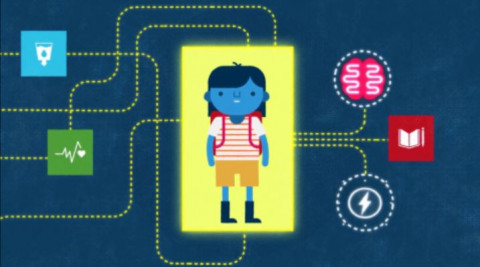 [Video] The Global Goals Food Project: Every Plate Tells a Story 出版年份: 2017 机构作者: World’s Largest Lesson The World’s Largest Lesson brings the Global Goals to children all over the world, reaching over 130 countries and millions of children since its launch in September 2015.Produced by Project Everyone and delivered in partnership with UNICEF and many NGOs, private sector organisations and foundations, the World’s Largest Lesson reaches students through multiple channels. Ministries of Education are invited annually to take part. NGOs distribute digital content through their networks and education organisations, both for and non-profit, encourage participation through their communities.
  [Video] The World’s Largest Lesson Part 2 - With Thanks to Sir Ken Robinson and Emma Watson 出版年份: 2016 机构作者: World’s Largest Lesson Sir Ken Robinson, Emma Watson and Aardman Animations invite children to get involved in the Global Goals for Sustainable Development by inventing, innovating and campaigning.To show the version with English subtitles please go to: vimeo.com/181766755
 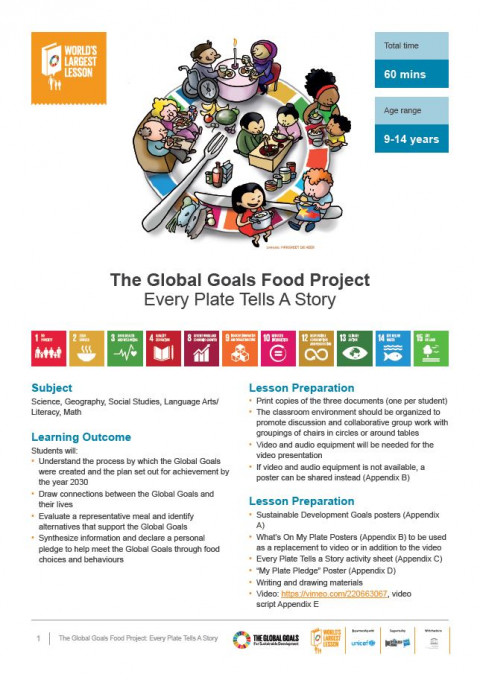 The Global Goals Food Project: Every Plate Tells a Story 出版年份: 2017 机构作者: World’s Largest Lesson This lesson plan, “Every Plate Tells a Story,” provides a guided activity for teachers and students to work together in efforts to bring the Global Goals to classrooms and learning.The lesson begins by broadly introducing the term “goal” and invites students to make personal connections to people, places, and environments by considering goals in their lives. Learners build knowledge as they integrate understanding of the Global Goals and the processes in which they were designed.During the lesson, students will engage in a process of inquiry through dialogue, collaboration, and research and will establish concrete realizations of the sustainability of the food they eat. Multiple sources of evidence/formative assessments can be used throughout the lesson to document learning, guide conversation, and inform future instruction.
 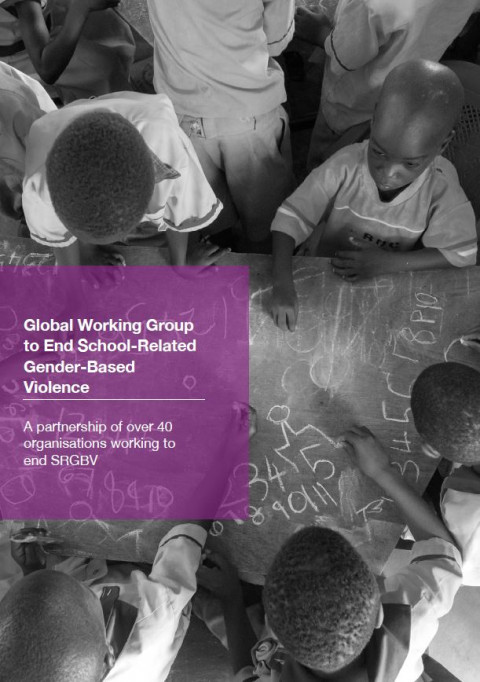 Global Working Group to End School-Related Gender-Based Violence 出版年份: 2017 机构作者: United Nations Girls' Education Initiative (UNGEI) In August 2014, a coalition of governments, development organizations, civil society activists, UN agencies and research institutions came together to collaborate on ending gender-based violence in and around schools.The Global Working Group to End SRGBV has been a strong advocate to ensure that schools remain safe places for learning and that girls and boys have the opportunity to acquire the knowledge, skills and resources they need to reach their potential.To learn more about the group and its members, please go here:www.ungei.org/srgbv
  [Video] SDG 4 Data to Get All Children in School and Learning by 2030 出版年份: 2018 机构作者: UNESCO Institute for Statistics (UIS) This video speaks in a simple and easy to understand language about the importance of data in achieving SDG 4. It is through data that success and failure can be identified and measure to build upon the successes or tackle the failures can be developed. Go straight to the source for global education data with the UNESCO Institute for Statistics http://on.unesco.org/SDG4web
  [Video] Learning about SDG 4 出版年份: 2017 机构作者: United Cities and Local Governments (UCLG) Life is continual learning, we learn to read to understand a constantly changing role, to participate and to live together. We learn in the classroom and beyond its world. Cities are places of opportunity but they can be also be places of exclusion. There are 758 million people over the age 15 in the world who can't read or write. Two out of three of them are women. Local governments because they are close to the people are able to respond to their needs and contribute to create equal educational opportunities. They work to ensure that facilities are ideal for learning and community life. They promote the adoption of sustainable life styles and provide education in values. Local government work with educators and administrations to ensure adequate resources and to improve education. In all these ways local governments contribute to achieve sustainable development goals for ensuring inclusive and quality education for all and promote lifelong learning.