
相关资源
探索丰富的全球公民教育资源,深化理解,促进研究、倡导、教学与学习。
共找到3,454条结果
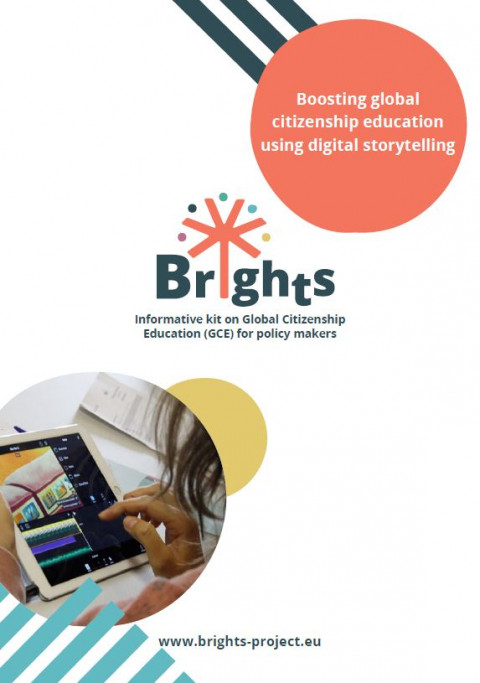 Informative Kit on Global Citizenship Education (GCE) for Policy Makers: Boosting Global Citizenship Education Using Digital Storytelling 出版年份: 2017 机构作者: European Union (EU) | European Commission This informative kit aims to equip policy makers with all the necessary knowledge about the role that Global Citizenship Education (GCE) can play in contemporary society. This document will summarize GCE, its principles, capabilities and advantages and will provide best cases regarding its application. The goal is to convince policy makers into adopting GCE in the training and education curricula. Furthermore, it presents the Digital Storytelling (DS) method and its benefits as a tool to teach GCE more effectively.
 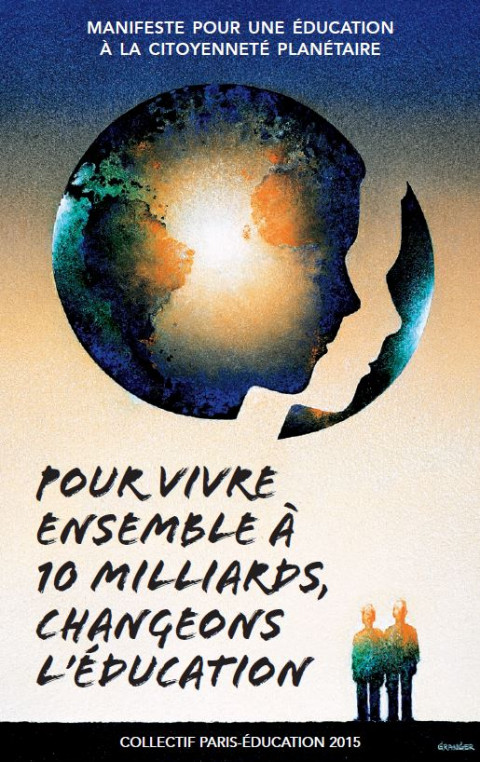 Manifeste pour une éducation à la citoyenneté planétaire: Pour vivre ensemble à 10 milliards, changeons l'éducation 出版年份: 2015 机构作者: Collectif Paris-Education 2015 Face à l’ampleur, l’urgence, la diversité et la complexité des problématiques engendrées par le modèle de développement de nos sociétés contemporaines, nous sommes donc obligés, dans l’urgence, de nous pencher sur les questions d’éducation et de formation des générations futures qui devront affronter des réalités biophysiques, économiques et politiques inédites, dont nous commençons à peine à entrevoir l’ampleur. Ce qui est dès lors en jeu, avec l’avenir de l’homme et de la Terre, c’est l’humain, ce qu’il deviendra, ce qu’il sera capable de porter comme projet pour l’humanité.Quelles qualités d’humains devons-nous faire advenir pour que ces réalités inédites puissent être rencontrées demain, sans que l’humanité bascule dans la violence et le dépeçage égoïste de la planète? Quels enfants voulons-nous laisser à notre Terre?Cette urgence impose un changement d’échelle dans la transformation des systèmes éducatifs, des contenus et des méthodes d’enseignement. Malgré la volonté et la compétence de nombreux acteurs de l’école, force est de constater que les actions menées pour une éducation plus en cohérence avec les enjeux climatiques et, plus largement, sociétaux restent à la marge. Elles sont réalisées par des individus clairvoyants. Il est temps d’enclencher la vitesse supérieure.
  Que valent les apprentissages en histoire, géographie et éducation à la citoyenneté ? : Colloque international des didactiques de l'histoire, de la géographie et de l'éducation à la citoyenneté 出版年份: 2014 作者: Caroline Leininger | Angelina Ogier | Sylvain Genevois 机构作者: Institut national de recherche pédagogique L’histoire et la géographie scolaires, de même que l’éducation à la citoyenneté, sont des domaines sensibles, liés au politique et au contexte social et sociétal dans lequel ils s’inscrivent. Si les recherches en didactique ont constaté dans les années 1990 une grande stabilité de l’histoire et la géographie scolaires, elles interrogent aujourd’hui plus spécifiquement les changements curriculaires et les recompositions qu’ils entraînent (thèmes des deux dernières éditions du colloque (Nantes, 2008, Lausanne 2009). Ces changements découlent de choix politiques et de savoirs universitaires, et redéfinissent le projet de ces disciplines et ses finalités. L'élève devient ainsi à l'issue de sa scolarité : un acteur de la société, un citoyen, un acteur économique, membre de communautés culturelles et politiques, un individu épanoui etc.Ce choix de finalités est aussi un choix de valeurs, explicites ou non dans les prescriptions, assumées ou non par les enseignants, par les élèves, les parents. Ce constat amène à questionner les articulations entre les apprentissages disciplinaires d’une part, et les apprentissages sociaux et politiques d’autre part. Les définitions de ces apprentissages, leur légitimité et leurs évaluations posent également question. Enseignants, décideurs, formateurs, didacticiens peuvent ainsi se demander ce que valent les apprentissages en histoire, en géographie et en éducation à la citoyenneté, tant du point de vue de leur reconnaissance disciplinaire et sociale que du point de vue des valeurs qui leur sont associées. Cet ouvrage cherche à questionner les articulations entre les apprentissages disciplinaires et les apprentissages sociaux et politiques.
 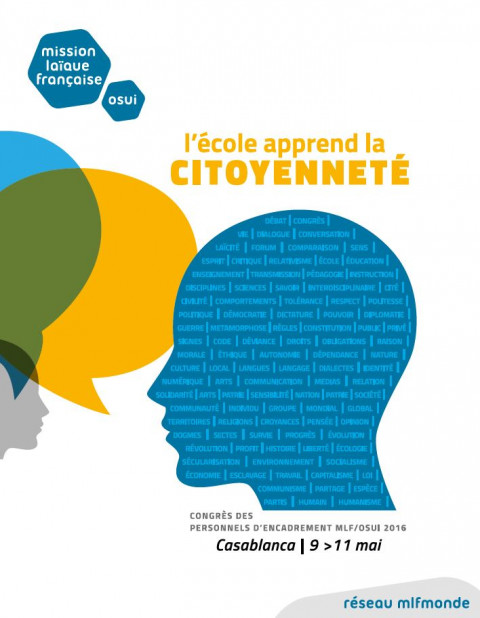 L’école apprend la citoyenneté (Congrès des personnels d’encadrement MLF/OSUI 2016) 出版年份: 2017 机构作者: Mission laïque française Le groupe scolaire Louis-Massignon à Bouskoura (Casablanca, Maroc) a accueilli du 9 au 11 mai 2016 près de 300 acteurs de l’enseignement français, représentants des établissements du réseau mlfmonde, du réseau de l’AFLEC, des académiespartenaires (Dijon, Paris, Poitiers et Reims), des représentants du MAEDI, du MENESR, de la DNE, de la DGESCO et de l’AEFE, des grands établissements de l’Éducation nationale (CNED, Canopé, ESENESR, CIEP), des représentants de l’organisation du baccalauréat international, de l’Unesco et de la société civile.Les mesures qui entrent en vigueur sur l’éducation à la citoyenneté concernent les «valeurs de la République».Parce que l’enseignement moral et civique est conçu et établi pour et dans un contexte strictement national, se pose dès lors la question d’une adaptation à l’usage de l’enseignement français à l’étranger qui ne soit pas en contradiction avec l’intention et l’esprit de cette partie du programme.
  Cultivating "Global Citizens": Relevant Photographs of Current Curriculum Construction: Rational Thinking and Practical Exploration of International Understanding Education 出版年份: 2018 作者: Pan Guowei The international understanding of education has quietly emerged. Its purpose is to enable students to grow into “global citizens” and promote human harmony. Based on this aim, schools should make a difference in the experience of students experiencing foreign languages, so that students can gradually form the necessary qualities of “global citizenship” in expanding international knowledge, enhancing the common prosperity of the world, and improving the ability of foreign activities.
  Realization of the Sustainable Development Goals by, for and with Persons with Disabilities (UN Flagship Report on Disability and Development 2018) 出版年份: 2018 机构作者: United Nations (UN) Realization of the Sustainable Development Goals by, for and with persons with disabilities 'Disability and the 2030 Agenda for Sustainable Development' this report represents the first UN systemwide effort to examine disability and the Sustainable Development Goals (SDGs) of the 2030 Agenda for Sustainable Development at the global level. The report reviews data, policies and programmes and identifies good practices; and uses the evidence it reviewed to outline recommended actions to promote the realization of the SDGs for persons with disabilities. The report shows that despite the progress made in recent years, persons with disabilities continue to face numerous barriers to their full inclusion and participation in the life of their communities. It sheds light on their disproportionate levels of poverty, their lack of access to education, health services, employment, their under-representation in decision-making and political participation. This is particularly the case for women and girls with disabilities. Main barriers to inclusion entail discrimination and stigma on the ground of disability, lack of accessibility to physical and virtual environments, lack of access to assistive technology, essential services, rehabilitation and support for independent living that are critical for the full and equal participation of persons with disabilities as agents of change and beneficiaries of development. Data and statistics compiled and analysed in the present report indicate that persons with disabilities are not yet sufficiently included in the implementation, monitoring and evaluation of the SDGs.
 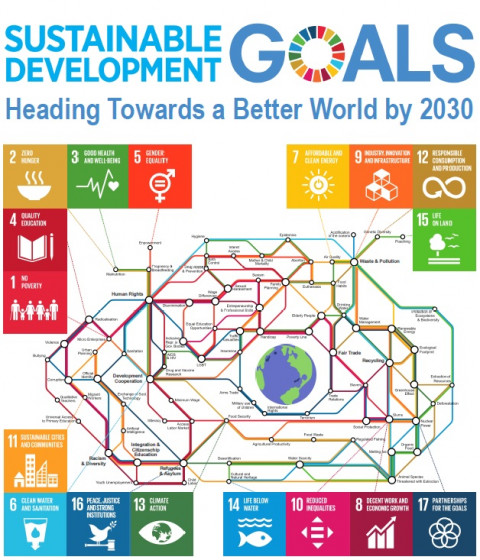 A metro map illustrated in the 17 sustainable development goals 出版年份: 2018 作者: Rembert Jonckheere 机构作者: ASPnet Flanders (Belgium) “Tackling one SDG… is tackling all of them!”This metro map is a complex illustration of the 17 sustainable development goals. With different kinds of topics as service stations and the SDG’s connecting them, it shows how the goals can relate to each other, and thus it emphasises their holistic nature. I do not pretend to be completely exhaustive or correct. Probably one can add more links and topics, but this map could be helpful in education or in other institutions as a source of inspiration to start up projects within the framework of the sustainable development goals.
 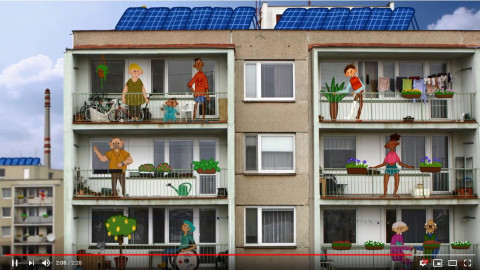 [Video] The future we need – and how we get there 出版年份: 2018 机构作者: Friends of the Earth Europe Friends of the Earth groups across Europe are working for a socially-just, safe and peaceful future for all – and this is how they do it.
 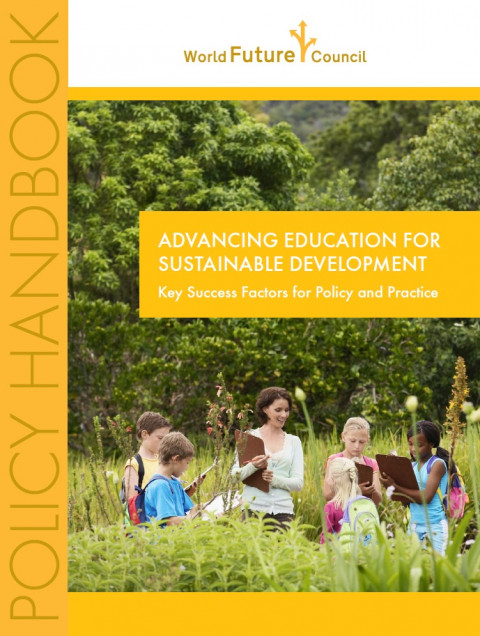 Policy Handbook: Advancing Education for Sustainable Development 出版年份: 2019 机构作者: World Future Council Foundation Given the huge challenges the world faces, it is clear that we need to teach, learn and live in a fundamentally different manner. Education for Sustainable Development (ESD) is increasingly recognised as playing a central role in empowering learners of all ages to positively respond to local and global challenges and act in a more peaceful, just, inclusive and sustainable manner. This approach is already helping people develop the skills, values and attitudes necessary to create more resilient societies and transition towards the skilled, green, low-carbon economies of the future. This handbook explores some of the central success factors in policy, process and practice in some of the pioneering countries and contexts where ESD is being effectively embraced. It examines some of the major trends, case studies and challenges in introducing this more holistic, progressive, hands-on education.
  The United Nations World Water Development Report 2019: Leaving No One Behind 出版年份: 2019 机构作者: UNESCO World Water Assessment Programme (WWAP) The UNESCO World Water Assessment Programme brings together the work of numerous UN-Water Members and Partners to produce the United Nations World Water Development Report series.The annual editions focus on strategic water issues. UN-Water Members and Partners as well as other experts contribute the latest knowledge on a specific theme.The 2019 Report seeks to inform policy and decision-makers, inside and outside the water community, how improvements in water resources management and access to water supply and sanitation services are essential to overcoming poverty and addressing various other social and economic inequities.In an increasingly globalized world, the impacts of water-related decisions cross borders and affect everyone. Extreme events, environmental degradation, population growth, rapid urbanization, unsustainable and inequitable consumption patterns, conflicts and social unrest, and unprecedented migratory flows are among the interconnected pressures faced by humanity, often hitting those in vulnerable situations the hardest through their impacts on water.Addressing the inequalities faced by disadvantaged groups requires tailored solutions that take account of the day-to-day realities of people and communities in vulnerable situations. Properly designed and adequately implemented policies, efficient and appropriate use of financial resources, as well as evidence-based knowledge on water resources and water-related issues are also vital to eliminating inequalities in access to safe drinking water and sanitation.Titled ‘Leaving No One Behind ’, the report reinforces the commitments made by the UN member states in adopting the 2030 Agenda for Sustainable Development and in recognizing the human rights to safe drinking water and sanitation, both of which are essential for eradicating poverty and for building prosperous, peaceful societies.