
相关资源
探索丰富的全球公民教育资源,深化理解,促进研究、倡导、教学与学习。
共找到3,229条结果
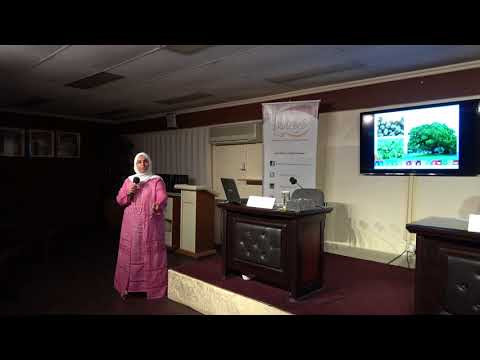 [Video] Contextualizing Sustainable Development Goals 出版年份: 2018 机构作者: Akanoo cc The Video is about a lecture talking about how contextualizing Sustainable Development Goals in Bahrain. To make the context, the lecturer started by describing how the Un reached to articulate the SDGs after the last MDGs. Then, the 17 goals were presented in details. In terms of localizing these SDGs, the lecturer gave some strategies on how individuals, companies and the government can implement these SDGs in their context. It is recommended that all members of the Bahraini society should participate in achieving the SDGs to reach to sustainable development. The lecturer also draw attention to some challenges facing Bahrain to achieve SDGs. To overcome these challenges, the lecturer suggested a number of activities to raise awareness among Bahraini people about the importance of participating in achieving SDGs. Finally, how Bahrain can contextualize SDGs is presented.
  أثر برنامج تدريبيّ في تنمية مبادئ المواطنة العالميّة لدى معلمي التاريخ في الأردن 出版年份: 2013 作者: Zaid Suleiman M. Al-Edwan | Fadyieh Mohmoud A. Bani Mustafa 机构作者: Deanship of Scientific Research, University of Jordan هدفت الد ا رسة إلى بناء برنامج تدريبيّ لمعلمي التاريخ في ضوء مبادئ المواطنة العالميّة واختبار أثره في مستوى معرفتهم لتلكالمبادئ في الأردن. تكونت عينة الد ا رسة من ( 26 ) معلمًا ومعلمة، تم اختيا رهم بالطريقة العشوائية من معلمي التاريخ للمرحلةالأساسيّة العليا في مديرية التربية والتعليم لمحافظة مأدبا. ولتحقيق أهداف الد ا رسة تم بناء برنامج تدريبيّ في ضوء مبادئالمواطنة العالميّة، هي: السلام العالميّ، والديمق ا رطيّة، وحقوق الإنسان، الإنسان والبيئة، والتفكير العلميّ، والتكنولوجيا،والثقافات المتعددة. وتم اعداد اختبار معرفيّ لمبادئ المواطنة العالميّة. وبعد اج ا رء التحليلات الاحصائية المناسبة أظهرتنتائج الد ا رسة أن مستوى المعرفة القبلية لمعلمي التاريخ للمرحلة الأساسيّة العليا لمبادئ المواطنة العالميّة كان أقل من المستوى0.01 ) بين مستوى المعرفة البعدية لمعلمي =α) المقبول تربويًّا ( 80 %). ووجود فروق ذات دلالة إحصائيّة عند مستوى الدلالةالتاريخ في المرحلة الأساسيّة العليا لمبادئ المواطنة العالميّة والمستوى المقبول تربويًّا ( 80 %)، ولصالح البرنامج التدريبيّ فيكلّ مجال من مبادئ المواطنة العالمية وللمجالات مجتمعة. وأوصت الد ا رسة بتضمين أبعاد مفاهيم المواطنة العالميّة ومبادئهافي الب ا رمج التدريبيّة للمعلمين لزيادة وعيهم بالقضايا العالميّة.الكلمات الدالة: المواطنة العالميّة، معلمي التاريخ، المرحلة الأساسيّة العليا.. The Effect of a Training Program on Developing the Global Citizenship Principles of the History Teachers in Jordan 出版年份: 2013 作者: Zaid Suleiman M. Al-Edwan | Fadyieh Mohmoud A. Bani Mustafa 机构作者: Deanship of Scientific Research, University of Jordan This study aimed at building a training program for the history teachers in the light of the global citizenship principles and testing its effect on their knowledge level of those principles in Jordan. Study sample consisted of (26) male and female teachers randomly selected from the history teachers for the high Basic stage in the Education Directorate in Ma'daba Governorate. To achieve the study goals, a training program was build in the light of the global citizenship principles, which are: the global peace, democracy, human rights, human and the environment, scientific thinking, technology, and multi-cultures.and a cognitive test of the global citizenship's principles was prepared. After performing the relevant statistical analysis the results revealed that the pre-knowledge level of the history teachers for the basic stage of the global citizenship principles was lower than the educational accepted level (80%), and the presence of differences with statistical significance (α=0.01) between the post-knowledge level of the history teachers at the higher basic stage about the global citizenship principles and the educational accepted level (80%), in favor of the training program in each domain of the global citizenship's principles and for the domains collectively. The study recommended the inclusion of the global citizenship principles and concepts in the teachers training programs to increase their awareness in the global issues.
  The Sustainable Development Goals Report 2019 出版年份: 2019 机构作者: United Nations (UN) Four years after signing the 2030 Agenda for Sustainable Development, countries have taken action to integrate the Goals and targets into their national development plans and to align policies and institutions behind them. The Sustainable Development Goals Report 2019 uses the latest available data to track global progress on the SDGs and to take stock of how far we have come in realizing our commitments. The report shows that, while advances have been made in some areas, monumental challenges remain. The evidence and data spotlight areas that require urgent attention and more rapid progress to realize the 2030 Agenda’s far-reaching vision. Member States agree that these challenges and commitments are interrelated and call for integrated solutions. It is therefore imperative to take a holistic view of the 2030 Agenda and to identify the highest impact areas in order to target interventions. The most urgent area for action is climate change. If we do not cut record-high greenhouse gas emissions now, global warming is projected to reach 1.5°C in the coming decades. As we are already seeing, the compounded effects will be catastrophic and irreversible: increasing ocean acidification, coastal erosion, extreme weather conditions, the frequency and severity of natural disasters, continuing land degradation, loss of vital species and the collapse of ecosystems. These effects, which will render many parts of the globe uninhabitable, will affect the poor the most. They will put food production at risk, leading to widespread food shortages and hunger, and potentially displace up to 140 million people by 2050. The clock for taking decisive actions on climate change is ticking. The other defining issue of our time is increasing inequality among and within countries. Poverty, hunger and disease continue to be concentrated in the poorest and most vulnerable groups of people and countries. Over 90 per cent of maternal deaths occur in low- and middle-income countries. Three quarters of all stunted children live in Southern Asia and sub-Saharan Africa. People living in fragile States are twice as likely to lack basic sanitation, and about four times as likely to lack basic drinking water services as people in non-fragile situations. Youth are three times more likely to be unemployed than adults. Women and girls perform a disproportionate share of unpaid domestic work and lack autonomy in decision-making. Just as problems are interrelated, the solutions to poverty, inequality, climate change and other global challenges are also interlinked. Valuable opportunities exist to accelerate progress by examining interlinkages across Goals. For example, tackling climate change requires a shift to clean energy, reversing the trend in forest loss, and changing our production and consumption patterns. Promoting sustainable agriculture can help reduce both hunger and poverty, since close to 80 per cent of those who are extremely poor live in rural areas. Increasing access to safe drinking water, sanitation and hygiene can save millions of lives per year and improve school attendance. Improving proficiency in reading and mathematics of some 200 million children who are falling behind in sub-Saharan Africa will help them climb out of poverty and ultimately enable the region to better compete in the global marketplace. This report also highlights the importance of investing in data for the full implementation of the 2030 Agenda. Most countries do not regularly collect data for more than half of the global indicators. The lack of accurate and timely data on many marginalized groups and individuals makes them “invisible” and exacerbates their vulnerability. While considerable effort has been made to address these data gaps over the past four years, progress has been limited. Increased investment is urgently needed to ensure that adequate data are available to inform decision-making on all aspects of the 2030 Agenda. Towards that end, the Dubai Declaration, launched at the second World Data Forum in October 2018, outlines a demand-driven funding mechanism under Member States’ oversight that will respond quickly and efficiently to the priorities of national statistical systems.
  Social and emotional learning (The Blue Dot Issue 10, 2019) 出版年份: 2019 机构作者: Mahatma Gandhi Institute of Education for Peace and Sustainable Development (MGIEP) The tenth edition of The Blue DOT focuses on different aspects of social and emotional learning, including the neurosciences, teacher training, frameworks such as CASEL and SEE Learning and systemic SEL, amongst others. The issue includes a Foreword by Dr. Richard Davidson, William James and Vilas Professor of Psychology and Psychiatry at the University of Wisconsin–Madison and the Founder and Director of the Center for Healthy Minds, and our Cover Story that focuses on how SEL can help to achieve the United Nations Sustainable Development Goals (SDGs). Additionally, it features interviews and opinions from some of the world’s most prominent SEL experts on the importance of integrating SEL in our education systems. Amongst various experts, we hear from Kimberly Schonert-Reichl on her journey in SEL, Robert W. Roeser on “Educating the Head, the Heart and the Hand in the 21st Century” as well as Roger P. Weissberg and Joseph L. Mahoney on “What is Systemic Social and Emotional Learning and Why Does it Matter”? Further, a featured article with responses to a survey by teachers from 4 countries (Bhutan, India, South Africa and Sri Lanka), following the launch of the Institute’s SEL modules on Global Citizenship in a workshop conducted in New Delhi, India in April 2019 is presented. The modules have been rendered on MGIEP’s in house Artificial Intelligence (AI) driven digital platform now called FramerSpace (formerly CHI) and allow the student to have an interactive, instantaneous feedback and immersive experience while addressing contemporary issues such as migration, nationalism and violence.
  Apprentissage de la citoyenneté à l'école 出版年份: 2018 机构作者: Geotimoun Geotimoun est le site d’éducation au développement de l’ONG Geomoun. Il s’adresse à vous: enseignants, parents et animateurs auprès d’enfants de primaires.L’objectif central de Geotimoun est de: promouvoir la paix par la rencontre de l’Autre encourager les enfants à garder leur esprit critique s’engager pour être acteur de changement et faire respecter les droits de l’enfant dans le monde.
 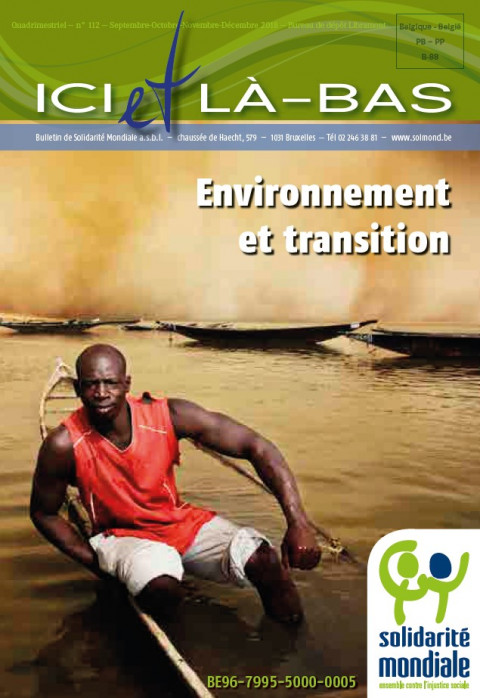 Environnement et transition (ici et là-bas) 出版年份: 2018 机构作者: Solidarité mondiale Les « Objectifs de Développement Durable » (ODD), adoptés en 2015 par les Nations unies, nous obligent à transformer notre monde. Nous devons prendre d’urgence des mesures pour lutter contre les changements climatiques et leurs répercussions. Si l’action humaine est à la base de ces changements climatiques, elle doit aussi être à la base des solutions. Cette prise de conscience est un fil rouge dans le travail de notre organisation. Les mouvements des travailleurs et travailleuses ont l’obligation d’intégrer le respect de l’environnement dans leurs stratégies, car la planète fixe les limites de tout développement durable ! J’espère que les actions concrètes de nos collègues en Afrique, Amérique latine et en Asie présentées dans notre revue, vous serviront de source de motivation et d’inspiration. Ces bonnes pratiques illustrent que le monde du travail est en train de bâtir, pas à pas, le chemin vers des économies à faibles émissions de carbone. Les personnes en situation pré- caire sont les plus touchées par les changements climatiques. Face à ce constat, nous défendons aussi que les politiques de protection sociale peuvent à la fois contribuer au renforcement des capacités individuelles pour s’adapter, et à l’atténuation des effets dévastateurs de ces changements.
 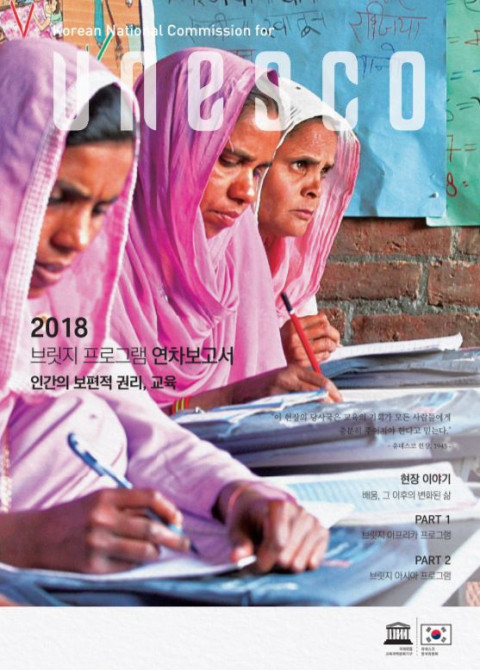 2018-2019 브릿지 프로그램 연차보고서 出版年份: 2019 机构作者: 유네스코한국위원회 국제사회는 지속가능발전목표 4번(SDG4)를 통해 2030년까지 모든 이들에게 포용적이고 공평한 양질의 교육을 보장하고, 평생학습의 기회가 증진되도록 노력하자는 교육 기치를 내세웠다.특히 SDG4는 아동의 초등교육 강화에 중심을 둔 '새천년개발목표' 2번(MDG2)과 모든 연령대의 기초교육에 초점을 둔 '모두를위한교육'(EFA)의 미완의 목표를 포괄함은 물론, 기초교육 이후의 교육(중등, 고등) 및 훈련(직업,기술)을 평생학습 차원에서 촉진함으로써 교육의 보편성을 강조하고 있다. 유네스코한국위원회의 브릿지 사업은 이러한 국제사회의 노력에 동참하며, 교육의 보편적 기본권이 확산될 수 있도록 돕기 위해, 전 세계적으로 교육 소외자가 집중되어 있는 사하라 이남 아프리카 지역과 남아시아 지역의 모든 연련대 교육 소외자들을 대상으로 교육권 강화에 이바지하고 있다. 브릿지 사업은 나이, 성별, 종교 그리고 사회적 배경으로 인해 공교육으로부터 배제된 이들이 교육을 받음으로써 자존감을 회복하고 삶의 질을 향상시킬 수 있게 도우며, 이러한 개인의 성장만이 궁극적으로 지역사회의 변화와 발전으로 이어진다는 확신을 갖고 있다.이 보고서에서는 브릿지 아프리카 프로그램, 브릿지 아시아 프로그램과 국별 프로젝트 및 성과를 확인할 수 있다.
  Égalité hommes-femmes vs conscience environnementale: Scène de ménage inéluctable ou convergence des luttes ? 出版年份: 2018 作者: Solène Houzé Réduire son empreinte environnementale est un souci qui gagne chaque jour davantage de citoyens. On essaye de faire de son mieux, pour soi et pour la planète. Cela demande une adaptation pour toute une série de tâches domestiques et de gestes quotidiens (choix de l’alimentation, moyens de transports, zéro déchet, produits d’entretiens naturels, etc.). À l’heure où la répartition des tâches domestiques est encore bien souvent inégalement partagée entre hommes et femmes, il est légitime de s’interroger sur la pression qu’exerce la conscience écologique sur le quotidien des femmes au sein de la sphère privée. Les enjeux des rapports de genre se mêlent alors aux enjeux environnementaux. L’écoféminisme est un courant de pensée qui veut analyser le rapprochement entre ces deux combats. Quels sont donc les fondements de ce mouvement et comment l’action au quotidien pour la nature et le climat s’inscrit-elle dans les analyses écoféministes ? Cette analyse invite donc à discuter des bases genrées nécessaires à une transition verte et durable dans toutes ses dimensions.
  جدول أعمال 2030 للتنمية المستدامة 出版年份: 2018 机构作者: United Nations System Staff College (UNSSC) من خلال تأييد خطة التنمية المستدامة لعام 2030 وأهدافها السبعة لعام 2015 ، أكد المجتمع الدولي على التنمية المستدامة. في هذا الجدول ، تعهدت مائة وتسع وثلاثون دولة من الدول الأعضاء بضمان نمو اقتصادي شامل ومستدام ، والاندماج الاجتماعي ، وحماية البيئة وتعزيز المجتمعات السلمية والعادلة والشاملة للجميع من خلال شراكة عالمية جديدة. إن جدول أعمال 2030 قائم على الحقوق وطموح. إنه خطة عمل طموحة للبلدان ، ومنظومة الأمم المتحدة ، وجميع الجهات الفاعلة الأخرى. تتجاوز الأجندة الخطابة وتوجه دعوة ملموسة للناس والكوكب والازدهار ، وتشجعنا على اتخاذ خطوات جريئة وتحويلية مطلوبة بشكل عاجل لتوجيه العالم نحو طريق مستدام ومرن.