
相关资源
探索丰富的全球公民教育资源,深化理解,促进研究、倡导、教学与学习。
共找到1,451条结果
 [Resumen] Enseñanza y aprendizaje en el siglo XXI : Metas, políticas educativas y currículo en seis países 出版年份: 2016 作者: Fernando Reimers | Connie K. Chung 机构作者: Global Education Innovation Initiative Este libro pretende promover discusiones sobre cómo las políticas educativas nacionales ayudan a los estudiantes a prepararse para la vida, el trabajo y la participación ciudadana en el siglo XXI. Revisa además cómo los objetivos educativos, los retos y las oportunidades que se perciben, reflejan los contextos histórico, político, y cultural de los sistemas educativos, los cuales a su vez varían en tamaño, mecanismos de gobernanza y condiciones demográficas, entre otros factores.
  Connecting Classrooms through Global Learning: Education for Sustainable Development and Global Citizenship; Preparing Pupils for Life in an Interconnected World 出版年份: 2020 机构作者: British Council | UK aid This resource contributes to the development of pupils’ core skills, enabling them to think critically, to consider how to resolve problems, to take informed and reflective action and to develop personal leadership skills. During the course, pupils will analyse global issues, and will plan, implement and evaluate action. This course can be linked to a variety of curriculum areas, including English, Social Studies, Geography, Modern Foreign Languages, Maths, History and Art and Design. It can be used with or without an overseas partner school.
  Teach the Change: 8 Steps to Be a Global Teacher 出版年份: 2018 机构作者: Start the Change | European Union (EU) These guidelines are a result of consultation with 45 teachers from across Europe, drawing on their combined experiences to reflect on the main challenges of developing educational activities on global issues and with a particular focus on the Sustainable Development Goals (SDGs) and migration.
  Educación a la ciudadanía mundial: Marco de referencia de la AQOCI 出版年份: 2019 机构作者: Affaires mondiales Canada | Quebec Association of International Cooperation Organizations (AQOCI) La educación es parte integrante de la misión de las organizaciones de solidaridad y cooperación internacionales (OCI). En continuidad con su misión de educación y de compromiso con el público, la AQOCI adopta de ahora en adelante un enfoque de Educación para la ciudadanía mundial (ECM). Ésta se encuentra en la razón misma de ser de la asociación y de sus integrantes, ya que la solidaridad internacional supone que todas las poblaciones estén conscientes de las desigualdades y que se movilicen para la construcción de un mundo más justo e igualitario. Durante el 1er Encuentro, las OCI destacaron la importancia de ampliar el impacto de su acción en ECM y de hacer valer y reconocer sus competencias en ese ámbito ante los diversos colaboradores así como la población en general. En ese sentido, este nuevo marco de referencia es una primera herramienta para las OCI miembros de la AQOCI. En éste se propone orientación, conceptos y un repertorio conciso de nuestras prácticas comunes con el objetivo de describir, orientar y reconocer nuestra acción colectiva en ECM. Este marco expresa la visión actual de la AQOCI y valora la acción diversificada del conjunto de sus integrantes. Éducation à la citoyenneté mondiale: Cadre de référence de l’AQOCI 出版年份: 2019 机构作者: Affaires mondiales Canada | Association québécoise des organismes de coopération internationale (AQOCI) L’éducation fait partie intégrante de la mission des organismes de solidarité et de coopération internationales (OCI). En continuité avec l’éducation et l’engagement du public, l’AQOCI adopte désormais l’approche de l’Éducation à la citoyenneté mondiale (ECM). Celle-ci est au cœur de la raison d’être de l’association et de ses membres puisque la solidarité internationale suppose que toutes les populations soient conscientes des inégalités et qu’elles se mobilisent dans la construction d’un monde plus juste et égalitaire. Lors du 1er Rendez-vous, les OCI ont souligné l’importance d’accroître l’impact de leur action en ECM et de mieux faire valoir et reconnaître leur expertise dans ce domaine auprès de divers partenaires, particulièrement des milieux de l’enseignement, ainsi qu’auprès de la population en général. Dans ce sens, ce nouveau cadre de référence est un premier outil pour les OCI membres de l’AQOCI. Il propose une orientation, une terminologie et un recensement succinct de nos pratiques communes afin de décrire, orienter et reconnaître leur action collective en ECM. Ce cadre de référence exprime la vision actuelle de l’AQOCI et valorise l’action diversifiée de l’ensemble de ses membres.
 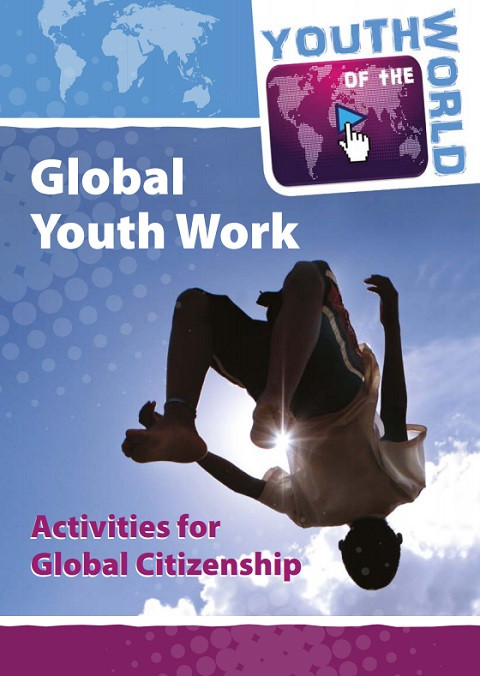 Global Youth Work: Activities for Global Citizenship 出版年份: 2014 作者: Kate Allen | Charlotte Dwyer 机构作者: Scotdec | European Union (EU) | Government of Scotland This resource has been designed for youth workers and other professionals working with young people to promote global youth work as a mainstream practice across Scotland. Each chapter contains practical activities, background information and resources aimed at encouraging young people to think about their own lives and how they connect with others. Examining these topics within the framework of social justice, human rights and sustainable development enables young people to reflect on how their behaviour and actions impact on people and issues locally and globally.
 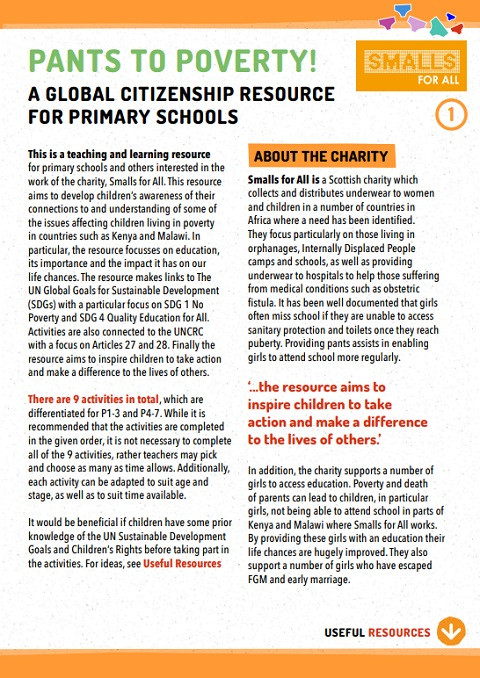 Pants to Poverty: A Global Citizenship Resource for Primary Schools 出版年份: 2018 作者: Stephanie Brown | Jennifer McMillan 机构作者: Smalls for All | Scotdec | International Development Education Association Scotland (IDEAS) With a focus on the right to an education, this series of 9 lessons explores issues affecting children living in poverty and encourages young people to take action for positive change. This resource aims to develop children’s awareness of their connections to and understanding of some of the issues affecting children living in poverty. There is a particular focus on the importance of education and its impact on our life chances.
 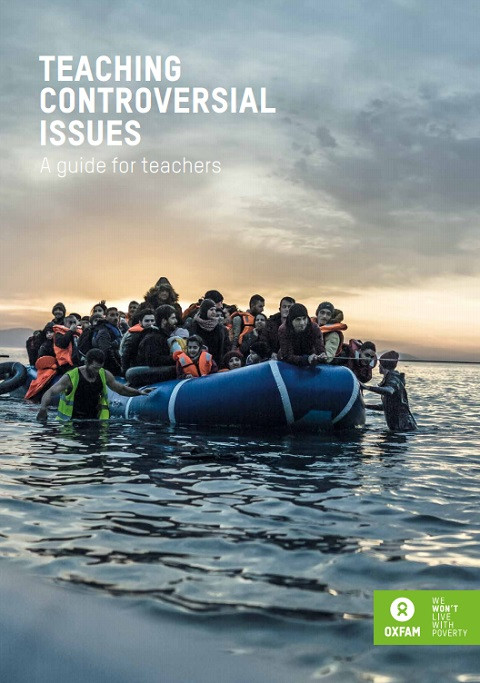 Teaching Controversial Issues: A Guide for Teachers 出版年份: 2018 机构作者: Oxfam GB This revised and updated version of Oxfam’s popular guide recognises the changes in social and political contexts in recent years and seeks to support educators in their discussions with young people in this complex environment. In increasingly divisive and polarised times, the need for young people to feel confident in tackling controversial issues is more pressing than ever. Advances in technology and the rise of social media mean that it is more important than ever for young people to think critically to become effective global citizens.This guide explores:• What controversial issues are.• Reasons for teaching controversial issues.• The value of a global citizenship education approach.• Guidance and classroom strategies for handling and exploring controversial issues.• Some practical activities for teaching controversial issues.
 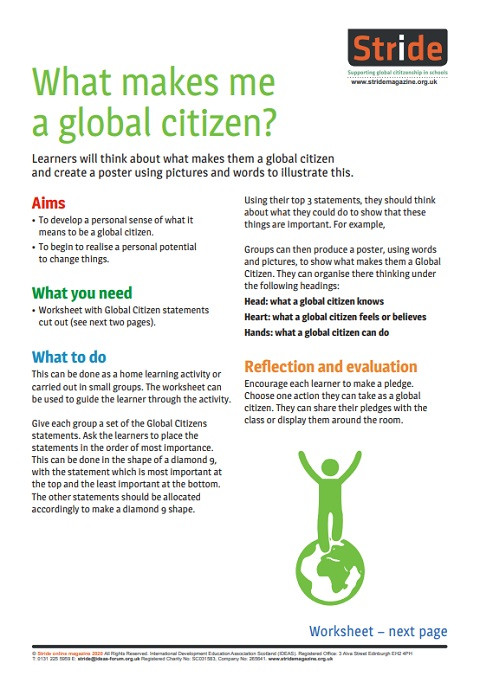 What Makes Me a Global Citizen? 出版年份: 2020 机构作者: Stride This material aims to develop a personal sense of what it means to be a global citizen and to begin to realize a personal potential to change things. Learners will think about what makes them a global citizen and create a poster using pictures and words to illustrate this.
  Global education in Lithuania: challenges and opportunities 出版年份: 2014 作者: Indrė Augutienė | Zina Baltrėnienė 机构作者: Lithuanian Development Education and Cooperation Network of Non-governmental Institutions (Association LITDEA) | Lithuanian National Non-Governmental Development Cooperation Organisations‘ Platform (NGDO Platform) The publication has been produced implementing the project ‘‘Quality Partnership for Development-EU Presidency project for the Lithuanian EU Presidency, 2013“ (no. DCINSA ED/2013/319-124). Today we live in a constantly changing world which is bound by the spirit of relations between people, countries and cultures and which presents various challenges and opportunities. Every day we have to solve numerous economic, social and environmental issues connecting us with other countries, their cultures and citizens and providing an opportunity for all of us to become part of a global society.In order to accept the opportunities provided by the globalisation processes and cope with the emerging challenges it is necessary to create the conditions for people to acquire the knowledge on global realities, emerging global development problems and to relate them with their own life. It is also important to provide the opportunities for people to acquire the skills and enhance own values facilitating active global citizenship and responsibility. Global problems increasingly impact on the lives of everybody throughout the world, therefore we must realise that we are part of the world with the still prevailing poverty, social inequality, climate change and global warming problems. In the current society it is especially important to ensure that different forms of education enhance people‘s understanding about the above challenges and their impact on personal, communal, national and global development.Global Education is directed toward formation and development of people‘s skills, knowledge and values facilitating understanding and response to the challenges of the 21st century. So far the concept of Global Education was not validated in any national documents. Today non-governmental organisations are actively discussing this issue with the academic society and with the Ministries of Foreign Affairs/and Education and Science representing the state in the above area. Besides, Lithuania has not developed a uniform Global Education strategy yet, but the dimension of Global Education is included in several specific national policy documents. In view of this, this article reviews the prerequisites for integration of global education set forth in the main legal acts defining Lithuania‘s sustainable development, development cooperation and education. This document provides a review of the Global Education concept, prerequisites for its implementation and description of the current situation in Lithuania. It also includes the proposals for a successful development of Global Education activities in our country.