
相关资源
探索丰富的全球公民教育资源,深化理解,促进研究、倡导、教学与学习。
共找到2,199条结果
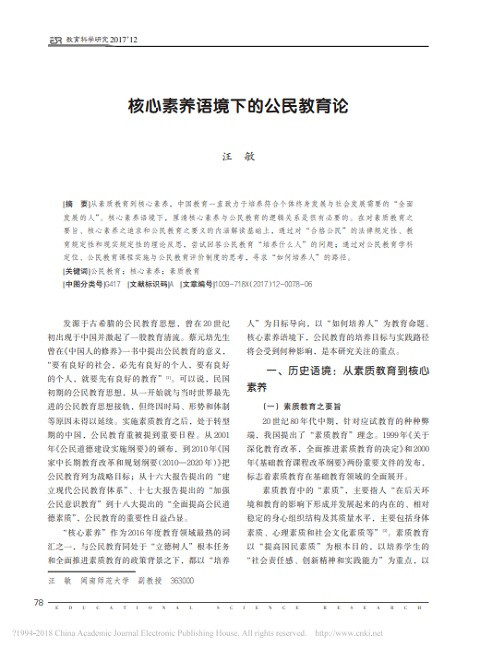 核心素养语境下的公民教育论 (教育科学研究) 出版年份: 2017 作者: Wang Min 机构作者: Beijing Open University 从素质教育到核心素养,中国教育一直致力于培养符合个体终身发展与社会发展需要的“全面 发展的人”。核心素养语境下,厘清核心素养与公民教育的逻辑关系是很有必要的。在对素质教育之 要旨、核心素养之追求和公民教育之要义的内涵解读基础上,通过对“合格公民”的法律规定性、教 育规定性和现实规定性的理论反思,尝试回答公民教育“培养什么人”的问题;通过对公民教育学科 定位、公民教育课程实施与公民教育评价制度的思考,寻求“如何培养人”的路径。
 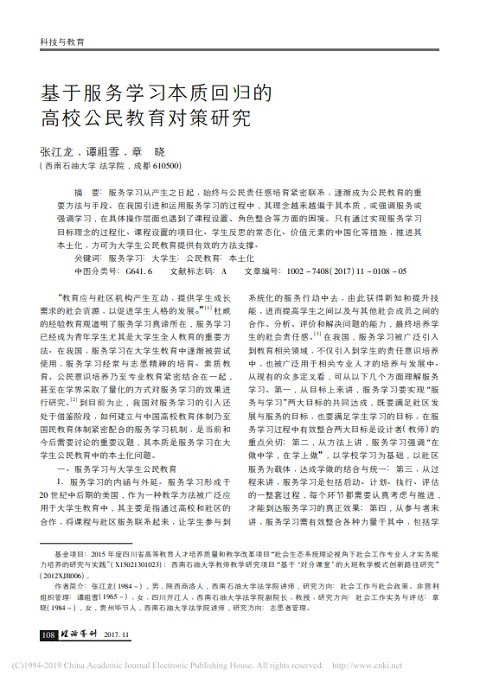 Research on Countermeasures of College Citizenship Education Based on the Return of Service Learning Essence (Journal of Socialist Theory Guide) 出版年份: 2017 作者: Zhang Jianglong | Tan Zuxue | Zhang Xiao 机构作者: Shaanxi Provincial Party School of the Communist Party of China Service learning has always been closely related to the cultivation of civic sense of responsibility since its birth, and has gradually become an important method of civic education. In the process of introducing and applying service learning in our country, its concept is more and more biased to its essence, or emphasizes service or learning, and it also encounters the dilemma of curriculum setting, role integration and other aspects at the specific operation level. Only by implementing the process of service learning objectives and concepts, the project of curriculum setting, the normalization of students’ reflection, the Sinicization of value elements and other measures, and promoting its localization, can we provide effective method support for college students’ civic education.
  한 세대 후 교육 2050년의 한국교육은 어떻게 변해 있을까? (Future Horizon Plus 제42권 제5호) 出版年份: 2019 作者: 서영인 机构作者: 과학기술정책연구원 세대를 평균 30년으로 보면 향후 약 2050년경의 한국교육은 어떻게 변해 있을까? 변화에는 인간의 의지가 작동하는 변화와 그와 상관없이 나타나는 변화가 있을 수 있다. 전자의 경우가 대부분이지만 간혹 후자가 작동하는 경우도 있다. 자연재해나 불의의 각종 사고 등이 그것이다. 그러나 현재의 모습이 과거 인간의 생각과 상상력의 결과라는 점을 인정한다면 한 세대 후 교육 역시 현재 인간의 상상력과 의지가 작동한 결과로 볼 수 있어 전자의 경우에만 한정하여 미래 교육을 예측해보려고 한다.
 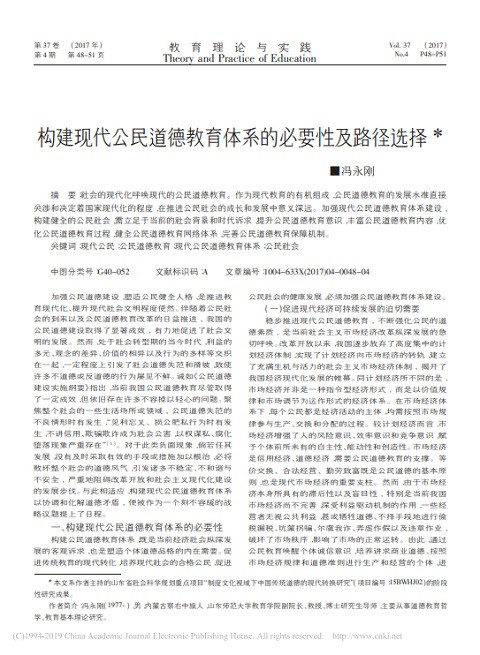 The Necessity and Path Selection for the Construction of Modern Citizen Moral Education System (Theory and Practice of Education; Vol. 37, No. 4) 出版年份: 2017 作者: Feng Yong-gang 机构作者: Shanxi Education Association Social modernization calls for modern citizen moral education. As the organic composition of modern education, development quality of citizen moral education directly relate and determine the country’s modernization level, have the far- reaching significance in promoting the growth and development of the civil society. The strengthen of the construction of modern citizen moral education system which can help build a healthy civil society, should base on the current social background and era demand, enhance the consciousness of citizen moral education, enrich the content of citizen moral education, optimize the process of citizen moral education, improve the network system of citizen moral education, perfect the safeguard mechanism of citizen moral education. 构建现代公民道德教育体系的必要性及路径选择 (教育理论与实践; Vol. 37, No. 4) 出版年份: 2017 作者: Feng Yong-gang 机构作者: Shanxi Education Association 社会的现代化呼唤现代的公民道德教育。作为现代教育的有机组成,公民道德教育的发展水准直接 关涉和决定着国家现代化的程度,在推进公民社会的成长和发展中意义深远。加强现代公民道德教育体系建设, 构建健全的公民社会,需立足于当前的社会背景和时代诉求,提升公民道德教育意识,丰富公民道德教育内容,优 化公民道德教育过程,健全公民道德教育网络体系,完善公民道德教育保障机制。 基于服务学习本质回归的高校公民教育对策研究 (理论导刊) 出版年份: 2017 作者: Zhang Jianglong | Tan Zuxue | Zhang Xiao 机构作者: Shaanxi Provincial Party School of the Communist Party of China 服务学习从产生之日起,始终与公民责任感培育紧密联系,逐渐成为公民教育的重 要方法与手段。在我国引进和运用服务学习的过程中,其理念越来越偏于其本质,或强调服务或 强调学习,在具体操作层面也遇到了课程设置、角色整合等方面的困境。只有通过实现服务学习 目标理念的过程化、课程设置的项目化、学生反思的常态化、价值元素的中国化等措施,推进其 本土化,方可为大学生公民教育提供有效的方法支撑。
 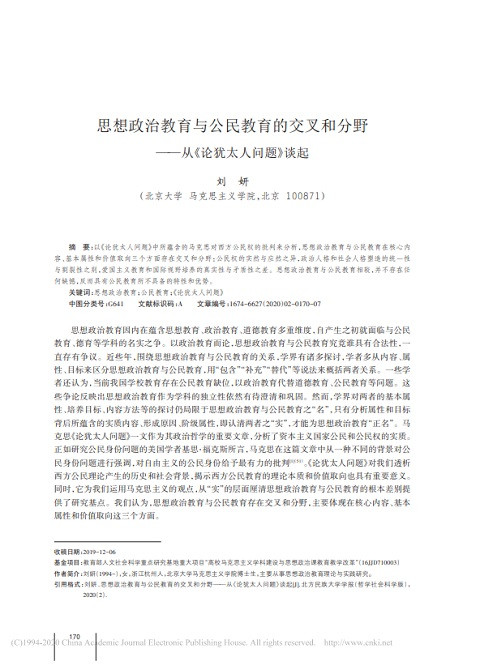 思想政治教育与公民教育的交叉和分野: 从《论犹太人问题》谈起 (北方民族大学学报; No. 2) 出版年份: 2020 作者: Liu Yan 机构作者: North Minzu University 以《论犹太人问题》中所蕴含的马克思对西方公民权的批判来分析,思想政治教育与公民教育在核心内容、基本属性和价值取向三个方面存在交叉和分野:公民权的实然与应然之异,政治人格和社会人格塑造的统一性与割裂性之别,爱国主义教育和国际视野培养的真实性与矛盾性之差。思想政治教育与公民教育相较,并不存在任何缺憾,反而具有公民教育所不具备的特性和优势。
  Theoretical Basis and Training System of Digital Citizenship 出版年份: 2020 作者: Zheng Yunxiang | Zhong Jinping | Huang Liuhui | Yanghao 机构作者: China Educational Technology Nowadays, cases of abuse and misuse of information technology are not uncommon, causing many negative effects and social problems that are extremely harmful to people, such as Internet fraud and cyberbullying. Practice all over the world shows that enhancing digital citizenship is an effective way to solve these problems. In order to call for emphasis on digital citizenship, this paper discussed its theoretical basis and training system in detail. Specifically, it firstly defined the concept of digital citizenship, then comprehensively discussed the content of digital citizenship through literature research, which constituted four first-level content indicators and eleven sub-indicators. After clarifying the connotation and extension of digital citizenship, this paper continued to discuss its uniqueness and irreplaceability, so as to highlight its necessity. Then the importance and meaning of implementing digital citizenship education were stated respectively. Based upon this theoretical foundation and our national conditions, a three-oriented digital citizenship training system was finally proposed. The cultivation of qualified digital citizens is imperative, as it helps to enhance the overall improvement of core literacy and Digital Intelligence Quotient, and facilitate the construction of a civilized and harmonious digital society and the achievement of Lide Shuren goal as well. 数字公民素养的理论基础与培养体系 出版年份: 2020 作者: Zheng Yunxiang | Zhong Jinping | Huang Liuhui | Yanghao 机构作者: China Educational Technology 当前,技术的滥用、误用产生了诸如网络诈骗、网络欺凌等社会问题,带来了负面影响和危害。世界各国的实践证明,提升数字公民素养是解决这些问题的有效途径。为倡议并呼吁重视数字公民素养,该文围绕数字公民素养的理论基础和培养体系展开论述。首先界定了数字公民素养的概念,通过文献研究法详细探讨了数字公民素养的主要内容,包括4项一级内容指标和11项二级内容指标。在界定数字公民素养的内涵与外延后,该文深入论述了它的独特性与不可替代性,以凸显其必要性。然后阐述了数字公民素养的重要性以及实施数字公民教育的意义所在,并在此基础上结合国情提出基于“三面向”的数字公民素养培养体系。合格数字公民的培育势在必行,数字公民素养的提升能带动核心素养和数字智商的全面提高,从而促进文明、和谐数字社会的构建和立德树人目标的实现。
  Research on Digital Competence of EU Citizens: A Comparative Analysis Based on the Dig Comp1.0, 2.0 and 2.1 (International and Comparative Education; No. 6) 出版年份: 2020 作者: Zheng Xudong | Fan Xiaoyu 机构作者: Beijing Normal University The explosive development of digital technology has revolutionized the competences of social citizens. In 2006, EU proposed digital competence, based on it, EU established A Framework for Developing and Understanding Digital Competence in Europe (Dig Comp 1.0). After releasing two revisions of Dig Comp 1.0, the Digital Competence Framework for Citizens (Dig Comp 2.1) was officially released in 2017. Compared with the former versions, Dig Comp 2.1 expanded digital competences areas, revised the competences names, no longer described the specific competences from KSA (knowledge, skill and attitude) perspective, and the proficiency of the competences were divided into more detailed 8 proficiency level. The Dig Comp 2.1 contained the following values: a. the transformation of the concept of digital citizenship education; b. paying attention to the competences of complex problem solving and innovation; c. looking forward to the future development of intelligent society; d. supporting the development of lifelong learning and developing qualified digital citizens. Dig Comp 2.1 has enlightenment for building a learning society in China, and that of improving the digital competences of Chinese citizens.