
相关资源
探索丰富的全球公民教育资源,深化理解,促进研究、倡导、教学与学习。
共找到2,199条结果
 Epistemología del Sur: una visión descolonial a los Objetivos de Desarrollo Sostenible 出版年份: 2016 作者: Javier Collado Ruano 机构作者: Universidade de Sao Paulo El objeto de investigación del presente artículo es identificar las diferentes perspectivas epistemológicas y metodológicas que han emergido desde el Sur global. También se aborda la irrupción de la globalización y los procesos transfronterizos del cambio climático desde la denominada “epistemología del sur”. Como resultado, se manifiesta la necesidad de crear puentes transculturales entre los pueblos de todo el mundo para superar la encrucijada paradigmática en la que nos encontramos como sistema-mundo, con la finalidad de alcanzar los Objetivos de Desarrollo Sostenible establecidos por los Naciones Unidas para el año 2030.
  Education for global and multicultural citizenship: a strategy for Victorian Government schools 2009-2013 出版年份: 2009 机构作者: State of Victoria (Australia) | Melbourne. Department of Education and Early Childhood Development. Office of Government School Education. Student Learning Programs Division The purpose of this strategy is to provide a renewed vision for global and multicultural education in Victorian Government schools; to align priorities to current legislative, policy and curriculum frameworks; and to guide action across schools, regions and the Department. The strategy offers a new concept for thinking about multicultural education: global and multicultural citizenship. The actions outlined will pursue the following objectives: improving educational outcomes for all students through the implementation of inclusive practices and through learning and teaching that utilises the Victorian Essential Learning Standards (VELS) domains relevant to global and multicultural citizenshipdeveloping the intercultural literacies that students, parents, educators, and leadership groups need to live and work as part of a diverse and globalised populationpromoting social cohesion and diversity as sources of educational and economic advantage for all students • enhancing the engagement, wellbeing and sense of belonging for all students in safe and secure learning environmentsbuilding the capacity of the school community to identify and address overt, subtle and institutionalised racism, stereotyping and other forms of prejudicebuilding and sustaining inclusive and participative school–community partnerships that prepare all students for global and multicultural citizenship. Education à la Citoyenneté Mondiale et Multiculturelle: une stratégie pour les écoles Victorienne Governement 2009-2013 出版年份: 2009 机构作者: State of Victoria (Australia) | Melbourne. Department of Education and Early Childhood Development. Office of Government School Education. Student Learning Programs Division Le but de cette stratégie est de fournir une vision renouvelée de l'éducation globale et multiculturelle dans les écoles publiques victorienne; d'aligner les priorités des cadres législatifs, politiques et programmes actuels; et pour guider l'action dans les écoles, les régions et le ministère. La stratégie offre un nouveau concept pour la réflexion sur l'éducation multiculturelle: mondiale et citoyenneté multiculturelle. Les actions décrites poursuivra les objectifs suivants:Améliorer les résultats scolaires pour tous les élèves grâce à la mise en œuvre de pratiques inclusives et par l'apprentissage et l'enseignement ont fait utliser les Normes d'Apprentissage Essentielles Victoriennes (NAEV) les domaines pertinents à la citoyenneté mondiale et multiculturelle développer les alphabétisations interculturelles ne élèves, les parents, les éducateurs et les groupes de leadership doivent vivre et travailler dans le cadre d'une diversité et globalisé promo population ting cohésion sociale et la diversité comme sources d'avantage éducatif et économique pour tous les élèves • renforcement de la participation, bien-être et le sentiment d'appartenance pour tous les élèves dans des environnements d'apprentissage sûrs et sécurisésle renforcement des capacités de la communauté scolaire pour identifier et traiter ouvertement, subtile et institutionnalisés racisme, les stéréotypes et d'autres formes de renforcement des préjugés et de maintien de partenariats inclusifs et participatifs scolaires communautaires a fait préparer tous les élèves à la citoyenneté mondiale et multiculturelle.
  Integration or Inclusion in Education? 出版年份: 2020 作者: Dilmurod Yusupov How to create true inclusive conditions for children with disabilities and developmental disabilities so that they can receive a quality education and subsequently find decent work? Analysis of a draft document on the development of inclusive (integrated) education prepared by INR. Интеграция или инклюзия в образовании? 出版年份: 2020 作者: Dilmurod Yusupov Как создать настоящие инклюзивные условия для детей с инвалидностью и особенностями в развитии, чтобы они могли получать качественное образование и впоследствии найти достойную работу? Анализ проекта документа о развитии инклюзивного (интегрированного) образования, подготовленного МНО.
  감염병 보도 규제의 현황 및 개선 방안 (이슈와 논점 제1665호) 出版年份: 2020 作者: 김여라 机构作者: 국회입법조사처 최근 코로나바이러스감염증-19의 확산으로 언론의 관련 보도가 증가하면서 부정확하고 자극적인 보도, 불필요한 피해자 신원 노출, 특정 집단에 대한 혐오 확산 등에 대한 우려가 높아지고 있다. 하지만 우리의 일상생활과 밀접하게 관련이 있으면서도 알려진 정보가 없는 신종 감염병과 관련하여 국민들은 정부의 발표와 더불어 추가적인 언론보도에 의존할 수밖에 없는 상황이다. 특히 코로나19의 급격한 확산으로 인해 불안감이 심해지는 상황에서 언론의 역할은 매우 중요하다. 이 글에서는 감염병 보도 관련 규제 현황과 감염병 보도의 문제점을 살펴본 후, 감염병 보도에 대한 규제를 법률적 규제와 자율적 규제로 나누어 개선방안을 제시하고자 한다.
  Responding to Covid-19: Online Classes in Korea - A Challenge Toward the Future of Education 出版年份: 2020 机构作者: Korea R. Ministry of Education Korea is effectively responding to the outbreak of COVID-19 by adopting a whole-of-government approach, under the leadership of the Central Disaster and Safety Countermeasures Headquarters to prevent and contain the pandemic with the principle of “openness, transparency and democratic process.” The nationwide introduction of the online classes to respond to COVID-19 was a huge challenge and a path that we have never trodden before. The Ministry of Education of the Republic of Korea introduced Korean education with the world in response to COVID-19 and shared experiences and challenges of distance learning and online education. COVID-19 is a universal challenge which requires joint response, and the global community should be committed to strong solidarity and close cooperation to overcome this crisis and take a leap forward to a brighter future. 코로나19 대응: 한국의 온라인개학 - 미래교육을 위한 도전 出版年份: 2020 机构作者: Korea R. Ministry of Education 대한민국 교육부가 한국의 온라인 개학을 통한 교육분야의 코로나19 대응을 해외에 소개하고 경험을 공유하기 위해 발간한 자료로 원격교육과 온라인 교육의 사례와 미래교육이 당면한 도전과제에 대해서 다루고 있다. 코로나19는 세계가 함께 극복해 나가야 할 공동 과제로서 모든 국가가 상호 연대와 협력을 통해 난관을 극복하고 도약할 수 있을 것이라고 전망한다.
 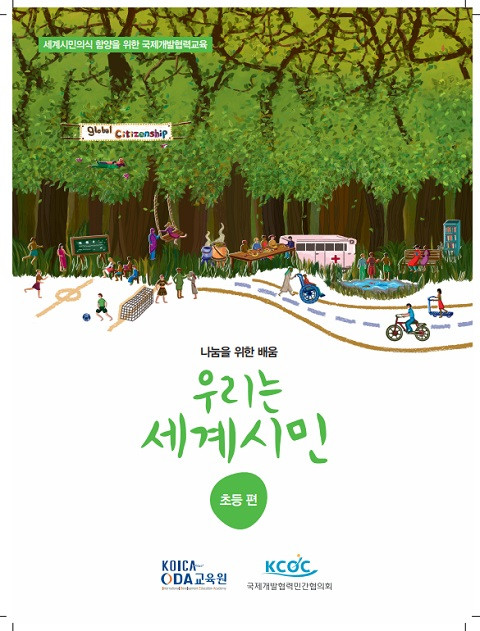 우리는 세계시민: 나눔을 위한 배움; 초등 편 出版年份: 2013 作者: 고아라 | 고영주 | 김영미 | 성은경 | 홍지영 机构作者: KOICA ODA 교육원 | 국제개발협력민간협의회 우리는 세계시민(초등편)은 상호연계성, 인권, 빈곤, 국제개발 진로 등 세계시민교육 관련 교사용 교수학습자료로 학생용 워크북이 포함되어 있다.
 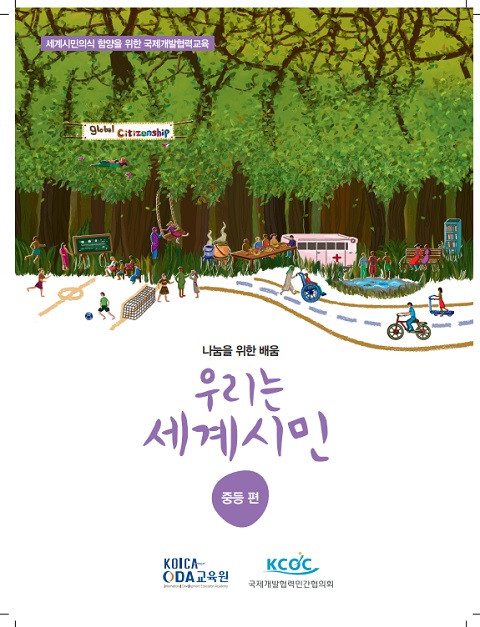 우리는 세계시민: 나눔을 위한 배움; 중등 편 出版年份: 2013 作者: 고아라 | 고영주 | 김영미 | 성은경 | 홍지영 机构作者: KOICA ODA 교육원 | 국제개발협력민간협의회 우리는 세계시민(중등편)은 상호연계성, 인권, 빈곤, 국제개발 진로 등을 주제로 한 세계시민교육 교사용 교수학습자료이다. 학생용 워크북 및 선택활동이 포함되어 있다.