
相关资源
探索丰富的全球公民教育资源,深化理解,促进研究、倡导、教学与学习。
共找到1,322条结果
 Freedom of Expression, Media and Information Literacy and Digital Competencies to Support Peace and Human Rights: Thematic Paper 出版年份: 2022 机构作者: UNESCO This document is part of the thematic papers developed by UNESCO to inform the Revision of the 1974 Recommendation concerning education for international understanding, co-operation and peace. It focuses on Freedom of Expression, Media and Information Literacy and Digital Competencies that are not currently covered in the Recommendation but that require greater attention in the revised version in view of ensuring it addresses contemporary challenges to lasting peace.
  The Relevance and Contributions of Education for Health and Well-Being to the Advancement of Human Rights, Sustainable Development & Peace: Thematic Paper 出版年份: 2022 机构作者: UNESCO This document is part of the thematic papers developed by UNESCO to inform the Revision of the 1974 Recommendation concerning education for international understanding, co-operation and peace. This paper aims to provide a few recommendations for revising the 1974 Recommendation.
 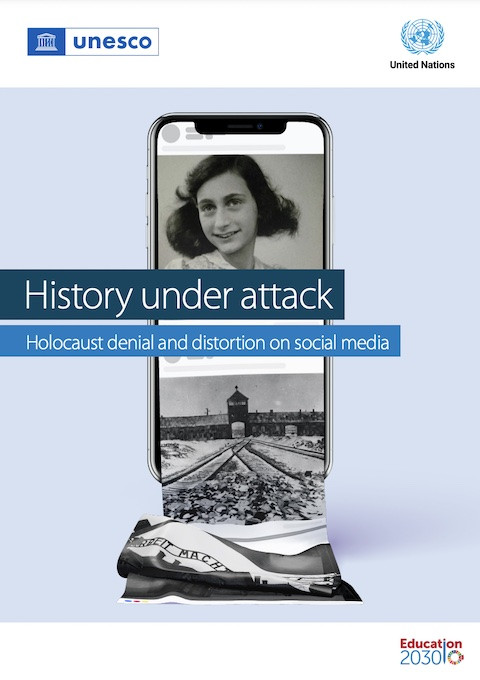 History Under Attack: Holocaust Denial and Distortion on Social Media 出版年份: 2022 机构作者: Организация Объединенных Наций по вопросам образования, науки и культуры (UNESCO) | United Nations (UN) Holocaust denial and distortion are dangerous. It is an attack on truth and knowledge. It feeds on and spreads antisemitic tropes and prejudices, and threatens our understanding of one of the most tragic and violent histories: The genocide of six million Jews by Nazi Germany, its allies and collaborators. In countries across Europe, people became complicit in the persecution and murder of their neighbours. Holocaust denial and distortion can prevent society from reckoning with this past. It impedes our comprehension of the causes and warning signs of genocide, and that might strengthen efforts for genocide prevention. It is insulting to the victims and survivors of the Holocaust, and risks the rehabilitation of violent, antisemitic ideologies. At its most extreme, it celebrates and glorifies this history, inciting violence against Jews and calling for another genocide. The United Nations and UNESCO condemn the rise of Holocaust denial and distortion online as a dangerous form of hatred, and commissioned this report in partnership with the World Jewish Congress to raise awareness of the forms and functions of Holocaust denial and distortion on social media, and determine a series of policy and educational responses. This report is a data-driven investigation into the extent and nature of Holocaust denial and distortion on online platforms. It is based on a manual review of almost 4,000 pieces of content collected in June and July 2021 that related to Jews, the Holocaust, antisemitism and Holocaust denial and distortion from five major online platforms and messenger apps. It looks at content posted on Facebook, Instagram, Telegram, TikTok and Twitter: some of the world’s largest online platforms and collectively home to billions of users. It addresses content in four different languages: English, French, Spanish and German, with the aim of providing a wide-ranging review that addresses multiple countries and contexts. This report aims to answer four questions:How much Holocaust-related content on social media either denies the Holocaust or distorts key elements of history?What are the key narratives in contemporary Holocaust denial and distortion?How are Holocaust denial and distortion communicated, and how are they situated within wider discourses and frames?What can online platform companies, policy-makers, educators and organizations promoting Holocaust remembrance, education and research do to tackle the problem? Based on the findings of this report, it provides a series of recommended actions that online platforms, policy-makers, civil society, researchers and educators can implement to prevent and counter Holocaust denial and distortion online.
 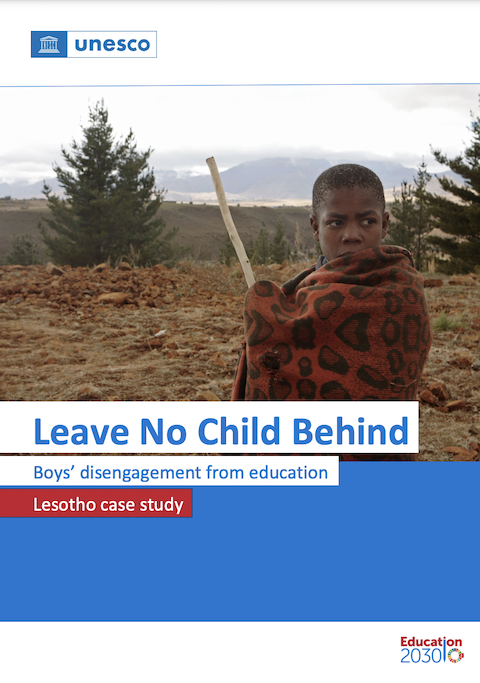 Leave No Child Behind: Boys’ Disengagement From Education; Lesotho Case Study 出版年份: 2022 作者: Paseka A. Mosia 机构作者: 유네스코 In the framework of its work gender equality in and through education better understand boys’ disengagement from education, UNESCO commissioned five country case studies to inform the publication “Leave no child behind: Global report on boys’ disengagement from education”. National research teams examined the situation in five countries – Fiji, Kuwait, Lesotho, Peru and the United Arab Emirates.This case study presents the results from Lesotho.
  School Violence and Bullying of Children With Disabilities in the Eastern and Southern African Region: A Needs Assessment 出版年份: 2022 作者: Thesandree Padayachee | Nithya Srinivasan | Mark Carew | Marcella Deluca | Amyn Lalji 机构作者: Leonard Cheshire (UK) | 联合国教科文组织 (UNESCO) This study looked at the robustness of policy and legal frameworks and the needs of teachers and learners with disabilities in regard to addressing school violence and bullying within the Eastern and Southern African region. The study comprised both a policy analysis and primary qualitative research within five countries in the Eastern and Southern African region (Botswana, Kenya, Lesotho, South Africa and Zambia).
 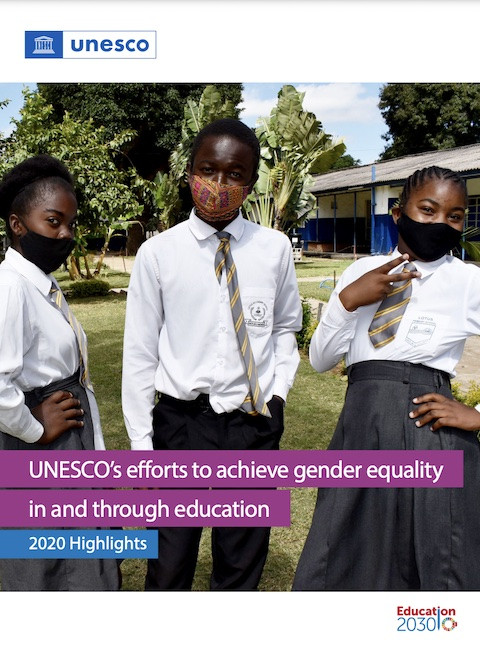 UNESCO’s Efforts to Achieve Gender Equality in and Through Education: 2020 Highlights 出版年份: 2022 机构作者: UNESCO This report presents highlights of UNESCO’s work in 2020 to advance gender equality in and through education.UNESCO's work in this area is guided by the UNESCO strategy for gender equality in and through education 2019–2025, and supported by Her Education, Our Future, which was launched in parallel with the strategy, to leverage political and financial commitments, cooperation and joint action for girls’ and women’s education.
 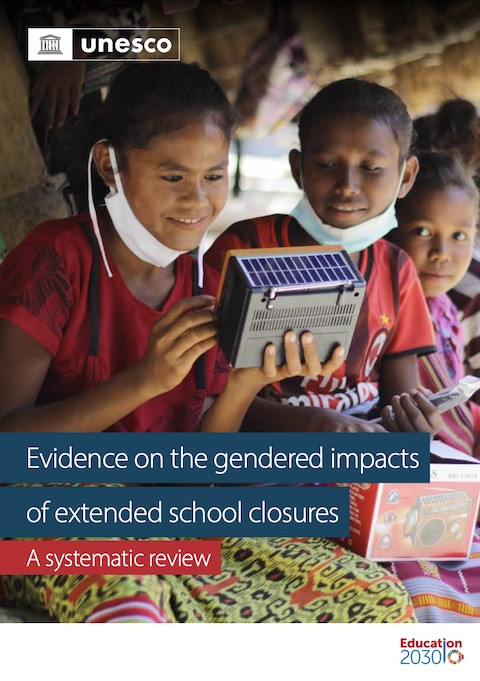 Evidence on the Gendered Impacts of Extended School Closures: A Systematic Review 出版年份: 2022 机构作者: UNESCO School closures to mitigate the spread of COVID-19 have affected nearly 1.6 billion learners across the globe. While the scale of these closures is unprecedented, in recent decades children in many contexts have been out of school for long periods due to other pandemics, disruptions and disasters such as floods, earthquake and conflicts – with marked gender effects.Building on the findings of 154 studies from every region of the world, this study investigates the evidence on the gendered impacts of extended school closures and periods out of school. Through a systematic review of the evidence, it highlights how these can deepen gendered exclusions and vulnerabilities – with the poorest children being the most affected.Undertaken by a team of leading academic experts on gender equality and education, Evidence on the gendered impacts of extended school closures: A systematic review aims to prevent and mitigate adverse outcomes arising from extended periods of time out of school, by ensuring that responses to current and future crises are informed by a solid understanding of their effects on children’s education, health, well-being and protection.
  Los actores no estatales en la educación superior: ¿Una visión compartida de la calidad y la asequibilidad? (Policy Paper 47) 出版年份: 2022 机构作者: UNESCO Los actores no estatales acogen a más de un tercio del alumnado de educación superior en todo el mundo, un porcentaje considerablemente más elevado que en la educación primaria o secundaria. Los proveedores son diversos y responden a una variedad de necesidades, y a menudo no hay una división clara entre los sectores estatal y no estatal. Los actores no estatales son además protagonistas importantes en la financiación de la educación superior a través de los hogares, los mecanismos de mercado y las alianzas público-privadas. A raíz de ello, estos actores desempeñan un papel significativo e influyen en la elaboración de normativas y políticas, así como en la configuración del sistema de educación superior en su conjunto. Los gobiernos deben garantizar la calidad y equidad —las dimensiones clave de la meta 4.3 de los Objetivos de Desarrollo Sostenible (ODS)—, independientemente del modo en que los actores estatales y no estatales compartan responsabilidades.
  [Resumen] Informe de seguimiento de la educación en el mundo 2021/2: Los actores no estatales en la educación; ¿quién elige? ¿quién pierde? 出版年份: 2022 机构作者: UNESCO El papel de los actores no estatales se extiende más allá de la escolarización a las intervenciones en diferentes niveles educativos y esferas de influencia. Junto con su revisión del progreso hacia el ODS 4, incluida la evidencia emergente sobre el impacto de la pandemia de COVID-19, el Informe de Seguimiento de la Educación en el Mundo 2021/2 insta a los gobiernos a considerar a todas las instituciones, estudiantes y docentes como parte de un solo sistema. Los estándares, la información, los incentivos y la rendición de cuentas deberían ayudar a los gobiernos a proteger, respetar y cumplir el derecho a la educación para todos, sin apartar la vista de los privilegios o la explotación. La educación financiada por el estado no tiene que ser proporcionada por el estado, pero se debe abordar la disparidad en los procesos educativos, los resultados de los estudiantes y las condiciones de trabajo de los maestros. La eficiencia y la innovación, en lugar de ser secretos comerciales, deben ser compartidos y practicados por todos. Con este fin, se debe mantener la transparencia e integridad del proceso de formulación de políticas de educación pública para bloquear los intereses creados. El grito de guerra del informe: ¿Quién elige? ¿Quién pierde? – invita a los responsables de la toma de decisiones políticas a cuestionar las relaciones con los actores no estatales en términos de elecciones fundamentales: entre equidad y libertad de elección; entre fomentar la iniciativa y establecer estándares; entre grupos de diferentes medios y necesidades; entre los compromisos inmediatos bajo el ODS 4 y los que se lograrán gradualmente (por ejemplo, educación postsecundaria); y entre la educación y otros sectores sociales. [Résumé] Rapport mondial de suivi sur l’éducation, 2021-2022: Les acteurs non étatiques dans l’éducation; Qui décide? qui est perdant? 出版年份: 2022 机构作者: UNESCO Le rôle des acteurs non étatiques s'étend au-delà de la scolarisation à des interventions à différents niveaux d'éducation et sphères d'influence. Parallèlement à son examen des progrès vers l'ODD 4, y compris les preuves émergentes sur l'impact de la pandémie de COVID-19, le Rapport mondial de suivi sur l'éducation 2021/2 exhorte les gouvernements à considérer tous les établissements, étudiants et enseignants comme faisant partie d'un système unique. Les normes, l'information, les incitations et la responsabilité devraient aider les gouvernements à protéger, respecter et réaliser le droit à l'éducation de tous, sans détourner les yeux des privilèges ou de l'exploitation. L'éducation financée par l'État n'a pas à être fournie par l'État, mais la disparité dans les processus éducatifs, les résultats des élèves et les conditions de travail des enseignants doit être abordée. L'efficacité et l'innovation, plutôt que d'être des secrets commerciaux, doivent être diffusées et pratiquées par tous. À cette fin, la transparence et l'intégrité du processus d'élaboration des politiques d'éducation publique doivent être maintenues pour bloquer les intérêts acquis. Le cri de ralliement du rapport – Qui choisit ? Qui perd ? – invite les décideurs politiques à questionner les relations avec les acteurs non étatiques en termes de choix fondamentaux : entre équité et liberté de choix ; entre l'incitation à l'initiative et l'établissement de normes ; entre des groupes aux moyens et aux besoins variés ; entre les engagements immédiats au titre de l'ODD 4 et ceux à concrétiser progressivement (par exemple, l'enseignement postsecondaire) ; et entre l'éducation et les autres secteurs sociaux.