
相关资源
探索丰富的全球公民教育资源,深化理解,促进研究、倡导、教学与学习。
共找到2,668条结果
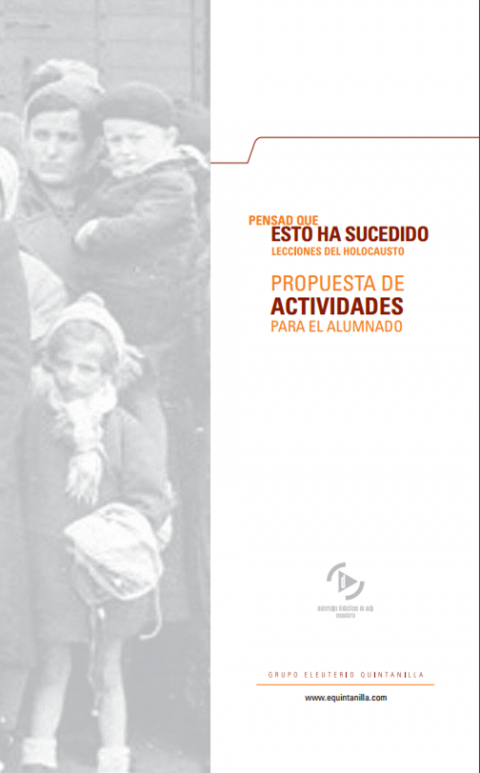 Pensez ce cours s'est passé de l'Holocauste: les activités proposées pour les étudiants 出版年份: 2007 机构作者: Grupo Eleuterio Quintanilla Ce guide de ressources publiées par l'association anti-raciste espagnol "Grupo Eleuterio Quintanilla" a été développé pour les enseignants à aborder l'Holocauste en examinant le processus historique et sa situation par le biais de documents juridiques et historiographiques.
  Dakar Office: Annual Report 2017 出版年份: 2018 机构作者: UNESCO Dakar Across the globe, the 2030 Agenda remains the unifying tool of the international community in the construction of a prosperous, peaceful, and sustainable world for all. The 17 Sustainable Development Goals are the expression of a shared global and transformative vision to change the world and improve the well-being of all peoples. UNESCO plays a transformative role in the implementation of this agenda, thanks to its education, culture, sciences and communication and information programmes.This annual report underlines the drive and spirit of our team in promoting innovation to uphold the 2030 and 2063 Agendas. It is a resounding testament to the unwavering forts of our team in 2017, and the depth of their commitment to advance the ideals and objectives of UNESCO.The 2017 Annual Report of the UNESCO Regional Office covers seven countries in the region: Burkina Faso, Cabo Verde, Guinea-Bissau, Niger, Senegal, The Gambia as well as Mali, supported by the national office in Bamako.
  Holocaust education: An investigation into the types of learning that take place when students encounter the Holocaust This study employs qualitative methods to investigate the types of learning that occurred when students in a single school encountered the Holocaust. The study explored the experiences of 48 students, together with two of their teachers and a Holocaust survivor who visited the school annually to talk to the students. A thematic analysis was conducted to identify prevalent similarities in the students’ responses. Three themes were identified, analysed and discussed. The three themes were: ‘surface level learning’ (their academic knowledge and understanding of the Holocaust), ‘affective learning’ (their emotional engagement with the topic) and ‘connective learning’ (how their encounter with the Holocaust fitted their developing worldview). The first theme revealed that students had a generally sound knowledge of the Holocaust, but there were discrepancies in the specifics of their knowledge. The second theme revealed that learning about the Holocaust had been an emotionally traumatic and complicated process. It also revealed that meeting a Holocaust survivor had a significant impact upon the students, but made them begin to question the provenance of different sources of Holocaust learning. The third theme showed that students had difficulty connecting the Holocaust with modern events and made flawed connections between the two. Finally, the study examines the views of the Holocaust survivor in terms of his intentions and his reasons for giving his testimony in schools. The study’s conclusions are drawn within the context of proposing a new conceptualization of the Holocaust as a ‘contested space’ in history and in collective memory. A tripartite approach to Holocaust Education is suggested to affect high quality teaching within the ‘contested space’ of the event. (By the author) The Holocaust and Historical Empathy: The Politics of Understanding It is difficult to choose secondary and primary sources for young historians. According to the author, two factors affect a student researcher’s decision when choosing sources. The first is in regards to his or her set of unique experiences and, secondly, how the researcher filters the available sources through a personal lens. Since we live in an information-rich world, student researchers often do not have a sustained attention of the past. This impedes historical understanding, which requires in-depth analysis and perspective taking. According to the author, history is one of the most controversial subjects taught. In reference to the Holocaust, since it is so politically charged, there are more issues than simple understanding. There may be difficulties in attempting to balance the cognitive and affective aspects of the Holocaust objectively. It is important for student researchers to build a framework around which to understand history through analysis of historical evidence. The author continues the article in three separate sections. The first deals with the politics of the Holocaust and how it is often a challenge to teach and sometimes creates a barrier to historical understanding. The second section discusses a methodological process and outcome interpretation of historical empathy in relation to the Holocaust. The final section critiques three popular curriculum guides on the Holocaust within the framework of historical empathy. The author concludes by discussing the considerations teachers face when teaching the Holocaust, such as whether to use prepared curriculum materials. The author also suggests that teachers employ the four constructs of historical empathy as outlined in the text and by Yeager, which provides students a framework for examining a historical event. Teachers must be cognizant of their positionalities and be clear about the reasons for teaching the Holocaust. (By the publisher) Holocaust education: challenges for the future The theme of the 2012 Ethel LeFrak Holocaust Education Conference was Holocaust Education: Challenges for the future. Its purpose was to bring together well-known scholars who could share with conference participants their research and reflections about what the Holocaust has to teach students about the dangers of dictatorship and apathy in the face of prejudice. Its purpose also was to inform participants about the 1994 genocide in Rwanda so that teachers also can incorporate teaching about the terrible event into their curricula. The essays in this book are intended to educate and encourage students and others who may be in situations to see, judge, and act on behalf of those whose lives are in danger. Studying about the Holocaust should encourage the people to help others in need. (By the USHMM)
 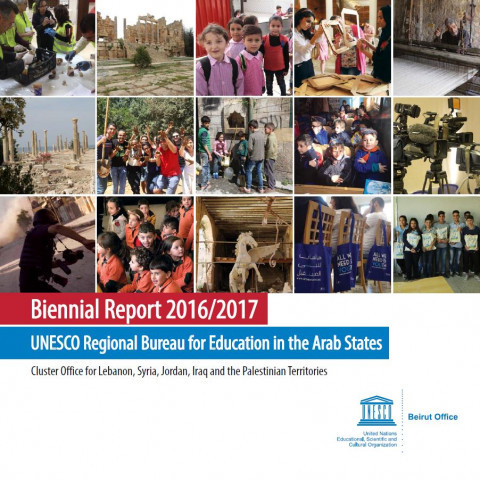 Biennial Report 2016/2017: UNESCO Regional Bureau for Education in the Arab States 出版年份: 2018 机构作者: UNESCO Beirut As Regional Bureau for Education, UNESCO Beirut is the lead coordinator for SDG 4 in the Arab Region. We strive to provide tangible support for each Member State in the region, taking into account national needs and priorities, thereby employing nationally relevant approaches. More specifically, our work aims to address both the humanitarian and development aspects brought about by the protracted crisis in Syria through bridging the learning gaps for the youth, both for Syrian refugees and vulnerable youth in host communities. Our response also targets teachers, mentors and facilitators as well as Ministries’ technical officials. The crisis in Syria has created a need for specific support in education in emergencies and quality education to which we actively engage from both, upstream analytical and capacity building and downstream operational levels. UNESCO Beirut has also strengthened its leadership to respond to the deliberate destruction of cultural heritage, illicit trafficking, and attacks against individuals on religious or cultural grounds. We raise the alarm to protect heritage in danger, assessing damages to World Heritage sites in conflict. We also raise awareness among the public about the values of cultural heritage and the need to protect it for future generations. In today’s diverse societies, the Organization’s fundamental humanist mission guides us to support people, especially the youth, in understanding each other and working together to build lasting peace and enables people to create and use knowledge for just and inclusive societies. We continue to advocate free, independent and pluralistic media in print, broadcast and online to enhance freedom of expression as a contributor to peace, sustainability, poverty eradication and human rights. This biennial report summarizes the work and achievements accomplished between 2016 and 2017 by our office. Arab Teachers and Holocaust Education: Arab Teachers Study Holocaust Education in Israel This paper examined whether change occurred in the attitudes of Arab teachers in Israel toward Holocaust education following an in-service study course. Survey and interview data indicated that after the course, teachers had a better understanding of what occurred during the Holocaust, and their willingness to know about its effects on Jewish people increased. However, the Israeli-Palestinian conflict impacted participants' views. (By the author) Teaching and Learning about the Holocaust through Visiting an Exhibition This article evaluates a teaching initiative that aimed to teach about the Holocaust through a traveling exhibit on Anne Frank. Data from 10 case study schools show the success of the approach and some ways in which the teaching relevance might have been strengthened. (By the author)
 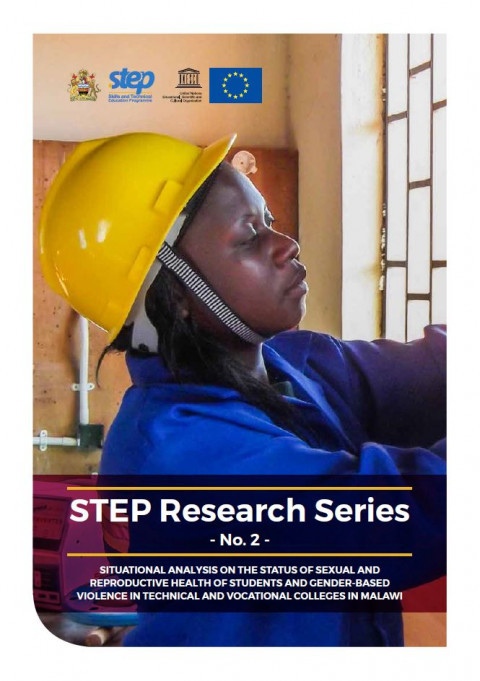 Situational Analysis on the Status of Sexual and Reproductive Health of Students and Gender-based Violence in Technical and Vocational Colleges in Malawi (STEP Research Series No. 2) 出版年份: 2017 机构作者: Skills and Technical Education Programme (STEP) Funded by the EU and implemented by UNESCO in collaboration with the Government of Malawi, the Skills and Technical Education Programme (STEP) is dedicated to reinforcing Technical, Entrepreneurial and Vocational Education and Training (TEVET) in Malawi.The programme will run from 2016-2020 and aims to improve TEVET at post-secondary level with a focus on equal access to enrolment, with particular emphasis on female learners; improving quality in the sector; and the establishment of clear governance structures. The STEP Research Series presents the highlights of the research undertaken by the programme.The situational analysis on the status of sexual and reproductive health of students and gender-based violence in technical and vocational colleges in Malawi is the second report in the STEP Research Series.
 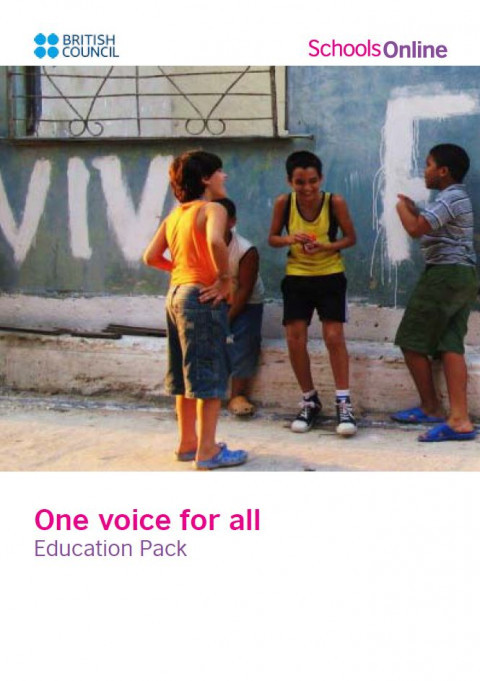 One Voice for All: Education Pack 出版年份: 2013 机构作者: British Council One Voice for All is a set of resources designed to help teachers work on the Connecting Classrooms themes of Rights and Responsibilities and Fairness and Equality through an exploration of human rights and street children. Its focus is the UN Convention on the Rights of the Child and it aims to allow learners to develop understanding of the key concepts of global citizenship, universal rights and justice.This resource aims to give young people the opportunity to understand the complexity of the wider world in which they live by exploring inequality and steps to address it.