
相关资源
探索丰富的全球公民教育资源,深化理解,促进研究、倡导、教学与学习。
共找到1,727条结果
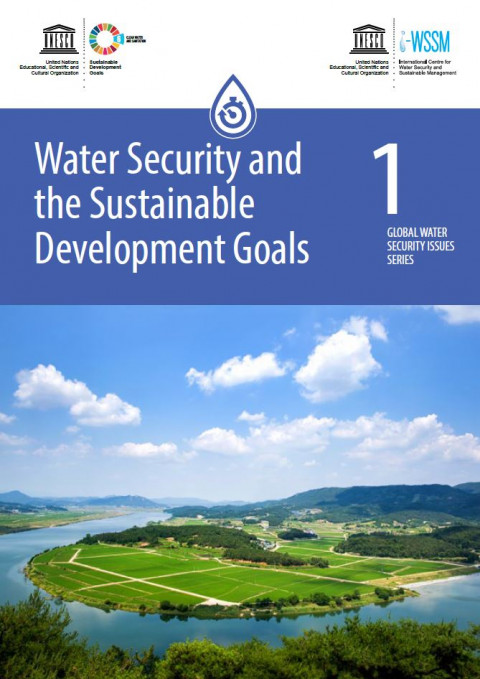 Water Security and the Sustainable Development Goals (Global Water Security Issues Series, 1) 出版年份: 2019 机构作者: UNESCO | International Centre for Water Security and Sustainable Management (i-WSSM) The ‘Global Water Security Issues (GWSI) series’ is the product of synergy within the UNESCO system, in particular the International Water Security and Sustainable Management (i-WSSM).The first edition of the GWSI series also seeks to demonstrate that water has a central role in all aspects of economic development and social welfare, and that concerted action via a collective approach of the water-using sectors is needed to ensure water’s many benefits are maximized and shared equitably and that water-related development goals are achieved.While this publication is factual, containing the most current information available concerning the state of knowledge on water security in the perspective of sustainable development and covering the most recent developments that affect it, this publication also provides decision-makers with concrete examples of approaches and potential responses for addressing water security-related challenges from the perspectives of both the sustainable development goals (SDGs) and a broader political and sectoral scope, which covers development, financing, capacity-building, institutional reform and technology.It is hoped that this publication will be a reference source on water security as it covers all aspects of human development and the cases and solutions introduced in the GWSI series can be invaluable for decision-makers, their advisors and anyone interested in – and concerned about – water security, and that this first edition will reach an ever-widening audience that includes actors outside the ‘water box’ who make or influence broad socio-economic policies that can affect water security.
  Global Citizenship Education for the Rule of Law: Doing the Right Thing 出版年份: 2018 机构作者: UNESCO | UN. Office on Drugs and Crime (UNODC) UNESCO and UNODC have established a partnership to promote the rule of law and a culture of lawfulness through education. Combining their resources and expertise, they are seeking to build the capacities of educators, teachers and policy-makers to plan and undertake educational activities that empower learners to take constructive and ethically responsible decisions in their daily lives that support justice, human rights and strong institutions to defend them.
  Proposal for a Global Action Programme on Education for Sustainable Development as Follow-up to the United Nations Decade of Education for Sustainable Development (DESD) after 2014 出版年份: 2013 机构作者: UNESCO The present document contains the proposal for a Global Action Programme on Education for Sustainable Development (ESD) and the comments and observations of the Executive Board thereon.
  United Nations Decade on Education for Sustainable Development (2005-2014): Education for Sustainable Development 出版年份: 2005 机构作者: UNESCO The Declaration of the International Conference on Ecology and Development, held in Rio de Janeiro in 1992, begins with the following words: "People are the main concern for sustainable development. They have the right to a healthy and productive life in harmony with nature. "The Declaration adopted at the World Summit on Sustainable Development, held in Johannesburg in 2002, reflected the commitment of world leaders to "create a humane, equitable and attentive to civil society, recognizing that each member of this society has its own human dignity". Education is the foundation of sustainable development, as discussed in chapter 36 of the Program-21 of the summit that was held in Rio de Janeiro in 1992. This idea was reiterated at the Johannesburg summit. The implementation plan foresees a link between the Millennium Development Goals for universal primary education for both boys and girls, with special attention paid to girls, and the Dakar Plan of Action on Education for All. The creation of a gender-sensitive educational system at all levels and in all types of education - formal, informal and informal - to reach those who are not involved in the educational process is an essential component of education for sustainable development. Education is considered a tool to address such important issues as rural development, health, the prevention of the spread of HIV / AIDS, the environment, as well as broader ethical and legal issues (for example, human values and human rights).There is no universal model of education for sustainable development. Despite the countries' agreement on the overall concept, the approaches to education in each country will differ due to local characteristics and priorities. Each country should define its priorities and actions, as well as goals, accents and processes, based on environmental, social, economic conditions and appropriate ways of solving the problem. Education for sustainable development is equally critical for both developed and developing countries. ОБРАЗОВАНИЕ ДЛЯ УСТОЙЧИВОГО РАЗВИТИЯ: Декада ООН по образованию для устойчивого развития (2005 – 2014) 出版年份: 2005 机构作者: Организация Объединенных Наций по вопросам образования, науки и культуры (UNESCO) Декларация Международной конференции по экологии и развитию, прошедшей в Рио-де-Жанейро в 1992 г., начи-нается следующими словами: “Люди являются главной за-ботой устойчивого развития. Они имеют право на здоровую и продуктивную жизнь в гармонии с природой”. Декларация, принятая на Всемирном саммите по устойчи-вому развитию, состоявшемся в Йоханнесбурге в 2002 г., отразила обязательства лидеров мировых держав “создать гуманное, равноправное и внимательное к проблемам че-ловека общество, признающее то, что каждый член этого общества имеет свое человеческое достоинство”. Образование является фундаментом устойчивого развития, об этом говорится в главе 36 Программы–21 саммита, про-шедшего в Рио-де-Жанейро в 1992 г. Еще раз эта мысль была подтверждена на саммите в Йоханнесбурге. План реализации предусматривает установление связи между Целями развития тысячелетия в отношении всеобщего на-чального образования как для мальчиков, так и для девочек, где девочкам уделяется особое внимание, и Дакарским пла-ном действий по Образованию для всех. Создание гендер-но–чувствительной системы образования на всех уровнях и во всех типах образования – формальном, неформальном и неофициальном – в целях охвата тех, кто не принимает участия в образовательном процессе, – важнейший компо-нент образования для устойчивого развития. Образование считается инструментом, направленным на решение таких важных вопросов, как развитие сельских регионов, здраво-охранение, предотвращение распространения ВИЧ/СПИД, экология, а также более широких вопросов этического и правового характера (например, общечеловеческие цен-ности и права человека).Универсальной модели образования для устойчивого разви-тия не существует. Несмотря на согласие стран в отношении общей концепции, подходы к образованию в каждой стране будут различаться в силу местных особенностей и приори-тетов. Каждая страна должна определить свои приоритеты и действия, а также цели, акценты и процессы, исходя из экологических, социальных, экономических условий и со-ответствующих путей решения проблемы. Образование для устойчивого развития в равной степени является критиче-ски важным как для развитых, так и для развивающихся стран.
  Promouvoir l’education a la citoyennete mondiale en afrique de l’ouest : Atelier international de renforcement de capacités des pays de la CEDEAO 07 – 09 Juillet 2015, Dakar, Sénégal 出版年份: 2015 机构作者: Organisation des Nations Unies pour l'éducation, la science et la culture (UNESCO) Ce rapport est le fruitde l’atelier international de renforcement de capacités organisé par l’UNESCO dans l’objectif de renforcer les capacités des pays membres de la Communauté économique des États de l'Afrique de l'Ouest (CEDEAO) pour la promotion de l’Education à la citoyenneté mondiale aux niveaux nationaux et régionaux. Autonomiser des citoyens du mon de actifs et construire un sens d’appartenance à une humanité commune ne font pas uniquement partie du mandat de l’UNESCO mais sont aussi des problèmes prioritaires pour l’Afrique de l’Ouest. Ce rapport d’atelier fournit des ressources, stratégies et feuilles de routes pour l’avancée et une meilleure intégration de l’ECM dans les politiques et les programmes éducatifs en Afrique de l’Ouest. Les feuilles de route ont été proposées par les Etats membres eux-mêmes et leur mise en œuvre dépendra de la disponibilité des ressources et des partenariats potentiels.
  Education about the Holocaust and Preventing Genocide: A Policy Guide 出版年份: 2017 机构作者: UNESCO This Guide provides policy-makers with solutions to introduce education about the Holocaust, and possibly broader education about genocide and mass atrocities, into education systems and curricula. It is the first of its kind, focusing on matters that are relevant to policy, rather than on teaching practices alone.The publication addresses a wide range of essential questions, including: Why teach about the Holocaust? What learning outcomes can be expected from such educational endeavours? How do they relate to global education priorities? How to introduce the subject in the curriculum, train teachers, promote the most relevant pedagogies, and work with the non-formal sector of education?Based on UNESCO’s Global Citizenship Education work, the Guide draws on years of research and experience in the fields of Holocaust and genocide education. Numerous academics, educators and other experts offered insights and suggestions throughout the process. Multiple Holocaust and genocide related organizations – including the United States Holocaust Memorial Museum – contributed to the content. This creation benefited from the time and expertise of many. This Guide raises challenging questions for education stakeholders. It also provides concrete solutions regarding how educators can deal with deeply troubling histories, to build a better future for all. Enseignement de l'Holocauste et prévention du genocide: guide à l'intention des décideurs politiques 出版年份: 2017 机构作者: Organisation des Nations Unies pour l'éducation, la science et la culture (UNESCO) Le present document a pour objectif de guider les responsables politiques qui souhaitent organiser ou renforcer l’etude de l’Holocauste et, plus generalement, du genocide et des crimes de masse, dans le systeme educatif de leur pays. Il y est explique pourquoi et comment l’enseignement et l’apprentissage relatifs a l’Holocauste peuvent contribuer a la realisation des priorites strategiques mondiales par l’education, notamment en cultivant la citoyennete mondiale, en promouvant les droits de l’homme et en instaurant une culture de paix et de prevention du genocide.Le document est principalement axe sur l’enseignement de l’Holocauste, et s’appuie sur des decennies de recherches, d’allocations de ressources et de pratiques pedagogiques qui en demontrent l’efficacite. Il prodigue des conseils sur la maniere de fixer des objectifs d’apprentissage clairs, realistes et adaptes au contexte, afin de promouvoir un enseignement de qualite dans ce domaine. Educación sobre el Holocausto y la prevención del genocidio: Una guía para la formulación de políticas 出版年份: 2017 机构作者: Organización de las Naciones Unidas para la Educación, la Ciencia y la Cultura (UNESCO) La presente guía proporciona a los responsables de la formulación de políticas diversas soluciones para la introducción de la educación sobre el Holocausto, y posiblemente una educación más amplia sobre el genocidio y las atrocidades masivas, en los sistemas educativos y los planes de estudios. Es la primera obra de este tipo, al hacer hincapié en asuntos que atañen a las políticas, más que en la mera enseñanza de las prácticas. En la publicación se aborda una amplia gama de cuestiones, entre las que figuran: ¿Por qué conviene impartir enseñanza sobre el Holocausto? ¿Qué resultados de aprendizaje cabe esperar de estas iniciativas educativas? ¿Cuál es su relación con las prioridades educativas a escala global? ¿Cómo introducir el tema en los planes de estudios, formar a los profesores, promover las pedagogías más pertinentes, y trabajar con el sector no formal de la educación?
  Tools for Planning and Monitoring Programmes of Multilingual Education in Asia 出版年份: 2020 机构作者: UNESCO | UNESCO Bangkok This booklet provides some tools that programme personnel may use in the M&E of their multilingual education (MLE) programmes. This booklet complements the five booklets of UNESCO’s MTB MLE Resource Kit – Including the Excluded: Promoting Multilingual Education (2018).