
相关资源
探索丰富的全球公民教育资源,深化理解,促进研究、倡导、教学与学习。
共找到2,199条结果
 교육과정 연계 디지털 리터러시 교육 가이드라인 개발 연구 出版年份: 2023 作者: 김진숙 | 김묘은 | 박일준 | 배현순 | 이지은 | 임동신 | 임지영 | 홍선주 机构作者: 한국교육학술정보원 본 연구는 본격적인 2022 개정 교육과정의 시행에 앞서 1차적으로 2015 교육과정과 연계된 디지털 리터러시 교수학습 자료 개발 및 확산을 지원하기 위한 이론적 기초를 확보하기 위해 수행되었다. 이를 위해 2022 개정 교육과정에서 명시된 디지털 소양(Digital lteracy)의 개념을 구조화하고, 2022 개정 정보과교육과정 시안 개발 연구(교육부 외, 2022.12.31)에서 도출된 디지털 리터러시 내용 체계의 대영역, 세부 요소 내용 등을 학습 요소와 수행 기대로 구체화하였다. 또한 교육과정의 교과 연계를 기반으로, 교과 성취기준을 분석하고 향후 디지털 리터러시 교육을 실천하기 위한 교수학습 자료 개발 방향을 제시하는 데 목적을 두었다.이러한 목적을 달성하기 위해 디지털 리터러시 구성 체계 정립, 교과 교육과정과 디지털 리터러시 내용 기준 연계, 디지털 리터러시 경험 및 교수학습 사례 분석과 교과 연계 디지털 리터러시 교육 방안 수립을 연구 내용으로 하여 결과를 도출하였다. 이를 위한 기본 연구 방법으로는 디지털 리터러시의 구성 요소 도출을 위한 문헌 분석과 키워드 네트워크 분석이 이루어졌으며, 현장 교사 심층면담(FGI)과 월드카페테리아 형식의 전문가 워크숍 등을 통해 디지털 리터러시 구성 체계의 타당성을 확보하였다. * 본 저작물은 '한국교육학술정보원'에서 2023년 작성하여 공공누리 제4유형으로 개방한 '교육과정 연계 디지털 리터러시 교육 가이드라인 개발 연구(작성자:김진숙 외)'을 이용하였으며, 해당 저작물은 한국교육학술정보원 홈페이지(https://www.keris.or.kr/)에서 무료로 다운받으실 수 있습니다.
 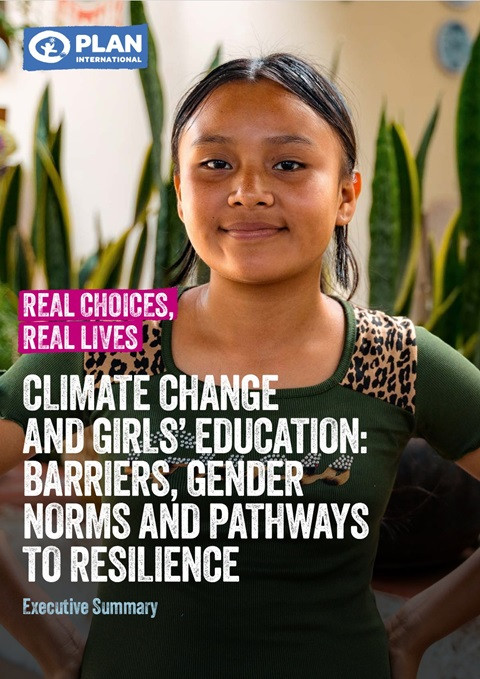 [Executive Summary] Climate Change and Girls' Education: Barriers, Gender Norms and Pathways to Resilience 出版年份: 2023 机构作者: Plan International This is the Executive Summary for the report: Climate Change and Girls’ Education: Barriers, Gender Norms and Pathways to Resilience. The full technical report and accompanying synthesis report are also available. [Résumé analytique] Changement climatique et éducation des filles: entraves, normes sexistes et chemins vers la resilience 出版年份: 2023 机构作者: Plan International This is the Executive Summary for the report: Climate Change and Girls’ Education: Barriers, Gender Norms and Pathways to Resilience. The full technical report and accompanying synthesis report are also available. [Resumen Ejecutivo] Cambio climático y educación de las niñas: barreras, normas de género, y rutas hacia la resiliencia 出版年份: 2023 机构作者: Plan International This is the Executive Summary for the report: Climate Change and Girls’ Education: Barriers, Gender Norms and Pathways to Resilience. The full technical report and accompanying synthesis report are also available.
  Nepal: lessons from integrating peace, human rights, and civic education into social studies curricula and textbooks 出版年份: 2015 作者: Melinda Smith 机构作者: UNESCO International Institute for Educational Planning (IIEP) | United Nations Children's Fund (UNICEF) | Education Above All (Qatar) This case study examines the process undertaken by the Ministry of Education (MoE) in collaboration with development partners to revise the social studies curriculum in Nepal. The aim was to promote education for peace, human rights, and civic education (PHRCE) in the wake of a 10-year Maoist insurgency and the transition to a democratic republic. It provides a critical analysis of the process, synthesizing information from two assessments of the initiative, and makes recommendations for the future based on challenges and gaps identified by stakeholders. The study also provides recommendations to countries in post-conflict transition which are interested in undertaking similar curriculum reform initiatives.Information is drawn from a number of reports and programme documents developed by the implementing partners, as well as 12 interviews with individuals involved in the process of curriculum reform. Interviewees included representatives of the major agencies involved in the revision process: the MoE’s Curriculum Development Centre, the National Centre for Education Development, Save the Children, UNESCO, and UNICEF. In addition, interviews were conducted with representatives of civil society and non-governmental agencies supporting peace education and representing marginalized groups, and the external international consultant who provided technical assistance. Népal: leçons tirées de l'intégration de la paix, des droits de la personne et de l'éducation civique dans les programmes d'études et les manuels scolaires 出版年份: 2015 作者: Melinda Smith 机构作者: UNESCO International Institute for Educational Planning (IIEP) | United Nations Children's Fund (UNICEF) | Education Above All (Qatar) Cette étude de cas examine le processus entrepris par le Ministère de l'Éducation (MdE) en collaboration avec les partenaires au développement pour réviser le programme d'études sociales au Népal. L'objectif était de promouvoir l'éducation pour la paix, les droits humains et l'éducation civique (PDHEC) à la suite d'une insurrection maoïste de 10 ans et la transition vers une république démocratique. Il fournit une analyse critique du processus, synthétise l'information à partir de deux évaluations de l'initiative et formule des recommandations pour l'avenir en fonction des défis et des lacunes identifiés par les intervenants. L'étude fournit également des recommandations aux pays en transition post-conflit qui sont intéressés à entreprendre des initiatives de réforme du curriculum similaires. L'information provient d'un certain nombre de rapports et de documents de programme élaborés par les partenaires d'exécution, ainsi que de 12 entrevues avec des personnes impliquées dans le processus de réforme du curriculum. Les personnes interrogées comprenaient des représentants des principaux organismes impliqués dans le processus de révision: Centre de développement, le Centre national pour le développement Education Curriculum MdE, Save the Children, l'UNESCO et l'UNICEF. En outre, des entrevues ont été menées avec des représentants de la société civile et les organisations non gouvernementales qui soutiennent l'éducation de la paix et représentant des groupes marginalisés, et le consultant international externe qui a fourni une assistance technique. Basic education curriculum guide: building on strengths (Primary 1 - Secondary 3) 出版年份: 2002 机构作者: Curriculum Development Council (Hong Kong) The Basic Education Curriculum Guide – Building on Strengths is prepared by the Curriculum Development Council (CDC) to advise school supervisors, school heads/principals, teachers, parents and those concerned on how to realise both the aims of education (EC, 2000) and the recommendations made in the report on Learning to Learn – The Way Forward in Curriculum Development (CDC, 2001) for life-long learning and the whole-persons development of students. This Guide replaces the Guide to the Primary 1 to 6 Curriculum (CDC, 1993) and the part on junior secondary level of the Guide to the Secondary 1 to 5 Curriculum (CDC, 1993). It aims to provide:• Recommendations of a central curriculum for schools and time allocation which all schools to adopt at primary and junior secondary levels• Suggestions for actions in school curriculum planning, learning and teaching and assessment to improve the quality of education, and for school-based adaptations to build on the strengths of Hong Kong schools as well as to meet the needs of students• Illustrative examples in authentic school contexts• Opportunities for reflection by school heads/principals, teachers and related parties Guide de Programme d'Éducation de Base: construire sur les forces (primaire 1 - secondaire 3) 出版年份: 2002 机构作者: Curriculum Development Council (Hong Kong) Guide de Programme d'Éducation de ㅠase - Construire sur les Forces est préparé par le Curriculum Development Council (CDC) pour conseiller les superviseurs scolaires, les directeurs d'école / directeurs, les enseignants, les parents et les personnes concernées sur la façon de réaliser les objectifs de l'éducation (EC, 2000) et les recommandations formulées dans le rapport sur Apprendre à apprendre - Aller de l'avant dans le développement du curriculum (CDC, 2001) pour l'apprentissage à vie et le développement des personnes sistes des étudiants. Ce guide remplace la <cite> Guide du primaire 1 à 6 Curriculum (CDC, 1993) et la partie au niveau secondaire du premier cycle de la balise <cite> Guide du secondaire 1 à 5 Curriculum (CDC, 1993). Il vise à fournir: • Les recommandations d'un programme central pour les écoles et la répartition du temps qui toutes les écoles adoptent à des niveaux primaire et secondaire juniors • Suggestions pour des actions dans la planification des programmes scolaires, l'apprentissage et l'enseignement et l'évaluation pour améliorer la qualité de l'éducation, et pour adaptations scolaires pour construire sur les points forts des écoles de Hong Kong, ainsi que pour répondre aux besoins des élèves • des exemples illustratifs dans des contextes scolaires authentiques • Possibilités de réflexion par les chefs d'établissement / directeurs, les enseignants et les parties liées 基础教育课程指引——各尽所能 发挥所长 (小一至中三) 出版年份: 2002 机构作者: Curriculum Development Council (Hong Kong) The Basic Education Curriculum Guide – Building on Strengths is prepared by the Curriculum Development Council (CDC) to advise school supervisors, school heads/principals, teachers, parents and those concerned on how to realise both the aims of education (EC, 2000) and the recommendations made in the report on Learning to Learn – The Way Forward in Curriculum Development (CDC, 2001) for life-long learning and the whole-persons development of students. This Guide replaces the Guide to the Primary 1 to 6 Curriculum (CDC, 1993) and the part on junior secondary level of the Guide to the Secondary 1 to 5 Curriculum (CDC, 1993). It aims to provide:• Recommendations of a central curriculum for schools and time allocation which all schools to adopt at primary and junior secondary levels• Suggestions for actions in school curriculum planning, learning and teaching and assessment to improve the quality of education, and for school-based adaptations to build on the strengths of Hong Kong schools as well as to meet the needs of students• Illustrative examples in authentic school contexts• Opportunities for reflection by school heads/principals, teachers and related parties World citizenship education and teacher training in a global context: Canada, India and South Africa 出版年份: 2011 作者: George Cappelle | Gary Crippin | Ulla Lundgren 机构作者: Children's identity and Citizenship in Europe (CICE) In this study we change our focus from a European setting to a global one. We were interested to see how our observations from the first study would be reflected in a more global context with focus on the cases of Canada, India and South Africa looking at both the models for world citizenship education and the influence of contextual factors.In choosing these countries we were interested in:Countries on different continentsCountries in different stages of national, social and economic developmentCountries in which there was considerable diversity in the populationCountries in which citizenship and world citizenship education was seen as an important priorityCountries, because of the limitations of researchers, which used English as a primary language.In addition to background research we asked for assistance from professors in the field of teacher education in the three countries to provide us with information on key questions related to citizenship education and teacher training.