
相关资源
探索丰富的全球公民教育资源,深化理解,促进研究、倡导、教学与学习。
共找到1,725条结果
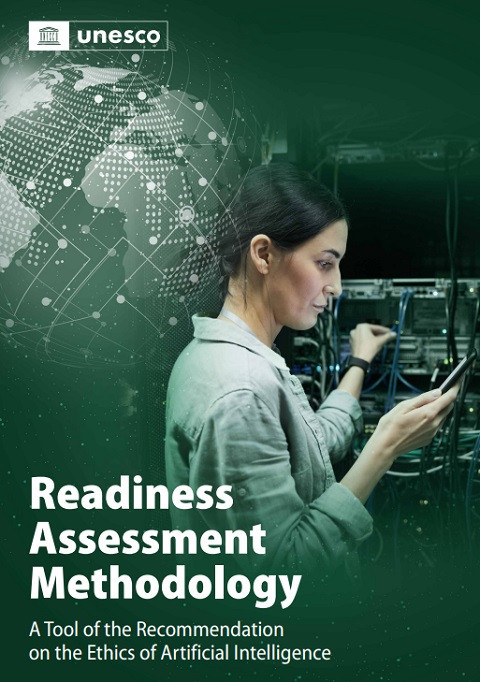 Readiness Assessment Methodology: A Tool of the Recommendation on the Ethics of Artificial Intelligence 出版年份: 2023 机构作者: UNESCO In November 2021, the 193 Member States of UNESCO signed the Recommendation on the Ethics of Artificial Intelligence, the first global normative instrument in its domain. The Recommendation serves as a comprehensive and actionable framework for the ethical development and use of AI, encompassing the full spectrum of human rights. It does so by maintaining focus on all stages of the AI system lifecycle. Beyond elaborating the values and principles that should guide the ethical design, development and use of AI, the Recommendation lays out the actions required from Member States to ensure the upholding of such values and principles, through advocating for effective regulation and providing recommendations in various essential policy areas, such as gender, the environment, and communication and information. With these values, principles, and policy areas in mind, the UNESCO Secretariat elaborated a programme for the implementation of the Recommendation, with the core aim of building national capacities to discharge the actions set out in the Recommendation and bolster regulatory frameworks. The Recommendation mandated the development of two key tools, the Readiness Assessment Methodology (RAM) and the Ethical Impact Assessment (EIA), which form the core pillars of the implementation. These tools both aim to assess and promote the resilience of existing laws, policies and institutions to AI implementation in the country, as well as the alignment of AI systems with the values and principles set out in the Recommendation. The goal of this document is to provide more information on the Readiness Assessment Methodology, lay out its various dimensions, and detail the work plan for the implementing countries, including the type of entities that need to be involved, responsibilities of each entity, and the split of work between UNESCO and the implementing country.
  ارشادات استخدام الذكاء الاصطناعي التوليدي في التعليم والبحث 出版年份: 2023 作者: Fengchun Miao | Wayne Holmes 机构作者: UNESCO تهدف هذه الإرشادات إلى دعم تخطيط اللوائح والسياسات وبرامج تنمية القدرات البشرية المناسبة ً لضمان أن يصبح الذكاء الاصطناعي التوليدي أداة تفيد المعلمين والمتعلمين والباحثين وتمكنهم حقا. وهو يشرح تقنيات الذكاء الاصطناعي التي يستخدمها الذكاء الاصطناعي التوليدي ويرسم قائمة بنماذج ً المحولات التوليدية المدربة مسبقا المتاحة للجمهور، خاصة تلك التي تخضع لترخيص مفتوح المصدر. كما ً ً حول ظهور نماذج المحولات التوليدية التعليمية المدربة مسبقا - التي يتم تدريبها باستخدام يفتح نقاشا بيانات محددة لخدمة الأغراض التعليمية. علاوة على ذلك، فهو يلخص بعض الخلافات الرئيسية حول ً الذكاء الاصطناعي التوليدي، بدءا من تفاقم الفقر الرقمي إلى تجانس ً الآراء، ومن التزييف العميق إلى قضايا حقوق الطبع والنشر. واستنادا إلى رؤية إنسانية، تقترح الإرشادات خطوات أساسية لتنظيم أدوات الذكاء الاصطناعي التوليدي، بما في ذلك فرض حماية خصوصية البيانات ووضع حد عمري للمحادثات المستقلة مع منصات الذكاء الاصطناعي التوليدي. ً لتوجيه الاستخدام السليم للأدوات في التعليم والبحث، تقترح هذه الإرشادات نهج ً ا مناسبا للعامل البشري والعمر للتحقق من الصحة الأخلاقية وعمليات التصميم التربوي. Guidance for Generative AI in Education and Research 出版年份: 2023 作者: Fengchun Miao | Wayne Holmes 机构作者: UNESCO This Guidance aims to support the planning of appropriate regulations, policies and human capacity development programmes to ensure that generative artificial intelligence (GenAI) becomes a tool that genuinely benefits and empowers teachers, learners and researchers. It explains the Al techniques used by GenAI and maps out a list of GPT models that are made publicly available, especially those under open-source licences. It also opens a discussion on the emergence of EdGPT - GenAI models that are trained with specific data to serve educational purposes. Furthermore, it summarizes some of the key controversies around GenAI, from worsening digital poverty to the homogenization of opinions, and from deeper deepfakes to issues of copyright. Based on a humanistic vision, the Guidance proposes key steps for the regulation of GenAI tools, including mandating the protection of data privacy and setting an age limit for independent conversations with GenAI platforms. To guide the proper use of the tools in education and research, this Guidance proposes a human-agent and age-appropriate approach to the ethical validation and pedagogical design processes.
 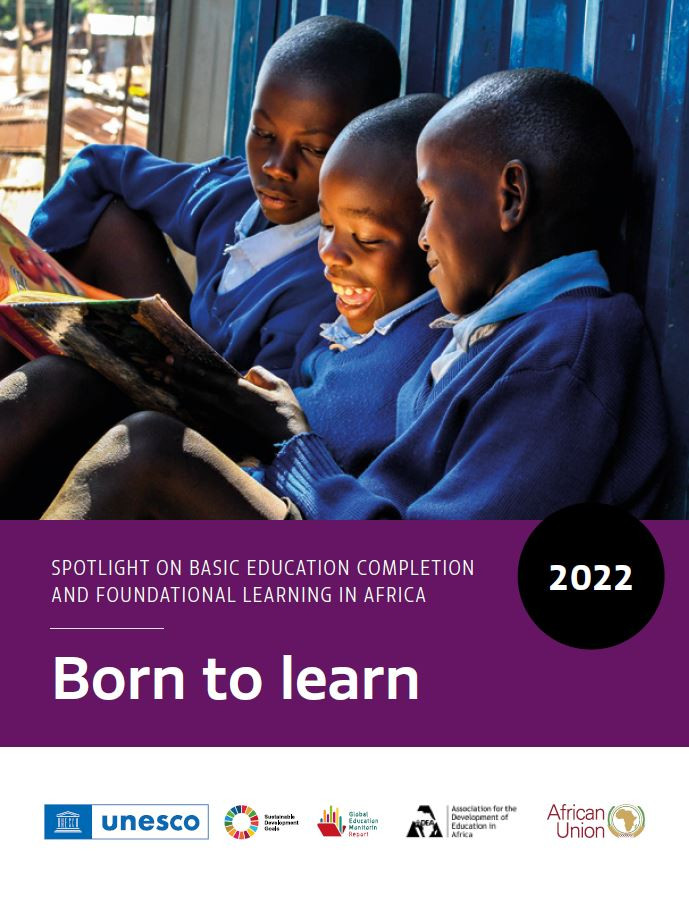 Spotlight on Basic Education Completion and Foundational Learning in Africa, 2022: Born to Learn 出版年份: 2022 机构作者: UNESCO | Association for the Development of Education in Africa (ADEA) | African Union This publication is the first in a three-part Spotlight series. It is produced by a partnership between the Global Education Monitoring Report, the Association for the Development of Education in Africa and the African Union.The report focuses on why learning levels in the region are low. All children are born to learn yet only one in five children in Africa who reach the end of primary school achieve the minimum proficiency level required to continue their education and fulfil their potential. Combining completion and learning statistics, the report shows that children in Africa are at least five times less likely than children in the rest of the world to be prepared for the future.Given the historically low levels of learning on the continent, fresh thinking is needed to translate the CESA and SDG 4 commitments into focused, coordinated, well-informed and appropriately funded actions. The report contains eight policy-oriented recommendations for driving change.
 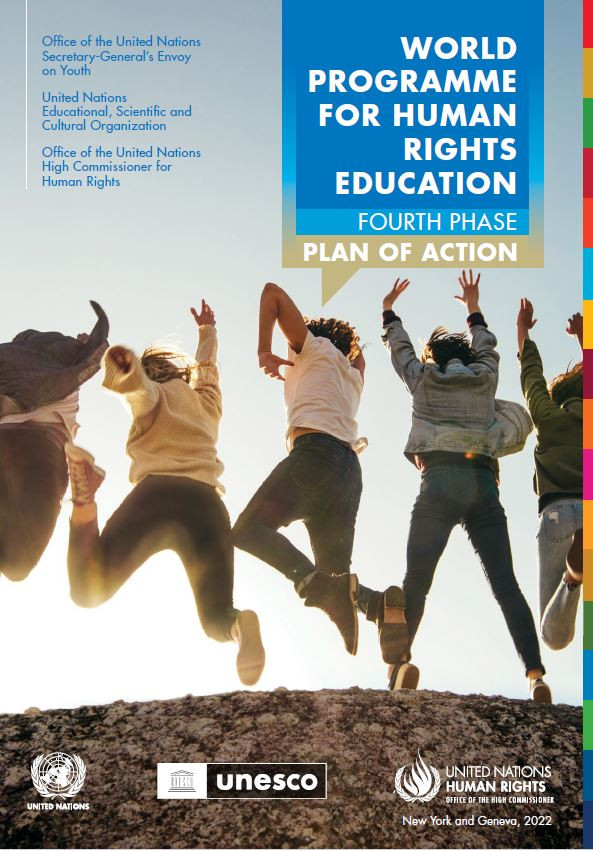 World Programme for Human Rights Education, Fourth Phase: Plan of Action 出版年份: 2022 机构作者: Organización de las Naciones Unidas para la Educación, la Ciencia y la Cultura (UNESCO) | UN. Office of the Secretary-General’s Envoy on Youth | UN. Office of the United Nations High Commissioner for Human Rights (UN. OHCHR) Human rights education for youth, in both formal and non-formal settings, promotes a shared sense of humanity and fosters a common understanding that all human beings are equally deserving of dignity, respect and justice. It empowers youth to fulfil their role as active citizens, to take action and uphold their human rights and those of others, and to participate meaningfully in public affairs and democratic decision-making processes.In recognition of this, the United Nations Member States launched the fourth phase (2020–2024) of the World Programme for Human Rights Education to advance human rights education programming for youth at the national level. This focus also contributes to the achievement of the 2030 Agenda for Sustainable Development, particularly Goal 4 on Education and target 4.7, which touches upon the aims of education.
  Online Antisemitism: A Toolkit for Civil Society 出版年份: 2022 机构作者: Institute for Strategic Dialogue (ISD) | B’nai B’rith International | UNESCO This guide looks to build literacy among Jewish professionals, lay leaders and community members at large – as well as wider allies from across civil society – to tackle antisemitism online. Recognising the enormous capacity for positive action that the digital space offers, it aims to consolidate knowledge and provide a wide range of policy and community avenues for action.The guide provides an assessment of the online antisemitism threat landscape, an overview of existing policy responses on an international and national level across a range of European countries, and, importantly, a broad set of recommendations for engagement with governments, platforms and within communities to address these issues.
  Berlin Declaration on Education for Sustainable Development: Learn for Our Planet; Act for Sustainability 出版年份: 2022 机构作者: UNESCO From 17 May to 19 May 2021 around 2800 people – politicians, business people, youth leaders, scientists, Non-governmental organizations, and many more - from 160 countries came together virtually at the UNESCO World Conference on Education for Sustainable Development (ESD) 2021. During the conference, they expressed their commitment to use the transformative power of education in order to address the global challenges we face. The Berlin Declaration was the main result of the conference. The Berlin Declaration on Education for Sustainable Development is an important document that emphasizes the significance of ESD for each and every one of us. It identifies concrete challenges the global community is facing and calls for changes that are urgently needed in order to fully integrate and strengthen ESD in all educational contexts.
  UNESCO Strategy on Education for Health and Well-being 出版年份: 2022 机构作者: UNESCO This strategy guides UNESCO to promote the physical and mental health and well-being of learners. By reducing health-related barriers to learning, such as malnutrition, early and unintended pregnancy, HIV and sexually transmitted infections (STIs) and violence and discrimination, UNESCO, governments and school systems can unlock the potential of all learners. The evidence for increased focus on the link between education and health is strong. Education strongly impacts health outcomes and health is equally fundamental to education. This calls for a more comprehensive approach to school health and more coordinated action across sectors.This revised and updated strategy is a roadmap for UNESCO to promote comprehensive sexuality education (CSE) and safe and inclusive learning environments, and place more emphasis on the role of schools and education systems in promoting health and well-being.
  Berlin Declaration on Education for Sustainable Development 出版年份: 2022 机构作者: 유네스코 In light of the dramatic challenges the world is facing today there is urgent need to transform learning and redesign our societies for the survival of our planet. Education for Sustainable Development (ESD) is key in achieving this change. In May 2021 Ministers of Education from around the world, youth, teachers, scientists and civil society, came together virtually at the UNESCO World Conference on Education for Sustainable Development. They adopted the Berlin Declaration for Sustainable Development, expressing their commitment to harness the power of ESD to build a more just, equal, equitable and sustainable world.The purpose of this online publication is to contextualize the promises made in the Berlin Declaration and explain complex terms and concepts contained in the document, thus rendering its content easily accessible to the wider public. The main body of the text presents the Declaration itself, while the explanatory boxes provide practical background information about sustainable development, Sustainable Development Goal target 4.7 as well as interesting links to find more information about ESD, climate change, green technologies and other related issues.
  Los actores no estatales en la educación superior: ¿Una visión compartida de la calidad y la asequibilidad? (Policy Paper 47) 出版年份: 2022 机构作者: UNESCO Los actores no estatales acogen a más de un tercio del alumnado de educación superior en todo el mundo, un porcentaje considerablemente más elevado que en la educación primaria o secundaria. Los proveedores son diversos y responden a una variedad de necesidades, y a menudo no hay una división clara entre los sectores estatal y no estatal. Los actores no estatales son además protagonistas importantes en la financiación de la educación superior a través de los hogares, los mecanismos de mercado y las alianzas público-privadas. A raíz de ello, estos actores desempeñan un papel significativo e influyen en la elaboración de normativas y políticas, así como en la configuración del sistema de educación superior en su conjunto. Los gobiernos deben garantizar la calidad y equidad —las dimensiones clave de la meta 4.3 de los Objetivos de Desarrollo Sostenible (ODS)—, independientemente del modo en que los actores estatales y no estatales compartan responsabilidades.