
相关资源
探索丰富的全球公民教育资源,深化理解,促进研究、倡导、教学与学习。
共找到2,197条结果
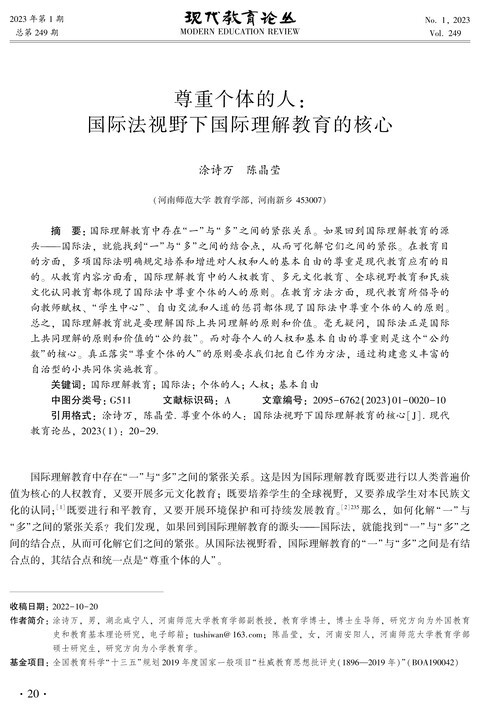 尊重个体的人: 国际法视野下国际理解教育的核心 (现代教育论丛; No.1, 2023) 出版年份: 2023 作者: 涂诗万 | 陈晶莹 国际理解教育中存在“一”与“多”之间的紧张关系。如果回到国际理解教育的源头——国际法,就能找到“一”与“多”之间的结合点,从而可化解它们之间的紧张。在教育目的方面,多项国际法明确规定培养和增进对人权和人的基本自由的尊重是现代教育应有的目的。从教育内容方面看,国际理解教育中的人权教育、多元文化教育、全球视野教育和民族文化认同教育都体现了国际法中尊重个体的人的原则。在教育方法方面,现代教育所倡导的向教师赋权、“学生中心”、自由交流和人道的惩罚都体现了国际法中尊重个体的人的原则。总之,国际理解教育就是要理解国际上共同理解的原则和价值。毫无疑问,国际法正是国际上共同理解的原则和价值的“公约数”。而对每个人的人权和基本自由的尊重则是这个“公约数”的核心。真正落实“尊重个体的人”的原则要求我们把自己作为方法,通过构建意义丰富的自治型的小共同体实施教育。
 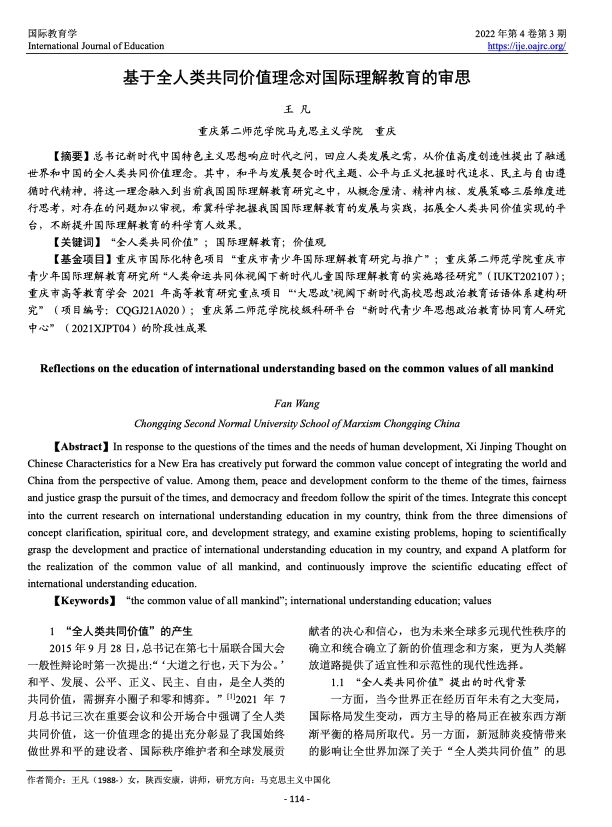 基于全人类共同价值理念对国际理解教育的审思 出版年份: 2022 作者: 王凡 总书记新时代中国特色主义思想响应时代之问,回应人类发展之需,从价值高度创造性提出了融通世界和中国的全人类共同价值理念。其中,和平与发展契合时代主题、公平与正义把握时代追求、民主与自由遵循时代精神。将这一理念融入到当前我国国际理解教育研究之中,从概念厘清、精神内核、发展策略三层维度进行思考,对存在的问题加以审视,希冀科学把握我国国际理解教育的发展与实践,拓展全人类共同价值实现的平台,不断提升国际理解教育的科学育人效果。
 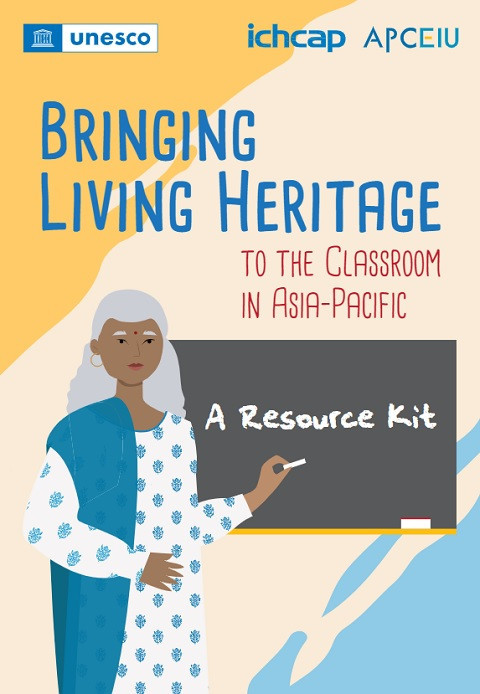 Bringing Living Heritage to the Classroom in Asia-Pacific: A Resource Kit 出版年份: 2022 机构作者: UNESCO Bangkok | APCEIU | International Information and Networking Centre for Intangible Cultural Heritage in the Asia-Pacific Region (ICHCAP) Integrating living heritage in school teaching and learning can enhance education quality, enliven the experiences of students and teachers, and contribute to keeping this heritage alive for current and future generations. In addition, as the ongoing COVID-19 pandemic has also demonstrated, living heritage can play an important role in ensuring the well-being and resilience of communities. UNESCO encourages countries to safeguard living heritage through formal and non-formal education. From the end of 2019 to early 2022, UNESCO has been working with partners to implement a pilot project “Teaching and Learning with Living Heritage in Schools” in six countries in Asia and the Pacific - including Cambodia, Kazakhstan, Kyrgyzstan, Nepal, Republic of Korea and Thailand. Over 1900 students from 21 schools had the opportunity to participate in these innovative classes. Throughout the process, 86 teachers, with more than two thirds being women, have developed and tested 101 lesson plans and activities. This Resource Kit provides step-by-step guidance and key resources on why and how to integrate living heritage in lessons and extracurricular activities in schools. Whoever you are – policy-maker, school director, teacher, student, parent, heritage practitioner – you have a vital role to play in this process.
  Religion and Belief Issues in the Countries of Central Asia (Kyrgyzstan, Kazakhstan, Uzbekistan, Tajikistan) and Russia in the Media; April 2016 - April 2017 出版年份: 2017 作者: Evgeny Zavyalov 机构作者: Open Position (Kyrgyzstan) This publication is a review of news on religion and belief issues that appeared in the media from April 2016 to April 2017, in Central Asia (Kyrgyzstan, Kazakhstan, Uzbekistan, Tajikistan) and Russia. The materials included in the publication were distributed monthly on a newsletter including members of religious communities and experts working on issues of religion and belief. Вопросы религии и убеждений в странах Центральной Азии (Кыргызстан, Казахстан, Узбекистан, Таджикистан) и России в материалах СМИ. Апрель 2016 г. - апрель 2017 г. 出版年份: 2017 作者: Evgeny Zavyalov 机构作者: Open Position (Kyrgyzstan) Настоящее издание представляет собой обзор новостей по вопросам религии и убеждений, вышедших в СМИ в период с апреля 2016 по апрель 2017 года, по странам Центральной Азии (Кыргызстан, Казахстан, Узбекистан, Таджикистан) и России. Вошедшие в публикацию материалы ежемесячно рассылались по рассылке, включающей членов религиозных общин и экспертов, занимающихся вопросами религии и убеждений.
 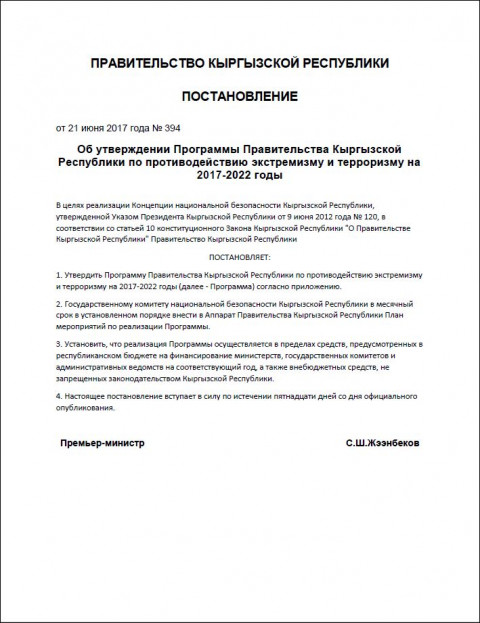 The Program of the Government of the Kyrgyz Republic on Countering Extremism and Terrorism for 2017-2022 出版年份: 2017 机构作者: Government of the Kyrgyz Republic The document contains the main provisions of the program of the Government of the Kyrgyz Republic on countering extremism and terrorism for 2017-2022.The program provides a set of measures to ensure effective countering the threats of extremism and terrorism, rigorous observance of human rights and freedoms, the rule of law and others constitutional principles of the Kyrgyz Republic. Purpose of this program is changing the current situation in the field countering extremism and preventing terrorism.Successful implementation of the program depends on coherence government bodies, organizations and institutions of the Kyrgyz Republic to counter extremism and terrorism. Программа Правительства Кыргызской Республики по противодействию экстремизму и терроризму на 2017-2022 годы 出版年份: 2017 机构作者: Government of the Kyrgyz Republic Документ содержит основные положения программы Правительства Кыргызской Республики по противодействию экстремизму и терроризму на 2017-2022 годы.Программа предусматривает комплекс мер, обеспечивающих эффективное противодействие угрозам экстремизма и терроризма, неукоснительное соблюдение прав и свобод человека, верховенства закона и других конституционных принципов Кыргызской Республики. Целью настоящей Программы является изменение складывающейся ситуации в области противодействия экстремизму и профилактики терроризма.Успешная реализация Программы зависит от согласованности действий государственных органов, организаций и учреждений Кыргызской Республики для противодействия экстремизму и терроризму.
  World Report on the Culture of Peace: Civil Society Report at Midpoint of the Culture of Peace Decade 出版年份: 2005 机构作者: Foundation for a Culture of Peace The year 2005 marks the midpoint of the International Decade for a Culture of Peace and Non-Violence for the Children of the World (2001-2010) as proclaimed by the United Nations General Assembly.The present report has been submitted to the UN Secretary-General for the General Assembly's consideration at its next session under the relevant agenda item which will review the midpoint of the Culture of Peace Decade. This initiative responds to the invitation contained in operative paragraph 10 of General Assembly resolution A/59/143.The report is based on the accounts submitted by 700 organizations from all regions of the world. From the information received, it can be concluded that the culture of peace is advancing.The report provides the first comprehensive view of the progress made by the global movement for a culture of peace, since it was called for in 1999 by General Assembly resolution A/53/243 (annexed to the end of this report). Rapport Mondial de la Culture de la Paix: Rapport de la société civile à mi-parcours de la Décennie de la Culture de Paix 出版年份: 2005 机构作者: Foundation for a Culture of Peace L'année 2005 se situe à mi-parcours de la Décennie internationale de la promotion d'une culture de la nonviolence et de la paix au profit des enfants du monde (2001-2010), conformément à la proclamation de l'Assemblée générale de l'Organisation des Nations Unies.Le présent rapport a été présenté au secrétaire général de l'Organisation des Nations Unies pour être étudié lors de la 60e session de l'Assemblée générale, lorsque sera abordé le point de l'ordre du jour relatif aux cinq premières années de la Décennie pour une culture de la paix. Cette initiative répond à l'invitation formulée au paragraphe 10 de la résolution A/59/143 de l'Assemblée générale.Le rapport est élaboré à partir d'informations présentées par 700 organisations provenant de toutes les régions du monde. Toutes les informations reçues permettent de conclure que la culture de la paix progresse.Le rapport fournit le premier panorama exhaustif des progrès réalisés par le mouvement mondial pour une culture de la paix depuis sa proclamation en 1999 par l'Assemblée générale dans sa résolution A/53/243 (en annexe au présent rapport). Informe Mundial de Cultura de Paz: Informe de la sociedad civil en la mitad del Decenio de Cultura de Paz 出版年份: 2005 机构作者: Foundation for a Culture of Peace El año 2005 marca la mitad del Decenio Internacional de una cultura de paz y no violencia para los niños del mundo (2001-2010), tal y como proclamó la Asamblea General de las Naciones Unidas.Este informe se ha presentado al Secretario General de las Naciones Unidas para la consideración de la Asamblea General en su 60º periodo de sesiones dentro del punto del orden del día donde se examinarán los primeros cinco años del Decenio de una Cultura de Paz. Esta iniciativa responde a la invitación recogida en el párrafo operativo 10 de la resolución A/59/143 de la Asamblea General.El informe se basa en la información presentada por 700 organizaciones provenientes de todas las regiones del mundo. De toda la información recibida, se puede concluir que la cultura de paz está avanzando.El informe proporciona la primera visión exhaustiva del progreso hecho por el movimiento global por una cultura de paz, desde que fue proclamado en 1999 por la Asamblea General en su resolución A/53/243 (anexada al presente informe).