
相关资源
探索丰富的全球公民教育资源,深化理解,促进研究、倡导、教学与学习。
共找到3,448条结果
 构建现代公民道德教育体系的必要性及路径选择 (教育理论与实践; Vol. 37, No. 4) 出版年份: 2017 作者: Feng Yong-gang 机构作者: Shanxi Education Association 社会的现代化呼唤现代的公民道德教育。作为现代教育的有机组成,公民道德教育的发展水准直接 关涉和决定着国家现代化的程度,在推进公民社会的成长和发展中意义深远。加强现代公民道德教育体系建设, 构建健全的公民社会,需立足于当前的社会背景和时代诉求,提升公民道德教育意识,丰富公民道德教育内容,优 化公民道德教育过程,健全公民道德教育网络体系,完善公民道德教育保障机制。
  基于服务学习本质回归的高校公民教育对策研究 (理论导刊) 出版年份: 2017 作者: Zhang Jianglong | Tan Zuxue | Zhang Xiao 机构作者: Shaanxi Provincial Party School of the Communist Party of China 服务学习从产生之日起,始终与公民责任感培育紧密联系,逐渐成为公民教育的重 要方法与手段。在我国引进和运用服务学习的过程中,其理念越来越偏于其本质,或强调服务或 强调学习,在具体操作层面也遇到了课程设置、角色整合等方面的困境。只有通过实现服务学习 目标理念的过程化、课程设置的项目化、学生反思的常态化、价值元素的中国化等措施,推进其 本土化,方可为大学生公民教育提供有效的方法支撑。
  The Role of Economic Citizenship Education in Advancing Global Citizenship (Policy & Practice: A Development Education Review; Vol. 24, Spring) 出版年份: 2017 作者: Jared Penner | Janita Sanderse 机构作者: Centre for Global Education (CGE) This article focuses on how to provide children and youth with the appropriate skills and capabilities required to create a more equal and sustainable world for future generations. It presents the concept of Economic Citizenship Education and the importance of combining financial, social and livelihoods education for the empowerment of children and youth throughout the world. Throughout the article, this concept is linked to Global Citizenship, Education for Sustainable Development, Development Education and the Sustainable Development Goals to show its importance to contemporary discourse on education and youth development. The reader is provided with examples of Economic Citizenship Education put in practice through government authorities and civil society organisations.
 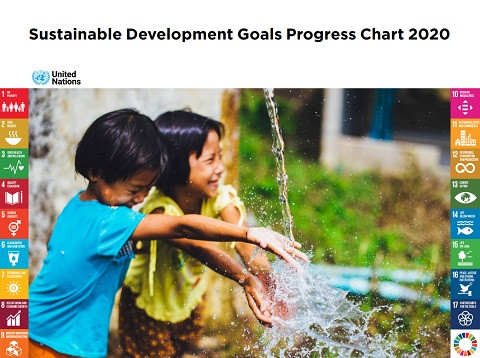 График хода достижения целей в области устойчивого развития к 2020 году 出版年份: 2020 机构作者: United Nations (UN) График хода достижения целей в области устойчивого развития к 2020 году отражает прогресс, достигнутый на конец 2019 года на глобальном и региональном уровнях в решении отдельных конкретных задач в рамках 17 целей Повестки дня в области устойчивого развития на период до 2030 года. В начале 2020 года Генеральный секретарь Организации Объединенных Наций объявил о Десятилетии действий, призвав национальные и местные органы власти, организации гражданского общества и частный сектор ускорить реализацию мер, направленных на достижение целей в области устойчивого развития к 2030 году. График хода достижения целей демонстрирует, как далеко мы продвинулись в выполнении наших обязательств и какие направления требуют неотложного внимания. Он также показывает, что для достижения большинства целей нынешних темпов прогресса недостаточно и требуется существенное ускорение. 2020年可持续发展目标进度表 出版年份: 2020 机构作者: United Nations (UN) 《2020年可持续发展目标进度表》展现了到2019年底全球和地区进展的概况。它涵盖《2030年可持续发展议程》17个目标下选定的具体目标。2020年初,联合国秘书长启动了“行动十年”,呼 吁国家和地方政府、民间社会组织和私营部门采取加速的方案,以在2030年实现可持续发展目标。进度表显示了我们在兑现承诺方面已取得的进展以及哪些领域还亟待关注。它还显示出,对于 大多数目标而言,进展速度不够,需要大幅加快。
  Migration and the 2030 Agenda: A Guide for Practitioners 出版年份: 2018 作者: Elisa Mosler Vidal 机构作者: International Organization for Migration (IOM) This guide is designed to serve government actors, both national and local, involved in any process of Sustainable Development Goal implementation, including those working specifically in migration, and those working in other sectors who are interested in integrating migration. It is also for government actors working in the migration field who wish to integrate the SDGs into their work.The focus of this guide is to help policymakers implement the migration aspects of the SDGs. Policymakers can use this guide to integrate migration into local or national development planning, by designing and implementing interventions that relate to migration in the context of the SDGs. These interventions may take the form of legislation, policies, programmes, projects or other activities, and may relate to core migration topics or integrate migration into activities in another sector. For example, policymakers may use this guide to design interventions that directly address human trafficking, as well as interventions in the health sector that help protect victims of trafficking.For actors with experience in migration mainstreaming, this guide offers a new approach that is based on the 2030 Agenda. For those with no experience in migration mainstreaming, it offers an introduction on how migration and development are linked in the context of the SDGs, and how to take action around these connections. La migración en la Agenda 2030: Guía para profesionales 出版年份: 2018 作者: Elisa Mosler Vidal 机构作者: International Organization for Migration (IOM) La presente guía va dirigida a los actores gubernamentales, tanto nacionales como locales, participantes en cualquier proceso de implementación de los ODS, incluidos aquellos que trabajan específicamente en la migración y aquellos que lo hacen en otros sectores interesados en integrar la migración. Asimismo, va dirigida a los actores gubernamentales que trabajan en el campo de la migración y que deseen integrar los ODS en su trabajo. El objetivo de esta guía es ayudar a los legisladores a implementar los aspectos de migración de los ODS. Los formuladores de políticas pueden utilizar esta guía para integrar la migración en la planificación del desarrollo local o nacional, diseñando e implementando intervenciones relacionadas con la migración en el contexto de los ODS. Estas intervenciones pueden tomar la forma de legislación, políticas, programas, proyectos u otras actividades, y pueden relacionarse con temas centrales de migración o integrar la migración en actividades en otro sector. Por ejemplo, los formuladores de políticas pueden usar esta guía para diseñar intervenciones que aborden directamente la trata de personas, así como intervenciones en el sector de la salud que ayuden a proteger a las víctimas de la trata. Para los actores con experiencia en la integración transversal de la migración de la migración, esta guía ofrece un nuevo enfoque basado en la Agenda 2030. Para quienes no tienen experiencia en dicha integración transversal de la migración, ofrece una introducción sobre cómo se vinculan la migración y el desarrollo en el contexto de los ODS, y cómo actuar en torno a estas conexiones.
 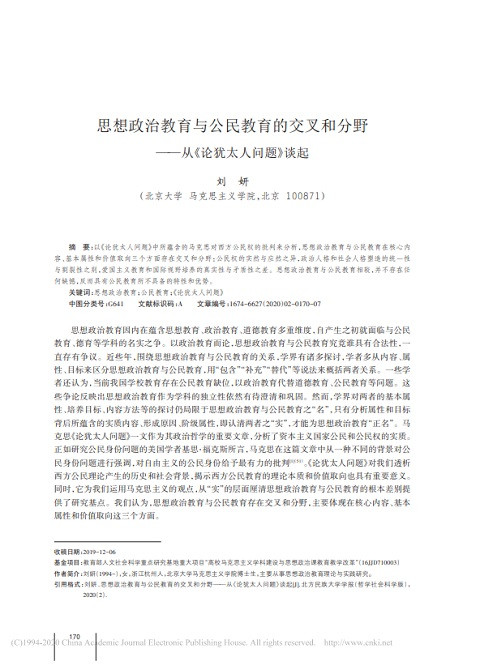 思想政治教育与公民教育的交叉和分野: 从《论犹太人问题》谈起 (北方民族大学学报; No. 2) 出版年份: 2020 作者: Liu Yan 机构作者: North Minzu University 以《论犹太人问题》中所蕴含的马克思对西方公民权的批判来分析,思想政治教育与公民教育在核心内容、基本属性和价值取向三个方面存在交叉和分野:公民权的实然与应然之异,政治人格和社会人格塑造的统一性与割裂性之别,爱国主义教育和国际视野培养的真实性与矛盾性之差。思想政治教育与公民教育相较,并不存在任何缺憾,反而具有公民教育所不具备的特性和优势。
  Theoretical Basis and Training System of Digital Citizenship 出版年份: 2020 作者: Zheng Yunxiang | Zhong Jinping | Huang Liuhui | Yanghao 机构作者: China Educational Technology Nowadays, cases of abuse and misuse of information technology are not uncommon, causing many negative effects and social problems that are extremely harmful to people, such as Internet fraud and cyberbullying. Practice all over the world shows that enhancing digital citizenship is an effective way to solve these problems. In order to call for emphasis on digital citizenship, this paper discussed its theoretical basis and training system in detail. Specifically, it firstly defined the concept of digital citizenship, then comprehensively discussed the content of digital citizenship through literature research, which constituted four first-level content indicators and eleven sub-indicators. After clarifying the connotation and extension of digital citizenship, this paper continued to discuss its uniqueness and irreplaceability, so as to highlight its necessity. Then the importance and meaning of implementing digital citizenship education were stated respectively. Based upon this theoretical foundation and our national conditions, a three-oriented digital citizenship training system was finally proposed. The cultivation of qualified digital citizens is imperative, as it helps to enhance the overall improvement of core literacy and Digital Intelligence Quotient, and facilitate the construction of a civilized and harmonious digital society and the achievement of Lide Shuren goal as well. 数字公民素养的理论基础与培养体系 出版年份: 2020 作者: Zheng Yunxiang | Zhong Jinping | Huang Liuhui | Yanghao 机构作者: China Educational Technology 当前,技术的滥用、误用产生了诸如网络诈骗、网络欺凌等社会问题,带来了负面影响和危害。世界各国的实践证明,提升数字公民素养是解决这些问题的有效途径。为倡议并呼吁重视数字公民素养,该文围绕数字公民素养的理论基础和培养体系展开论述。首先界定了数字公民素养的概念,通过文献研究法详细探讨了数字公民素养的主要内容,包括4项一级内容指标和11项二级内容指标。在界定数字公民素养的内涵与外延后,该文深入论述了它的独特性与不可替代性,以凸显其必要性。然后阐述了数字公民素养的重要性以及实施数字公民教育的意义所在,并在此基础上结合国情提出基于“三面向”的数字公民素养培养体系。合格数字公民的培育势在必行,数字公民素养的提升能带动核心素养和数字智商的全面提高,从而促进文明、和谐数字社会的构建和立德树人目标的实现。