
相关资源
探索丰富的全球公民教育资源,深化理解,促进研究、倡导、教学与学习。
共找到3,454条结果
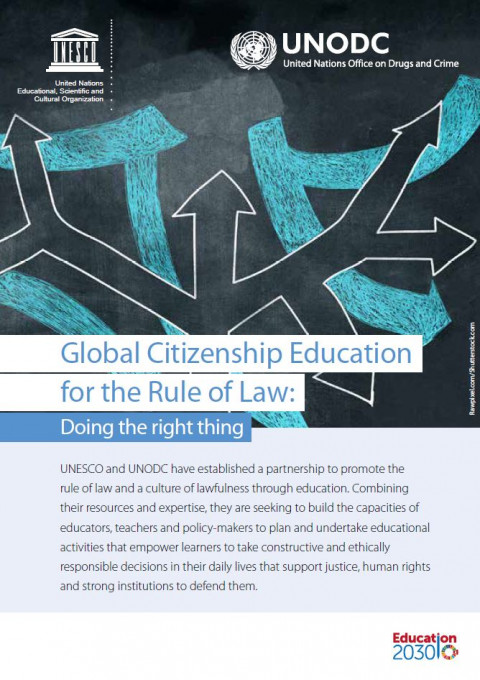 Global Citizenship Education for the Rule of Law: Doing the Right Thing 出版年份: 2018 机构作者: UNESCO | UN. Office on Drugs and Crime (UNODC) UNESCO and UNODC have established a partnership to promote the rule of law and a culture of lawfulness through education. Combining their resources and expertise, they are seeking to build the capacities of educators, teachers and policy-makers to plan and undertake educational activities that empower learners to take constructive and ethically responsible decisions in their daily lives that support justice, human rights and strong institutions to defend them.
  Proposal for a Global Action Programme on Education for Sustainable Development as Follow-up to the United Nations Decade of Education for Sustainable Development (DESD) after 2014 出版年份: 2013 机构作者: UNESCO The present document contains the proposal for a Global Action Programme on Education for Sustainable Development (ESD) and the comments and observations of the Executive Board thereon.
  برنامج الملك عبد الله بن عبد العزيز الدولي لثقافة السلام والحوار: أهم منجَزات المرحلة الأولى 出版年份: 2016 机构作者: منظمة الأمم المتحدة للتربية والعلم والثقافة (UNESCO) انبثق برنامج الملك عبد الله بن عبد العزيز الدولي لثقافة السلام والحوار من الإطار المؤسسي لبرنامج اليونسكو لثقافة السلام واللاعنف.إن ثقافة السلام لا تقتصر على كونها مفهوماً بل تتعداه إلى كونها التزاماً بجعل السلام واقعاً ملموساً للجميع. فهي تعبِّ عن “مجموعة من القيم والمواقف والتقاليدوأنماط السلوك وأساليب الحياة تستند إلى [...] احترام الحياة وإنهاء العنف [... و] التمسك بمبادئ الحرية والعدل والديمقراطية والتسامح والتضامنوالتعاون والتعددية والتنوع الثقافي والحوار والتفاهم على مستويات المجتمع كافة وفيما بين الأمم” (المادة 1 من إعلان وبرنامج العمل بشأن ثقافة السلام،اليونسكو، 1999 ). وتثابر اليونسكو على العمل لغرس ثقافة السلام مع مراعاة اعتبارات التنمية، بمضافرة القوى مع أصحاب المصلحة الملتزمين فيمجال التربية والعلوم والثقافة، والاتصال والإعلام.
  United Nations Decade on Education for Sustainable Development (2005-2014): Education for Sustainable Development 出版年份: 2005 机构作者: UNESCO The Declaration of the International Conference on Ecology and Development, held in Rio de Janeiro in 1992, begins with the following words: "People are the main concern for sustainable development. They have the right to a healthy and productive life in harmony with nature. "The Declaration adopted at the World Summit on Sustainable Development, held in Johannesburg in 2002, reflected the commitment of world leaders to "create a humane, equitable and attentive to civil society, recognizing that each member of this society has its own human dignity". Education is the foundation of sustainable development, as discussed in chapter 36 of the Program-21 of the summit that was held in Rio de Janeiro in 1992. This idea was reiterated at the Johannesburg summit. The implementation plan foresees a link between the Millennium Development Goals for universal primary education for both boys and girls, with special attention paid to girls, and the Dakar Plan of Action on Education for All. The creation of a gender-sensitive educational system at all levels and in all types of education - formal, informal and informal - to reach those who are not involved in the educational process is an essential component of education for sustainable development. Education is considered a tool to address such important issues as rural development, health, the prevention of the spread of HIV / AIDS, the environment, as well as broader ethical and legal issues (for example, human values and human rights).There is no universal model of education for sustainable development. Despite the countries' agreement on the overall concept, the approaches to education in each country will differ due to local characteristics and priorities. Each country should define its priorities and actions, as well as goals, accents and processes, based on environmental, social, economic conditions and appropriate ways of solving the problem. Education for sustainable development is equally critical for both developed and developing countries. ОБРАЗОВАНИЕ ДЛЯ УСТОЙЧИВОГО РАЗВИТИЯ: Декада ООН по образованию для устойчивого развития (2005 – 2014) 出版年份: 2005 机构作者: Организация Объединенных Наций по вопросам образования, науки и культуры (UNESCO) Декларация Международной конференции по экологии и развитию, прошедшей в Рио-де-Жанейро в 1992 г., начи-нается следующими словами: “Люди являются главной за-ботой устойчивого развития. Они имеют право на здоровую и продуктивную жизнь в гармонии с природой”. Декларация, принятая на Всемирном саммите по устойчи-вому развитию, состоявшемся в Йоханнесбурге в 2002 г., отразила обязательства лидеров мировых держав “создать гуманное, равноправное и внимательное к проблемам че-ловека общество, признающее то, что каждый член этого общества имеет свое человеческое достоинство”. Образование является фундаментом устойчивого развития, об этом говорится в главе 36 Программы–21 саммита, про-шедшего в Рио-де-Жанейро в 1992 г. Еще раз эта мысль была подтверждена на саммите в Йоханнесбурге. План реализации предусматривает установление связи между Целями развития тысячелетия в отношении всеобщего на-чального образования как для мальчиков, так и для девочек, где девочкам уделяется особое внимание, и Дакарским пла-ном действий по Образованию для всех. Создание гендер-но–чувствительной системы образования на всех уровнях и во всех типах образования – формальном, неформальном и неофициальном – в целях охвата тех, кто не принимает участия в образовательном процессе, – важнейший компо-нент образования для устойчивого развития. Образование считается инструментом, направленным на решение таких важных вопросов, как развитие сельских регионов, здраво-охранение, предотвращение распространения ВИЧ/СПИД, экология, а также более широких вопросов этического и правового характера (например, общечеловеческие цен-ности и права человека).Универсальной модели образования для устойчивого разви-тия не существует. Несмотря на согласие стран в отношении общей концепции, подходы к образованию в каждой стране будут различаться в силу местных особенностей и приори-тетов. Каждая страна должна определить свои приоритеты и действия, а также цели, акценты и процессы, исходя из экологических, социальных, экономических условий и со-ответствующих путей решения проблемы. Образование для устойчивого развития в равной степени является критиче-ски важным как для развитых, так и для развивающихся стран.
 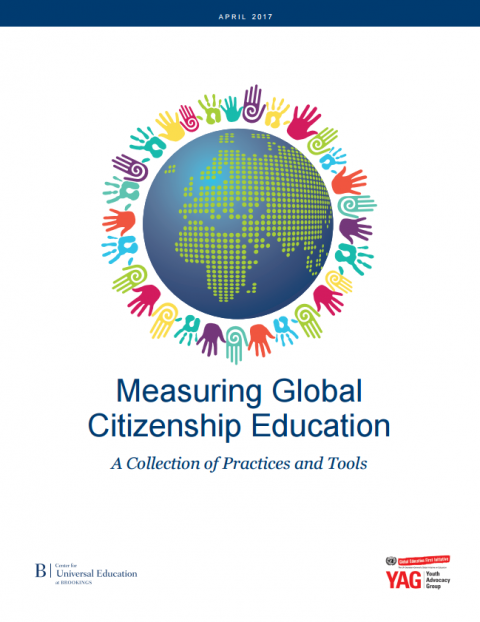 Measuring Global Citizenship Education: A Collection of Practice and Tools 出版年份: 2017 机构作者: Center for Universal Education at Brookings | UNESCO | UN Global Education First Initiative - Youth Advocacy Group (YAG) The idea of global citizenship has existed for several millennia. In ancient Greece, Diogenes declared himself a citizen of the world,1 while the Mahaupanishads of ancient India spoke of the world as one family.2 Today, education for global citizenship is recognized in many countries as a strategy for helping children and youth prosper in their personal and professional lives and contribute to building a better world.This toolkit is intended to shed light on one aspect of operationalizing global citizenship education (GCED): how it can be measured. This toolkit is the result of the collective efforts of the Global Citizenship Education Working Group (GCED-WG), a collegium of 90 organizations and experts co-convened by the United Nations Educational, Scientific, and Cultural Organization (UNESCO), the Center for Universal Education (CUE) at the Brookings Institution, and the United Nations Secretary General’s Global Education First Initiative’s Youth Advocacy Group (GEFI-YAG). To gather the measurement tools in this collection, the working group surveyed GCED programs and initiatives that target youth (ages 15–24).3 For the purposes of this project, GCED was defined as any educational effort that aims to provide the skills, knowledge, and experiences and to encourage the behaviors, attitudes, and values that allow young persons to be agents of long-term, positive changes in their own lives and in the lives of people in their immediate and larger communities (with the community including the environment).This toolkit begins with a brief review of opinions on why GCED is important and the variety of definitions of GCED. We follow the report with a catalog of 50 profiles of assessment efforts, each describing practices and tools to measure GCED at the classroom, local, and national levels. Note that the survey does not represent an exhaustive list but may be regarded as a living document that will grow as the field of GCED itself grows around the world.Broadly speaking, the assessment efforts in this survey may be categorized across achieving three goals: (1) fostering the values/attitudes of being an agent of positive change; (2) building knowledge of where, why, and how to take action toward positive change; and (3) developing self-efficacy for taking effective actions toward positive change.Today, global challenges such as climate change, migration, and conflict will require people to do more than just think about solutions. They will require effective action, by both individuals and communities. Education for global citizenship is one means to help young people develop the knowledge, skills, behaviors, attitudes, and values to engage in effective individual and collective action at their local levels, with an eye toward a long-term, better future at the global level. We offer this toolkit to provide guidance for educators, policymakers, non-governmental organizations, civil society, and researchers, and to inform this conversation.
  UNESCO's Contribution to the Prevention of Violant Extremism 出版年份: 2016 机构作者: UNESCO This document provides a summary of recent efforts by UNESCO to step up its action to prevent violent extremism, in the context of the United Nations Secretary-General’s Plan of Action on Violent Extremism, launched in January 2016. Building on its mandate and existing activities, UNESCO has adopted an intersectoral approach, paying particular attention to the needs of young people particularly at risk of radicalization.
 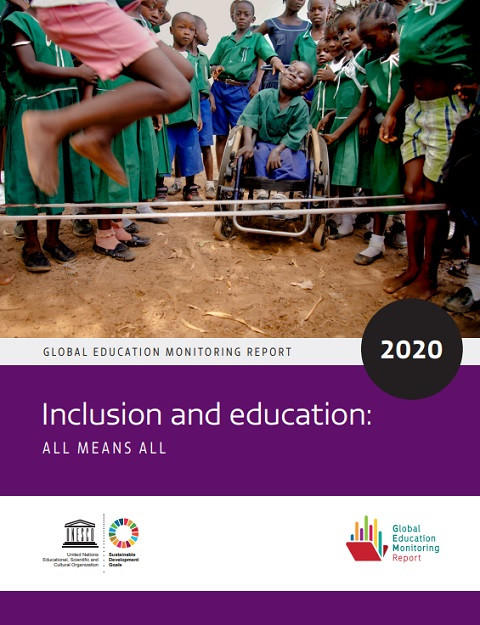 Informe de seguimiento de la educación en el mundo 2020: Inclusión y educación: Todos y todas sin excepción 出版年份: 2020 机构作者: Global Education Monitoring Report Team | Organización de las Naciones Unidas para la Educación, la Ciencia y la Cultura (UNESCO) En el Informe de Seguimiento de la Educación en el Mundo 2020 se examinan los mecanismos sociales, económicos y culturales que discriminan a niños, jóvenes y adultos desprotegidos, manteniéndolos excluidos de la educación o marginados dentro de ella. Estimulados por su compromiso de hacer realidad el derecho a la educación inclusiva, los países están ampliando su visión de la inclusión en la educación y otorgando a la diversidad un lugar central en sus sistemas. Sin embargo, la aplicación de leyes y políticas bienintencionadas suele flaquear. El informe, publicado a principios del decenio de acción que culmina en 2030 y en el contexto de la crisis de Covid-19 que ha exacerbado las desigualdades subyacentes, sostiene que la resistencia a atender las necesidades de todos los educandos es una verdadera amenaza para el logro de los objetivos mundiales de educación.En Inclusión y educación: todos y todas sin excepción se definen prácticas en materia de gobernanza y finanzas; planes de estudios, manuales escolares y evaluaciones; formación de los docentes; infraestructura escolar; y relaciones con los alumnos, los padres y las comunidades que pueden desbloquear el proceso hacia la inclusión. Se formulan recomendaciones de política para que la diversidad de los educandos sea una fuerza que se valora, una fuerza de cohesión social.Dos nuevos sitios web complementan la cuarta edición del Informe de Seguimiento de la Educación en el Mundo. Education Profiles (Perfiles educativos) describe la manera en que los países abordan la inclusión, y constituye un medio útil para el diálogo sobre políticas. Education Progress (El Progreso de la educación) brinda la oportunidad de interactuar con los datos y explorar una serie de indicadores del ODS 4.
 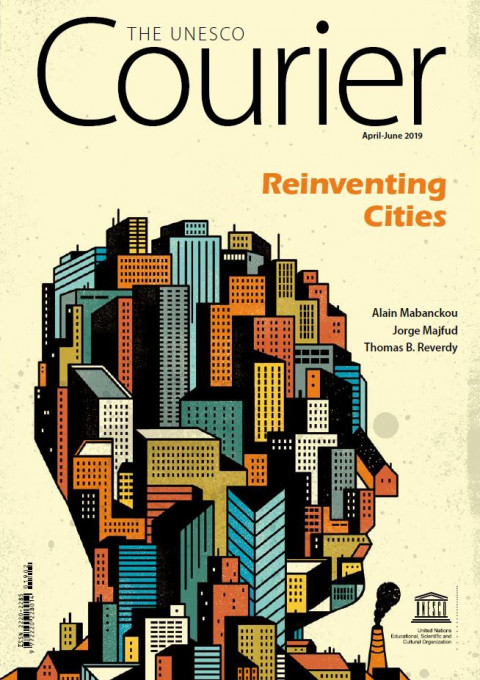 Cuando las ciudades se renuevan (El Correo de la UNESCO no. 2, abril-junio 2019) 出版年份: 2019 作者: Alain Mabanckou | Jorge Majfud | Thomas B. Reverdy 机构作者: Organización de las Naciones Unidas para la Educación, la Ciencia y la Cultura (UNESCO) Las ciudades siempre han sido centros de poder, atracción y prosperidad. Pero la urbanización descontrolada que ha tenido lugar en las últimas décadas pone en peligro su función histórica de crisoles de culturas.A medida que aumenta la población, las ciudades se deshumanizan: violencia, desigualdad, discriminación… Mientras más crecen, mayores dimensiones adquieren esos males que las asedian.Pero al tiempo que se deshumanizan, las ciudades se renuevan. Del ingenio para buscarse la vida en Kinsasa (RDC) a los grandes proyectos nacionales de rehabilitación de urbes monoindustriales en Rusia; de la iniciativa personal de un galerista que sacó de su somnolencia a la pequeña villa de Erriadh (Túnez) a la movilización de masas contra la apropiación autoritaria del espacio público en Varsovia (Polonia); de los movimientos de solidaridad con los migrantes que operan en Londres (Reino Unido) a las sinergias que hacen revivir el casco antiguo de La Habana (Cuba), surgen y se organizan fuerzas creadoras que dan a la vida urbana nuevo sentidos y perspectivas inéditas. Cabe pensar que se trata de “minúsculas resistencias”, para usar la expresión del escritor francés Thomas B. Reverdy, pero son esas mínimas fuerzas las que marcan la diferencia.Otros dos escritores comparten sus puntos de vista con nuestros lectores en el presente número. Nuestro invitado, el franco-congoleño Alain Mabanckou, nos habla de las “Áfricas móviles” y del coraje de escribir, mientras hace hincapié en pasajes contradictorios de la historia colonial. Por su parte, el escritor uruguayo-estadounidense Jorge Majfud denuncia las actitudes racistas hacia los migrantes en la sección Ideas, en la que además se ofrece un análisis de las políticas migratorias de Estados Unidos.En la sección De actualidad, publicamos , con motivo del Día de África (25 de mayo), una entrevista con Tshilidzi Marwala (Sudáfrica) sobre el auge de la inteligencia artificial (IA) en ese continente. Para festejar el Día Internacional de la Diversidad Biológica (22 de mayo), visitamos el Gran Pajatén (Perú) con Roldán Rojas Paredes, el hombre que promovió la inscripción de este sitio en la Red de Reservas de Biosfera de la UNESCO. Asimismo viajamos a Sharjah (Emiratos Árabes Unidos), que en abril de 2019 presenta su programa de capital mundial del libro.Por último, en la sección Zoom, visitamos lugares carentes de electricidad en la India, México, Myanmar y Uganda. ¡Una vuelta al mundo modesta pero muy luminosa! Города: в поисках новых перспектив (Курьер ЮНЕСКО no. 2, апрель-июнь 2019 года) 出版年份: 2019 作者: Alain Mabanckou | Jorge Majfud | Thomas B. Reverdy 机构作者: Организация Объединенных Наций по вопросам образования, науки и культуры (UNESCO) На протяжении всей истории человечества города всегда оставались синонимом мощи, привлекательности и процветания. Однако в результате стремительной урбанизации, наблюдаемой в последние десятилетия, они могут лишиться своей функции «плавильных котлов», где встречались и смешивались представители самых разных слоев общества. По мере роста городского населения мегаполисы все больше утрачивают человеческий облик. Насилие, неравенство и дискриминация становятся обыденным явлением, и масштабы этих проблем зачастую прямо пропорциональны размеру города.Однако наряду с дегуманизацией города претерпевают целый ряд других коренных изменений. В стремлении преодолеть возникающие трудности, наполнить городскую жизнь новым смыслом и открыть новые перспективы развития они задействуют весь свой творческий потенциал.Примеров изобретательности городов целое множество. Основанные на находчивости стратегии выживания, которыми в совершенстве овладели жители Киншасы (Демократическая Республика Конго), крупные национальные проекты по возрождению промышленных моногородов в России, личная инициатива галериста, выведшая тунисский городок Эррияд из оцепенения, всеобщая мобилизация против захвата властями общественного пространства в Варшаве (Польша), движения солидарности с мигрантами в Лондоне (Соединенное Королевство), проект по реставрации центра города Гаваны (Куба) с активным привлечением местного населения – вот лишь некоторые примеры изобретательности городов, о которых мы рассказываем в этом выпуске «Курьера».На первый взгляд может показаться, что это лишь единичные случаи «мелкого противостояния», если позаимствовать выражение французского писателя Тома Б. Реверди, но именно благодаря им перемены становятся возможны.Своими взглядами с читателями этого номера делятся и два других литератор а. Наш гость франко-конголезский писатель Ален Мабанку рассказывает нам о своих «трех Африках», о противоречивом колониальном прошлом и о писательском мужестве. В свою очередь, уругвайско-американский писатель Хорхе Махфуд, чью статью вы найдете в рубрике «Идеи», указывает на расистское отношение к мигрантам. Эту тему продолжает другой текст из тойже рубрики, предлагающий анализ иммиграционнойполитики США.В разделе «Новости» читателя ждут статьи, посвященные знаменательным событиям этого триместра. Так, по случаю Всемирного дня Африки (25 мая) мы публикуем интервью с южноафриканским ученым Тшилидзи Марвалой, который расскажет нам о зарождении Индустрии 4.0 на этом континенте. 22 мая в мире отмечается Международный день биологического разнообразия, в связи с чем мы посетили биосферный заповедник Гран-Пахатен в Перу и побеседовали с Ролданом Рохас Паредесом, по инициативе которого он был включен в Сеть биосферных заповедников ЮНЕСКО. Еще один текст перенесет нас в Шарджу (Объединенные Арабские Эмираты), которая в апреле 2019 года вступит в звание Всемирной столицы книги.Наконец, рубрика «Фокус» прольет свет на лишенные электричества районы И ндии, Мексики, Мьянмы и Уганды. Приятного путешествия по страницам «Курьера»!