
相关资源
探索丰富的全球公民教育资源,深化理解,促进研究、倡导、教学与学习。
共找到3,227条结果
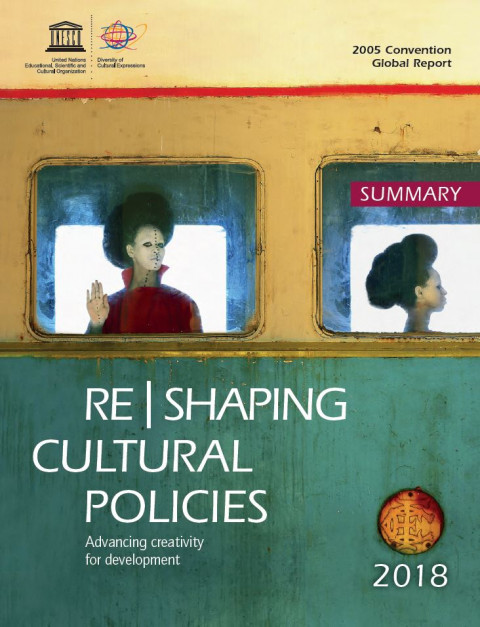 [Resumen] Re|pensar las políticas culturales: creatividad para el desarrollo, Convención de 2005 Informe Mundial 2018: resumen 出版年份: 2017 机构作者: Organización de las Naciones Unidas para la Educación, la Ciencia y la Cultura (UNESCO) Concebida para efectuar el seguimiento de la aplicación de la Convención de la UNESCO sobre la Protección y la Promoción de la Diversidad de las Expresiones Culturales (2005), esta serie de Informes Mundiales también proporciona pruebas de cómo el proceso de aplicación de esta Convención contribuye a la consecución de las metas fijadas en los Objetivos de Desarrollo Sostenible de la Agenda para 2030 de las Naciones Unidas.En el Informe Mundial 2018 se examinan los progresos realizados en la aplicación de la Convención de 2005 desde la publicación del primer Informe en 2015.Basándose en un análisis de los informes periódicos cuadrienales presentados por las Partes en la Convención, así como en los resultados pertinentes de recientes investigaciones, el presente Informe muestra cómo la Convención de 2005 ha contribuido a hacer evolucionar las políticas culturales a nivel nacional y mundial en diez ámbitos. En el Informe se formula un conjunto de recomendaciones sobre esas políticas con vistas al futuro, abordando la cuestión de su adaptación a la rápida evolución del universo digital sobre la base del respeto de los derechos humanos y las libertades fundamentales.Las dos ediciones de 2015 y 2018 del Informe Mundial proporcionan conjuntamente toda una serie de datos recientes y valiosos que aportan información para la elaboración de políticas culturales y contribuyen al progreso de la creatividad para el desarrollo.
 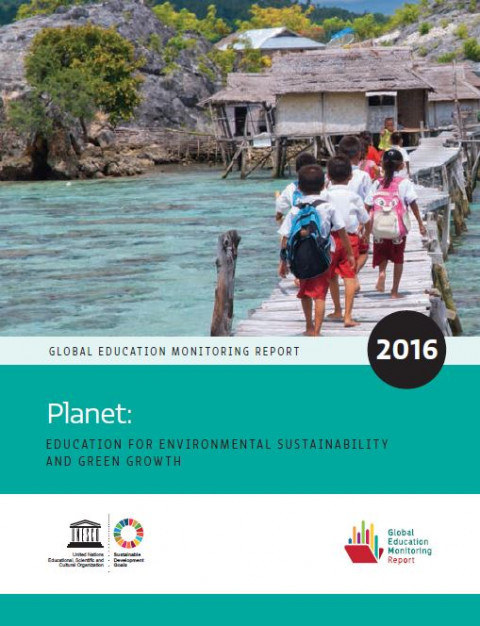 Global Education Monitoring Report, 2016: Planet: Education for Environmental Sustainability and Green Growth 出版年份: 2016 机构作者: UNESCO PLANET: Education for environmental sustainability and green growth, a publication taken from the full 2016 Global Education Monitoring Report, explores the knowledge and skills needed for sustainable and inclusive economic growth that does not damage our planet.This publication demonstrates how education can help people understand and respond to environmental issues and climate change. Environmental education can increase green knowledge and build sustainability practices. The publication warns that while education contributes to economic growth, education systems must be careful not to encourage unsustainable lifestyles and all learners must acquire the knowledge and skills needed to promote sustainable development.It also argues that we must continue to learn throughout our lives in order to make production and consumption sustainable, and to provide green skills for green industries. Creating green industries relies on high-skill workers with specific training, yet by 2020 there could be 40 million too few workers with tertiary education relative to demand. Higher education and research should also be oriented towards green innovation and growth; innovation depends on cooperation in higher education and investment in research and development to transform production in vast swaths of the economy.It also recognises that education must change in order to keep up with the changing face of work. Green and transferable skills should be taught in both school and the workplace. The greening of industries requires not only the production of more high-skill workers, but the continued training and education for low and medium skill workers, often on the job. “To ensure the Sustainable Development Goals are implemented, everyone involved needs to think, to work, to organise, to communicate and to report in ways that are completely different from what has been done up till now. Education truly is key to a wide appreciation not just of the SDGs but the new ways of thinking and working that are going to be necessary to fulfil them. So the challenge to all of us is to re-learn, and that does not just apply to educators, but it applies to all of us.”
  Guidelines on Sustainability Science in Research and Education 出版年份: 2017 机构作者: UNESCO “Guidelines on Sustainability Science in Research and Education” is the main output of the international UNESCO project “Broadening the Application of the Sustainability Science Approach” initiated in October 2015 with the support of the Japanese Ministry of Education, Culture, Sports, Science and Technology (Japan/MEXT) to identify good practices and develop policy guidelines to help Member States harness the potential of sustainability science in their sustainable development strategies.This project aimed to help UNESCO Member States and other stakeholders introduce or reinforce a sustainability science approach into transdisciplinary research and education, to enable them to better respond to global challenges, through three symposia to foster dialogue and collaboration among experts and policy-makers. Based on the joint efforts of UNESCO’s Natural Sciences Sector, Social and Human Sciences Sector, Education Sector and Regional Science Bureau for Asia and the Pacific in Jakarta, the project benefited from the guidance of a multidisciplinary steering committee and a drafting sub-committee.For further information on Sustainability Science, please visit: https://en.unesco.org/sustainability-science
  Meeting on Learning to Live Sustainably in Cities in Latin America and the Caribbean, Villa María, Argentina (26-28 April 2017): Meeting Report 出版年份: 2017 机构作者: UNESCO Villa Maríia, the first Argentinian city to join the UNESCO Global Network of Learning Cities (GNLC), co-hosted the first GNLC meeting in the region, titled ‘Learning to live sustainably in cities in Latin America and the Caribbean’. This three-day event was a joint effort of the City of Villa Maríia, the UNESCO Institute for Lifelong Learning (UIL), UNESCO Headquarters, and the UNESCO Regional Bureau for Education in Latin America and the Caribbean (OREALC/UNESCO Santiago). Participants explored new ways to implement sustainable solutions at the local level, as well as increase awareness and training related to Education for Sustainable Development (ESD). More than 170 city representatives from over 40 cities and 20 countries (including mayors and deputy mayors, experts, authorities and practitioners) were welcomed by the host city. The first day of the meeting was composed of plenary sessions; the second day consisted of two parallel workshop sessions: (1) a regional workshop on the Global Action Programme (GAP) on ESD and Cities, and (2) a regional workshop on learning cities. Aprender a Vivir de Manera Sostenible en Ciudades de América Latina y el Caribe, Villa María (Argentina), 26-28 de abril de 2017: informe de la reunión 出版年份: 2017 机构作者: Organización de las Naciones Unidas para la Educación, la Ciencia y la Cultura (UNESCO) Villa Maríia, la primera ciudad argentina que entróo a formar parte de la Red Mundial de Ciudades del Aprendizaje de la UNESCO, fue una de las organizadoras de la primera reunióon de esta Red en la regióon, titulada “Aprender a vivir de manera sostenible en ciudades en Améerica Latina y el Caribe”. Este acto, de tres díias de duracióon, fue una iniciativa conjunta de la ciudad de Villa Maríia, el Instituto de la UNESCO para el Aprendizaje a lo Largo de Toda la Vida (IUAL), la Sede de la UNESCO y la Oficina Regional de Educacióon de la UNESCO para Améerica Latina y el Caribe (OREALC/UNESCO Santiago). Los participantes estudiaron nuevas formas de poner en práactica soluciones sostenibles a escala local, asíi como de fomentar una mayor sensibilizacióon y formacióon en materia de educacióon para el desarrollo sostenible (EDS). Villa Maríia acogióo a máas de 170 representantes de máas de 40 ciudades y 20 paíises, entre los que se encontraban alcaldes y tenientes de alcalde, expertos, autoridades y profesionales. Durante la primera jornada de la reunióon tuvieron lugar reuniones plenarias y la segunda jornada se dividióo en dos sesiones paralelas de talleres: 1) un taller regional sobre el Programa de Accióon Mundial de EDS y las ciudades, y 2) un taller regional sobre las ciudades del aprendizaje.
  Europe and North America Regional Workshop on the Global Action Programme on Education for Sustainable Development and Cities 出版年份: 2017 机构作者: UNESCO UNESCO promotes Education for Sustainable Development (ESD) through the Global Action Programme (GAP), the official follow-up to the UN Decade of ESD. The Europe and North America region was the first to officially adopt a regional strategy for the United Nations Decade of Education for Sustainable Development (DESD, 2005-2014), which seeks to promote a better quality of life for populations and human settlements. Learning to live in a sustainable way and securing people’s involvement and participation in community and urban life are key factors in ensuring sustainable economic, social and environmental development. It is in this context that UNESCO, the UNESCO Global Network of Learning Cities, with its secretariat in the UNESCO Institute for Lifelong Learning (UIL) in Hamburg, and the Free and Hanseatic City of Hamburg, organized the regional workshop for Europe and North America on the role of cities in accelerating sustainable solutions at local level through education. More than 50 experts and city representatives from Europe and North America participated in the regional workshop in Hamburg, Germany, from 12 to 14 December 2016. The workshop examined how education and learning beyond the formal system can be used to support the implementation of the five Ps (Planet, People, Peace, Prosperity and Partnership) of the 2030 Agenda to achieve the Sustainable Development Goals (SDGs). Experts shared their views on ESD, with cities providing insight into their good practices and enriching discussions on the challenges of promoting the various SDGs through education and lifelong learning at city level. These discussions helped to promote awareness on integrating ESD in their cities’ development and education agendas. Programme d'action global pour l'Education en vue du développement durable et les villes: atelier régional pour l'Europe et l'Amérique du Nord 出版年份: 2017 机构作者: Organisation des Nations Unies pour l'éducation, la science et la culture (UNESCO) L’UNESCO oeuvre pour l’éducation au développement durable (EDD) dans le cadre du Programme d’action global, suivi officiel de la Décennie des Nations Unies pour l'éducation au service du développement durable (DEDD, 2005-2014). La région Europe et Amérique du Nord a été la première à adopter formellement une stratégie régionale pour la Décennie visant à promouvoir une meilleure qualité de vie pour les populations et les établissements humains. L’apprentissage d’un mode de vie durable et la participation des individus à la vie de la communauté et de la ville sont des conditions essentielles d’un développement économique, social et environnemental durable. C’est dans ce contexte que l’UNESCO, son Réseau mondial des villes apprenantes, dont le secrétariat est hébergé par l’Institut de l'UNESCO pour l'apprentissage tout au long de la vie (UIL) à Hambourg, et les autorités de la Ville libre et hanséatique de Hambourg ont organisé l’atelier régional pour l’Europe et l’Amérique du Nord sur le rôle des villes dans la mise en place accélérée de solutions locales durables, par l’éducation. Plus de 50 experts et représentants de villes d’Europe et d’Amérique du Nord ont participé à l’atelier régional, qui s’est tenu à Hambourg (Allemagne) du 12 au 14 décembre 2016. Ils ont réfléchi à la manière de s’appuyer sur l’éducation et l’apprentissage, au-delà du cadre formel, pour faciliter la mise en oeuvre des « cinq P » – planète, population (humanité), paix, prospérité et partenariats – du Programme 2030 et réaliser les Objectifs de développement durable (ODD). Les experts ont partagé leurs vues sur l’EDD, et les municipalités ont présenté leurs bonnes pratiques et enrichi les discussions sur les défis que représentait la promotion des différents ODD par l’éducation et l’apprentissage tout au long de la vie, au niveau des villes. Ces discussions ont aidé les villes à mieux comprendre comment intégrer l’EDD dans leurs programmes de développement et d’éducation.
 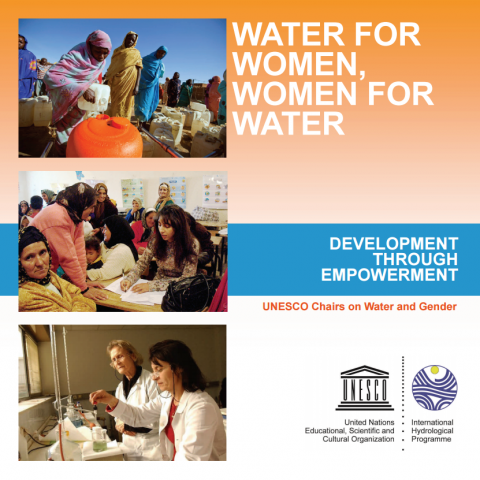 Water for Women, Women for Water: UNESCO's Chairs on Water and Gender 出版年份: 2014 机构作者: 유네스코 The access to sufficient, safe and affordable water is a basic human right. It calls for governments, institutions, corporations and public and private organizations involved in the water sector to eliminate various forms of discrimination in the access, management and decision‐making processes involving water resources. Within the framework of the UNITWIN/UNESCO Chairs Programme, UNESCO has established five Chairs seeking to promote the engagement of women in sustainable development and water resource management. These Chairs integrate the UNESCO Water Family, consisting of the International Hydrological Programme (IHP), water‐related Centers’, the UNESCO‐IHE Institute for Water Education, the World Water Assessment Programme (WWAP), and a total of 35 UNESCO Chairs and UNITWIN Networks.Located in Brazil, Côte d’Ivoire, Morocco, Togo and the Dominican Republic, the Chairs are based in institutions of research and higher education, working actively to develop human resources, build solutions, and share scientific and practical knowledge. They work in partnership with other academic institutions, as well as public and private organizations. They also pave the way for the research and higher education communities to join forces with UNESCO in an effort to achieve internationally agreed Development Goals and targets. With a high appreciation for the Chairs’ great potential for impact, IHP has strongly encouraged their projects and initiatives, as well their involvement in other focal areas of the Eighth Phase of IHP, in order to strengthen water security, enhance tertiary and technical water education and respond to the needs of communities, with a special focus on women’s needs. With their inception in 2006, the UNESCO Chairs on Water and Gender have built a remarkable combination of knowledge and experience in their area of expertise. Through their actions, the Chairs have successfully fostered cooperation and exchange of information among different institutions of higher education; conducted research and training activities on gender‐related issues, water and natural sciences; established networks between professionals, governmental, non‐governmental and private organizations; created new approaches to deal with the water‐related needs of local communities and succeeded in increasing participation, leadership and the role of women in the water sector.As a general goal, the Chairs strive to enhance women’s capacities through motivation, engagement, development of skills and education. They have been active in organizing learning courses, training sessions, workshops, conferences and a diverse range of research and community projects. The following pages present a detailed overview of the five Chairs and their goals, activities, and initiatives.
 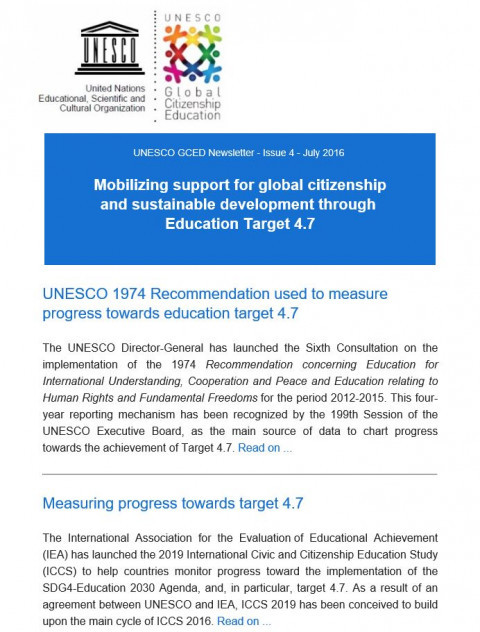 UNESCO GCED eNewsletter Issue 4 出版年份: 2016 机构作者: UNESCO Feature: Mobilizing support for global citizenship and sustainable development through Education Target 4.7 UNESCO 1974 Recommendation used to measure progress towards education target 4.7 Measuring progress towards 4.7 Gyeongju Action Plan: NGOs join UNESCO Global capacity-building workshop on GCED organized by APCEIU Southern Africa Regional Meeting on GCED convened in Johannesburg, South Africa UNESCO launches Teacher's Guide on the Prevention of Violent Extremism Expert meeting on the Prevention of Violent Extremism through Education European ministers back education for democracy to counter extremism and racaism UN discusses innovative solutions to prevent violent extremism through education UNESCO's YESPeace Network taps the power of youth worldwide to change the future GCED Topics and Learning Objectives available in seven languages.
 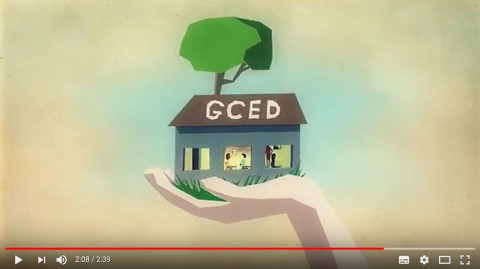 [Video] Learning to live together in peace through Global Citizenship Education 出版年份: 2016 机构作者: UNESCO The UNESCO video on “Learning to live together in peace through Global Citizenship Education” explains the importance of Global Citizenship Education (GCED) in a globalized and increasingly interconnected and interdependent world. GCED is key to understand the interconnections between the local and the global and nurture a sense of belonging to a common humanity. It builds motivation to assume active roles to contribute to a more just, peaceful, tolerant and sustainable world. The video also illustrates how GCED can be delivered in and outside of schools.