
相关资源
探索丰富的全球公民教育资源,深化理解,促进研究、倡导、教学与学习。
共找到2,161条结果
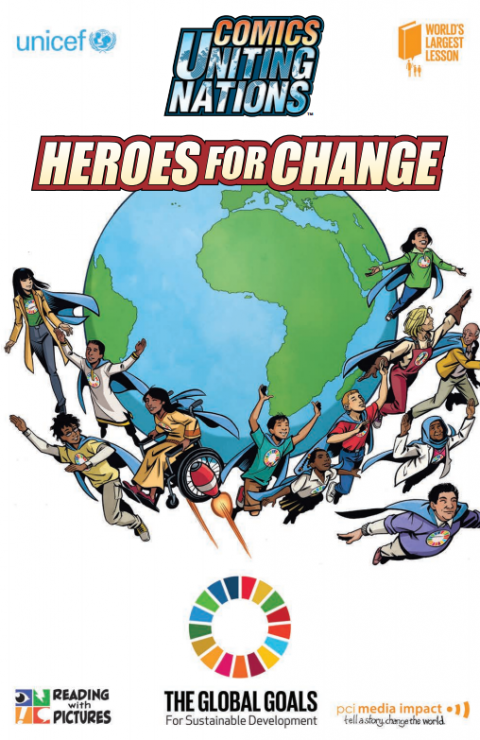 Heroes For Change 出版年份: 2015 作者: Josh Elder | Natabara Rollosson | Sean Southey | Grace Allison | Karl Kesel | Grace Allison 机构作者: Project Everyone | PCI Media Impact | Reading With Pictures Heroes for Change has been created for the World's Largest Lesson Initiative to share information on the global goals. LES HÉROS DU CHANGEMENT 出版年份: 2015 作者: Josh Elder | Natabara Rollosson | Sean Southey | Grace Allison | Karl Kesel | Grace Allison 机构作者: Project Everyone | PCI Media Impact | Reading With Pictures Heroes for Change has been created for the World's Largest Lesson Initiative to share information on the global goals. héroes para el cambio 出版年份: 2015 作者: Josh Elder | Natabara Rollosson | Sean Southey | Grace Allison | Karl Kesel | Grace Allison 机构作者: Project Everyone | PCI Media Impact | Reading With Pictures Heroes for Change has been created for the World's Largest Lesson Initiative to share information on the global goals. Герои за перемены 出版年份: 2015 作者: Josh Elder | Natabara Rollosson | Sean Southey | Grace Allison | Karl Kesel | Grace Allison 机构作者: Project Everyone | PCI Media Impact | Reading With Pictures Heroes for Change has been created for the World's Largest Lesson Initiative to share information on the global goals. أبطال من أجل التغي 出版年份: 2015 作者: Josh Elder | Natabara Rollosson | Sean Southey | Grace Allison | Karl Kesel | Grace Allison 机构作者: Project Everyone | PCI Media Impact and Reading With Pictures Heroes for Change has been created for the World's Largest Lesson Initiative to share information on the global goals. 改革英雄 出版年份: 2015 作者: Josh Elder | Natabara Rollosson | Sean Southey | Grace Allison | Karl Kesel | Grace Allison 机构作者: Project Everyone | PCI Media Impact | Reading With Pictures Heroes for Change has been created for the World's Largest Lesson Initiative to share information on the global goals.
 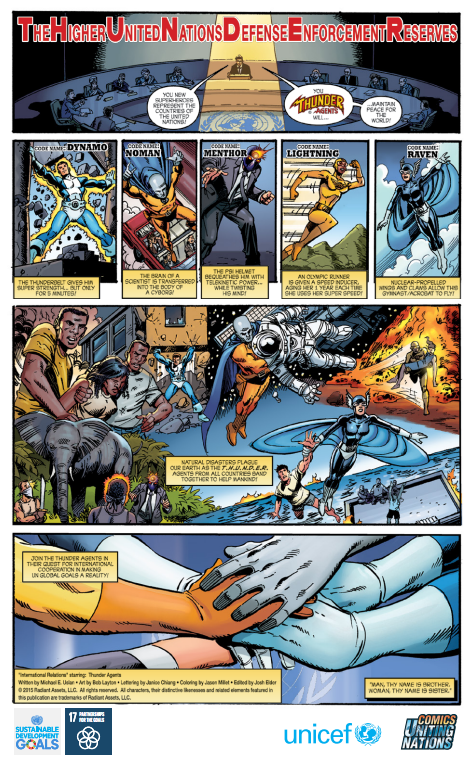 T.H.U.N.D.E.R. Agents 出版年份: 2015 作者: Michael E. Ulsan | Bob Layton | Janic Chiang | Jason Millet | Josh Elder 机构作者: Radiant Assets | LLC | United Nations Children's Fund (UNICEF) T.H.U.N.D.E.R. -- The Higher United Nations Defense Enforcement Reserves -- are UN Superheroes tasked with promoting global cooperation to make the world a better place. The T.H.U.N.D.E.R. Agentswas a comic originally created in the 1960s and is set to be made into a major motion picture in 2018.
 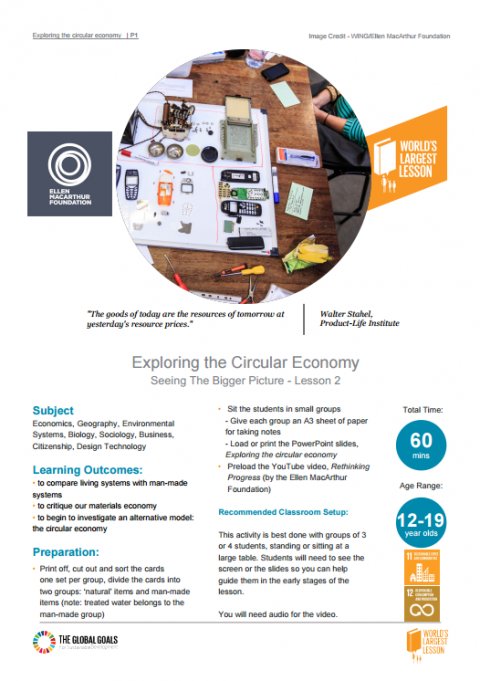 Exploring the Circular Economy: Seeing The Bigger Picture - Lesson 2 机构作者: United Nations Children's Fund (UNICEF) World’s Largest Lesson is a collaborative education project to support the announcement of the United Nations Global Goals for Sustainable Development. Learning outcomes of the project: • to compare living systems with man-made systems • to critique our materials economy • to begin to investigate an alternative model: the circular economy
 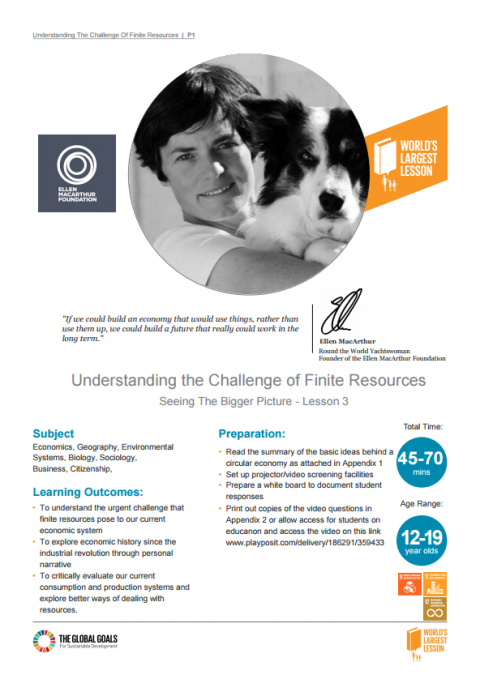 Understanding the Challenge of Finite Resources: Seeing The Bigger Picture - Lesson 3 机构作者: United Nations Children's Fund (UNICEF) World’s Largest Lesson is a collaborative education project to support the announcement of the United Nations Global Goals for Sustainable Development. Learning outcomes of the project: • To understand and the urgent challenge that finite resources pose to our current economic system • To explore economic history since the industrial revolution through personal narrative • To critically evaluate our current consumption and production systems and explore better ways of dealing with resources.
  Designing for a Circular Economy: Seeing The Bigger Picture - Lesson 4 机构作者: United Nations Children's Fund (UNICEF) World’s Largest Lesson is a collaborative education project to support the announcement of the United Nations Global Goals for Sustainable Development. Learning outcomes of the project: • To learn about companies that have adopted the circular economy framework • To design a product or service based on the circular economy