
相关资源
探索丰富的全球公民教育资源,深化理解,促进研究、倡导、教学与学习。
共找到2,657条结果
 Les perspectives de l'éducation au développement dans les pays africains: la construction d'une masse critique de citoyens pour l'engagement civique 出版年份: 2015 作者: Simon Eten 机构作者: Centre for Global Education (CGE) Cet article soutient que l'éducation au développement est souvent encadrée dans un contexte africain dans les notions de citoyenneté nationale visant à susciter le soutien des institutions et des politiques publiques plutôt que de développer la pensée critique. Ce concept limité et l'application de l'éducation au développement se traduit souvent par l'apathie du public et le désengagement de la participation à la communauté, les initiatives nationales et mondiales de développement. L'auteur fait valoir que le recours à la plus radicale, la conception freirienne de la pratique de l'éducation au développement dans les pays africains pourrait soutenir l'activisme public plus engagé dans les questions qui sous-tendent la pauvreté et de l'injustice localement et globalement. L'auteur puise dans ses connaissances et de l'expérience du secteur public au Ghana et les tendances générales à travers l'Afrique pour proposer des zones potentiellement fertiles de la recherche qui pourrait soutenir la pratique DE plus efficace qui favorise l'engagement civique renforcée.
 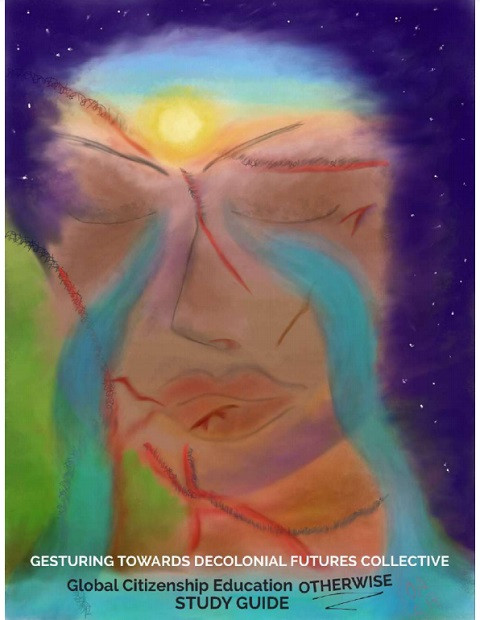 Gesturing Towards Decolonial Futures Collective: Global Citizenship Education Otherwise; Study Guide 出版年份: 2019 作者: Vanessa de Oliveira Andreotti | Sharon Stein | Rene Suša | Dani d’Emilia | Elwood Jimmy | Bill Calhoun | Sarah Amsler | Camilla Cardoso | Dino Siwek | Kyra Fay | Tereza Čajková 机构作者: Decolonial Futures Collective This booklet was developed with a specific audience in mind: educators working with global citizenship education in Europe. It presents an overview of the work of the collective and outlines two pedagogical experiments. The first pedagogical experiment, “Bare Basics” is a program for self or group study consisting of a collection of resources organized around 6 thematic areas (denial of violence, denial of unsustainability, denial of entanglement, how education has helped create the problem, so what/now what?, the difficulties/impossibilities of imagining otherwise). The second pedagogical experiment is an experiential learning program that we run by request (as a TTT or a residency). It involves mapping, imagination, body and land-based exercises. We invite you to engage with the outline of both programs, starting with our “broccoli seed agreement” on the back of the booklet.
 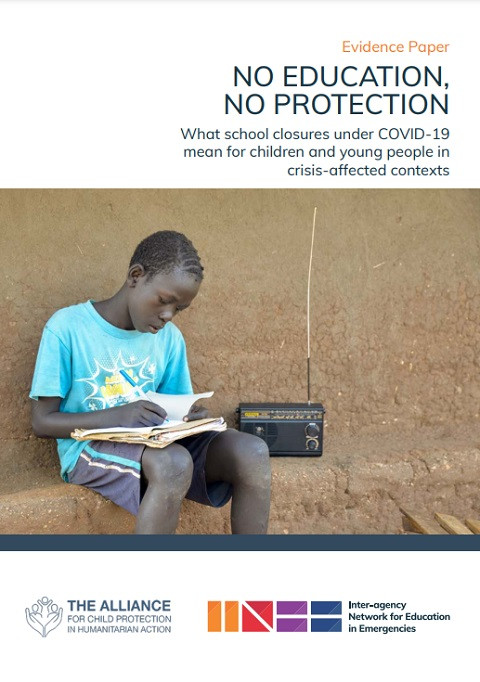 No Education, No Protection: What School Closures Under COVID-19 Mean for Children and Young People in Crisis-Affected Contexts 出版年份: 2021 机构作者: Inter-agency Network for Education in Emergencies (INEE) | Alliance for Child Protection in Humanitarian Drawing from research and experience on previous infectious disease outbreaks and an emergent body of work from the current COVID-19 pandemic, this report highlights the primarily negative effects resulting from the combination of sudden school closures and restricted access to and availability of services, social networks, and other protective facilities for children and young people living in crisis-affected contexts. The consequences of school closures on education and child protection can be categorized into three principal areas:1. Loss of learning and impediments to providing inclusive, equitable, quality education2. Negative impact on child well-being and healthy development3. Amplified child protection risks and harms experienced by children and young people
 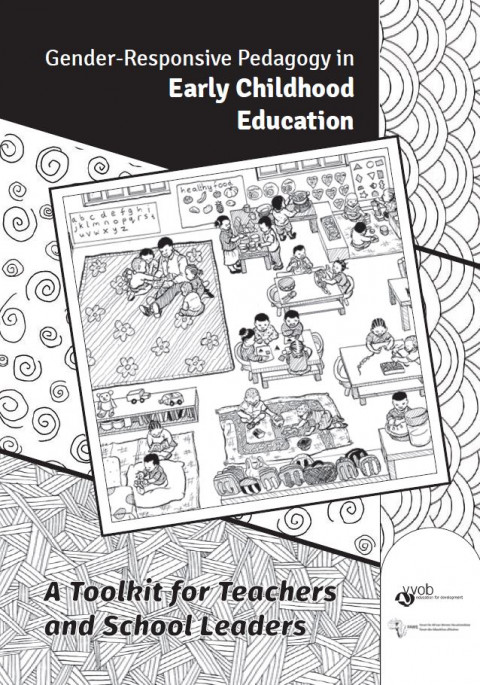 Gender-responsive Pedagogy for Early Childhood Education: A Toolkit for Teachers and School Leaders 出版年份: 2019 机构作者: VVOB | Forum for African Women Educationalists (FAWE) The Gender-Reponsive Pedagogy for Early Childhood Education Toolkit targets early childhood education teachers and all other practitioners who deal with younger children. It is a practical guide that can be adapted to any context and the related needs as well as a source of ideas and resources that individual teachers and school leaders can put to immediate use in their classrooms and schools. The toolkit is also a useful resource for researchers, school-parent committees and governing bodies, civil society organisations, community leaders and education policy makers.
 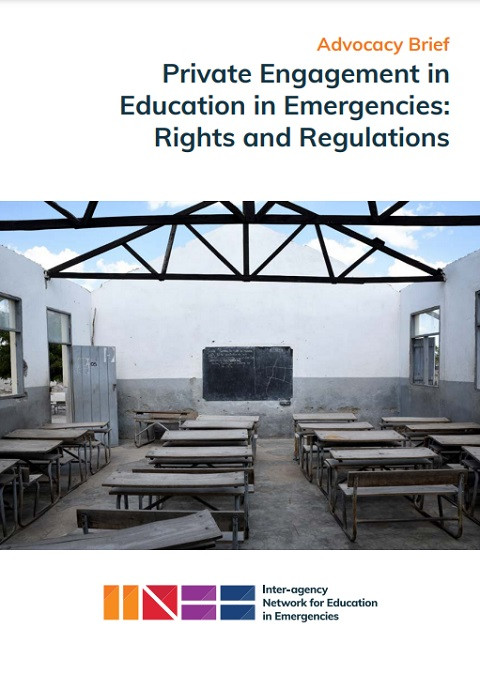 Private Engagement in Education in Emergencies: Rights and Regulations 出版年份: 2021 作者: Francine Sara Menashy | Zeena Zhakaria 机构作者: Inter-agency Network for Education in Emergencies (INEE) Efforts to secure inclusive and equitable education for all have prompted calls for greater engagement by the private sector, asserting that businesses and foundations can play significant roles as partners in achieving Sustainable Development Goal 4 (SDG4).In recent years, given shortfalls in public financing and the need for urgent responses, private actors have increasingly become involved in various aspects of educational programming for education in emergencies (EiE). This arrangement, however, can produce tensions between private engagement and humanitarian response in education, which need to be addressed and in turn require extra coordination, advocacy and attention. This brief explores some of these tensions and makes recommendations to support the prioritization of safe, equitable, and quality public education for all children and young people affected by crises.INEE supports every young person’s right to education and recognizes the State as the primary duty-bearer of schooling, in alignment with international declarations, frameworks, and legal instruments that assert and protect the right to education. Participación del sector privado en la Educación en situaciones de emergencia: Derechos y regulaciones 出版年份: 2021 作者: Francine Sara Menashy | Zeena Zhakaria 机构作者: Inter-agency Network for Education in Emergencies (INEE) Las iniciativas que buscan garantizar una educación inclusiva y equitativa para todos han generado peticiones para una mayor involucramiento del sector privado, afirmando que las empresas y las fundaciones pueden jugar un papel importante como socios para alcanzar el Objetivo de Desarrollo Sostenible 4 (ODS4). En los últimos años, debido a la falta de financiamiento público y a la necesidad de respuestas urgentes, ha crecido la participación del sector privado en diversos aspectos de la programación educativa para la educación en situaciones de emergencia (EeE). Esta forma de trabajar, sin embargo, puede causar tensiones entre la participación del sector privado y la respuesta humanitaria en materia de educación. Es necesario resolver estas tensiones, lo cual requiere una mayor coordinación, abogacía y atención. Este informe explora algunas de estas tensiones y ofrece recomendaciones para apoyar la priorización de una educación pública segura, equitativa y de calidad para todos los niños, niñas y jóvenes afectados por crisis. La INEE apoya el derecho que tienen todas las personas jóvenes a la educación y reconoce al Estado como el principal responsable de la escolarización, en línea con declaraciones, marcos e instrumentos legales internacionales que reconocen y protegen el derecho a la educación.
  Digital Empowerment of Girls 出版年份: 2018 机构作者: Plan International Despite the accumulated efforts and commitments of the past 20 years, today’s women and girls continue to face gender-based barriers that prevent them from accessing and utilising technology and digital tools at the same level as boys and men.Girls are 5 times less likely to consider a career in tech than boys.Equality of education is essential to redress the digital gender gap – which is sadly growing – but it’s not the only method.We must make tech safe, affordable and accessible to girls – wherever they live. We must tackle the ingrained gender norms that prevent girls from seeing digital roles as accessible career paths.Rather than making assumptions about what girls want and need from technology, we must work with them to create solutions for the issues that affect them by enabling them to learn digital skills.Technology can be a powerful tool for girls’ voices to become even louder and reach even further.This briefing paper provides recommendations for closing the digital gender gap that will enable girls to participate in and contribute to our increasingly digital future.Despite the accumulated efforts and commitments of the past 20 years, today’s women and girls continue to face gender-based barriers that prevent them from accessing and utilising technology and digital tools at the same level as boys and men.Promoting girls’ digital literacy and closing the digital gender gap will play an important role in achieving gender equality and promoting the rights of girls and women worldwide.Plan International strives to build a world in which girls have the tools and the power to shape their own futures and influence decision making and policy processes at local and global levels. Technology is not a prerequisite for being a change agent or a leader, but it can be a powerful tool for girls’ voices to become even louder and reach even further. Similarly, social media can be used as a vehicle to spread inspirational stories of female leaders and connect activists and changemakers across the world.Digital technologies have a strong potential to empower girls and women economically and socially. Girls feel safer and more connected when they have a mobile phone, and they use mobile phones to save time and money and access educational opportunities. Yet girls and women are, on average, less likely than men to own a mobile phone, use mobile data, social media apps or SMS. There is also a stark gender disparity in access to the Internet, which limits the ability of girls and women to benefit from many innovations of the digital economy, such as digital payments and mobile money. The gender disparity in access to technology is compounded by a significant gender divide in terms of career and academic aspirations related to ICTs.Advancing digital equality for girlsThis briefing paper argues that promoting girls’ digital literacy and closing the digital gender gap will play an important role in achieving gender equality and promoting the rights of girls and women worldwide. Indeed, bridging the digital gender divide is essential in ensuring girls and women are not left behind in an increasingly digital future.The paper also argues that actions promoting girls’ digital empowerment should be guided by the principle of engaging girls and women as active, capable partners in our work, not merely passive recipients or targets. Rather than making assumptions about what girls want and need from technology, it is important to work together with girls to strengthen and develop their use and creation of technology and digital tools. Empoderamiento digital de las niñas 出版年份: 2018 机构作者: Plan International Este documento informativo argumenta que mediante la promoción de la alfabetización digital de las niñas y el cierre de la brecha digital de género se podrá conseguir importantes logros con respecto a la igualdad de género y la promoción de los derechos de las niñas y mujeres en todo el mundo.
  Education Under Attack 2020 出版年份: 2020 机构作者: Global Coalition to Protect Education from Attack (GCPEA) This study is published by the Global Coalition to Protect Education from Attack (GCPEA), which was formed in 2010 by organisations working in the fields of education in emergencies and conflict-affected contexts, higher education, protection, and international human rights and humanitarian law that were concerned about ongoing attacks on educational institutions, their students, and staff in countries affected by conflict and insecurity.GCPEA is a coalition of organizations that includes: co-chairs Human Rights Watch and Save the Children, the Council for At-Risk Academics (Cara), the Institute of International Education (IIE), the Office of the United Nations High Commissioner for Refugees (UNHCR), the Education Above All Foundation (EAA), Plan International, the United Nations Children’s Fund (UNICEF) and the United Nations Educational, Scientific and Cultural Organization (UNESCO). GCPEA is a project of the Tides Center, a non-profit 501(c)(3) organization. Education under Attack 2020 is the result of independent research conducted by GCPEA. It is independent of the individual member organizations of the Steering Committee of GCPEA and does not necessarily reflect the views of the Steering Committee member organizations.
  Global Resources Outlook: 2024 Bend the Trend; Pathways to a Liveable Planet as Resource Use Spikes 出版年份: 2024 作者: Hans Bruyninckx, Steve Hatfield-Dodds, Stefanie Hellweg, Heinz Schandl 机构作者: United Nations Environment Programme (UNEP) | International Resource Panel (IRP) The world is in the midst of a triple planetary crisis of climate change, biodiversity loss and pollution and waste. The global economy is consuming ever more natural resources, while the world is not on track to meet the Sustainable Development Goals. The scientific community has never before been more aligned or more resolute on the need for urgent global transformation towards the sustainable use of resources. This 2024 edition of the Global Resources Outlook sheds light on how resources are essential to the effective implementation of the Agenda 2030 and multilateral environmental agreements to tackle the triple planetary crisis. The report brings together the best available data, modelling and assessments to analyse trends, impacts and distributional effects of resource use. It builds on more than 15 years of work by the International Resource Panel, including scientific assessments and inputs from countries, a vast network of stakeholders in the field and regional experts. The report illustrates how, since the 2019 edition of this report, rising trends in global resource use have continued or accelerated. The report also shows how demand for resources is expected to continue increasing in the coming decades. This means that, without urgent and concerted action, by 2060 resource extraction could rise by 60% from 2020 levels – driving increasing damage and risks. However, this fate is not sealed. The report also describes the potential to turn negative trends around and put humanity on a trajectory towards sustainability. For that, bold policy action is critical to phase out unsustainable activities, speed up responsible and innovative ways of meeting human needs and create conditions conducive to social acceptance and equity within the necessary transitions. This includes urgent action to embed resources in the delivery of multilateral environmental agreements, define sustainable resource use paths and roll out appropriate financial, trade and economic incentives. The pathway towards sustainability is increasingly steep and narrow, and the window of opportunity is closing. The science is clear: The key question is no longer whether a transformation towards global sustainable resource consumption and production is necessary, but how to make it happen now. Addressing this reality, based on evolving concepts of a just transition, is an essential part of any credible and justifiable way forward.