
相关资源
探索丰富的全球公民教育资源,深化理解,促进研究、倡导、教学与学习。
共找到3,454条结果
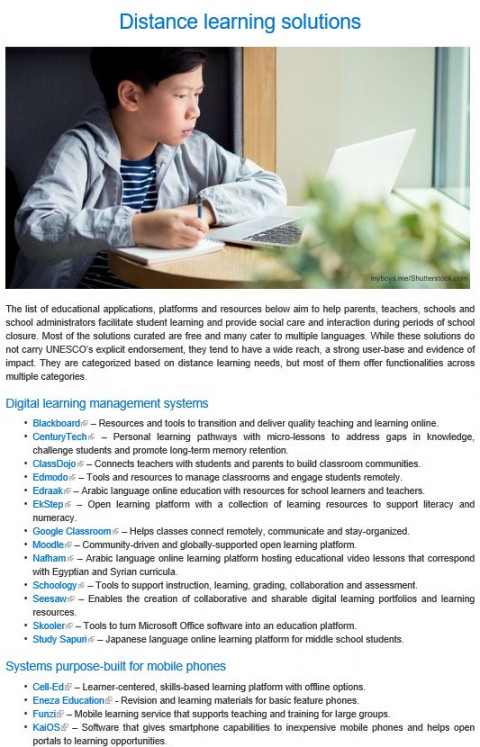 حلول للتعلّم عن بعد 出版年份: 2020 机构作者: منظمة الأمم المتحدة للتربية والعلم والثقافة (UNESCO) الغرض من قائمة التطبيقات والمنصات والموارد التعليمية الواردة أدناه، مساعدة الأهل والمعلمين والمدارس ومديريها على تيسير عملية تعلّم الطلاب وتقديم الرعاية الاجتماعية والتفاعل الاجتماعي لهم في أثناء فترة إغلاق المدارس. ومعظم الحلول المختارة مجانية، ويقدم العديد منها محتوى متاحاً بعدة لغات. ولا تحظى هذه الحلول بدعم صريح من اليونسكو، بيد أنها تصل إلى عدد كبير من الأشخاص، ولها قاعدة مستخدمين واسعة، وتأثيرها مثبت. وتُصنّف هذه الحلول في فئات تبعاً لاحتياجات الدارسين، ولكن معظمها يحتوي على خصائص مأخوذة من فئات مختلفة.
  UNESCO: Promise of Gender Equality; Key Actions of 2018 and 2019 出版年份: 2020 机构作者: UNESCO This is the first UNESCO Annual Report on Gender Equality that highlights the key initiatives implemented in 2018-2019. The advancement of gender equality through education, the sciences, culture, information and communication, at the heart of UNESCO’s mandate, aims to equip both women and men to address the challenges of sustainable development in a fast-changing world. UNESCO: La Promesse de l’Egalité des genres; Actions clés de 2018 - 2019 出版年份: 2020 机构作者: Organisation des Nations Unies pour l'éducation, la science et la culture (UNESCO) Ceci est le premier rapport annuel de l’UNESCO sur l’égalité des genres qui met en lumière quelques-unes des initiatives clés mises en place en 2018 - 2019. Les progrès en matière d’égalité des genres par l’éducation, les sciences, la culture, l’information et la communication, au cœur des activités de l’UNESCO, visent à donner aux femmes et aux hommes les moyens de relever les défis du développement durable dans un monde en perpétuelle mutation.
  Visioning and Framing the Futures of Education: February 2020 出版年份: 2020 机构作者: UNESCO This statement is the outcome from first meeting of the International Commission on the Futures of Education held in Paris, 28-29 January 2020. Established by UNESCO, the Commission is charged with looking at 2050 and beyond to issue a report in 2021 to rethink how knowledge, learning and education may address the challenges and opportunities, both those foreseen for the future and those with us in the present. Note de cadrage sur les Futurs de l'éducation: Février 2020 出版年份: 2020 机构作者: Organisation des Nations Unies pour l'éducation, la science et la culture (UNESCO) Cette note est le fruit de la première réunion de la Commission internationale sur les futurs de l’éducation qui s’est tenue à Paris les 28 et 29 janvier 2020. Etablie par l’UNESCO, la Commission est chargée de repenser lessavoirs, l’apprentissage et l’éducationface aux défis et auxopportunités, tant ceux envisagés à l’horizon2050 et au-delà, que ceux duprésent. Visióny marco de los futuros de la educación: Febrero de 2020 出版年份: 2020 机构作者: Organización de las Naciones Unidas para la Educación, la Ciencia y la Cultura (UNESCO) La declaración es el resultado de la primera reunión de la Comisión Internacional sobre los Futuros de la Educación, celebrada en París los días 28 y 29 de enero de 2020. La Comisión, establecida por la UNESCO, se encarga de mirarhacia 2050 y más allá para publicar en 2021 un informe con el fin de repensar el modo en que el conocimiento, el aprendizaje y la educación pueden ayudar a abordar los desafíos y las oportunidades, tanto los previstos para el futuro como los que nos acompañan en el presente. Концептуальное осмысление и определение перспектив развития образования: Февраль 2020года 出版年份: 2020 机构作者: Организация Объединенных Наций по вопросам образования, науки и культуры (UNESCO) Представленное ниже заявление является итоговым документом первого заседания Международной комиссии по перспективам развития образования, состоявшегося 28-29 января 2020 года в Париже. Ко-миссия была создана решением ЮНЕСКО с задачей проанализировать перспективы развития образо-вания до 2050 года и в последующий период с целью подготовки к публикации в 2021 году доклада, в котором будет по-новому осмыслено то, каким образом знания, обучение и образование могли бы со-действовать использованию возможностей и решению сложных проблем, причем не только прогнози-руемых, но и уже существующих. رؤية مستقبل التعليم وتأطيره: فبراير 2020 出版年份: 2020 机构作者: منظمة الأمم المتحدة للتربية والعلم والثقافة (UNESCO) نورد فيما أييت البيان الصادر عن االجتماع األول للجنة الدولية ملستقبل الرتبية و التعليم الذي قد ُ ع يف ابريس يف ُ ُون الفرتة من 28 إىل 29 َكان لثَّ ِان ٱ ُ ر ِ اي َ ن َ / ي 2020 .وذلك يف إطار عمل اللجنة املكلفة من قبل اليونسكو للنظر ً وأييت هذا البيان متهيدا إلصدار تقرير اللجنة يف عام 2021 إلعادة التفكري يف املستقبل إىل عام 2050 وما بعده، يف كيف ميكن للمعرفة والتعلم والتعليم مواجهة التحدايت والفرص، سواء تلك املتوقعة للمستقبل أو تلك املوجودة 展望并构筑教育的未来: 2020年2月 出版年份: 2020 机构作者: 联合国教科文组织 (UNESCO) 以下是关于教育的未来国际委员会第一次会议(2020年1月28–29日,巴黎)成果的声明。该委员会由教科文组织创设,其任务是展望2050年及以后,在2021年发布一份报告,重新思考知识、学习和教育可如何应对挑战、把握机遇,包括未来可预见的以及当前存在的挑战和机遇。
 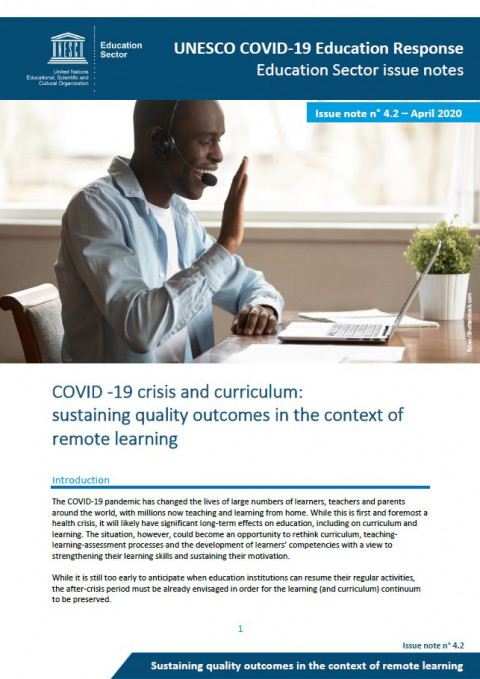 COVID-19 Crisis and Curriculum: Sustaining Quality Outcomes in the Context of Remote Learning (Issue Note no. 4.2 – April 2020) 出版年份: 2020 机构作者: UNESCO The COVID-19 pandemic has changed the lives of large numbers of learners, teachers and parents around the world, with millions now teaching and learning from home. While this is first and foremost a health crisis, it will likely have significant long-term effects on education, including on curriculum and learning. The situation, however, could become an opportunity to rethink curriculum, teaching-learning-assessment processes and the development of learners’ competencies with a view to strengthening their learning skills and sustaining their motivation.This crisis will likely provide an opportunity for schools to strengthen their ties with families, and for teachers to communicate and cooperate better with parents in the interest of learners. In the same vein, the crisis means teachers and parents may become more involved in decisions regarding curriculum appropriateness. This can support the development of a learner-centred, participative and inclusive learning paradigm that takes into account the interests of learners, as well as their environments and aspirations.