
相关资源
探索丰富的全球公民教育资源,深化理解,促进研究、倡导、教学与学习。
共找到2,772条结果
 Shared Responsibility, Global Solidarity: Responding to the Socio-Economic Impacts of COVID-19 出版年份: 2020 机构作者: United Nations (UN) We are facing a global health crisis unlike any in the 75-year history of the United Nations — one that is killing people, spreading human suffering, and upending people’s lives. But this is much more than a health crisis. It is a human crisis. The coronavirus disease (COVID-19) is attacking societies at their core. The IMF has just reassessed the prospect for growth for 2020 and 2021, declaring that we have entered a recession – as bad as or worse than in 2009. The IMF projects recovery in 2021 only if the world succeeds in containing the virus and take the necessary economic measures.In the face of such an unprecedented situation in recent history, the creativity of the response must match the unique nature of the crisis – and the magnitude of the response must match its scale. No country will be able to exit this crisis alone.This report is a call to action, for the immediate health response required to suppress transmission of the virus to end the pandemic; and to tackle the many social and economic dimensions of this crisis. It is, above all, a call to focus on people – women, youth, low-wage workers, small and medium enterprises, the informal sector and on vulnerable groups who are already at risk.
 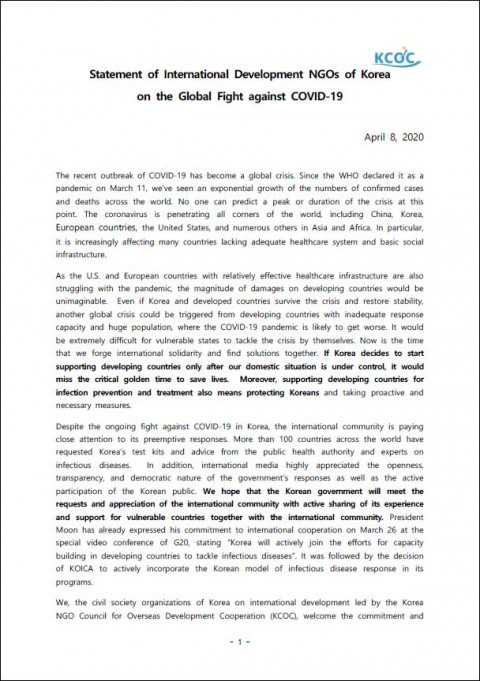 Statement of International Development NGOs of Korea on the Global Fight against COVID-19 出版年份: 2020 机构作者: Korea NGO Council for Overseas Development Cooperation (KCOC) The recent outbreak of COVID-19 has become a global crisis. Since the WHO declared it as a pandemic on March 11, we’ve seen an exponential growth of the numbers of confirmed cases and deaths across the world. No one can predict a peak or duration of the crisis at this point.As the U.S. and European countries with relatively effective healthcare infrastructure are also struggling with the pandemic, the magnitude of damages on developing countries would be unimaginable. It would be extremely difficult for vulnerable states to tackle the crisis by themselves. Now is the time that we forge international solidarity and find solutions together. 국제사회의 코로나19 퇴치를 위한 한국 국제개발협력 시민사회단체들의 호소문 出版年份: 2020 机构作者: Korea NGO Council for Overseas Development Cooperation (KCOC) 코로나19가 전 지구적 위기로 다가왔습니다. 지난 3월 11일 세계보건기구(WHO)가 팬데믹을 선언한 이래, 전 세계 확진자 및 사망자의 수가 기하급수적으로 증가하고 있고, 그 정점이 어디인지, 언제까지 이 사태가 계속될지 누구도 예측하지 못하는 상황입니다.보건 의료 인프라가 잘 갖춰진 미국과 유럽에서조차 팬데믹의 영향이 심각한 상황임을 감안할 때, 향후 개발도상국(이하 개도국)이 받게 될 피해의 정도를 가늠하기 어렵습니다. 취약한 나라일수록 스스로의 노력만으로 현 위기 상황을 타개하기란 매우 어렵기에 우리는 지금부터 국제적으로 연대하고 공동으로 해결방안을 모색해야 합니다. 또한 개도국의 감염예방 및 치료를 돕는 것이 곧 우리의 안전을 지키는 일이며, 필수적이고도 선제적인 예방책이 될 것이라는 점을 기억해야 합니다.
 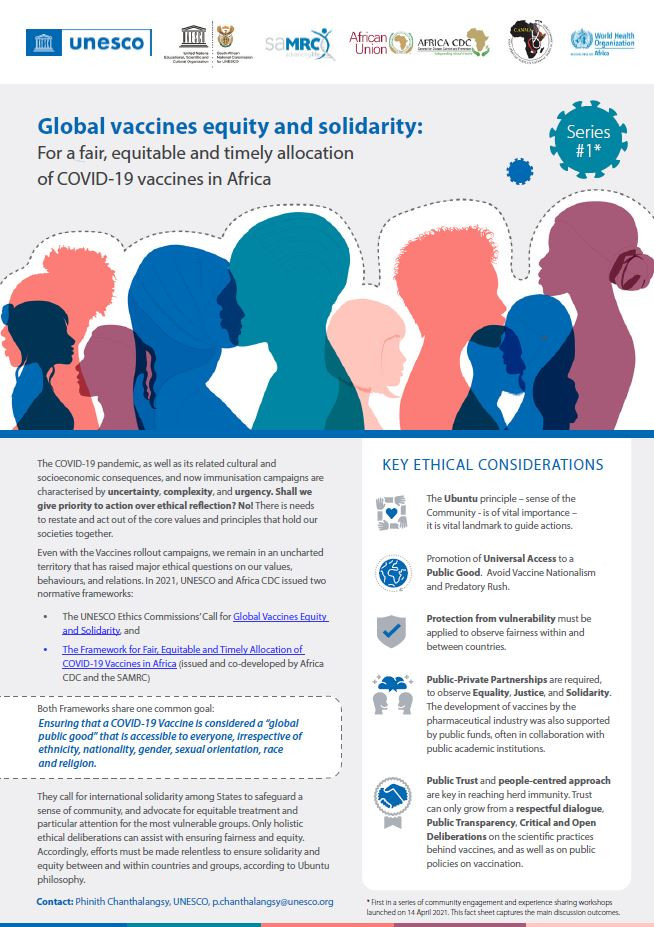 Global Vaccines Equity and Solidarity: For a Fair, Equitable and Timely Allocation of COVID-19 Vaccines in Africa; Series #1 出版年份: 2021 机构作者: UNESCO Harare African populations have been side-lined through the COVID-19 Vaccination roll-out process. A vaccination timeline taking Africa into 2023 would be unethical. African countries need to invest in their own structures and stop relying on colonial structures. There is a moral obligation to safeguard the population through equal distribution. This not only makes moral and ethical sense but also scientific and economic sense as a slow roll out in Africa will impact the rest of the world. First in a series of community engagement and experience sharing workshops launched on 14 April 2021. This fact sheet captures the main discussion outcomes.
 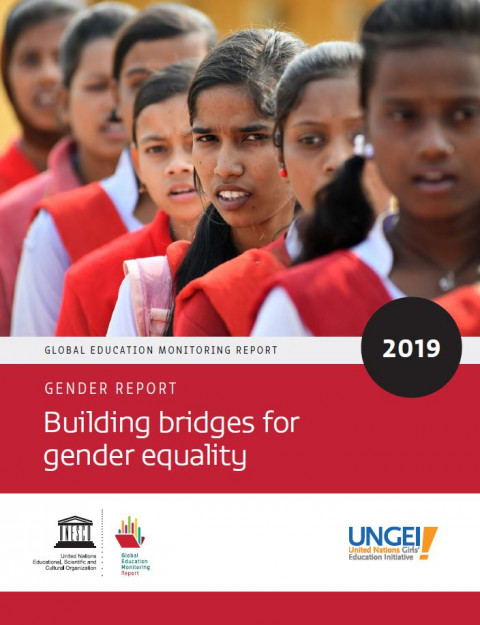 Global Education Monitoring Report 2019: Gender Report: Building Bridges for Gender Equality 出版年份: 2019 机构作者: Global Education Monitoring Report Team Achieving gender equality in education participation, in the teaching and learning process and in access to social and economic opportunities that education can facilitate are key interlinked ambitions in two of the Sustainable Development Goals (SDGs) in the 2030 Agenda for Sustainable Development: SDG 4 on education and SDG 5 on gender equality. These aims are also key to the Education 2030 Framework for Action, which calls on countries to adopt strategies that not only cover access to education for all but also address substantive gender equality issues: ‘supporting gender-sensitive policies, planning and learning environments; mainstreaming gender issues in teacher training and curricula; and eliminating gender-based discrimination and violence in schools’. The 2019 Gender Report is based on a monitoring framework first introduced in the 2016 Global Education Monitoring Report.In addition to focusing on gender parity in education participation, attainment and learning achievement, the framework examines broad social and economic contexts (gender norms and institutions) and key education system characteristics (laws and policies, teaching and learning practices, learning environments, and resources). The framework also looks at the relationship between education and selected social and economic outcomes. For instance, a move towards parity in education attainment may increase women’s labour force participation rates, but low levels of labour force participation feed into existing norms and may constrain expansion of education opportunities for women.
 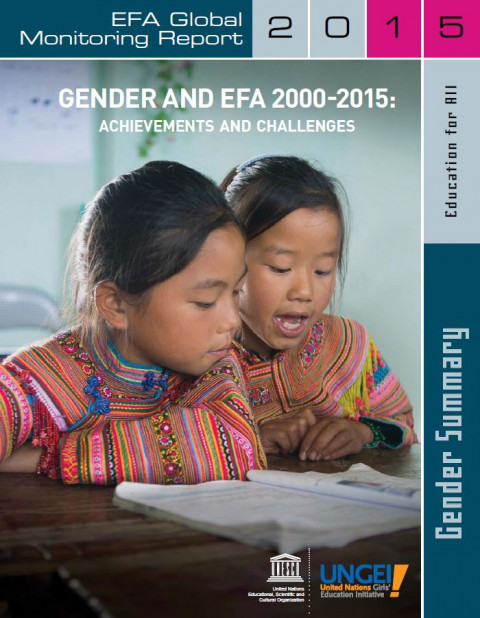 [Summary] Gender and EFA 2000-2015: Achievements and Challenges; EFA Global Monitoring Report 2015; Gender Summary 出版年份: 2015 机构作者: Global Education Monitoring Report Team This report describes an array of country efforts, some quite effective, to achieve and go beyond gender parity in education. Many of these policies and programmes focus on the immediate school environment in which girls learn. Others focus on the informal and formal laws, social norms and practices that deny girls their right of access to, and completion of, a full cycle of quality basic education. The analyses and key messages in Gender and EFA 2000–2015: Achievements and Challenges deserve careful scrutiny as the world embarks on a universal, integrated and even more ambitious sustainable development agenda in the years to come.
  International Higher Education: Shifting Mobilities, Policy Challenges, and New Initiatives 出版年份: 2018 作者: Rajika Bhandari | Chelsea Robles | Christine Farrugia 机构作者: Global Education Monitoring Report Team | Institute of International Education (USA). Center for Academic Mobility Research and Impact Cross-border mobility in higher education, while still referring to a minority of people, is a large phenomenon that is increasingly taking new forms, extending from students and faculty member mobility to the movement of educational programs and institutions, including the spread of online courses facilitated by improvements in technology. It is also a phenomenon with major implications in facilitating the flow and exchange of ideas and knowledge, improving practices, generating resources for receiving countries, and attracting talent. For that reason, the internationalization of higher education puts pressure on countries to develop a strategy that would maximize the education, political and economic benefits while minimizing the costs.Based on an in-depth review of research and existing data, this paper examines key issues in the internationalization of higher education, assesses broad consequences, and discusses a selection of the latest trends. The paper also provides an overview of the key policy challenges and options facing governments in low, middle and high income countries as they seek to internationalize their higher education sectors while also sending their top talent overseas to acquire a global education. Rapport mondial de suivi de l'éducation 2019: rapport sur l'égalité des genres: Bâtir des ponts pour promouvoir l'égalité des genres 出版年份: 2019 机构作者: Global Education Monitoring Report Team La réalisation de l’égalité des genres dans la participation à l’éducation, les processus d’enseignement et d’apprentissage et l’accès aux possibilités sociales et économiques offertes par l’éducation est une ambition majeure portée par deux des Objectifs du Programme de développement durable à l’horizon 2030: l’ODD 4 relatif à l’éducation et l’ODD 5 relatif à l’égalité des sexes. Cette ambition occupe également une place centrale dans le Cadre d’action Éducation 2030, qui appelle les pays à ne pas se limiter à l’accès à l’éducation pour tous dans les stratégies qu’ils adoptent mais à aborder également les questions de fonds relatives à l’égalité des genres: «nous prenons l’engagement de soutenir les politiques, la planification et les environnements d’apprentissage attentifs au genre, d’intégrer les questions de genre dans la formation des enseignants et dans les programmes d’enseignement, ainsi que d’éliminer les discriminations et la violence fondées sur le genre à l’école». Le Rapport 2019 sur l’égalité des genres s’appuie sur le cadre de mesure qui a été utilisé pour la première fois dans l’édition 2016 du Rapport mondial de suivi sur l’éducation.Tout en examinant en priorité la parité entre les genres dans la participation à l’éducation et les résultats et les acquis scolaires, le cadre analyse des données sociales et économiques (normes et institutions liées au genre) ainsi que les principales caractéristiques des systèmes éducatifs (lois et politiques, pratiques d’enseignement et d’apprentissage, environnements d’apprentissage et ressources). Le cadre s’intéresse en outre aux rapports entre l’éducation et certains résultats sociaux et économiques précis. Ainsi, une plus grande parité au niveau des résultats scolaires peut accroître le taux de participation des femmes au marché du travail tandis qu’une faible participation féminine au marché du travail renforce les normes existantes et freine le développement des possibilités d’éducation des femmes. التقرير العالمي لرصد التعليم 2019: التقرير عن المسائل الجنسانية; بناء الجسور لتحقيقالمساواة بين الجنسين 出版年份: 2019 机构作者: Global Education Monitoring Report Team يمثل تحقيق المساواة بين الجنسين من حيث الالتحاق بالمدرسة والمشاركة في عمليات التعليم والتعلم والاستفادة من الفرص الاقتصادية والاجتماعية التي يمكن أن يتيحها التعليم طموحات أساسية مترابطة لهدفين من أهداف التنمية المستدامة المحددة في خطة التنمية المستدامة لعام 2030 ، هما: هدف التنمية المستدامة 4 الخاص بالتعليم وهدف التنمية المستدامة 5 الخاص بالمساواة بين الجنسين. وهذان الهدفان ضروريان أيضاً لتحقيق برنامج "التعليم حتى عام 2030 إطار العمل لتحقيق الهدف الرابع من أهداف التنمية المستدامة" الذي يدعو البلدان إلى اعتماد استراتيجيات لا تتطرق فقط إلى انتفاع الجميع بالتعليم بل تتناول أيضاً قضايا جوهرية تتعلق بالمساواة بين الجنسين منها: "دعم السياسات والخطط وبيئات التعلّم المراعية لقضايا الجنسين، وبتعميم مراعاة قضايا الجنسين في إعداد المعلمين وفي المناهج الدراسية، وبالقضاء على التمييز والعنف القائمين على نوع الجنس في المدارس".ويستند التقرير عن المسائل الجنسانية لعام 2019 إلى إطار رصد اعتُمد أول مرة في التقرير العالمي لرصد التعليم لعام 2016 . وهذا الإطار، فضلاً عن تركيزه على التكافؤ بين الجنسين في المشاركة في التعليم والتحصيل الدراسي والنتائج الدراسية، يدرس الظروف الاقتصادية والاجتماعية العامة )المعايير الجنسانية والمؤسسات( وسمات نظام التعليم الرئيسية )القوانين والسياسات وممارسات التعليم والتعلم وبيئات التعلم والموارد(. ويبحث الإطار أيضاً العلاقة القائمة بين التعليم ومجموعة مختارة من النتائج الاقتصادية والاجتماعية. فالتحرك باتجاه تحقيق التكافؤ بين الجنسين على مستوى التحصيل الدراسي، على سبيل المثال، يؤدي إلى ارتفاع معدلات مشاركة المرأة في القوة العاملة، غير أن مشاركتها هذه، إذا كانت منخفضة المستوى، تعزز المعايير السائدة وتحول دون زيادة فرص التعليم التي يمكن أن تتاح لها.
  Transformative Learning Journeys: Venturing Into the Wilds of Global Citizenship Education 出版年份: 2021 机构作者: Bridge 47 With the intensive courses of the Transformative Learning Journey, Bridge 47 created experimental learning spaces for communities of practitioners, researchers and activists of transformative education from around the world.The courses endeavored to challenge common concepts of Global Citizenship Education, to explore questions like those below and to experiment with different, holistic and potentially more transformative, practices of learning and co-creating.What are the (cultural) root causes of the global multi-crisis?How to decolonize and transform a modern system that is broken beyond fixing?What do we have to learn, unlearn or let go of- individually and collectively - in order to allow, embrace and foster real change? What characterizes transformative learning, and how can education create holistic spaces to trigger, support and accompany such learning processes? How transformative is our own organizational and educational practice?Do we have to re-imagine education and activism and become more radical? Are we asking the right questions?Based on the positive resonance, Bridge 47 wants to share some of the learnings through this publication. The book gives insights into the design, content and methodology of the course. Featuring diverse contributions from participants, it is a mosaic of perspectives and experiences of transformation, decolonization and learning. It also comprises some tools and invitations for reflection. It is not a cohesive prescription of how to facilitate transformative learning – as there is none - but an invitation to relate to and play."This book is dedicated to all the curious people out there who are passionate about education in caring for our world and each other - the dreamers, the healers, the lovers, the teachers for a different future to emerge. It goes to the fighters who are desperate and overwhelmed in face of complex challenges and are worn out by their struggle for justice and change – to find inspiration, energy and courage to treat ourselves gently, to let go and to make space for new things to emerge."