
相关资源
探索丰富的全球公民教育资源,深化理解,促进研究、倡导、教学与学习。
共找到3,227条结果
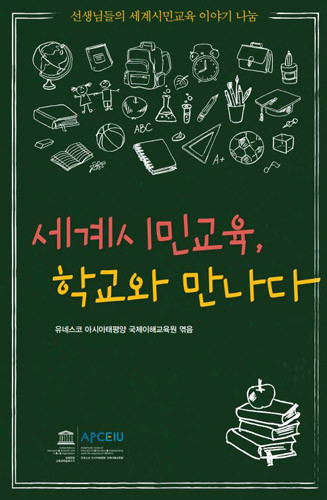 세계시민교육, 학교와 만나다: 선생님들의 세계시민교육 이야기 나눔 出版年份: 2016 机构作者: 유네스코 아시아태평양 국제이해교육원 유네스코 아시아태평양 국제이해교육원은 “세계시민교육, 학교와 만나다”를 출간하였다. 이 책은 세계시민교육을 실천하고 있는 학교 선생님들의 현장 이야기를 담은 책으로, 세계시민교육 선도교사로 활동하고 있는 11명의 선생님들의 세계시민교육에 관한 진솔한 이야기를 만날 수 있다. 여는글수평적 관계 맺음으로 시작하는 세계시민교육 - 김동혁 (광주 문정여고)작은 학교에서 세계시민교육 실천하기 - 곽병남 (충북 영동초등학교)배움으로 행동하기, 행동으로 배우기 - 임영아 (울산 강남고등학교)아이들의 시선에서 사회적 문제 바라보기 - 이흥순 (인천 청일초등학교)지구인과 소통하며 살아가기 - 박범철 (서울 경문고등학교)제주에서 세계시민을 만나다 - 한상희 (제주 서귀중앙여자중학교)아이들과 함께, 선생님들과 함께 열어가는 세계시민교육 - 김민경 (인천 청량초등학교)스스로, 천천히, 하나의 변화로 시작하기: ‘촛불하나’ 이야기 - 최재화 (경기 신천고등학교)세계시민교육, 아이들과 눈맞춰 함께 가기 - 김양모 (안동 동부초등학교)미래로 가는 길, 선생님과 함께 걷는 세계시민교육 - 정애경 (서울 국제고등학교) 세계시민교육이란 일상에서 가치 찾기 - 조성준 (대전 복수고등학교)
  Final Report: 2nd Youth Leadership Workshop on Global Citizenship Education 出版年份: 2016 机构作者: APCEIU This report provides an overview of the activities carried out during the 2nd Youth Leadership Workshop on Global Citizenship Education (GCED) held in Busan, Republic of Korea, from 11 - 16 July 2016. As an APCEIU's 2nd youth workshop, this programme gathered 49 youth activists from 38 countries around the world to exchange their ideas and identify GCED leadership strategies in order to mobilize young people for GCED in local and national contexts and advance the agenda globally. This report also aims to convey the voice of the youth on GCED: their thoughts and reflections on GCED and its priority areas. The workshop was co-organized by APCEIU and UN Secretary General’s Global Education First Initiative (GEFI); it was sponsored by Busan University of Foreign Studies and the Geum-jeong District of Busan Metropolitan City. For more information, please contact APCEIU's Office of Education and Training at ent@unescoapceiu.org. 제2차 세계시민교육 청년리더십 워크숍 최종보고서 出版年份: 2016 机构作者: 유네스코 아시아태평양 국제이해교육원 본 보고서는 2016년 7월 11일부터 16일까지 부산에서 열린 ‘제2차 세계시민교육 청년리더십 워크숍(2nd Youth Leadership Workshop on GCED)’에서 이루어진 활동 개요를 제공한다. 이 워크숍은 유네스코 아태교육원과 유엔 사무총장의 글로벌교육우선구상(GEFI)가 공동주최하고 부산외국어대학교와 부산광역시 금정구가 후원하였다.이 프로그램에 전세계 38개국 49명의 청년활동가들이 참가하여 세계시민교육에 대한 아이디어를 교환하며, 세계시민교육을 전 세계적으로 확산하고 지역·국가적 차원의 청년활동을 증진하기 위한 리더십 전략을 논의하였다. 본 보고서는 6일간의 워크숍 활동들에 대한 기록과 더불어 세계시민교육의 주체로서 청년들의 세계시민교육의 의미와 우선 과제들에 대한 목소리를 담고자 했다. 문의: 유네스코 아태교육원 교육연수실(ent@unescoapceiu.org)
  Education for international understanding: a river flowing from the mountains (SangSaeng vol5. autumn 2002) 出版年份: 2002 作者: Swee-Hin Toh 机构作者: APCEIU EIU (Education for International Understanding) is a concept that has diverse sources and tributaries, much like a river that begins in the mountains and flows to the sea or ocean, enriched by innumerable ideas, perspectives and practices along its journey. However, unlike a river in one community or nation, this is a river that flows across the world encompassing the breadth and depth of civilizations, peoples and mother Earth. Although by designation EIU appears to have a “modern genealogy,” it is vital to recognize and to search for its roots in the ancient wisdoms of all civilizations, especially through the values and principles of well-being, dignity and good or virtuous relationships between and among all peoples, communities and societies. EIU has been catalyzed and developed by multiple individuals, organizations, agencies and movements, including educators, researchers, national/multilateral organizations (e.g. UN agencies), NGOs, people’s organizations (POs) and other civil society movements and advocates. EIU is simultaneously practiced in all modes of education (formal, non-formal and informal), but a challenge is to attain synergy across all the modes for optimal outcomes and sustainability. Education pour la compréhension internationale: une rivière qui coule des montagnes (SangSaeng vol 5. automne 2002) 出版年份: 2002 作者: Swee-Hin Toh 机构作者: Centre Asie-Pacifique d'éducation pour la compréhension internationale (APCEIU) ECI (éducation pour la compréhension internationale) est un concept qui a diverses sources et affluents, un peu comme une rivière qui commence dans les montagnes et se jette à la mer ou de l'océan, enrichi par des idées innombrables, les perspectives et les pratiques le long de son voyage. Cependant, contrairement à une rivière dans une communauté ou d'une nation, cela est une rivière qui coule à travers le monde englobant la largeur et la profondeur des civilisations, les peuples et la Terre mère. Bien que par la désignation ECI semble avoir une «généalogie moderne», il est essentiel de reconnaître et de rechercher ses racines dans les anciennes sagesses de toutes les civilisations, en particulier à travers les valeurs et les principes du bien-être, la dignité et de bons ou vertueux relations entre et parmi tous les peuples, les communautés et les sociétés. ECI a été catalysée et développé par des individus multiples, les organisations, les organismes et les mouvements, y compris les éducateurs, les chercheurs, les organisations nationales / multilatérales (par exemple les agences de l'ONU), les ONG, les Organisations Populaires (OPs) et les autres mouvements de la société civile et les défenseurs. ECI est simultanément pratiqué dans tous les modes de l'éducation (formelle, non formelle et informelle), mais un défi est d'atteindre une synergie entre tous les modes pour des résultats optimaux et la durabilité.
 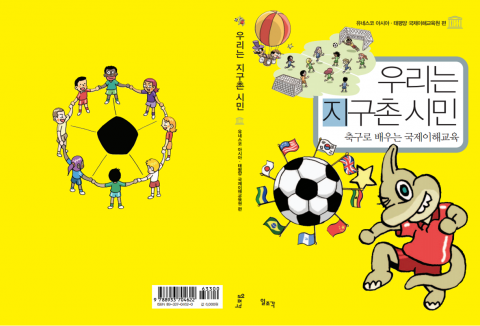 우리는 지구촌 시민: 축구로 배우는 국제이해교육 出版年份: 2004 机构作者: 유네스코 아시아태평양 국제이해교육원 『우리는 지구촌 시민—축구로 배우는 국제이해교육』은 세계화 시대에 우리 학생들이 세계 이웃의 다른 모습을 이해하고, 함께 살아가는 가치관을 깨우칠 수 있도록 도움을 주기 위하여 만들어진 교재입니다.세계적인 석학들과 교육 전문가들로 구성된 유네스코 21세기 세계교육위원회는 「들로르 보고서」에서 ‘함께 살기 위한 교육’을 21세기 교육의 핵심 과제로 제시하였습니다. 점차 증가하고 있는 여러가지 갈등 문제를 교육을 통하여 해결해 나가기 위한 시도인 것입니다. 이러한 세계적인 흐름 속에서 우리나라도 이에 발맞추어 제 7차 교육과정에서 '국제이해교육'을 창의적 재량학습 과목의 하나로 채택하였습니다. 이제는 국제이해교육의 하나의 독립된 학습 과목으로 자리잡을 수 있게 되었고, 이에 걸맞은 전문 교재와 교육 자료들이 필요하게 되었습니다. 하지만 안타깝게도 이러한 시대적인 요구를 만족시켜 줄만한 교재나 교육 자료는 그다지 많지 않습니다. 또한 '국제이해교육'이라는 제목을 통해서도 알 수 있듯이, 그 범위가 아주 넓어 어디서부터 어떻게 시작해야 할 지 막막한 기분이 드는 것도 사실입니다.유네스코 아시아태평양 국제이해교육원은 이러한 교육 현장의 요구에 부응하기 위해 『우리는 지구촌 시민—축구로 배우는 국제이해교육』을 발간하게 되었습니다. 유네스코 아시아태평양 국제이해교육원은 아시아·태평양 지역의 45개 나라들과 함께 '국제이해교육'을 강화하고 발전시킬 책임을 완수하기 위해 학교와 시민사회에서 다양한 활동을 이어오고 있습니다. 이러한 활동의 일환으로 우리 교육원은 다양한 분야의 전문가들과 함께 국제이해교육의 교육과정을 연구하는 동시에, 교원들에 대한 연수와 교육자료 개발에 온 힘을 쏟고 있습니다. 이번에 발간된 『우리는 지구촌 시민—축구로 배우는 국제이해교육』은 일곱 개의 장으로 구성되어 있으며, 각 장은 학생들이 세계 여러 나라의 저마다 다른 문화에 대한 이해를 통해서 문화간 이해, 인권, 평화, 세계화, 지속가능한 발전 등의 범세계적인 가치관을 배울 수 있도록 짜여졌습니다. 학생들이 일상 생활에서 쉽게 접할 수 있는 '축구'라는 작고 친근한 소재를 통해 '나와 다른 모습에 대한 이해'와 '함께 만들어가는 세상'을 체험하고 배울 수 있도록 꾸몄으며, 각 단원마다 다양한 <함께해보기>를 수록하여 학생들이 직접 참여함으로써 자신들이 가지고 있던 편견과 선입견을 발견하고 스스로 깨우쳐 나갈 수 있도록 구성하였습니다. 이 교재를 통하여 학생들이 편견에서 벗어나 세계의 친구들과 함께 살아갈 수 있는 올바른 가치관과 태도를 배울 수 있게 되기를 바랍니다.
 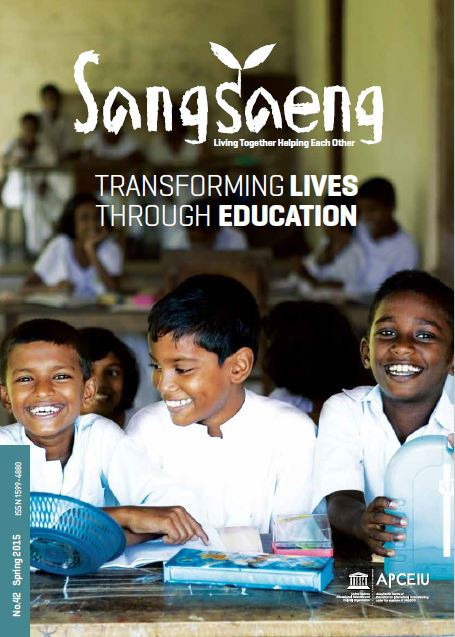 Transforming lives through education (SangSaeng no. 42 spring 2015) 出版年份: 2015 机构作者: APCEIU The 42nd issue of SangSaeng, ‘Transforming Lives Through Education’, has been published. This spring edition has been released prior to the World Education Forum 2015 to provide the context for the post-2015 education agenda. It contains compelling articles that underline the importance of Global Citizenship Education in building a more sustainable and peaceful society. 3 Director’s Message4 Special Column Every Child Deserves a Child-Friendly World8 Focus: Transforming Lives Through Education 8 Emergence of Global Citizenship Education in the Post-2015 Education Agenda13 Re-Visioning Education Beyond 201518 Global Citizenship Education for the 21st Century23 Young People Are Ready to Lead: The Education We Want26 Interview Education Beyond 201531 Special ReportGlobal UNESCO Clearinghouse on Global Citizenship Education Hosted by APCEIU34 Best Practices34 Citizenship Education in a Community Setting38 Pangaea42 Letter Unity in Diversity44 Peace in My MemoryPresenting a Message of Peace Through Music47 Understanding the Asia-Pacific Region Timeless Festivity of the Ancient World: Hidirellez50 APCEIU in Action Transformer des vies par l'éducation (SangSaeng no. 42 printemps 2015) 出版年份: 2015 机构作者: Centre Asie-Pacifique d'éducation pour la compréhension internationale (APCEIU) Message du Directeur 3 4 Colonne spécialeChaque enfant mérite un enfant-Friendly Monde 8 Mise au point: Transformer des vies par l'éducation8 Emergence de L'éducation à la citoyenneté Mondiale (ECM) dans le L'après 2015 Agenda Education13 Re-Visioning Education Beyond 201518 L'éducation à la citoyenneté Mondiale (ECM) pour le 21e siècle23 jeunes gens sont prêts à plomb: L'éducation que nous voulons 26 InterviewEducation Beyond 2015 Rapport spécial 31Centre UNESCO mondial sur L'éducation à la citoyenneté Mondiale (ECM) Hébergé par APCECI 34 Meilleures pratiques34 éducation à la citoyenneté dans un cadre communautaire38 Pangaea 42 LettreUnité dans la diversité 44 Paix dans ma mémoirePrésenter un message de paix par la musique 47 Présentation de la région Asie-PacifiqueTimeless Festivity du monde antique: Hidirellez 50 APCECI en action
 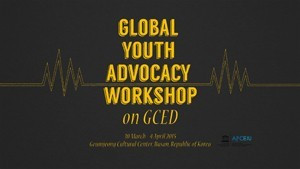 Video sketch: Global Youth Advocacy Workshop on GCED 出版年份: 2015 机构作者: APCEIU APCEIU produced a video on the Global Youth Advocacy Workshop on GCED held in Busan, Republic of Korea, from 30 March to 4 April 2015. The workshop invited 45 youth participants from 34 countries around the world, who are actively engaged with and committed to advocating and educating youth for GCED in their local contexts.This short video sketch of the workshop provides an overview of the activities carried out during the workshop and also includes the interviews of the participants, who shared their expectations, impressions, and reflections on the workshop.The workshop was co-organized by APCEIU, UN Secretary General’s Global Education First Initiative (GEFI), and the UNESCO Mahatma Gandhi Institute of Education for Peace and Sustainable Development (MGIEP); and sponsored by Educate A Child and the Geum-jeong District of Busan Metropolitan City.
 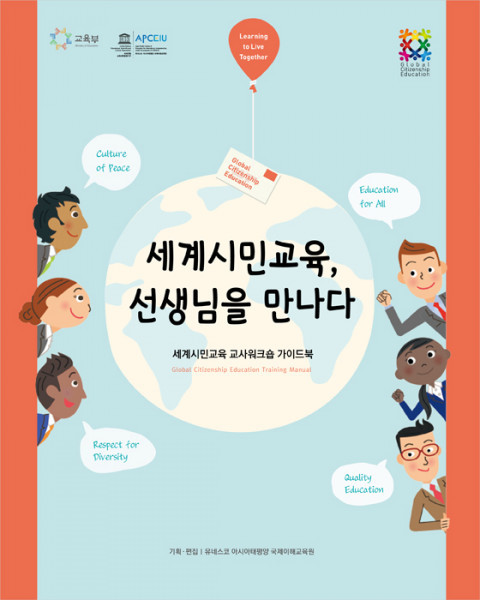 GCED Meets Teachers: GCED Teacher Workshop Guidebook 出版年份: 2015 机构作者: APCEIU APCEIU published the GCED teacher workshop guidebook “GCED meets teachers.” This guidebook will be used at GCED workshops for teachers of 17 metropolitan and provincial offices of education carried out by GCED Lead teachers. The contents include the concept and the background of GCED, main contents, implementing methods at school. This GCED workshop manual provides teachers with opportunities to search for the ways to implement GCED at the schools, experience learning methods, and understand the main issues and themes of GCED through workshops. This guidebook is composed of 7 workshop sessions(refer to list below). Teachers and teacher educators planning GCED workshop can use this guidebook which includes the contents of the sessions, consultation to help plan and implement workshops based on participation and communication of the participants. “Global Citizenship Education meets teachers” GuidebookSession 1. Importance of World Education Forum and Global Citizenship EducationSession 2. Concept of GCED and its backgroundSession 3. Learning the contents and the theme of GCEDSession 4. Understanding the complexity and interrelationship of the issuesSession 5. Discussion class for cooperative communicationSession 6. Implementing GCED through Project Based LearningSession 7. Setting GCED action plans