
相关资源
探索丰富的全球公民教育资源,深化理解,促进研究、倡导、教学与学习。
共找到3,453条结果
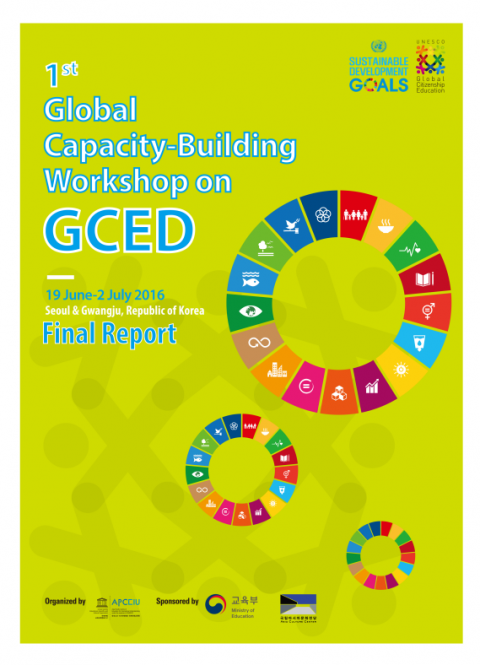 Final Report: 1st Global Capacity-Building Workshop on GCED 出版年份: 2016 机构作者: APCEIU This report provides an overview of the activities carried out during the 1st Global Capacity-Building Workshop on GCED held in Seoul and Gwangju, Republic of Korea from 19 June - 2 July, 2016. APCEIU organized the 1st Global Capacity-Building Workshop on GCED in collaboration with UNESCO in order to contribute to achieving the Sustainable Development Goals(SDGs) target 4.7 by enhancing the capacity of teacher educators and trainers in implementing GCED. This intensive 2-week workshop provided the participating educators with the opportunities to better understand the concept and internalize the pedagogical principles of GCED while sharing their experiences and working on collaborative action plans. For more information, please contact APCEIU's Office of Education and Training at ent@unescoapceiu.org.
 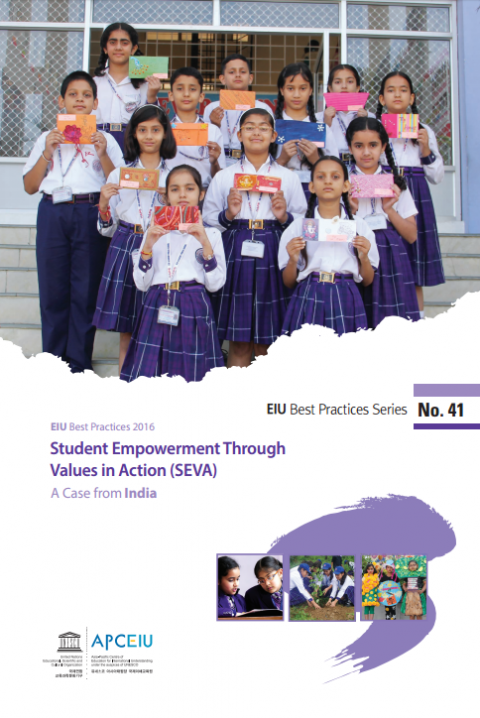 EIU Best Practices Series No. 41: Student Empowerment Through Values in Action (SEVA) 出版年份: 2016 机构作者: APCEIU This monograph is one of APCEIU's EIU Best Practices Series, which aims to encourage educators, scholars, and activists to implement and share local initiatives on EIU. The Series No. 41 introduces a programme called “Student Empowerment through Values in Action (SEVA)" carried out by a school in India. The programme encouraged students to put the values of respect, responsibility, care, integrity, resilience and cyber-wellness in day to day actions. The programme has been successful in motivating the school staffs to enthusiastically participate in the programme as they witnessed the impact of the progarmme on the students. The programme sends out important messages to the school education system, where evaluation of success tends to be heavily based on academic performance.
 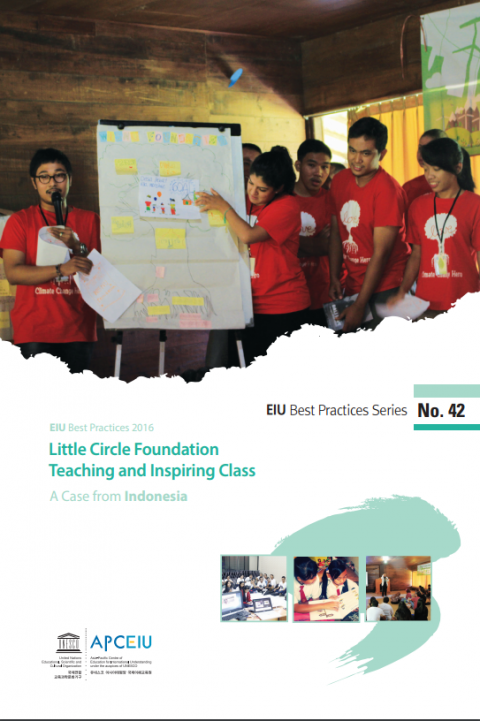 EIU Best Practices Series No. 42: Little Circle Foundation Teaching and Inspiring Class 出版年份: 2016 机构作者: APCEIU This monograph is one of APCEIU's EIU Best Practices Series, which aims to encourage educators, scholars, and activists to implement and share local initiatives on EIU. The Series No. 42 introduces a programme called “Little Circle Foundation Teaching and Inspiring Class”, a great example of young people taking action to improve the quality of education in their community in Bali, Indonesia. The activities presented in this case are solely organized by youth for youth themselves. This proves that young people are not only recipients of education, but also active participants and providers of education.
 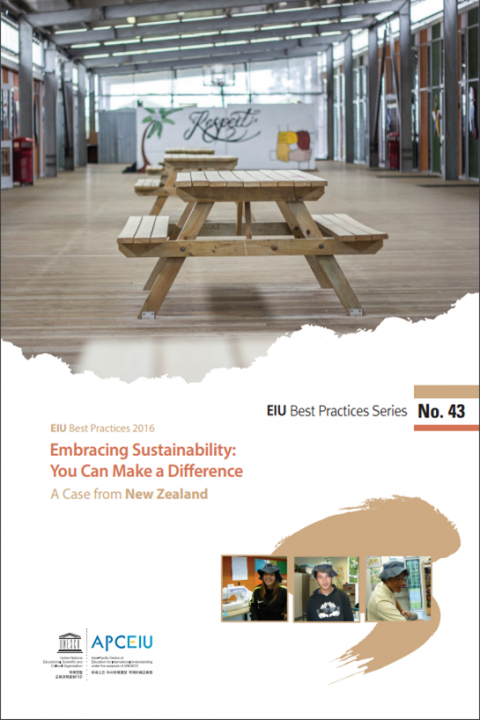 EIU Best Practices Series No. 43: Embracing Sustainability: You Can Make a Difference 出版年份: 2016 机构作者: APCEIU This monograph is one of APCEIU's EIU Best Practices Series, which aims to encourage educators, scholars, and activists to implement and share local initiatives on EIU. The Series No. 43 introduces a programme called “Embracing Sustainability: You Can Make a Difference”, designed by a teacher in New Zealand to allow his students to think about sustainability from a global perspective. The programme has been successful in engaging disengaged youth by giving them a sense of self-worth and helping them to understand sustainability and see their place in the global society. The valuable insights provided in this case will also be able to inform those who intend to embed EIU/GCED principles in the existing curriculum.
 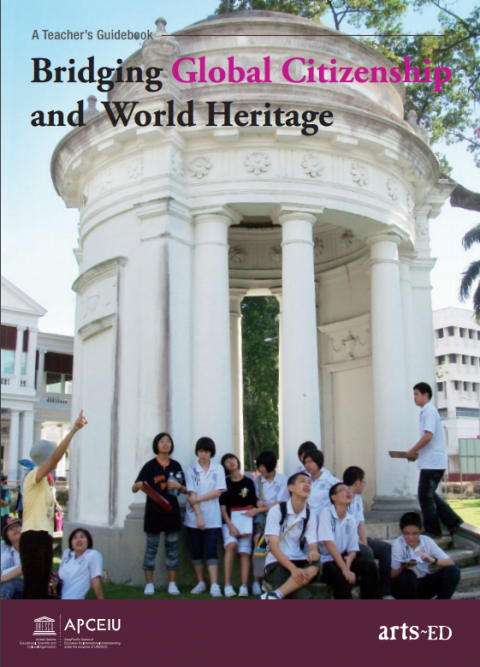 GCED Teacher's Guidebook Bridging Global Citizenship and World Heritage 出版年份: 2016 机构作者: APCEIU APCEIU, in collaboration with Arts-ED Penang, a non-profit organisation for art and culture education, has published a Global Citizenship Education(GCED) Teacher’s Guidebook Bridging Global Citizenship and World Heritage. This guidebook was developed as a project of GCED Material Development on World Heritage, in order to promote awareness of cultural diversity as well as mutual understanding. This Teacher’s guidebook not only provides literature on both World Heritage in Malaysia and GCED but also gives case examples and lesson plans to provide teachers with practical assistance in designing and conducting GCED class utilizing World Heritage. <Contents>ForewordList of Figures and ImagesChapter 1. Introduction to the World Heritage Site of George Town and MelakaChapter 2. Global Citizenship Education: Empowering Citizens to Create a Better World TogetherChapter 3. How to Design Lessons Using Global Citizenship Education and Heritage ResourcesChapter 4. Case Examples and Lesson PlansReferences 세계문화유산 활용 세계시민교육 교사 지침서 出版年份: 2016 机构作者: 유네스코 아시아태평양 국제이해교육원 문화다양성과 상호이해 증진을 위한 세계유산 활용 세계시민교육 자료개발 사업의 일환으로 발간된 이 교사 지침서는 말레이시아의 세계문화유산을 활용해 진행했던 실천사례와 수업예시 등을 담고 있어 일선 교사들이 향후 세계시민교육 수업을 구성하고 진행하는데 실질적인 도움을 줄 것으로 기대된다.<목차>발간사도표와 그림1장. 믈라카와 조지타운 세계유산 소개2장. 세계시민교육: 더 나은 세상을 함께 만들기 위한 시민의 역량을 기르다.3장. 세계유산과 세계시민교육을 활용한 수업 구성하기4장. 실천 사례 및 수업 교안참고자료
 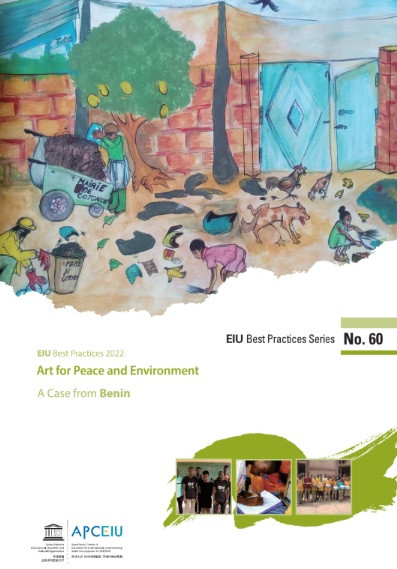 EIU Best Practices 2022: Art for Peace and Environment; A Case from Benin (EIU Best Practices Series; no.60) 出版年份: 2022 作者: Constant Odounfa 机构作者: Centre Asie-Pacifique d'éducation pour la compréhension internationale (APCEIU) This monograph is one of APCEIU's EIU Best Practices Series, which aims to encourage educators, scholars, and activists to implement and share local initiatives on EIU. The Series No.60 is focusing on increasing people’s awareness regarding the importance of open-mindedness, empathy as well as the effects of their bad behaviour on the environment and their own lives, calling for the necessity of change.
 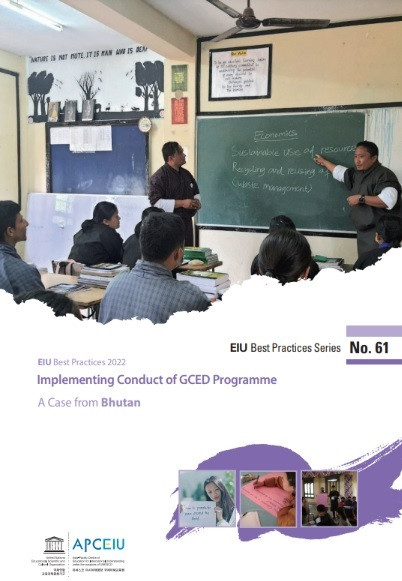 EIU Best Practices 2022: Implementing Conduct of GCED Programme; A Case from Bhutan (EIU Best Practices Series; no.61) 出版年份: 2022 作者: Santosh Kumar Biswa 机构作者: Centre Asie-Pacifique d'éducation pour la compréhension internationale (APCEIU) This monograph is one of APCEIU's EIU Best Practices Series, which aims to encourage educators, scholars, and activists to implement and share local initiatives on EIU. The Series No.61 is focusing on equipping youths, teachers and people around the world with the concept of GCED through his capacity-building and familiarization programme in schools and communities.
 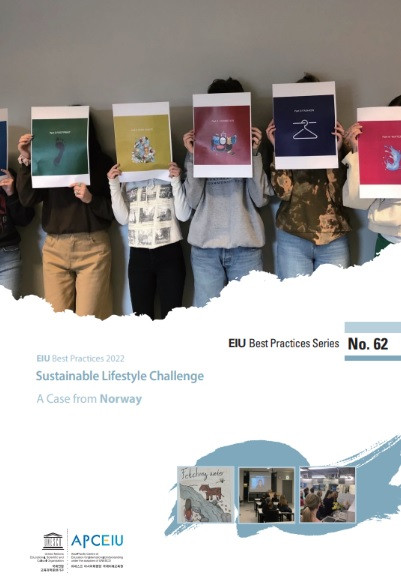 EIU Best Practices 2022: Sustainable Lifestyle Challenge; A Case from Norway (EIU Best Practices Series; no.62) 出版年份: 2022 作者: Barbara Anna Zielonka 机构作者: 亚太地区促进国际理解教育中心 (APCEIU) This monograph is one of APCEIU's EIU Best Practices Series, which aims to encourage educators, scholars, and activists to implement and share local initiatives on EIU. The Series No.61 is focusing on providing opportunity for teachers and students worldwide to learn about environmentally friendly alternatives by changing their lifestyles and engaging with the world through the lens of sustainability.
 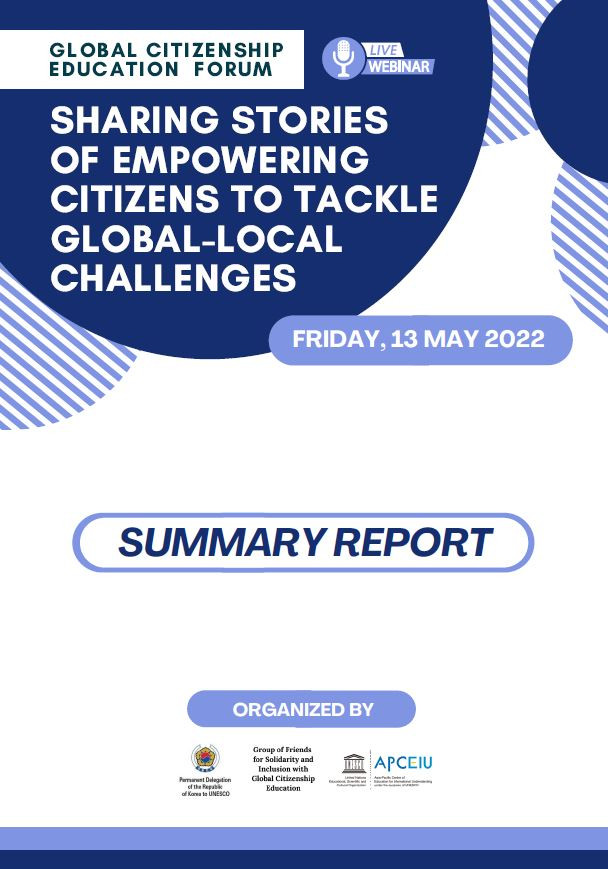 [Summary] Global Citizenship Education Forum: Sharing Stories of Empowering Citizens to Tackle Global-Local Challenges 出版年份: 2022 机构作者: Permanent Delegation of the Republic of Korea to UNESCO | Group of Friends for Solidarity and Inclusion with Global Citizenship Education | APCEIU This report shares the overview of the Global Citizenship Education Forum held under the theme ‘Sharing Stories of Empowering Citizens to Tackle Global-Local Challenges’ on Friday, 13 May 2022. The event was co-organized by the Permanent Delegation of the Republic of Korea to UNESCO and the Asia-Pacific Centre of Education for International Understanding (APCEIU) in collaboration with the Group of Friends for Solidarity and Inclusion with GCED (Afghanistan, Armenia, Austria, Bangladesh, Canada, Colombia, Italy, Jordan, Kenya, Kuwait, Philippines, Republic of Korea, Saudi Arabia, Senegal and Serbia). This report shares the summary of the event, particularly the presentations on GCED activities implemented by practitioners from Armenia, Austria, Colombia, Jordan, Kenya and the Philippines to influence more GCED programmes/initiatives on various contexts and backgrounds.