
相关资源
探索丰富的全球公民教育资源,深化理解,促进研究、倡导、教学与学习。
共找到3,385条结果
 Principes directeurs de l'UNESCO pour l'éducation interculturelle 出版年份: 2006 机构作者: Organisation des Nations Unies pour l'éducation, la science et la culture (UNESCO) These Guidelines have been prepared as a contribution to the understanding of the issues around intercultural education. They draw together the key standard-setting instruments and the results of numerous conferences, in particular, the Expert Meeting held at UNESCO Headquarters in March 2006, in order to present those concepts and issues which may be used to guide future activities and policy making in this area. The document refl ects UNESCO’s unique role as international standard setter and convenor of diverse cultural and ideological perspectives.
  UNESCO guidelines on intercultural education 出版年份: 2006 机构作者: UNESCO This paper aims to synthesize the central issues surrounding Intercultural Education, and presents the fundamental guiding principles for an intercultural approach to education as viewed by UNESCO. It is divided into three parts. Part I outlines the key issues surrounding Intercultural Education, as well as its objectives and basic operating principles. Part II contains a short presentation of the normative framework for Intercultural Education, based on an analysis of international standard-setting instruments that make reference to education and intercultural issues, and on outcomes from International Conferences. Part III synthesizes the international position on this issue and provides a set of three basic principles that should guide educational policies with regard to Intercultural Education. L'Education au Changement Climatique en vue du Développement Durable: l'Initiative de l'UNESCO pour Faire Face au Changement Climatique 出版年份: 2010 机构作者: Organisation des Nations Unies pour l'éducation, la science et la culture (UNESCO) The UNESCO Climate Change Initiative was launched by Director-General Irina Bokova in Copenhagen during the 15th Conference of the Parties to the UN Framework Convention on Climate Change (UNFCCC COP15). It seeks to reinforce the scientific, mitigation and adaptation capacities of countries and communities that are most vulnerable to the effects of climate change. It focuses on a select number of strategic issues in line with The UN System Delivering as One on Climate Change action plan and The UNESCO Strategy for Action on Climate Change. The Initiative is based on four thematic areas: scientific, educational, environmental and ethical. Key objectives will be achieved through intersectoral and interdisciplinary cooperation, coordinated field activities, and networking. Special attention is given to UNESCO’s two global priorities, Africa and gender equality, as well as to the increased vulnerability of Small Island Developing States (SIDS). The UN System “Delivering as One” on Climate Change During the 13th session of the Conference of Parties to the UNFCCC in Bali, Indonesia, UN Secretary General Ban Ki-Moon presented an unprecedented coordination effort to bring together all the diverse perspectives, expertise and strengths of the UN system so as to deliver as one in the critical area of climate change. The initiative brings together expertise and ongoing work in diverse areas ranging from science and technology to agriculture, transport, forestry and disaster risk reduction, to address both mitigation and adaptation. It brings together the normative, standard setting and knowledge sharing capacities of the system with its operational reach in order to support the most vulnerable. The overall objective is to maximize existing synergies, eliminate duplication and overlap, and optimize the impact of the collective effort of the UN system. To ensure better coordination, convening responsibilities were assigned to UN system entities with a large volume of activities in the five focus areas and four cross-cutting areas. Focus areas ㆍAdaptation – High-Level Committee on Programmes collectively ㆍ Technology transfer – UNIDO, UN-DESA ㆍReduction of emissions from deforestation and degradation (REDD) – UNDP, FAO, UNEP ㆍ Financing mitigation and adaptation action – UNDP, World Bank Group ㆍCapacity building – UNDP, UNEP Cross-cutting areas ㆍClimate knowledge: science, assessment, monitoring and early warning – WMO, UNESCO ㆍSupporting global, regional and national action – UN-DESA, UN Regional Commissions, UNDP ㆍClimate-neutral UN – UNEP ㆍPublic awareness – UNCG, UNEP.
 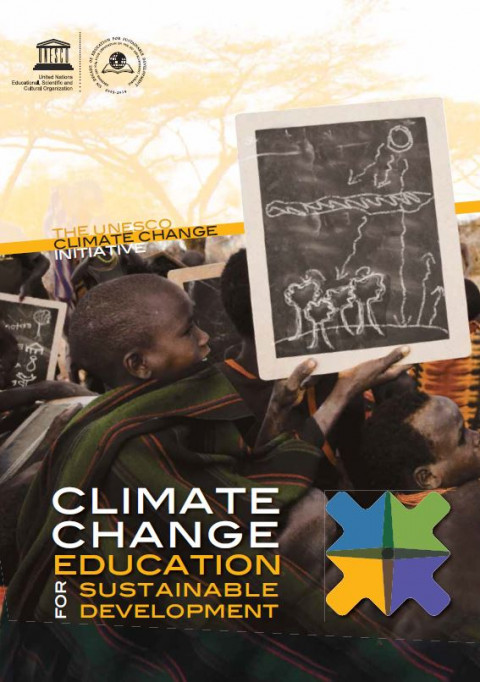 Climate Change Education for Sustainable Development: the UNESCO Climate Change Initiative 出版年份: 2010 机构作者: UNESCO The UNESCO Climate Change Initiative was launched by Director-General Irina Bokova in Copenhagen during the 15th Conference of the Parties to the UN Framework Convention on Climate Change (UNFCCC COP15). It seeks to reinforce the scientific, mitigation and adaptation capacities of countries and communities that are most vulnerable to the effects of climate change. It focuses on a select number of strategic issues in line with The UN System Delivering as One on Climate Change action plan and The UNESCO Strategy for Action on Climate Change. The Initiative is based on four thematic areas: scientific, educational, environmental and ethical. Key objectives will be achieved through intersectoral and interdisciplinary cooperation, coordinated field activities, and networking. Special attention is given to UNESCO’s two global priorities, Africa and gender equality, as well as to the increased vulnerability of Small Island Developing States (SIDS).The UN System “Delivering as One” on Climate Change During the 13th session of the Conference of Parties to the UNFCCC in Bali, Indonesia, UN Secretary General Ban Ki-Moon presented an unprecedented coordination effort to bring together all the diverse perspectives, expertise and strengths of the UN system so as to deliver as one in the critical area of climate change. The initiative brings together expertise and ongoing work in diverse areas ranging from science and technology to agriculture, transport, forestry and disaster risk reduction, to address both mitigation and adaptation. It brings together the normative, standard setting and knowledge sharing capacities of the system with its operational reach in order to support the most vulnerable. The overall objective is to maximize existing synergies, eliminate duplication and overlap, and optimize the impact of the collective effort of the UN system.To ensure better coordination, convening responsibilities were assigned to UN system entities with a large volume of activities in the five focus areas and four cross-cutting areas. Focus areas ㆍAdaptation – High-Level Committee on Programmes collectively ㆍ Technology transfer – UNIDO, UN-DESA ㆍReduction of emissions from deforestation and degradation (REDD) – UNDP, FAO, UNEP ㆍ Financing mitigation and adaptation action – UNDP, World Bank Group ㆍCapacity building – UNDP, UNEP Cross-cutting areas ㆍClimate knowledge: science, assessment, monitoring and early warning – WMO, UNESCO ㆍSupporting global, regional and national action – UN-DESA, UN Regional Commissions, UNDP ㆍClimate-neutral UN – UNEP ㆍPublic awareness – UNCG, UNEP.
 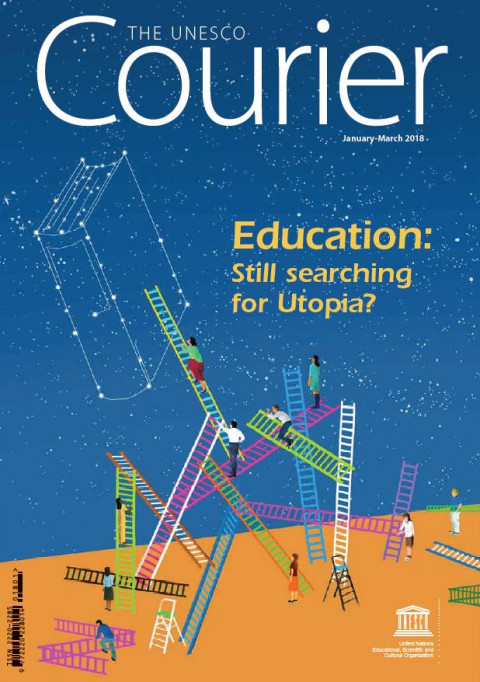 Education: Still Searching for Utopia? (The UNESCO Courier no. 1, January-March 2018) 出版年份: 2018 机构作者: UNESCO At a time of heightened global tension, when human rights, freedom of speech, peace and the future of the planet itself may seem challenged as never before, the transformational power of education is of critical importance.In Learning: The Treasure Within, the landmark Report to UNESCO by the International Commission on Education for the Twenty-first Century in 1996, Jacques Delors, then Chairman of the Commission (1992 to 1996), spoke of education as “the necessary Utopia” and “an indispensable asset in its attempt to attain the ideals of peace, freedom and social justice.”Education was held up as neither miracle nor magic, but rather the best means to foster a climate where humanity would be improved −. and where the rich potential for learning, inherent in every individual, would be tapped. Our humanity is confronted with a very strange paradox: the world’s population has never been better educated, and yet, according to the UNESCO Institute for Statistics, 263 million children and young people are out of school, 617 million children and adolescents worldwide do not meet the minimum threshold for literacy and mathematics, at least 750 million adults are illiterate, and girls remain more likely than boys to never set foot in a classroom. Yet education is still called upon to address inequalities, poverty, terrorism and conflict. It is seen as one of the keys to global citizenship and sustainable development, two of UNESCO’s fields of action. The Organization is also mandated to lead the Education 2030 global agenda with a special focus on ensuring that no one is left behind. Under the title, “Education: Still searching for Utopia?”, the UNESCO Courier evaluates the state of global education and explores how it responds to some of the main challenges we face. Education: en quête d'une utopie nécessaire (Le Courrier de l’UNESCO no. 1, Janvier-Mars 2018) 出版年份: 2018 机构作者: Organisation des Nations Unies pour l'éducation, la science et la culture (UNESCO) À une époque où la tension ne cesse de croître, où les droits de l'homme, la liberté d'expression, la paix et l'avenir de la planète semblent plus que jamais remis en question, le pouvoir de transformation véhiculé par l'éducation revêt une importance cruciale.L’éducation est une « utopie nécessaire », elle est « un atout indispensable pour permettre à l’humanité de progresser vers les idéaux de paix, de liberté et de justice sociale », lit‑on dans le rapport historique de l’UNESCO, L’éducation : un trésor est caché dedans, élaboré par la Commission internationale sur l'éducation pour le XXIe siècle, présidée en 1996 par Jacques Delors.L'éducation n'y est présentée ni comme miracle, ni comme baguette magique, mais comme le meilleur moyen de favoriser un climat permettant à l'humanité de s’améliorer.Notre humanité est confrontée à un paradoxe très étrange : la population mondiale n’a jamais été aussi instruite, alors que, selon l’Institut de statistiques de l’UNESCO, 263 millions d’enfants et de jeunes ne sont pas scolarisés, que 617 millions d’enfants et d’adolescents dans le monde n’atteignent pas le seuil minimal de compétence en lecture et en mathématiques, qu’au moins 750 millions d’adultes sont analphabètes, et que les filles demeurent plus susceptibles que les garçons de ne jamais mettre les pieds dans une classe. Cependant l’éducation est toujours appelée à remédier aux inégalités, à la pauvreté, au terrorisme et aux conflits. Elle est considérée comme une des clés essentielles de la citoyenneté mondiale et du développement durable, deux domaines d’action de l’UNESCO, qui a aussi pour mandat de diriger l’agenda mondial Éducation2030 en veillant tout particulièrement à ce que personne ne soit laissé pour compte.Sous le titre « Éducation : en quête d'une utopie nécessaire », Le Courrier de l'UNESCO porte un regard panoramique sur l'éducation dans le monde et explore comment elle peut répondre à certains grands défis. La Educación, una utopia necesaria (El Correo de la UNESCO no.1, Enero-Marzo 2018) 出版年份: 2018 机构作者: Organización de las Naciones Unidas para la Educación, la Ciencia y la Cultura (UNESCO) El poderoso vector de transformación que es la educación reviste una importancia fundamental en estos tiempos en que parecen ponerse en tela de juicio más que nunca los derechos humanos, la libertad de expresión, la paz y el futuro de nuestro planeta.La educación es una “utopía necesaria” y “constituye un instrumento indispensable para que la humanidad pueda progresar hacia los ideales de paz, libertad y justicia social”, tal como se afirma en el histórico informe “La educación encierra un tesoro”, presentado a la UNESCO en 1996 por la Comisión Internacional sobre la Educación para el siglo XXI presidida por Jacques Delors.La educación, según ese informe, no es un remedio milagroso ni un mágico “ábrete sésamo”, sino una vía mejor que otras para lograr que la humanidad sea mejor.Nuestra época afronta una situación extremadamente paradójica. Mientras que el nivel de instrucción de la población mundial ha alcanzado su más alto nivel histórico, todavía quedan en el mundo 263 millones de niños y adolescentes sin escolarizar y otros 617 millones no logran alcanzar un nivel mínimo de competencia en lectura, escritura y matemáticas. Además, hay 750 millones de adultos analfabetos y actualmente la posibilidad de que las niñas y las jóvenes no pisen jamás una escuela es mucho más alta que en el caso de los varones. Ahora bien, la educación sigue siendo un instrumento indispensable para reducir las desigualdades, la pobreza, elterrorismo y los conflictos armados, así como un factor clave para la mentalización de las personas con vistas a que lleguen a “ciudadanos del mundo” y coadyuven a al desarrollo sostenible. La educación para la ciudadanía y para el desarrollo sostenible son dos ámbitos de acción de la UNESCO, que además tiene el mandato de liderar la agenda mundial Educación 2030, procurando en especial que los sistemas educativos no dejen a nadie atrás.Bajo el título “La educación, una utopía necesaria”, El Correo de la UNESCO traza una panorámica de determinados aspectos de la educación en el mundo, así como de la manera en que ésta puede responder a algunos de los grandes retos planteados a la humanidad.
  Learning: the treasure within; report to UNESCO of the international commission on education for the twenty-first century (highlights) 出版年份: 1996 作者: Jacques Delors 机构作者: International Commission on Education for the Twenty-first Century Learning: The Treasure Within, commonly referred to as the 'Delors Report', proposes a holistic and integrated vision of education based on the paradigms of lifelong learning, and the four pillars of learning to be, to know, to do, and to live together. Learning: the treasure within; report to UNESCO of the international commission on education for the twenty-first century (highlights) 出版年份: 1996 作者: Jacques Delors 机构作者: International Commission on Education for the Twenty-first Century Apprentissage: Le trésor est caché dedans, communément appelé le ‘Rapport Delors’, propose une vision globale et intégrée de l'éducation basée sur les paradigmes de l'apprentissage continu, et les quatre piliers de l'apprentissage à être, à connaître, à faire, et de vivre ensemble. “학습, 그 안에 숨겨진 보물(Learning: the treasure within)”: 21 세기 교육 유네스코 국제위원회 보고서 (하이라이트) 出版年份: 1996 作者: Jacques Delors 机构作者: International Commission on Education for the Twenty-first Century ‘학습, 그 안에 숨겨진 보물(Learning: the treasure within)’은 유네스코가 후원하는 평생학습 포럼의 슬로건으로, 일반적으로 ‘들로르 보고서(Delors Report)로 지칭하는 평생학습의 패럼다임이 될 네 가지 학습의 기둥 즉, 함께 살고, 수행하고, 알고, 존재함을 그 기본으로 하는 교육의 전체적이고 통합된 비전을 제시한다.