
相关资源
探索丰富的全球公民教育资源,深化理解,促进研究、倡导、教学与学习。
共找到3,446条结果
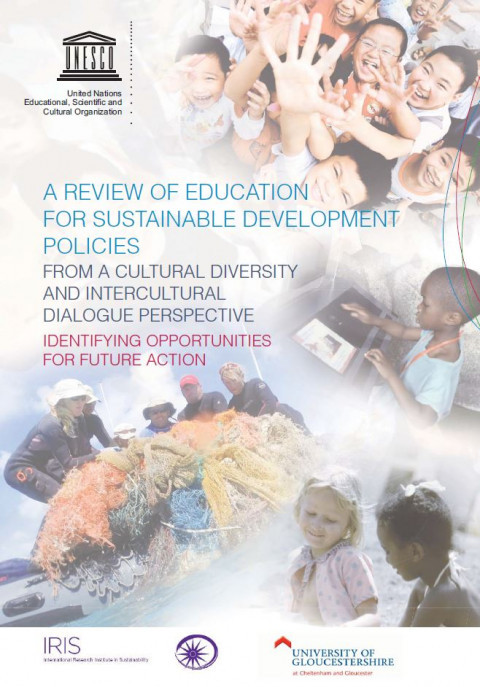 A Review of education for sustainable development policies from a cultural diversity and intercultural dialogue perspective: identifying opportunities for future action 出版年份: 2009 作者: Daniella Tilbury | I. Mulà 机构作者: UNESCO This review highlights the striking absence of culture in ESD, a gap also acknowledged by participants at the UNESCO World Conference on Education for Sustainable Development held in Bonn, Germany, from 31 March to 2 April 2009. The final declaration emphasizes that ESD is about 'creative and critical approaches, long-term thinking, innovation and empowerment for dealing with uncertainty', and for solving complex problems, highlighting in particular the interdependence of environment, economy, society, and cultural diversity from local to global levels. The review and its methodology provide an instructive example of ways to articulate the linkages between cultural diversity, intercultural dialogue and ESD, required for a sustainable future. Un examen de l'éducation pour les politiques de développement durable à partir d'une diversité culturelle et de la perspective d'un dialogue interculturel: l'identification des possibilités d'action future 出版年份: 2009 作者: Daniella Tilbury | I. Mulà 机构作者: Organisation des Nations Unies pour l'éducation, la science et la culture (UNESCO) Cet avis met en évidence l'absence frappante de la culture dans l'EDD, un écart aussi reconnu par les participants auconférencemondial de l'UNESCO sur l'éducation pour le développement durable tenu à Bonn, en Allemagne, du 31 Mars au 2 Avril 2009. La déclaration finale souligne que l'EDD est sur ' approches créatives et critiques, la pensée à long terme, l'innovation et l'autonomisation pour faire face à l'incertitude », et pour résoudre des problèmes complexes, en soulignant en particulier l'interdépendance de l'environnement, l'économie, la société et la diversité culturelle du niveau local au niveau mondial. L'examen et sa méthodologie fournissent un exemple instructif de façons d'articuler les liens entre la diversité culturelle, le dialogue interculturel et EDD, nécessaire pour un avenir durable.
 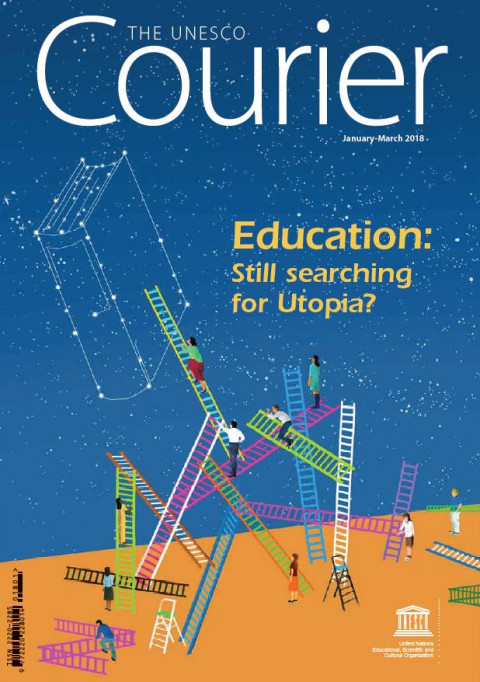 Education: Still Searching for Utopia? (The UNESCO Courier no. 1, January-March 2018) 出版年份: 2018 机构作者: UNESCO At a time of heightened global tension, when human rights, freedom of speech, peace and the future of the planet itself may seem challenged as never before, the transformational power of education is of critical importance.In Learning: The Treasure Within, the landmark Report to UNESCO by the International Commission on Education for the Twenty-first Century in 1996, Jacques Delors, then Chairman of the Commission (1992 to 1996), spoke of education as “the necessary Utopia” and “an indispensable asset in its attempt to attain the ideals of peace, freedom and social justice.”Education was held up as neither miracle nor magic, but rather the best means to foster a climate where humanity would be improved −. and where the rich potential for learning, inherent in every individual, would be tapped. Our humanity is confronted with a very strange paradox: the world’s population has never been better educated, and yet, according to the UNESCO Institute for Statistics, 263 million children and young people are out of school, 617 million children and adolescents worldwide do not meet the minimum threshold for literacy and mathematics, at least 750 million adults are illiterate, and girls remain more likely than boys to never set foot in a classroom. Yet education is still called upon to address inequalities, poverty, terrorism and conflict. It is seen as one of the keys to global citizenship and sustainable development, two of UNESCO’s fields of action. The Organization is also mandated to lead the Education 2030 global agenda with a special focus on ensuring that no one is left behind. Under the title, “Education: Still searching for Utopia?”, the UNESCO Courier evaluates the state of global education and explores how it responds to some of the main challenges we face. Education: en quête d'une utopie nécessaire (Le Courrier de l’UNESCO no. 1, Janvier-Mars 2018) 出版年份: 2018 机构作者: Organisation des Nations Unies pour l'éducation, la science et la culture (UNESCO) À une époque où la tension ne cesse de croître, où les droits de l'homme, la liberté d'expression, la paix et l'avenir de la planète semblent plus que jamais remis en question, le pouvoir de transformation véhiculé par l'éducation revêt une importance cruciale.L’éducation est une « utopie nécessaire », elle est « un atout indispensable pour permettre à l’humanité de progresser vers les idéaux de paix, de liberté et de justice sociale », lit‑on dans le rapport historique de l’UNESCO, L’éducation : un trésor est caché dedans, élaboré par la Commission internationale sur l'éducation pour le XXIe siècle, présidée en 1996 par Jacques Delors.L'éducation n'y est présentée ni comme miracle, ni comme baguette magique, mais comme le meilleur moyen de favoriser un climat permettant à l'humanité de s’améliorer.Notre humanité est confrontée à un paradoxe très étrange : la population mondiale n’a jamais été aussi instruite, alors que, selon l’Institut de statistiques de l’UNESCO, 263 millions d’enfants et de jeunes ne sont pas scolarisés, que 617 millions d’enfants et d’adolescents dans le monde n’atteignent pas le seuil minimal de compétence en lecture et en mathématiques, qu’au moins 750 millions d’adultes sont analphabètes, et que les filles demeurent plus susceptibles que les garçons de ne jamais mettre les pieds dans une classe. Cependant l’éducation est toujours appelée à remédier aux inégalités, à la pauvreté, au terrorisme et aux conflits. Elle est considérée comme une des clés essentielles de la citoyenneté mondiale et du développement durable, deux domaines d’action de l’UNESCO, qui a aussi pour mandat de diriger l’agenda mondial Éducation2030 en veillant tout particulièrement à ce que personne ne soit laissé pour compte.Sous le titre « Éducation : en quête d'une utopie nécessaire », Le Courrier de l'UNESCO porte un regard panoramique sur l'éducation dans le monde et explore comment elle peut répondre à certains grands défis. La Educación, una utopia necesaria (El Correo de la UNESCO no.1, Enero-Marzo 2018) 出版年份: 2018 机构作者: Organización de las Naciones Unidas para la Educación, la Ciencia y la Cultura (UNESCO) El poderoso vector de transformación que es la educación reviste una importancia fundamental en estos tiempos en que parecen ponerse en tela de juicio más que nunca los derechos humanos, la libertad de expresión, la paz y el futuro de nuestro planeta.La educación es una “utopía necesaria” y “constituye un instrumento indispensable para que la humanidad pueda progresar hacia los ideales de paz, libertad y justicia social”, tal como se afirma en el histórico informe “La educación encierra un tesoro”, presentado a la UNESCO en 1996 por la Comisión Internacional sobre la Educación para el siglo XXI presidida por Jacques Delors.La educación, según ese informe, no es un remedio milagroso ni un mágico “ábrete sésamo”, sino una vía mejor que otras para lograr que la humanidad sea mejor.Nuestra época afronta una situación extremadamente paradójica. Mientras que el nivel de instrucción de la población mundial ha alcanzado su más alto nivel histórico, todavía quedan en el mundo 263 millones de niños y adolescentes sin escolarizar y otros 617 millones no logran alcanzar un nivel mínimo de competencia en lectura, escritura y matemáticas. Además, hay 750 millones de adultos analfabetos y actualmente la posibilidad de que las niñas y las jóvenes no pisen jamás una escuela es mucho más alta que en el caso de los varones. Ahora bien, la educación sigue siendo un instrumento indispensable para reducir las desigualdades, la pobreza, elterrorismo y los conflictos armados, así como un factor clave para la mentalización de las personas con vistas a que lleguen a “ciudadanos del mundo” y coadyuven a al desarrollo sostenible. La educación para la ciudadanía y para el desarrollo sostenible son dos ámbitos de acción de la UNESCO, que además tiene el mandato de liderar la agenda mundial Educación 2030, procurando en especial que los sistemas educativos no dejen a nadie atrás.Bajo el título “La educación, una utopía necesaria”, El Correo de la UNESCO traza una panorámica de determinados aspectos de la educación en el mundo, así como de la manera en que ésta puede responder a algunos de los grandes retos planteados a la humanidad.
  Education and Security - a global literature review on the role of education in countering violent religious extremism 出版年份: 2016 作者: Ratna Ghosh | Ashley Manuel | W.Y. Alice Chan | Maihemuti Dilimulati | Mehdi Babaei This review demonstrates that the impact of the worldwide proliferation of violent attacks motivated by religious extremism threatens both national and personal security irrespective of location or faith. Education has been particularly damaged by direct attacks on institutions, by the removal of educational opportunity, and by the use of education to indoctrinate and recruit young people. This review suggests that more young people today are being radicalized through soft power – extremist ideas, ideology, narratives and propaganda. It questions whether this can be met adequately by hard power responses, as these methods appeal directly to the psychological, intellectual and emotional states of young people. Education and Security - a global literature review on the role of education in countering violent religious extremism 出版年份: 2016 作者: Ratna Ghosh | Ashley Manuel | W.Y. Alice Chan | Maihemuti Dilimulati | Mehdi Babaei Cette revue démontre que l'impact de la prolifération des attaques violentes motivées par un extrémisme religieux menace aussi bien la sécurité nationale que celle des individus, quelle que soit la religion et le pays. L'éducation a été particulièrement touchée par des attaques directes sur des institutions éducatives, par la perte de toute perspective d’éducation et par l'usage abusif de l'éducation pour endoctriner et enrôler les jeunes. Cette revue avance que, aujourd'hui, force est de constater que plus de jeunes se radicalisent par l'intermédiaire du « soft power » - idées extrémistes, idéologie, récits et propagande. Elle remet en question l'efficacité et l'adéquation des réponses sécuritaires, alors que ces méthodes agissent sur les jeunes à la fois sur les plans psychologique, intellectuel et émotionnel.
 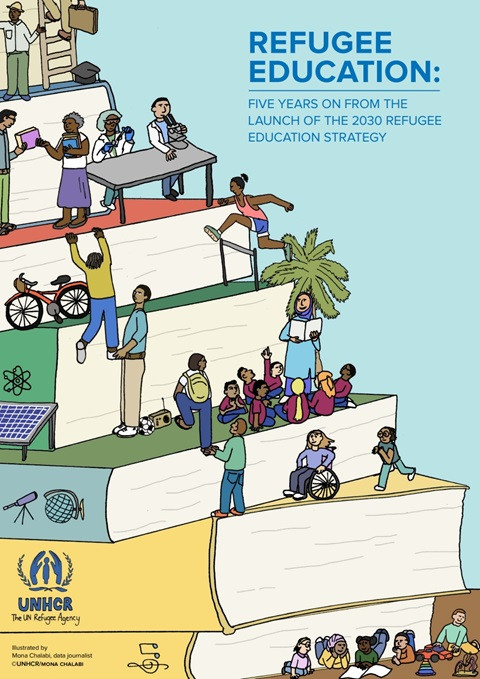 Refugee Education; Five Years on from the Launch of the 2030 Refugee Education Strategy 出版年份: 2024 作者: Cirenia Chavez Villegas | Kate Bond 机构作者: UN. Office of the United Nations High Commissioner for Refugees (UNHCR) The 2024 UNHCR Refugee Education Report draws on data from more than 65 countries worldwide to provide the most detailed picture yet of the state of refugee education and enrolment. The report reflects on the 2030 Refugee Education Strategy (launched in 2019) and where notable progress has been made as well as areas where greater investment and enhanced collaboration are needed to meet the strategic objectives of the Strategy.
  Gender and Rural Development in Eastern Europe and Central Asia: Key Issues 出版年份: 2016 机构作者: Food and Agriculture Organization of the United Nations (FAO) This report provides a brief overview and description of the critical issues affecting the situation of rural women in the region. This overview has been compiled with the aim of informing all stakeholders and using this information in public campaigns and to achieve greater impact of interventions for development.
  Гендер и развитие сельских районов в Восточной Европе и Центральной Азии: Основные проблемы 出版年份: 2016 机构作者: Продовольственная и сельскохозяйственная организация Объединённых Наций (ФАО) В данном отчете представлен краткий обзор и описание важнейших вопросов, оказывающих влияние на положение женщин в сельских районах в регионе. Данный обзор составлен с целью информирования всех заинтересованных сторон и использования этой информации в общественных кампаниях и для достижения большей результативности интервенций по развитию.