
相关资源
探索丰富的全球公民教育资源,深化理解,促进研究、倡导、教学与学习。
共找到2,772条结果
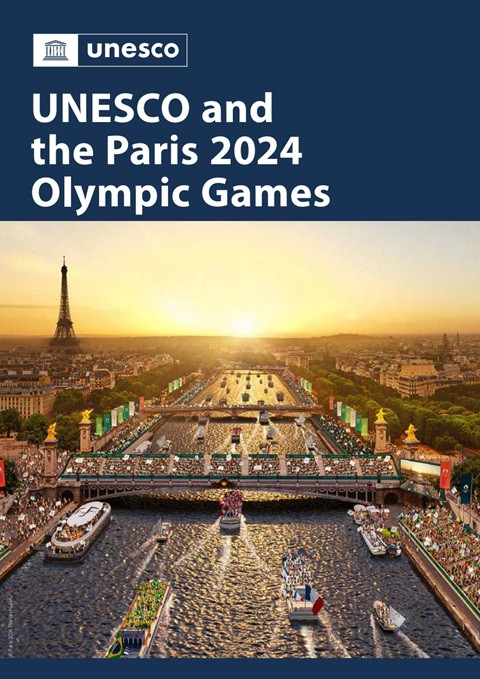 UNESCO and the Paris 2024 Olympic Games 出版年份: 2024 机构作者: UNESCO For the Olympic and Paralympic Games, UNESCO and The Associated Press are joining forces to ensure quality media coverage of Paris 2024. The Associated Press will set up on the premises and roof of the UNESCO headquarters building, facing the Eiffel Tower, to record and broadcast its television programmes. The Agency will provide spectators with unique media coverage of the Games and offer original content on the social impact of sport and sports policies, in collaboration with UNESCO.
 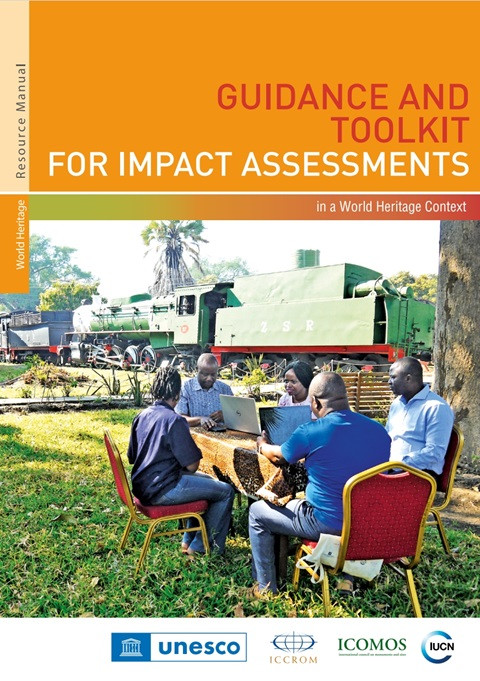 Guidance and Toolkit for Impact Assessments in a World Heritage Context 出版年份: 2022 作者: Sarah Court | Eugene Jo | Richard Mackay | Mizuki Murai | Riki Therivel 机构作者: UNESCO | International Centre for the Study of the Preservation and Restoration of Cultural Property (ICCROM) | International Council on Monuments and Sites (ICOMOS) | International Union for Conservation of Nature (IUCN) | Korea R. Cultural Heritage Administration As the World Heritage Convention celebrates its 50th anniversary in 2022, over 1100 sites around the world are recognized as World Heritage - places that are so valuable to humanity that there conservation has been deemed our collective responsibility. Yet many of these exceptional places face increasing pressure from diverse types of development projects within and around the sites. Assessing the impacts of such projects – before deciding to proceed with their implementation – is essential to both prevent damage to World Heritage and identify sustainable options.The Guidance and Toolkit for Impact Assessments in a World Heritage Context is the go-to reference that explains the process for achieving these goals. Offering practical tips and tools including checklists and a glossary, it provides a framework for conducting impact assessments for cultural and natural heritage sites.Developed by UNESCO and the Advisory Bodies to the World Heritage Committee, ICCROM, ICOMOS and IUCN, this Guidance and Toolkit fosters cross-sectoral, multidisciplinary collaboration to identify solutions for both protecting World Heritage sites and supporting good quality and appropriate development . States Parties to the World Heritage Convention, heritage managers, decision-makers, planners and developers are invited to use it to help realise our collective commitment to passing on our precious heritage to future generations. 세계유산 영향평가 지침서 出版年份: 2023 作者: Sarah Court | Eugene Jo | Richard Mackay | Mizuki Murai | Riki Therivel 机构作者: 유네스코 | International Centre for the Study of the Preservation and Restoration of Cultural Property (ICCROM) | International Council on Monuments and Sites (ICOMOS) | International Union for Conservation of Nature (IUCN) | Korea R. Cultural Heritage Administration 2022년 '세계유산협약'이 탄생 50주년을 맞았다. 그동안 전 세계적으로 1,100건이 넘는 곳이 세계유산으로 공인되어 그 가치를 보존하는 것이 인류 전체의 의무로 인식되고 있다. 그러나 많은 세계유산이 유산 안팎의 다양한 개발행위로 인해 위협받고 있다. 그러한 개발행위로 인한 유산의 훼손을 예방하고 지속가능한 대안을 찾기 위해서는 개발행위를 실행하기로 결정하기에 앞서 유산에 미칠 영향을 평가해야한다. 이러한 목적을 위해 편리하게 활용할 수 있도록 나온 안내서가 바로 본 '세계유산 영향평가 지침서(이하 '지침서')이다. 지침서는 실무에 바로 쓸 수 있도록 용어정의, 점검목록 등을 제안하며 문화유산과 자연유산의 영향평가에 모두 사용할 수 있다. UNESCO와 세계유산위원회의 자문기구인 ICCROM, ICOMOS와 ICUN이 개발한 이 지침서는 다양한 분야를 넘나드는 학제적 협력을 통해 세계유산보호와 고품질의 적절한 개발이라는 일석이조의 목적을 달성하는 대안을 찾기 위한 안내서이다. 세계유산협약의 당사국, 유산관리자, 계획정책 당국과 개발 사업자까지 본 지침서를 활용하여, 인류의 공동 사명인 소중한 유산을 후세에 전승하는데 기여해 주길 바란다.
 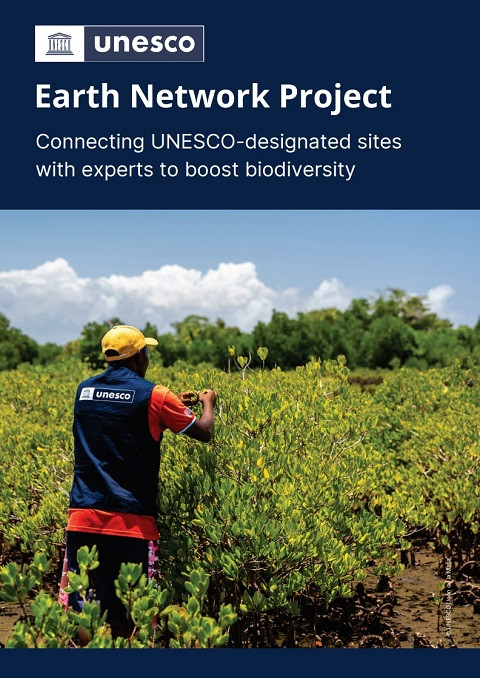 Earth Network Project: Connecting UNESCO-Designated Sites With Experts to Boost Biodiversity 出版年份: 2024 机构作者: UNESCO The Earth Network project was launched in 2021 with the support of the Government of Italy. It brings together over 380 experts from more than 60 countries, encompassing diverse biodiversity-related fields that include land restoration, environmental management and environmental law. The specialists volunteer to put their unique skillsets and knowledge at the disposal of sites designated by UNESCO which request their assistance. The Earth Network covers all scientific domains and proudly combines different forms of knowledge: scientific, practitioner, local and indigenous. On the ground, these experts provide technical advice, collect data, build partnerships, and provide training tailored to the specific needs and priorities of each UNESCO-designated site.
 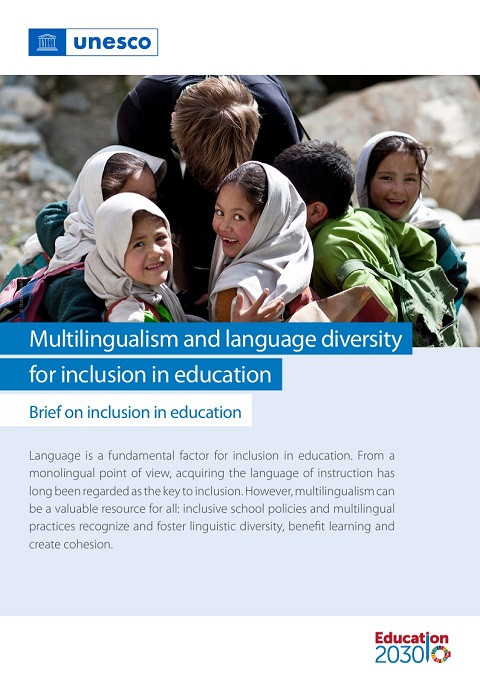 Multilingualism and Language Diversity for Inclusion in Education: Brief on Inclusion in Education 出版年份: 2024 作者: Piet Van Avermart 机构作者: UNESCO Language is a fundamental factor for inclusion in education. From a monolingual point of view, acquiring the language of instruction has long been regarded as the key to inclusion. However, multilingualism can be a valuable resource for all: inclusive school policies and multilingual practices recognize and foster linguistic diversity, benefit learning and create cohesion.
  Dialogue for Prevention 出版年份: 2025 机构作者: UNESCO In an era where geopolitical power struggles disrupt traditional peacebuilding, where identity and misinformation fuel divisions, and where trust in institutions is eroding, UNESCO’s Intercultural Dialogue for Conflict Transformation briefs series presents an adaptable, culturally grounded, and people-centred approach to peacebuilding. With 1.5 billion people living in contexts with low intercultural dialogue where global challenges such as absolute poverty, terrorism and forced displacement are more prevalent, this four-part series draws on firsthand experience, country case studies, and expert analysis to demonstrate the transformative potential of dialogue in fragile and conflict-sensitive settings. The Dialogue for Prevention brief, developed with the Auschwitz Institute for the Prevention of Genocide and Mass Atrocities, explores the powerful role intercultural dialogue can play in preventing large-scale identity-based violence, particularly in the upstream and downstream phases of conflict. Grounded in the idea that dialogue can bridge divides and foster mutual understanding, the brief argues that enabling environments for intercultural dialogue—marked by stability, inclusive governance, freedom of expression, horizontal equality, and social cohesion—also mitigate key risk factors for atrocity violence. Drawing on diverse examples from Cambodia, Colombia, Italy, and Kenya, it showcases creative, context specific applications of dialogue. Through practical guidance, the brief equips policymakers, practitioners and civil society seeking to embed dialogue into prevention strategies.
  Dialogue for Social Cohesion 出版年份: 2025 作者: Isaure Vicarini | Euan Mackway-Jones 机构作者: UNESCO In an era where geopolitical power struggles disrupt traditional peacebuilding, where identity and misinformation fuel divisions, and where trust in institutions is eroding, UNESCO’s Intercultural Dialogue for Conflict Transformation briefs series presents an adaptable, culturally grounded, and people-centred approach to peacebuilding. With 89% of conflicts worldwide occurring in countries with limited capacity for intercultural dialogue, this four-part series draws on firsthand experience, country case studies, and expert analysis to demonstrate the transformative potential of dialogue in fragile and conflict-sensitive settings. The Dialogue for Social Cohesion brief—developed in collaboration with the Berghof Foundation and Search for Common Ground—bridges theory and practice to explore the horizontal (community-to-community) and vertical (citizen-to-state) dimensions of social cohesion and highlights how inclusive dialogue can support both. Case studies from Afghanistan, Germany, Somalia, and South Sudan illustrate how dialogue—whether through theatre, education, local governance, or environmental peacebuilding—can cultivate mutual understanding and trust, bridge identity-based divides, and restore, step by step, the social fabric in fractured societies. Through actionable recommendations, this brief equips practitioners, policymakers, and civil society with the essential guidance needed to tailor and embed dialogue in their respective contexts, helping to ensure that peace processes are inclusive, locally driven, and enduring.
  Recommendation on Education for Peace, Human Rights and Sustainable Development: An Implementation Guide 出版年份: 2025 机构作者: UNESCO There is no peace without education. With conflicts rising on so many fronts, there has never been a more urgent need for a transformed education geared towards building and sustaining peace.The Recommendation on Education for Peace and Human Rights, International Understanding, Cooperation, Fundamental Freedoms, Global Citizenship and Sustainable Development, adopted by all 194 Member States of UNESCO in 2023, articulates a humanistic and transformative vision of education that can help address contemporary and future affronts to peace. These challenges range from the resurgence of conflicts driven by systemic inequalities and injustices, the rise and spread of hate speech, racism and discrimination particularly online, to the adverse effects of digital technologies and the existential threat of climate change.UNESCO has developed this Guide as the first of several tools to assist Member States in unpacking and fully implementing the 2023 Recommendation. The Guide elaborates its contents, integrating the 2023 Recommendation’s transdisciplinary lens to connect key concepts and issues. It also provides concrete ideas and curated resources for action at different levels and types of education, while calling for a multi-stakeholder and whole-of-society approach that includes everyone and builds on existing positive efforts.The Guide is a timely addition to the pool of available collective resources to fully implement the 2023 Recommendation and foster an education that is transformative for a just and peaceful world. Recomendación sobre la educación para la paz, los derechos humanos y el desarrollo sostenible: guía de implementación 出版年份: 2026 机构作者: UNESCO Sin educación no hay paz. Una educación transformadora, orientada a la construcción y el mantenimiento de la paz es más urgente que nunca, dado el aumento de los conflictos en diversos frentes.La Recomendación sobre la Educación para la Paz y los Derechos Humanos, la Comprensión Internacional, la Cooperación, las Libertades Fundamentales, la Ciudadanía Mundial y el Desarrollo Sostenible, que fue adoptada por los 194 Estados Miembros de la UNESCO en 2023, articula la visión humanista y transformadora de la educación que ayuda a abordar los actuales y futuros agravios a la paz. Estos desafíos abarcan desde el resurgimiento de conflictos impulsados por desigualdades e injusticias sistémicas, el auge y la propagación del discurso de odio, el racismo y la discriminación—especialmente en línea—, hasta los efectos adversos de las tecnologías digitales y la amenaza existencial del cambio climático.La UNESCO ha elaborado esta Guía como la primera de varias herramientas que ayudarán a los Estados miembro a comprender e implementar plenamente la Recomendación de 2023. Su contenido ha sido desarrollado integrando la perspectiva transdisciplinaria para conectar conceptos y cuestiones clave de la Recomendación de 2023. Además, proporciona ideas concretas y recursos seleccionados para la acción en distintos niveles y tipos de educación. Asimismo, promueve un enfoque multisectorial que parte de las iniciativas positivas ya en marcha y busca la inclusión de todas las personas.Esta Guía es una incorporación oportuna al conjunto de recursos colectivos disponibles para implementar plenamente la Recomendación de 2023 y promover así una educación transformadora para un mundo justo y pacífico.
  Recommandation sur l’éducation pour la paix, les droits de l’homme et le développement durable: un guide de mise en oeuvre 出版年份: 2025 机构作者: UNESCO Il n’y a pas de paix sans éducation. Face à la multiplication des conflits sur de nombreux fronts, jamais la nécessité d’une éducation transformée, orientée vers la construction et le maintien de la paix, n’a été aussi pressante. La Recommandation sur l’éducation pour la paix et les droits de l’homme, la compréhension internationale, la coopération, les libertés fondamentales, la citoyenneté mondiale et le développement durable, adoptée en 2023 par l’ensemble des 194 États membres de l’UNESCO, exprime une vision humaniste et transformatrice de l’éducation, capable de répondre aux défis actuels et futurs à la paix. Ces défis vont de la résurgence de conflits alimentés par les inégalités et injustices systémiques, à la montée et la diffusion des discours de haine, du racisme et de la discrimination – notamment en ligne – en passant par les effets négatifs des technologies numériques et la menace existentielle que constitue le changement climatique. L’UNESCO a élaboré le présent Guide comme le premier d’une série d’outils destinés à aider les États membres à comprendre et à mettre pleinement en œuvre la Recommandation de 2023. Le Guide développe son contenu, en intégrant la perspective transdisciplinaire de la Recommandation afin de relier concepts et enjeux clés. Il propose également des pistes concrètes et des ressources sélectionnées pour 2 milliards de personnes – un quart de l’humanité – vivent dans des zones touchées par des conflits l’action à différents niveaux et dans divers types d’éducation, tout en appelant à une approche multi-acteurs et à l’échelle de la société, qui inclut toutes et tous et s’appuie sur les efforts positifs déjà entrepris. Le Guide constitue une ressource collective opportune pour mettre pleinement en œuvre la Recommandation de 2023 et promouvoir une éducation véritablement transformatrice au service d’un monde plus juste et pacifique.