
相关资源
探索丰富的全球公民教育资源,深化理解,促进研究、倡导、教学与学习。
共找到3,790条结果
 Воспитание глобальной гражданственности: темы и цели обучения 出版年份: 2015 机构作者: Организация Объединенных Наций по вопросам образования, науки и культуры (UNESCO) Данная публикация, озаглавленная «Воспитание глобальной гражданственности: темы и цели обучения» является первым, подготовленным ЮНЕСКО, педагогическим руководством в области воспитания глобальной гражданственности. Она является результатом обширных исследований и консультаций с участием экспертов из разных частей мира. Это руководство основывается на публикации ЮНЕСКО «Воспитание глобальной гражданственности: подготовка учащихся к проблемам XXI века» и результатах трех ключевых мероприятий ЮНЕСКО в области воспитания глобальной гражданственности: технической консультации по воспитанию глобальной гражданственности (сентябрь 2013 г.), а также первого и второго форумов ЮНЕСКО по воспитанию глобальной гражданственности, прошедших в декабре 2013 г. и январе 2015 г. До составления окончательного варианта руководства оно было протестировано заинтересованными сторонами в области образования в отдельных странах во всех регионах для обеспечения его актуальности в различных географических и социо-культурных ситуациях.
  التربية على المواطنة العالمية: مواضيع وأهداف تعلمية 出版年份: 2015 机构作者: منظمة الأمم المتحدة للتربية والعلم والثقافة (UNESCO) هذا الدليل "التربية على المواطنة العالمية: المواضيع والأهداف التعلمية" هو أول التوجيهات التربوية لليونسكو حول تعليم المواطنة العالمية. أتى هذا الدليل نتيجة لبحوث معمقة وعملية استشارية مع خبراء من مختلف أصقاع العالم. يرتكز هذا التوجيه على دليل اليونسكو» التربية على المواطنة العالمية: تحضير المتعلمين لتحديات القرن الواحد والعشرين " ومخرجات الأحداث لليونسكو حول التربية على المواطنة العالمية: المشاورة الفنية حول التربية على المواطنة العالمية (أيلول/سبتمبر 2013) وندوة اليونسكو الأولى والثانية حول التربية على المواطنة العالمية، واللتين عقدتا في كانون الأول/ديسمبر 2013 وكانون الثاني/يناير من العام 2015 على التوالي. قبل الانتهاء من العمل على هذا التوجيه، اختبره أصحاب المصلحة في المجال التعليمي اختباراً ميدانياً في عدد من الدول المنتقاة بغية الحرص على ملاءمته للسياقات الجغرافية والاجتماعية الثقافية المختلفة. تهدف التربية على المواطنة العالمية إلى أن تشكل قوة تحويلية، وبناء المعرفة والمهارات والقيم والسلوكيات التي يحتاج إليها المتعلمون ليتمكنوا من المساهمة في عالم أكثر دمجاً وعدلا وسلاماً. ويقدم هذا الدليل اقتراحات لترجمة مفاهيم التربية على المواطنة العالمية إلى مواضيع وأهداف تعلمية عملية ومراعية للأعمار بطريقة تسمح بمواءمتها مع السياقات المحلية. ويهدف الدليل إلى أن يشكل مورداً للمربين ومطوري المناهج والمدربين، بالإضافة إلى صانعي السياسات، فضلا عن كونه مهماً أيضاً لغيرهم من أصحاب المصلحة في المجال التعليمي، العاملين في أطر نظامية أو غير نظامية. يعرّف الدليل بالتربية العالمية ومقوماتها التعلمية وكيفية إدماجها في النطم التربوية وتطبيقها داخل الصف.
  세계시민교육: 학습 주제 및 학습 목표 出版年份: 2015 机构作者: 유네스코 세계시민교육은 학습자들이 더 포용적이고, 정의롭고, 평화로운 세상을 만드는 데 이바지할 수 있도록 필요한 지식, 기능, 가치, 태도를 길러줌으로써 변혁적인 교육을 달성하고자 한다.이 책 『세계시민교육 : 학습 주제 및 학습 목표』는 세계시민교육에 대한 유네스코의 첫 교수·학습 지침서이다. 세계시민교육의 개념을 지역적 맥락에 맞게 활용할 수 있도록 실제 연령별 학습 주제 및 학습 목표로 구체화한 제안을 담고 있다. 교육자, 교육과 정 개발자, 교사교육자 및 정책입안자를 대상으로 개발된 본 지침서는 무형식 및 비형식 교육환경에 있는 교육 관계자들에게도 유용한 자료가 될 것이다.
  Incheon Declaration: Education 2030: Towards inclusive and equitable quality education and lifelong learning for all 出版年份: 2015 机构作者: UNESCO The "Incheon Declaration: Education 2030: Towards inclusive and equitable quality education and lifelong learning for all" was signed and adopted at the end of the World Education Forum 2015 (WEF 2015) by over 130 Education Ministers and more than 1500 participants. The Declaration marks an important step in the development of international education policy, continuing the Education for All (EFA) movement started in Jomtien in 1990 and formalized in Dakar in 2000. The Declaration also reaffirms the commitment to realize the SDG4, “Ensure inclusive and equitable quality education and promote life-long learning opportunities for all” and the willingness to invest efforts on access, equity and inclusion, quality and learning outcomes, within a lifelong learning approach. Déclaration d'Incheon: Education 2030: Vers une éducation inclusive de qualité et équitable et de l'apprentissage à vie pour tous 出版年份: 2015 机构作者: Organisation des Nations Unies pour l'éducation, la science et la culture (UNESCO) La ‘Déclaration de Incheon: Education 2030: Vers une éducation inclusive de qualité et équitable et l'apprentissage continu pour tous’ a été signé et adopté à la fin du Forum Mondial sur l'Éducation 2015 (FME 2015) par plus de 130 ministres de l'éducation et plus de 1500 participants. La Déclaration marque une étape importante dans le développement de la politique de l'éducation internationale, continue l'Education pour tous (EPT) a commencé à Jomtien en 1990 et formalisé à Dakar en 2000. La Déclaration réaffirme également l'engagement de réaliser le SDG4, ‘Assurer inclusivement l'éducation équitable de la qualité et promouvoir les possibilités d'apprentissage continu pour tous’ et la volonté d'investir des efforts sur l'accès, l'équité et l'inclusion, la qualité des résultats et de l'apprentissage, dans une approche de l'apprentissage continu.
  Programme d'action de l'UNESCO: pour une culture de la paix et de la non-violence, une vision en action 出版年份: 2013 机构作者: Organisation des Nations Unies pour l'éducation, la science et la culture (UNESCO) This document builds upon the experience and resources of the Intersectoral Platform for a Culture of Peace and Non-Violence and has benefited from the contribution of Professor Arjun Appadurai. This document shows the UNESCO's mission; Buidling the defences of peace in the minds of men and women and Culture of peace and Non-violence which is positive values, attitudes and behaviours for everyday peace. This document pointed out today's multiple crisis, and then introduced the programme of action on a culture of peace and non-violence. After drew the UNESCO's strategies, UNESCO's peace activities were followed.
 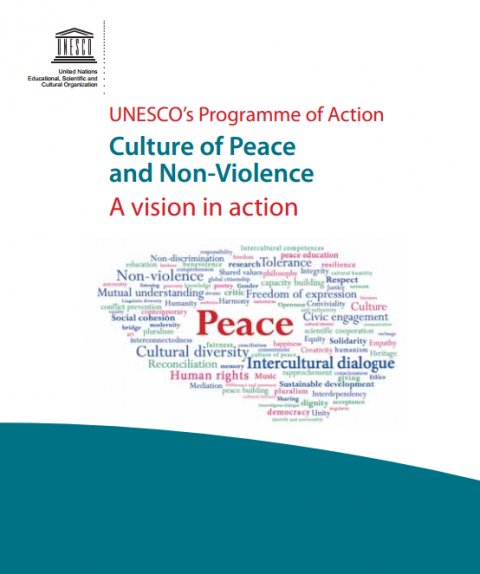 UNESCO's programme of action: culture of peace and non-violence, a vision in action 出版年份: 2013 机构作者: UNESCO This document builds upon the experience and resources of the Intersectoral Platform for a Culture of Peace and Non-Violence and has benefited from the contribution of Professor Arjun Appadurai. This document shows the UNESCO's mission; Buidling the defences of peace in the minds of men and women and Culture of peace and Non-violence which is positive values, attitudes and behaviours for everyday peace. This document pointed out today's multiple crisis, and then introduced the programme of action on a culture of peace and non-violence. After drew the UNESCO's strategies, UNESCO's peace activities were followed. UNESCO's programme of action: culture of peace and non-violence, a vision in action 出版年份: 2013 机构作者: Organisation des Nations Unies pour l'éducation, la science et la culture (UNESCO) Ce document se fonde sur l'expérience et les ressources de la plate-forme intersectorielle pour une Culture de la Paix et la non-violence et a bénéficié de la contribution du Professeur Arjun Appadurai. Ce document montre la mission de l'UNESCO; Buidling Construire les défenses de la paix dans l'esprit des hommes et des femmes et la culture de la paix et de non-violence qui est des valeurs positives, les attitudes et les comportements pour la paix tous les jours. Ce document a souligné multiples crises d'aujourd'hui, et a ensuite présenté le programme d'action sur une culture de paix et de non-violence. Après les stratégies de l'UNESCO, les activités de paix de l'UNESCO ont été suivies.
  Civic education for media professionals: a training manual 出版年份: 2009 作者: Fackson Banda 机构作者: UNESCO Civic awareness enables both media practitioners and users to appreciate the role of journalism and media in building democratic societies. This manual serves as a resource for journalism students and media professionals in developing countries, providing them with essential knowledge for the analysis of the relationship between media functions and active citizenship, and the underlying nexus of democracy, development and the media based on the fundamental principles of democracy and human rights that lie at the heart of UNESCO’s mandate. For the purpose of this manual, civic education refers to the cultivation of civic knowledge, civic skills and civic virtues. Civic knowledge consists of fundamental ideas and information that learners must know and use to become effective and responsible citizens in a democracy. Civic skills include the intellectual skills needed to understand, explain, compare, and evaluate principles and practices of government and citizenship. They also include participatory skills that enable citizens to monitor and influence public policies. Civic virtues include the traits of character, dispositions, and commitments necessary for the preservation and improvement of democratic governance and citizenship. Examples of civic virtues are respect for the worth and dignity of each person, civility, integrity, self-discipline, tolerance, and compassion. Commitments include a dedication to human rights, the common good, equality and the rule of law. L'éducation civique pour les professionnels des médias: un manuel de formation 出版年份: 2009 作者: Fackson Banda 机构作者: Organisation des Nations Unies pour l'éducation, la science et la culture (UNESCO) La conscience civique permet aux deux professionnels des médias et aux utilisateurs d'apprécier le rôle du journalisme et des médias dans l'édification de sociétés démocratiques. Ce manuel sert de ressource pour les étudiants en journalisme et les professionnels des médias dans les pays en développement, en leur fournissant des connaissances essentielles pour l'analyse de la relation entre les fonctions des médias et la citoyenneté active, et le lien sous-jacent de la démocratie, le développement et les médias sur la base des principes fondamentaux de la démocratie et des droits humains qui sont au cœur du mandat de l'UNESCO. Aux fins de ce manuel, l'éducation civique fait référence à la culture des connaissances civiques, les compétences civiques et les vertus civiques. la connaissance civique se compose d'idées fondamentales et de l'information que les apprenants doivent connaître et utiliser pour devenir des citoyens efficaces et responsables dans une démocratie. compétences civiques comprennent les compétences intellectuelles nécessaires pour comprendre, expliquer, comparer et évaluer les principes et les pratiques du gouvernement et de la citoyenneté. Ils comprennent également les compétences participatives qui permettent aux citoyens de suivre et d'influencer les politiques publiques. vertus civiques comprennent les traits de caractère, les dispositions et les engagements nécessaires à la préservation et l'amélioration de la gouvernance démocratique et de la citoyenneté. Des exemples de vertus civiques sont le respect de la valeur et la dignité de chaque personne, la civilité, l'intégrité, l'auto-discipline, la tolérance et la compassion. Les engagements comprennent un attachement aux droits de l'homme, le bien commun, l'égalité et la primauté du droit.