
相关资源
探索丰富的全球公民教育资源,深化理解,促进研究、倡导、教学与学习。
共找到3,451条结果
 Diagnóstico participativo a través de photovoice sobre percepciones y actitudes de la juventud en torno a los discursos de odio y negacionistas de la violencia de género y de los derechos de las personas migrantes desde los enfoques de la educación para 出版年份: 2024 作者: Bárbara Biglia | Aloe Cubero 机构作者: InteRed | Agencia Española de Cooperación Internacional para el Desarrollo (AECID) Este diagnóstico busca responder a la necesidad de explorar las percepciones y actitudes de la juventud en torno a los discursos de odio, específicamente sobre aquellos negacionistas de las violencias de género y en contra de los derechos de las personas migrantes. Hemos querido hacer este proceso reconociendo la agencia de las personas jóvenes y por ello buscamos generar reflexiones colectivas y movilizadoras que aumenten su compromiso como agentes de cambio en nuestra sociedad. Para tal fin, nos ubicamos en el marco de la Investigación Activista Feminista (IAF) haciendo uso del photovoice como estrategia de investigación.
  Global Citizenship: A plural and Transformative Vision of Society and School; Volume Ⅰ 出版年份: 2020 作者: Rafael Díaz-Salazar | Alfonso Díez Prieto | Antonio Roura | Begoña Carmona | Carme García Yeste | Carmen Magallón | César García-Rincón | Florencio Luengo | Gema Celorio | Gonzalo Fanjul | Juan Iglesias | Juan Pablo Rayo | Luis González Reyes | Manuela Mesa | María Laín | Mónica Cantón de Celis | Pedro Sáez | Pilar Álvarez Cifuentes | Rafael Feito | Regina Gairal | Santiago Álvarez Cantalapiedra | Victoria Camps | Violeta Velasco | Yayo Herrero | Augusto Ibañez 机构作者: SM Foundation The objective of this work, which brings together the voices of great specialists, reinforced by the vision of the school itself, is to promote and channel the debate on global citizenship towards an education oriented to the care of the person, society and nature. Understood in this way, education for global citizenship can help us form fulfilled people, prepared to intervene positively in a world in continuous change, and capable of adopting a sustainable way of life for ourselves, those around us and those who will succeed us. Ciudadanía Global: Una visión plural y transformadora de la sociedad y de la escuela; Volumen Ⅰ 出版年份: 2020 作者: Rafael Díaz-Salazar | Alfonso Díez Prieto | Antonio Roura | Begoña Carmona | Carme García Yeste | Carmen Magallón | César García-Rincón | Florencio Luengo | Gema Celorio | Gonzalo Fanjul | Juan Iglesias | Juan Pablo Rayo | Luis González Reyes | Manuela Mesa | María Laín | Mónica Cantón de Celis | Pedro Sáez | Pilar Álvarez Cifuentes | Rafael Feito | Regina Gairal | Santiago Álvarez Cantalapiedra | Victoria Camps | Violeta Velasco | Yayo Herrero | Augusto Ibañez 机构作者: SM Foundation El objetivo de esta obra, que recoge las voces de grandes especialistas, reforzadas por la visión de la propia escuela, es impulsar y canalizar el debate sobre la ciudadanía global hacia una educación orientada al cuidado de la persona, de la sociedad y de la naturaleza. Entendida así, la educación para la ciudadanía global puede ayudarnos a formar a personas plenas, preparadas para intervenir positivamente en un mundo en continuo cambio, y capaces de adoptar un modo de vida sostenible para nosotros, los que nos rodean y los que nos sucederán.
  온라인 허위정보와 뉴스 미디어 出版年份: 2020 作者: 박아란, 이나연, 오현경 机构作者: 한국언론진흥재단 본 연구에서는 코로나19 사태 등 최근 국내외에서 발생한 주요 사안들과 관련하여 유포되고 있는 허위정보와 가짜뉴스의 사례와 개념 등을 정리하고 각국의 대응방안에 대해 조사하는 것을 목표로 한다. 특히 현재 진행 중인 코로나19 사태는 전 세계적으로 관심이 집중되고 있는 사안이니만큼 코로나19와 관련된 허위정보의 확산 및 피해 사례들을 중점적으로 살펴보고, 최근 선거를 치르거나 앞두고 있는 국가들의 사례를 통해 선거 관련 허위조작정보 문제에 대해서도 살펴봄으로써 사회적 혼란을 가져오고 불신을 양산하는 허위정보 문제에 효과적으로 대응할 수 있는 방안을 모색하고자 한다.
 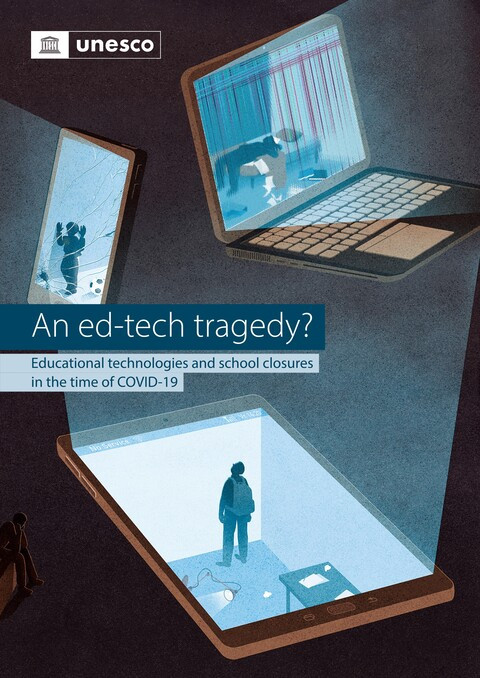 An Ed-Tech Tragedy? Educational Technologies and School Closures in the Time of COVID-19 出版年份: 2023 机构作者: UNESCO Charting a new course for the transformation of education in a digital age An Ed-Tech Tragedy? is a detailed analysis of what happened when education became largely reliant on connected technology during school closures stemming from the COVID-19 pandemic, the largest global disruption to education in history.Many claim that this experience was chiefly one of forced progress and transformations that have, however haltingly, helped propel education into desirable digital futures. Others underline an experience of imperfect salvation – technology saving the day in an emergency and preserving learning continuity for significant numbers of students, even if not all students were helped. But the global evidence reveals a more sombre picture. It exposes the ways unprecedented educational dependence on technology often resulted in unchecked exclusion, staggering inequality, inadvertent harm and the elevation of learning models that place machines and profit before people. This publication examines the promises of educational technologies against the reality of what was delivered during periods of pandemic school closures, which stretched for various durations from early 2020 to the end of 2022. Dedicated sections consider alternate possibilities that had the potential to be more inclusive and equitable.The analysis extracts lessons and recommendations to chart new and more humanistic directions for the development, integration and use of technology in education.
 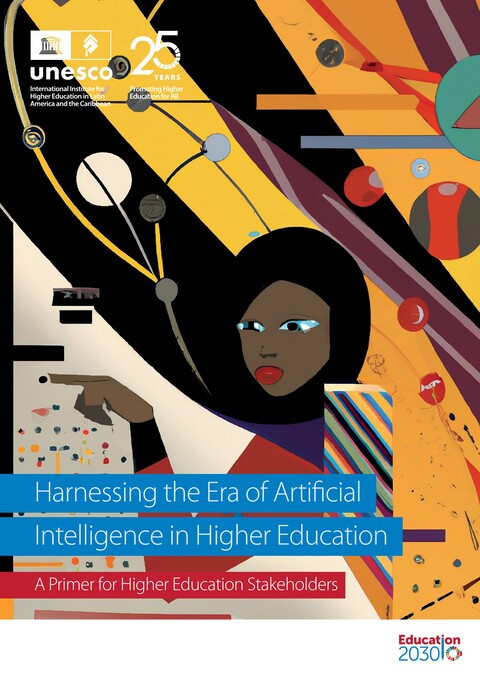 Harnessing the Era of Artificial Intelligence in Higher Education: A Primer for Higher Education Stakeholders 出版年份: 2023 作者: Bosen Lily Liu | Diana Morales | Jaime Roser-Chinchilla | Emma Sabzalieva | Arianna Valentini | Daniele Vieira do Nascimento | Clarisa Yerovi 机构作者: UNESCO | UNESCO International Institute for Higher Education in Latin America and the Caribbean (IESALC) The International Institute for Higher Education in Latin America and the Caribbean (UNESCO IESALC) is one of UNESCO’s key education-focused institutes and is the only institute in the United Nations with a specific mandate for higher education. Taking a holistic and integrated intersectoral and cross-sectoral approach to higher education, UNESCO IESALC provides support to Member States through policy-driven and action-oriented research and publications, capacity development, training, advocacy and networking. Following the release of a Quick Start Guide on using ChatGPT and Artificial Intelligence (AI) in higher education, UNESCO IESALC is pleased to offer to the wider community of higher education stakeholders worldwide this Primer on AI and higher education. Providing information and tips for developing further thinking and policies related to the use of AI processes and outcomes in higher education institutions, the Primer is a comprehensive and comprehensible introduction to AI. It also serves as a practical tool for guidance and reference with recommendations for its use in higher education. Oportunidades y desafíos de la era de la inteligencia artificial para la educación superior: Una introducción para los actores de la educación superior 出版年份: 2023 作者: Bosen Lily Liu | Diana Morales | Jaime Roser-Chinchilla | Emma Sabzalieva | Arianna Valentini | Daniele Vieira do Nascimento | Clarisa Yerovi 机构作者: Organización de las Naciones Unidas para la Educación, la Ciencia y la Cultura (UNESCO) | UNESCO International Institute for Higher Education in Latin America and the Caribbean (IESALC) El Instituto Internacional de la UNESCO para la Educación Superior en América Latina y el Caribe (UNESCO IESALC) es uno de los institutos clave de la UNESCO centrado en la educación y es el único instituto de las Naciones Unidas con un mandato específico para la educación superior. Adoptando un enfoque holístico e integrado de manera intersectorial y transectorial de la educación superior, el IESALC presta apoyo a los Estados miembros mediante investigaciones y publicaciones orientadas a la formulación de políticas y a la acción, al desarrollo de capacidades, la formación, la abogacía y la creación de redes. Tras la publicación de una Guía de inicio rápido sobre el uso de ChatGPT y la Inteligencia Artificial (IA) en la educación superior, UNESCO IESALC se complace en ofrecer a la comunidad en general interesada en la educación superior global este Manual en IA y educación superior. Proporcionando información y consejos para el desarrollo de pensamiento y de políticas relacionadas con el uso de la IA en las instituciones de educación superior, este Manual es una introducción comprensible y exhaustiva a la IA. También sirve como herramienta práctica de orientación y referencia con recomendaciones para su uso en la enseñanza superior.
  Arts Education: An Investment in Quality Learning 出版年份: 2023 作者: Vivek Venkatesh | Lydia Ruprecht | Martha K. Ferede 机构作者: UNESCO This paper reviews key research on the impact and outcomes of Arts Education (AE), with the objective of demonstrating how AE and its conceptualizations, methodological approaches, theoretical foundations and applications are closely aligned with the objectives and expectations of quality education as notably envisioned by Sustainable Development Goal 4 (SDG 4) on education. For UNESCO (2006), AE is understood to include two different approaches: o the teaching of art as an individual study subject and AE as developing learners’ artistic skills, abilities and sensibilities; o the mobilization of the arts, its tools, methods and stakeholders as a pedagogical approach, also referred to as 'arts in education' or 'learning through the arts.”The evidence gathered in this paper points to six main conclusions. • Arts education contributes to the humanistic outcomes associated with quality education as captured in Target 4.7 of SDG 4 on education, namely the promotion of values grounded in global peace, sustainability, justice and respect for cultural diversity and the development of social and emotional skills such as empathic concern and perspective-taking, all of which support personal and collective well-being and indices associated with increased societal happiness1 such as healthy life expectancy, freedom and generosity. • The evidence demonstrates that the “learning of the arts” positively impacts learning in ways that are relevant to broader academic and non-academic outcomes(see Tables 1 and 2).It has been associated with improvements in mathematics performance, writing skills, reading achievements, creativity, student engagement and attendance, as well as perseverance in pursuit of educational goals and classroom behaviours. • Arts education fosters teacher innovation and collaboration, positively impacting school culture and can help students gain a sense of mastery and accomplishment and engage with their communities. • By linking formal and non-formal learning settings, including both in-person and digital cultural spaces such as museums, festivals, performance venues and cultural centres, AE supports the capacity-building of artists and cultural bearers, while expanding the pedagogical role of cultural institutions and spaces. • Considering the nature of local and Indigenous knowledge in spanning language, cultural practices, land use practices, social interactions, ritual and spirituality, AE holds the potential to support knowledge revitalization for Indigenous peoples, which have been historically compromised or delegitimized within traditional education settings. • Last but not least, by building on the economic potential of the arts and creative industries, AE creates opportunities for employment and economic growth, which cannot be underestimated. • On a methodological note, the review of existing research highlights the limitations of quantitative methods and the absence of evaluation mechanisms to assess the contribution and impact of AE to learning.
 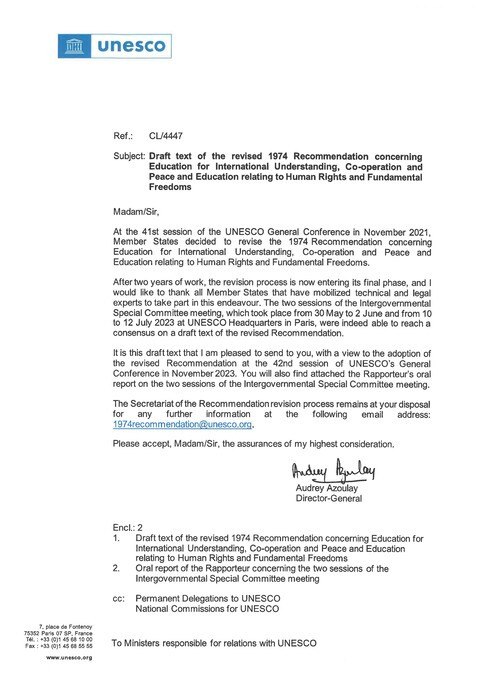 Draft Text of the Revised 1974 Recommendation Concerning Education for International Understanding, Co-Operation and Peace and Education Relating to Human Rights and Fundamental Freedoms 出版年份: 2023 机构作者: UNESCO In accordance with the UNESCO Constitution and the Rules of Procedure concerning Recommendations to Member States and international conventions covered by the terms of Article IV, paragraph 4, of the Constitution, the draft text of the revised Recommendation concerning education for international understanding, co-operation and peace and education relating to human rights and fundamental freedoms, and the related preliminary report, were sent to UNESCO Member States through the circular letter CL/4401 (September 2022) for their written commentsand observations. On the basis of their comments, a second draft of the text was prepared. In circular letter CL/4433 (April 2023), the second draft together with the Definitive Report were submitted to Member States. The Special Committee meeting of experts designated by Member States took place from 30 May to 2 June 2023, as per the circular letter CL/4417 (November 2022), and from 10 to 12 July 2023, as per circular letter CL/4442 (June 2023).
 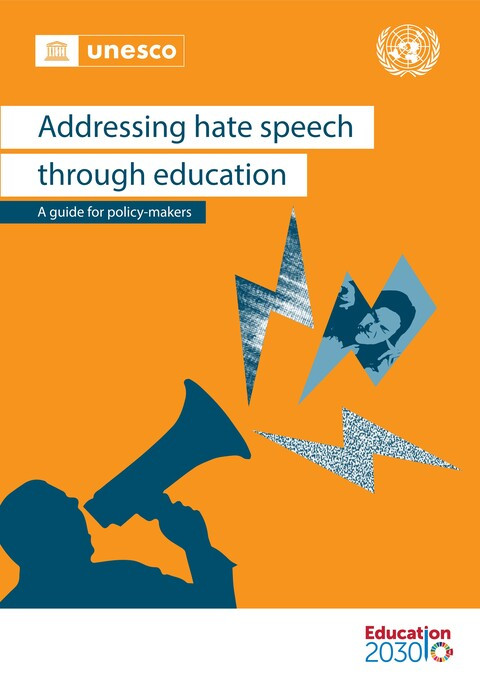 Addressing Hate Speech Through Education: A Guide for Policy-Makers 出版年份: 2023 机构作者: UNESCO | UN. Office on Genocide Prevention and the Responsibility to Protect Hate speech is spreading faster and further than ever before as a result of social media user growth and the rise of populism. Both online and offline, hate speech targets people and groups based on who they are. It has the potential to ignite and fuel violence, spawn violent extremist ideologies, including atrocity crimes and genocide. It discriminates and infringes on individual and collective human rights, and undermines social cohesion. Education can play a central role in countering hateful narratives and the emergence of group-targeted violence. Educational responses to hate speech and all forms of hateful communication include:• Training teachers and learners on the values and practices related to being respectful global and digital citizens;• Adopting pedagogical and whole-school approaches to strengthening social and emotional learning;• Revising and reviewing curricula and educational materials to make them culturally responsive and to include content that identifies hate speech and promotes the right to freedom of expression;This policy guide developed by UNESCO and the United Nations’ Office on Genocide Prevention and the Responsibility to Protect explores these educational responses and provides guidance and recommendations to policy-makers on how to strengthen education systems to counter hate speech.