
相关资源
探索丰富的全球公民教育资源,深化理解,促进研究、倡导、教学与学习。
共找到3,441条结果
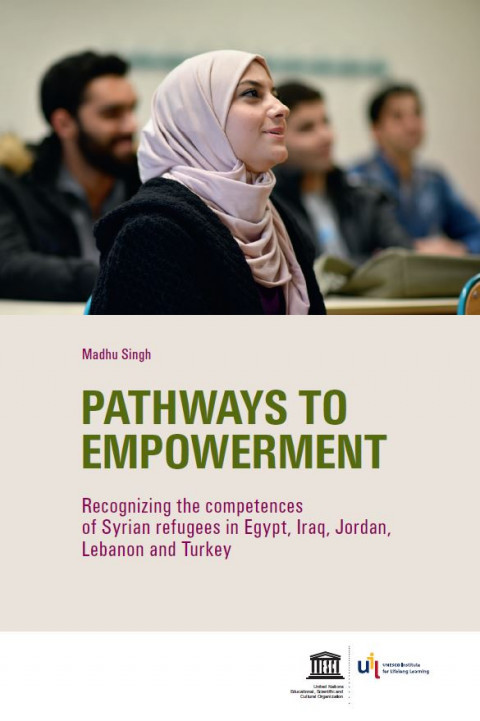 Pathways to Empowerment: Recognizing the Competences of Syrian Refugees in Egypt, Iraq, Jordan, Lebanon and Turkey 出版年份: 2018 作者: Madhu Singh 机构作者: UNESCO Institute for Lifelong Learning (UIL) For Syrian refugees living in Egypt, Iraq, Jordan, Lebanon and Turkey, recognition is a transformative mechanism that can help them enter or re-enter education, integrate into the world of work and participate fully in their host communities. However, while policy-makers in the region have prioritized the recognition, validation and accreditation of non-formal and informal learning, it remains a major challenge to develop systems that do this effectively. Pathways to Empowerment lays the essential groundwork for such a system, urging governments to develop comprehensive national strategies rather than ad hoc projects to recognize the competences of Syrian refugees. Its recommendations will contribute to dialogue between national authorities and social partners, and guide policy actions and RVA practices both in the region and in other parts of the world where recognition of refugees’ learning is a critical issue.
  Recognition, Validation and Accreditation of Youth and Adult Basic Education as a Foundation of Lifelong Learning 出版年份: 2018 机构作者: UNESCO Institute for Lifelong Learning (UIL) Since its 2005 General Conference, UNESCO has supported the recognition, validation and accreditation (RVA) of the outcomes of nonformal and informal learning for youth and adults and acknowledged the importance of RVA in the development of lifelong learning systems. More recently, the UNESCO Institute for Lifelong Learning, in partnership with UNESCO’s Section of Partnerships, Cooperation and Research, has undertaken a number of comprehensive analyses of policy and practice in this area. These studies have highlighted the need to focus on the RVA of non-formal basic education.Globally, the scale of need is enormous. There are significant challenges in integrating the recognition, validation and accreditation of the outcomes of non-formal and informal learning at the basic education level into existing RVA systems and in enabling young people and adults without basic education to complete such processes successfully.This report summarizes the research and policy dialogue of an international expert group invited by UNESCO to three meetings in 2016. It focuses on three themes – principles, policy and practice – and provides examples of how the issue is being approached across the world. It offers 12 conclusions, based on the evidence considered by the expert group, and proposes a number of key messages for stakeholders in Member States, including policy-makers and the research community.
 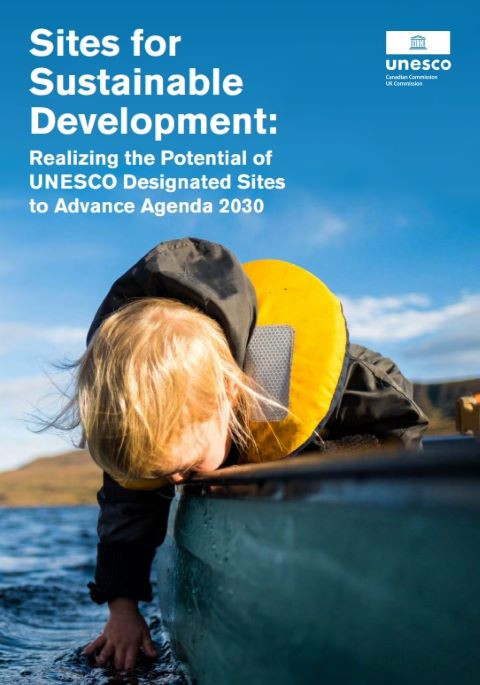 Sites for Sustainable Development: Realizing the Potential of UNESCO Designated Sites to Advance Agenda 2030 出版年份: 2022 作者: Tim Carter | Eleanor R. Haine | Alexander J. Kent | Matthew Rabagliati 机构作者: Canadian Commission for UNESCO | United Kingdom National Commission for UNESCO This report outlines the role that UNESCO’s global network of designated sites — World Heritage Sites, global geoparks and biosphere reserves — can play in helping stakeholders (including businesses, communities, government agencies and their local organizations, Indigenous Peoples, traditional authorities, councils of elected representatives, and heritage and nature groups) carry out sustainable development approaches to tackle, mitigate and adapt to challenges like these.The ideas contained in this report emerge from a study designed to explore the merits of UNESCO’s increasing tendency to refer to biosphere reserves, global geoparks and World Heritage Sites as “sites for sustainable development.”
 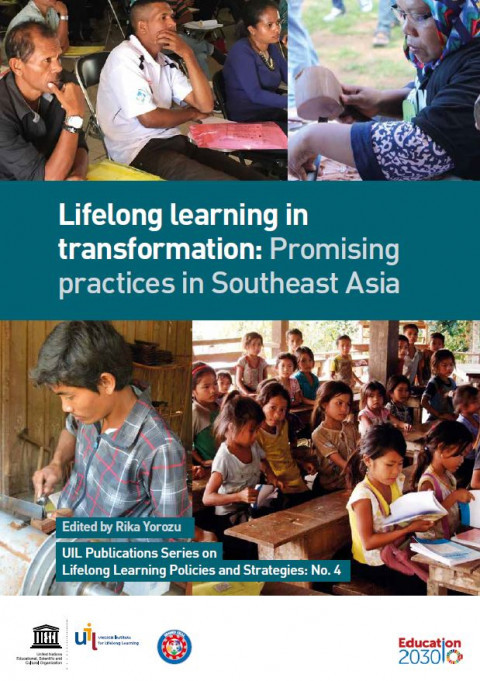 Lifelong Learning in Transformation: Promising Practices in Southeast Asia 出版年份: 2017 作者: Rika Yorozu 机构作者: UNESCO Institute for Lifelong Learning (UIL) This report is an outcome of a project on building a lifelong learning agenda in Southeast Asian countries, which aims to address the region’s remaining educational challenges in ensuring ‘inclusive and equitable quality education and promot[ing] lifelong learning opportunities for all’ (Goal 4 of the 2030 Agenda for Sustainable Development). By sharing promising policies and practices in implementing integrated lifelong learning from different perspectives, countries can learn from one another and move their visions for lifelong learning fully into practice. The publication documents a variety of promising practices from 11 countries, focusing particularly on the features critical to the promotion of lifelong learning for all; namely, inclusive and gender-responsive teaching and learning practices, recognition of learning outcomes from non-formal and informal learning, collaboration between social and economic development sectors and coherent national government policies and strategies. The report comprises three main sections: a reflection on lifelong learning in international and national documents, a collection of good practice drawn from their national reports, and a set of recommendations for policies and programmes promoting lifelong learning. It is hoped that these recommendations will stimulate discussion and new developments, in both policy and practice, in the region.
 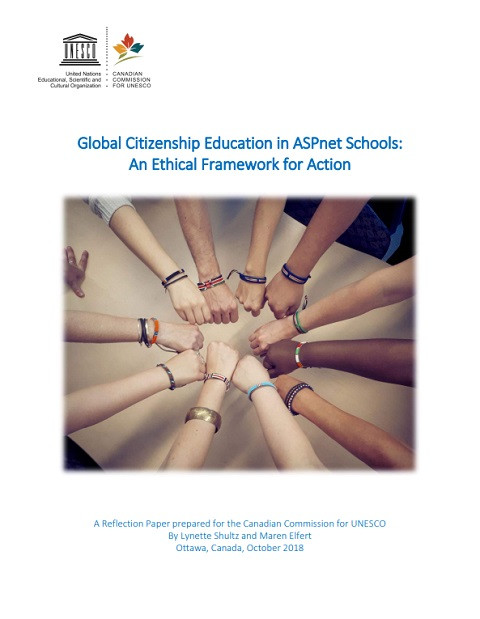 Global Citizenship Education in ASPnet Schools: An Ethical Framework for Action 出版年份: 2018 作者: Lynette Shultz | Maren Elfert 机构作者: Canadian Commission for UNESCO This report proposes global citizenship not so much as a curriculum subject or a pedagogical approach, but as an ethical position, a worldview that emphasizes human rights and earth rights, the interconnectedness of all human beings with each other, the animals and the planet, and an awareness of our global responsibilities in the face of the key challenges that we are facing today on our planet.This document is structured into three sections: It starts by introducing the UNESCO Associated Schools Network and the UNESCO perspective on global citizenship. In the second section, it shows the framework to implement GCED in schools, which will serve as the foundation for a whole school approach to the integration of a GCED perspective in curricula, lesson plans and broader school and community activities. It also gives some selected resources and examples in section three.
 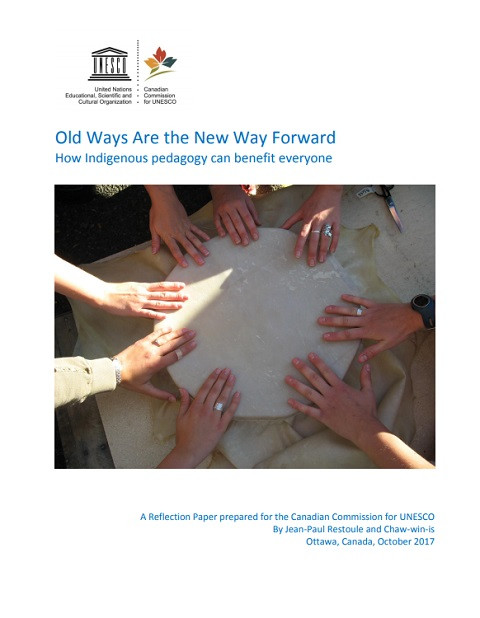 Old Ways Are the New Way Forward: How Indigenous Pedagogy Can Benefit Everyone 出版年份: 2017 作者: Jean-Paul Restoule | Chaw-win-is 机构作者: Canadian Commission for UNESCO This report explores traditional Indigenous ways of teaching and how they are the way forward for "new" innovations in education.
  Media and Information Literacy: Challenges and Opportunities for the World of Education 出版年份: 2019 作者: Carolyn Wilson 机构作者: Canadian Commission for UNESCO This paper explores media and information literacy and its importance to understanding democratic rights, active citizenship, and technological literacy. Filled with key concepts, sample questions, and additional resources, it is essential reading for both educators and the wider public.
 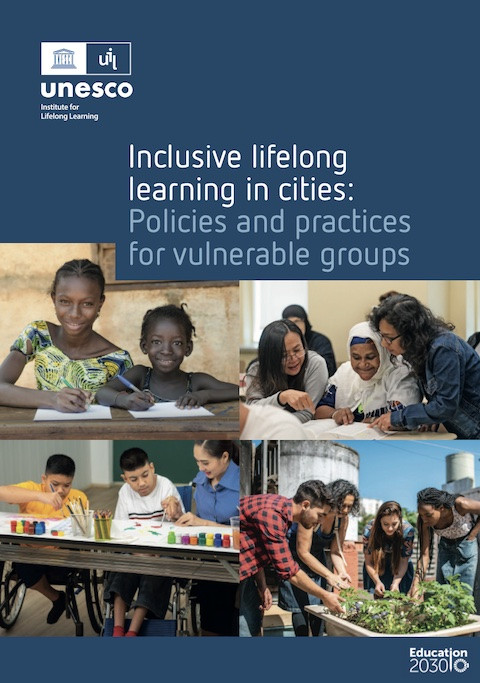 Inclusive Lifelong Learning in Cities: Policies and Practices for Vulnerable Groups 出版年份: 2021 机构作者: UNESCO Institute for Lifelong Learning (UIL) This publication features chapters on learning cities’ endeavours to promote inclusive lifelong learning for vulnerable groups. It is based on research papers prepared for the fourth International Conference on Learning Cities, which took place in 2019 in Medellín, Colombia, under the theme ‘Inclusion – A principle for lifelong learning and sustainable cities’ and hence marks a transition between the learning city conferences of 2019 and 2021.
  ESD Implementation in Learning Cities 出版年份: 2021 机构作者: UNESCO Institute for Lifelong Learning (UIL) This publication aims to share the best practice cases from nine cities on ESD implementation (policy and practice) following a lifelong learning approach. These cases showcase innovative local initiatives that have embedded ESD into lifelong learning systems through policy/ strategy development or project implementation, focusing on the following priority areas of action and local activities laid down in the ESD for 2030 roadmap: Local policy/strategy development on ESD: The development of an action plan that determines how the community as a whole can become a learning laboratory for sustainable development. Capacity-building for educators and local authorities: Lifelong learning initiatives for systematic and comprehensive ESD capacity development for educators in the formal and non-formal education sectors, and for local government officials. Efforts to foster engagement with local communities, including: • formal education institutions’ engagement with local communities for the promotion of ESD; • non-formal education institutions (e.g. community learning centres) serving as a hub for lifelong learning on ESD in their communities. Empowerment and mobilization of youth: Lifelong learning initiatives for ESD that focus on young people. Innovative use of local spaces for ESD: Designated areas or spaces that inspire learning and host projects that promote sustainability. In addition to the five priority areas listed above, the case studies share one cross-cutting theme: • Multi-stakeholder approach: How people from different walks of life or professional sectors come together to contribute to local ESD initiatives at either the policy or the project level.
  Global Inventory of Regional and National Qualifications Frameworks 2017, Vol. I: Thematic Chapters 出版年份: 2017 机构作者: European Centre for the Development of Vocational Training (CEDEFOP) | European Training Foundation (ETF) | UNESCO | UNESCO Institute for Lifelong Learning (UIL) The global inventory 2017 further strengthens the knowledge base on developments in national and regional qualifications frameworks, as implemented by countries and regions, by end of 2016. It acts as an observatory of progress in establishing NQFs, as well as the challenges and success factors in implementation. The thematic chapters (Volume I) discuss key trends and policy issues emerging from qualifications frameworks and learning outcomes reforms and developments. Volume II consists of NQF case studies of 100 countries from all continents and seven regional qualifications frameworks (RQF). The case studies look at the educational, social, economic and political context in which an NQF is embedded, main policy objectives, implementation of learning outcomes, stakeholder involvement and institutional arrangements. They also show how NQFs open for and link to validation arrangements, support recognition and learning pathways. They conclude with important lessons and future plans.The global inventory draws on inventories from four agencies: the European Centre for the Development of Vocational Training (Cedefop), the European Training Foundation (ETF), the United Nations Educational, Scientific and Cultural Organisation (UNESCO) and the UNESCO Institute for Lifelong Learning (UIL), working and communicating with country officials and experts. It also draws on extensive international research in qualifications reforms, comparability of qualifications, and use of learning outcomes.