
相关资源
探索丰富的全球公民教育资源,深化理解,促进研究、倡导、教学与学习。
共找到3,451条结果
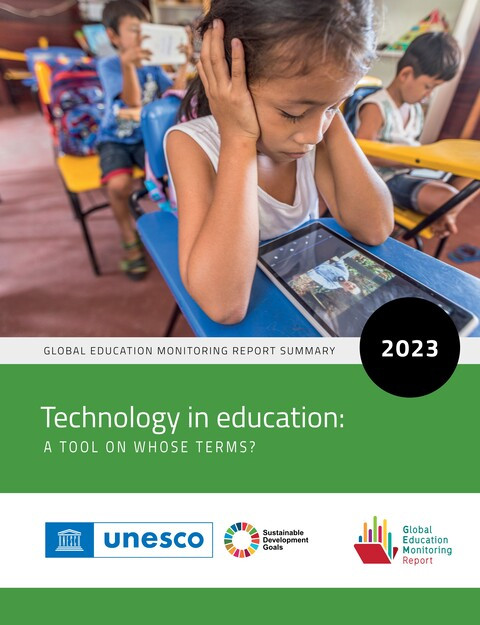 [Resumen] Resumen del informe de seguimiento de la educación en el mundo 2023: tecnología en la educación; ¿una herramienta en los términos de quién? 出版年份: 2023 机构作者: Organización de las Naciones Unidas para la Educación, la Ciencia y la Cultura (UNESCO) | Global Education Monitoring Report Team El papel de la tecnología en la educación lleva mucho tiempo suscitando intensos debates. ¿Democratiza el conocimiento o amenaza la democracia al permitir que unos pocos controlen la información? ¿Ofrece oportunidades ilimitadas o conduce a un futuro tecnodependiente sin retorno? ¿Nivela las desigualdades?¿Debe utilizarse en la enseñanza de niños pequeños o supone un riesgo para su desarrollo? El debate ha sido alimentado por el cierre de las escuelas debido al COVID-19 y la aparición de la inteligencia artificial generativa. Pero como los desarrolladores suelen ir un paso por delante de los responsables de la toma de decisiones, la investigación sobre tecnología educativa es compleja. Las pruebas sólidas e imparciales son escasas. ¿Se plantean las sociedades las preguntas adecuadas sobre la educación antes de recurrir a la tecnología como solución? ¿Reconocen sus riesgos mientras buscan sus beneficios? Las tecnologías de la información y la comunicación pueden contribuir a la equidad y la inclusión para llegar a los alumnos desfavorecidos y difundir más conocimientos en formatos atractivos y asequibles. En determinados contextos y para algunos tipos de aprendizaje, puede mejorar la calidad de la enseñanza y el aprendizaje de las competencias básicas. En cualquier caso, las competencias digitales se han convertido parte de un paquete de habilidades básicas. La tecnología digital también puede respaldar la gestión y aumentar la eficiencia, ayudando a manejar volúmenes más grandes de datos educativos. Pero la tecnología también puede excluir y ser irrelevante y onerosa, cuando no directamente perjudicial. Los gobiernos deben garantizar las condiciones adecuadas para permitir un acceso equitativo a la educación para todos, regular el uso de la tecnología para proteger a los alumnos de sus influencias negativas y preparar a los profesores. Este informe recomienda que la tecnología se introduzca en la educación sobre la base de pruebas que demuestren que sería apropiada, equitativa, escalable y sostenible. En otras palabras, su uso debe estar en el mejor interés de los estudiantes y debe complementar la interacción cara a cara con los profesores. Debe verse como una herramienta a utilizar en estos términos. A medio camino de la fecha límite, el Informe de seguimiento de la educación en el mundo 2023 evalúa la distancia que queda por recorrer para alcanzar los objetivos educativos de 2030. La educación es la clave para alcanzar otros objetivos de desarrollo, entre ellos el del progreso tecnológico.
  Greening Curriculum Guidance: Teaching and Learning for Climate Action 出版年份: 2024 机构作者: UNESCO This Guidance responds to the calls from young people for a holistic approach to climate change and sustainability in the curriculum. It outlines a common language on how quality climate change and sustainability can be reflected in the curriculum by setting expected learning outcomes per age group (from 5-year olds and up to 18+ age group, including a lifelong learning approach).This is crucial for accelerating country-level action and ensuring joint monitoring of progress. The objective is to have 90 per cent of all countries include climate change in their curricula by 2030, as established by the Greening Education Partnership.This Guidance aims to support countries, schools or individual practitioners in reassessing their ongoing practices to adopt a more action-oriented, holistic, scientifically accurate, justice-driven and lifelong learning approach to climate change.
  Guía para hacer verdes los currículos: enseñanza y aprendizaje para la acción climática 出版年份: 2025 机构作者: Organización de las Naciones Unidas para la Educación, la Ciencia y la Cultura (UNESCO) Hacer verdes los currículos con el fin de preparar a todos los estudiantes para el cambio climático. La educación es una herramienta poderosa para transformar el mundo e impulsar la acción contra el cambio climático a largo plazo.Esta guía responde a los llamados de las juventudes en favor de un enfoque holístico del cambio climático y la sostenibilidad en los planes de estudio. Define un lenguaje en común sobre cómo debe reflejarse con calidad el cambio climático y la sostenibilidad en los planes de estudio, mediante el establecimiento de los resultados de aprendizaje esperados por grupo etario (grupos de 5 años hasta mayores de 18 años, incluyendo un enfoque de aprendizaje a lo largo de toda la vida).Esto es crucial para acelerar la acción a nivel de los países y garantizar el seguimiento conjunto de los progresos. La meta es lograr que el 90 por ciento de todos los países incluyan el cambio climático en sus planes de estudio para el año 2030, según lo establecido por la Alianza para una Educación Verde.Esta guía tiene el propósito de apoyar a países, escuelas y profesionales en la revisión de las prácticas que tienen en marcha para adoptar un enfoque del cambio climático más orientado a la acción, holístico, científicamente preciso, impulsado por la justicia y con una perspectiva de aprendizaje a lo largo de toda la vida.
 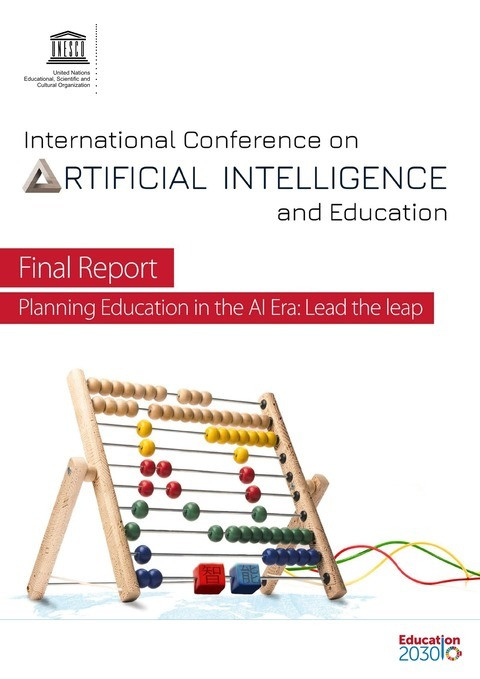 International Conference on Artificial Intelligence and Education, Planning Education in the AI Era: Lead the Leap; Final Report 出版年份: 2019 机构作者: UNESCO The current report is an exhaustive account of the discussion and debate at the International Conference on Artificial Intelligence and Education (hereafter referred to as ‘the conference’) held in Beijing from 16 to 18 May 2019. Under the overarching theme of ‘Planning Education in the AI Era: Lead the Leap’, the conference was structured into seven plenary sessions and 16 breakout sessions complemented by a live exhibition and study tours to facilitate forwardlooking debates, share cutting-edge knowledge and AI solutions, and deliberate on sector-wide strategies.
 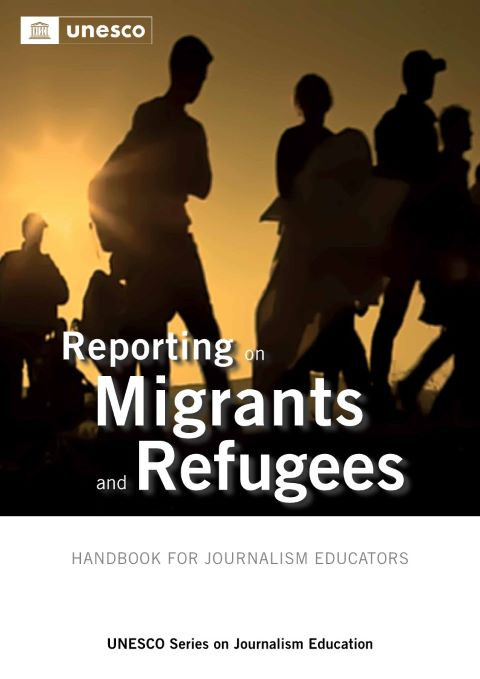 Couvrir les migrations et les réfugiés : manuel pour les formateurs en journalisme 出版年份: 2023 机构作者: Organisation des Nations Unies pour l'éducation, la science et la culture (UNESCO) Couvrir les migrations : Un défi pour les formateurs en journalisme du monde entier Ce manuel permet aux formateurs en journalisme du monde entier de relever l'un des défis du XXIe siècle : la migration et le déplacement forcé. Cet ensemble de treize modules constitue un cursus complet. Il couvre tous les aspects nécessaires pour enseigner l'analyse, la recherche documentaire, la mise en forme, le démarchage des organes de presse et l'éthique de la couverture des migrations. Unique en son genre, il intègre les connaissances issues des champs de la communication et des sciences politiques et sociales. Il a été conçu par un groupe international et interculturel de chercheurs, de formateurs et de journalistes.Les enseignants seront à même de lancer un programme d'études innovant. Les étudiants apprendront que les questions de migration et de déplacement forcé concernent des êtres humains et nécessitent donc une connaissance et une attention particulière à l'exactitude des faits, à la fiabilité des sources, à l'éthique de la collecte d'informations et aux bonnes pratiques en la matière. Les journalistes expérimentés y trouveront un outil d'auto-apprentissage. Quant aux organisations de développement des médias, elles pourront intégrer le cursus à leurs plans de formation.Cette initiative vise à couvrir de manière plus complète les questions relatives aux migrants et aux réfugiés dans les pays d'origine, de transit et de destination, pour que puisse s’instaurer un débat public plus équilibré et plus éclairé à travers le monde et les cultures. Cubrir la migración: Un desafío para los educadores/as Репортажи о мигрантах и беженцах: Руководство для преподавателей журналистики 出版年份: 2023 机构作者: Организация Объединенных Наций по вопросам образования, науки и культуры (UNESCO) Освещение миграции: Вызов для преподавателей журналистики во всем мире Это руководство позволяет преподавателям журналистики во всем мире решать одну из проблем 21 века проблемы миграции и беженцев. В наборе из тринадцати модулей преподавателям журналистики предлагается комплексная учебная программа. Она охватывает все аспекты, необходимые для обучения анализу, исследованиям, презентации, маркетингу и этике освещения миграции.Справочник уникален тем, что в нем собраны результаты исследований в области коммуникации, а также политических и социальных наук. Он был разработан международной и межкультурной группой исследователей медиа, медиапедагогов и медиапрактиков.Преподаватели журналистики получат возможность запустить новую учебную программу. Студенты-журналисты узнают, что вопросы миграции и вынужденного перемещения касаются человека и поэтому требуют знания и осведомленности о точных фактах, надежных источниках, этичном освещении и надлежащей практике. Опытные журналисты получат пользу от использования этого тома в качестве инструмента самообучения, а организации по развитию СМИ могут адаптировать учебную программу к своим учебным планам.Проект повлияет на более полное освещение вопросов мигрантов и беженцев в странах происхождения, транзита и назначения, а также на более сбалансированные и информированные общественные дебаты в разных странах и культурах.
  Mapping Cultural Policies in Small Island Developing States: Amplifying SIDS Voices in the Global Policy Dialogue on Culture and Sustainable Development 出版年份: 2025 机构作者: UNESCO Mapping Cultural Policies in Small Island Developing StatesSpanning three sub-regions – the Atlantic, Indian Ocean and South China Sea (AIS), the Caribbean, and the Pacific – the Small Island Developing States (SIDS) represent 39 UNESCO Member States and 9 Associate Members. Countries and regional organizations have increasingly demonstrated their commitment in the context of fast-evolving policy landscape and cultural ecosystems, encompassing the different dimensions of culture through its diversity and a wide spectrum of concerned stakeholders. Today, a SIDS-specific, culture-led development vision is on the rise.Culture has a multifaceted impact on sustainable development pathways of the SIDS, from climate action, biodiversity protection and food security to economic diversification, social inclusion, gender equality or urban sustainability. The voices and aspirations of SIDS must be heard in the global policy dialogue, in acknowledgement of their priorities, opportunities and insights. International cooperation efforts by UNESCO and other organizations are also essential in identifying areas for future policy investment and adaptation at the national and regional levels.Following the UNESCO World Conference on Cultural Policies and Sustainable Development – MONDIACULT 2022, SIDS are championing culture for sustainable development towards the adoption of a new Programme of Action, the Antigua and Barbuda Agenda for SIDS 2024-2034.
 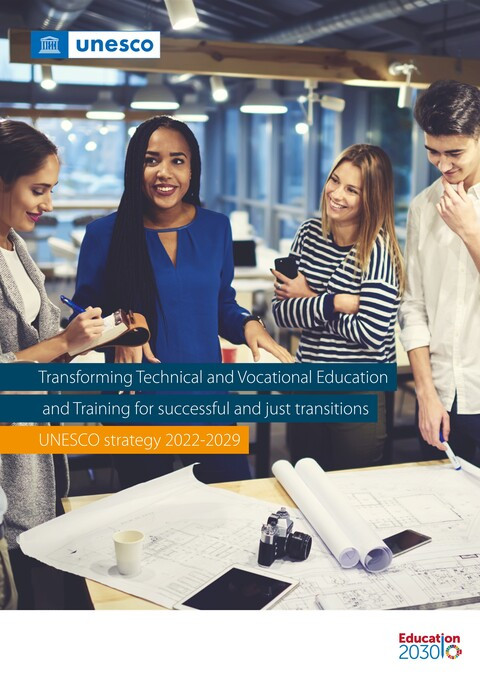 Transformer l’enseignement et la formation techniques et professionnels pour des transitions réussies et justes: Stratégie UNESCO 2022-2029 出版年份: 2022 机构作者: Organisation des Nations Unies pour l'éducation, la science et la culture (UNESCO) Cette Stratégie couvrant la période 2022 à 2029 guide l’UNESCO pour promouvoir le développement des compétences en vue de l’autonomisation, de l’emploi productif et du travail décent, et faciliter la transition vers des économies et des sociétés plus numériques, vertes et inclusives. Conformément aux Objectifs de développement durable, à l’Agenda 2030 pour l’éducation et aux recommandations du Sommet sur la transformation de l’éducation, l’UNESCO soutiendra la transformation de l’enseignement et de la formation techniques et professionnels dans tous les États membres et travaillera aux côtés de partenaires bilatéraux et multilatéraux, des institutions, des gouvernements, du secteur privé et des éducateurs du monde entier pour placer l’EFTP en tête de l’agenda de l’éducation. Il est évident que des efforts collectifs doivent être mis en place pour donner aux jeunes et aux adultes les instruments pour acquerir de nouvelles compétences, tout en les aidant à libérer leur potentiel pour naviguer avec succès dans les changements sociaux, économiques et environnementaux que connait le monde. Преобразование технического и профессионального образования и подготовки для успешной и справедливой трансформации : Стратегия ЮНЕСКО на 2022-2029 гг. 出版年份: 2022 机构作者: Организация Объединенных Наций по вопросам образования, науки и культуры (UNESCO) Эта стратегия, охватывающая период 2022-2029 гг., помогает ЮНЕСКО содействовать развитию навыков для расширения прав и возможностей, продуктивной занятости и достойной работы, а также содействовать переходу к более цифровым, зеленым и инклюзивным экономикам и обществам. В соответствии с Целями Устойчивого Развития, программой «Образование 2030» и рекомендациями Саммита «Преобразование образования», ЮНЕСКО поддержит преобразование технического и профессионального образования и подготовки во всех государствахчленах и будет работать в двухстороннем и многостороннем порядке с партнерами, учреждениями, правительствами, частным сектором и педагогами со всего мира, чтобы поднять ТПОП в приоритеты программ по образованию. Очевидно, что необходимо приложить коллективные усилия, чтобы вооружить молодежь и взрослых новыми навыками и помочь им раскрыть свой потенциал для успешного ориентирования в социальных, экономических и экологических изменениях, которые происходят в мире. 变革职业技术教育与培训 实现成功和公正的转型 联合国教科文组织战略 2022–2029年 出版年份: 2022 机构作者: 联合国教科文组织 (UNESCO) 本战略时限涵盖2022年至2029年,指导联合国教科文组织推动技能开发工作,以提升能力,支持生产性就业和体面工作,并推动经济和社会向更加数字化、更加绿色化、更具包容性的方向转型。 根据可持续发展目标、2030年教育议程和教育变革峰会的建议,联合国教科文组织将支持所有成员国的职业技术教育与培训转型,并携手世界各地的双边及多边伙伴、机构、政府、私营部门及教育者,将职业技术教育与培训作为教育议程的最优先工作。 显而易见,各方必须做出共同努力,让青年和成人掌握新技能,并帮助他们释放潜能以便在世界正经历的社会、经济及环境变革中顺利前进。