
相关资源
探索丰富的全球公民教育资源,深化理解,促进研究、倡导、教学与学习。
共找到3,438条结果
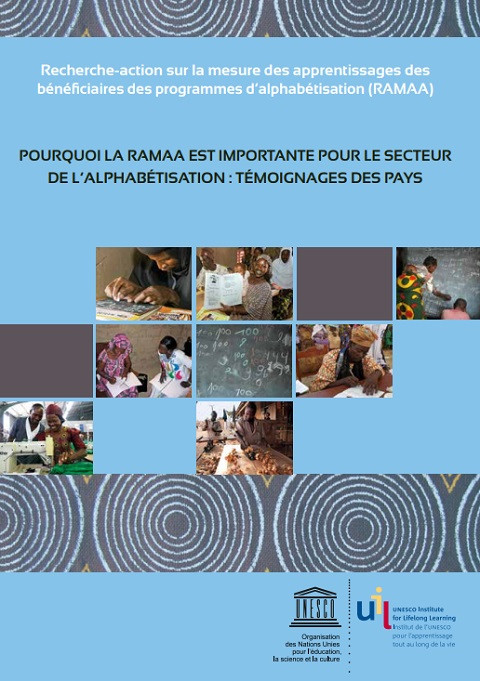 Why RAMAA Is Important for Literacy: Testimonies From Participating Countries; Action Research on Measuring Literacy Programme Participants’ Learning Outcomes (RAMAA) 出版年份: 2016 机构作者: UNESCO Institute for Lifelong Learning (UIL) The RAMAA action research, launched at the initiative of the UNESCO Institute for Lifelong Learning (UIL), and piloted in partnership with local UNESCO offices, responds to this vital need to assess the quality of literacy programmes by taking the learning effectively acquired by the beneficiaries at the end of their training as an objective variable.The first phase of RAMAA involved five countries, now twelve countries are participating in the second phase of RAMAA – Benin, Burkina Faso, Cameroon, Côte d'Ivoire, Central African Republic, Democratic Republic of Congo, Morocco, Mali, Niger, Senegal, Chad and Togo. The countries’ commitment throughout the implementation of the second phase of RAMAA and the integration of the results into the national systems are key to the project. Pourquoi la RAMAA est importante pour le secteur de l'alphabétisation: Témoignages des pays; Recherche-action sur la mesure des apprentissages des bénéficiaires des programmes d'alphabétisation (RAMAA) 出版年份: 2016 机构作者: UNESCO Institute for Lifelong Learning (UIL) La Recherche-action RAMAA, lancée à l’initiative de l’Institut de l’UNESCO pour l’apprentissage tout au long de la vie (UIL), et pilotée en partenariat avec les bureaux UNESCO répond à ce besoin vital d’évaluer la qualité des programmes d’alphabétisation en prenant comme variable objective les apprentissages réellement acquis par les bénéficiaires à la sortie de leur formation.La première phase de la RAMAA comptait cinq pays, douze pays sont désormais engagés dans la deuxième phase de la RAMAA - Bénin, Burkina Faso, Cameroun, Côte d’Ivoire, République centrafricaine, République démocratique du Congo, Maroc, Mali, Niger, Sénégal, Tchad et Togo. L’engagement des pays tout au long de la mise en œuvre de la deuxième phase de la RAMAA et l’intégration des résultats dans les dispositifs nationaux deviennent impératifs.
 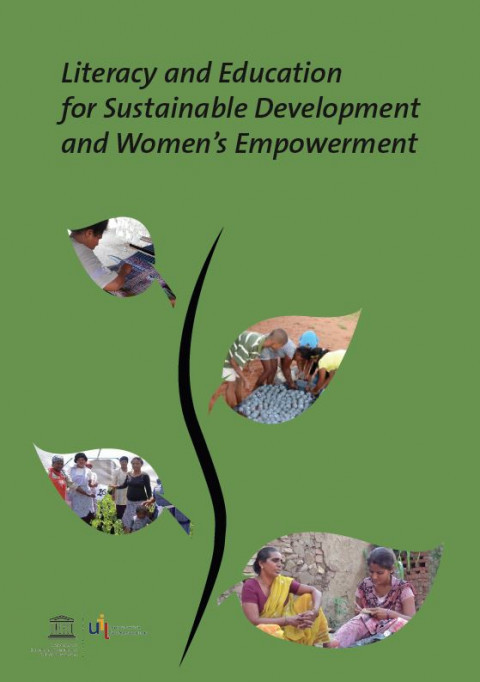 Literacy and education for sustainable development and women's empowerment 出版年份: 2014 作者: Anna Robinson-Pant 机构作者: UNESCO Institute for Lifelong Learning (UIL) The fact that women constitute two-thirds of the world’s non-literate population has been a cause for concern for several decades now. Despite a number of high-profile literacy interventions specifically targeting women – including UNESCO’s LIFE initiative – the disparity between male and female literacy rates persists in many countries of the world (UIL, 2013). This starting point for thinking about women’s literacy has however often led to a narrow focus on literacy access and outcomes. Whilst educational policy makers and planners have attempted to identify and overcome barriers to women’s participation, researchers have directed their attention to measuring the social and economic benefits of women’s literacy (see Robinson-Pant, 2004). Statistical correlations have been presented as evidence of the impact of women’s literacy: for instance, in Pakistan, women with a high level of literacy earned 95% more than women with no literacy skills yet there was only a 33% differential amongst men (UNESCO 2012: 196).Barriers to participation have been analysed in terms of structural (timing, location, women-only versus mixed gender) and social (marriage, poverty, language hierarchies) factors (see Ballara 1991). Within such analysis however, little attention has been given to the social processes associated with literacy learning and development. By contrast, this paper sets out to take a wider lens on literacy in order to explore not only ‘what works’ in practical terms of encouraging women to participate programmes, but also to look at how and why literacy programmes can contribute to sustainable development and processes of empowerment. Taking this perspective on women’s literacy involves asking alternative questions from the more usual ‘how can we make more women literate?’ Approaching literacy through the lens of sustainable development and women’s empowerment means that we develop a more nuanced understanding of how different kinds of literacy emerge from or support different development approaches and how women engage with such processes of change.How is literacy related to sustainable development programmes? What does empowerment mean to different women in different situations? What kind of research evidence and knowledge are literacy programmes and policy building on? How can adult learning facilitate economic, social and environmental change? These larger questions will guide the conceptual exploration of sustainable development, women’s empowerment and literacy, as well as the review of literacy programmes presented in this paper. The starting assumption is that only by looking in depth at the processes of literacy learning and development practice can we begin to address the challenge of narrowing the gender gap in literacy attainment.
 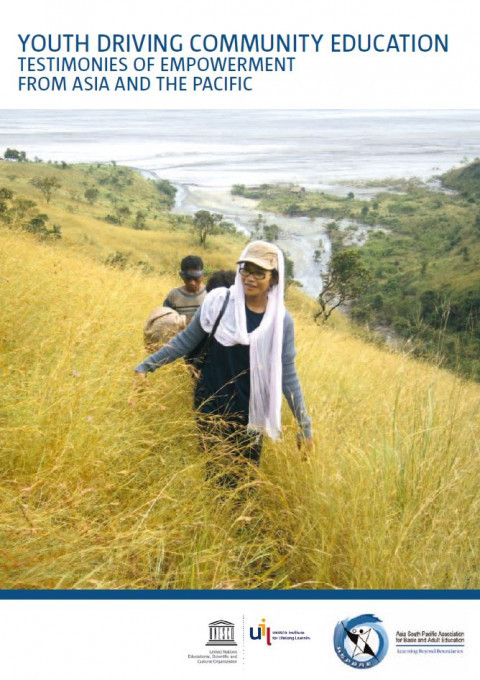 Youth Driving Community Education: Testimonies of Empowerment from Asia and the Pacific 出版年份: 2014 机构作者: UNESCO Institute for Lifelong Learning (UIL) | Asia South Pacific Association for Basic and Adult Education (ASPBAE) This publication presents a collection of testimonies from young women and men from vulnerable backgrounds who have transformed their lives through community education and development activities. Their testimonies describe the challenges they faced in pursuing an education, how they benefited from community education programmes, and the active roles they now play in community education and development.The publication will meet its objectives if it inspires young people and their partners to take action to:> Improve educational and learning environments for young men and women;> Improve the participation of young women in community building and democratic processes; and> Engage young men and women as active citizens working towards peace, democracy and sustainable development.
  Alfabetización para el desarrollo sostenible y el empoderamiento de las mujeres 出版年份: 2014 作者: Anna Robinson-Pant 机构作者: UNESCO Institute for Lifelong Learning (UIL) The fact that women constitute two-thirds of the world’s non-literate population has been a cause for concern for several decades now. Despite a number of high-profile literacy interventions specifically targeting women – including UNESCO’s LIFE initiative – the disparity between male and female literacy rates persists in many countries of the world (UIL, 2013). This starting point for thinking about women’s literacy has however often led to a narrow focus on literacy access and outcomes. Whilst educational policy makers and planners have attempted to identify and overcome barriers to women’s participation, researchers have directed their attention to measuring the social and economic benefits of women’s literacy (see Robinson-Pant, 2004). Statistical correlations have been presented as evidence of the impact of women’s literacy: for instance, in Pakistan, women with a high level of literacy earned 95% more than women with no literacy skills yet there was only a 33% differential amongst men (UNESCO 2012: 196). Barriers to participation have been analysed in terms of structural (timing, location, women-only versus mixed gender) and social (marriage, poverty, language hierarchies) factors (see Ballara 1991). Within such analysis however, little attention has been given to the social processes associated with literacy learning and development. By contrast, this paper sets out to take a wider lens on literacy in order to explore not only ‘what works’ in practical terms of encouraging women to participate programmes, but also to look at how and why literacy programmes can contribute to sustainable development and processes of empowerment. Taking this perspective on women’s literacy involves asking alternative questions from the more usual ‘how can we make more women literate?’ Approaching literacy through the lens of sustainable development and women’s empowerment means that we develop a more nuanced understanding of how different kinds of literacy emerge from or support different development approaches and how women engage with such processes of change. How is literacy related to sustainable development programmes? What does empowerment mean to different women in different situations? What kind of research evidence and knowledge are literacy programmes and policy building on? How can adult learning facilitate economic, social and environmental change? These larger questions will guide the conceptual exploration of sustainable development, women’s empowerment and literacy, as well as the review of literacy programmes presented in this paper. The starting assumption is that only by looking in depth at the processes of literacy learning and development practice can we begin to address the challenge of narrowing the gender gap in literacy attainment. Alphabétisation et éducation pour le développement durable et l'autonomisation des femmes 出版年份: 2014 作者: Anna Robinson-Pant 机构作者: UNESCO Institute for Lifelong Learning (UIL) The fact that women constitute two-thirds of the world’s non-literate population has been a cause for concern for several decades now. Despite a number of high-profile literacy interventions specifically targeting women – including UNESCO’s LIFE initiative – the disparity between male and female literacy rates persists in many countries of the world (UIL, 2013). This starting point for thinking about women’s literacy has however often led to a narrow focus on literacy access and outcomes. Whilst educational policy makers and planners have attempted to identify and overcome barriers to women’s participation, researchers have directed their attention to measuring the social and economic benefits of women’s literacy (see Robinson-Pant, 2004). Statistical correlations have been presented as evidence of the impact of women’s literacy: for instance, in Pakistan, women with a high level of literacy earned 95% more than women with no literacy skills yet there was only a 33% differential amongst men (UNESCO 2012: 196). Barriers to participation have been analysed in terms of structural (timing, location, women-only versus mixed gender) and social (marriage, poverty, language hierarchies) factors (see Ballara 1991). Within such analysis however, little attention has been given to the social processes associated with literacy learning and development. By contrast, this paper sets out to take a wider lens on literacy in order to explore not only ‘what works’ in practical terms of encouraging women to participate programmes, but also to look at how and why literacy programmes can contribute to sustainable development and processes of empowerment. Taking this perspective on women’s literacy involves asking alternative questions from the more usual ‘how can we make more women literate?’ Approaching literacy through the lens of sustainable development and women’s empowerment means that we develop a more nuanced understanding of how different kinds of literacy emerge from or support different development approaches and how women engage with such processes of change. How is literacy related to sustainable development programmes? What does empowerment mean to different women in different situations? What kind of research evidence and knowledge are literacy programmes and policy building on? How can adult learning facilitate economic, social and environmental change? These larger questions will guide the conceptual exploration of sustainable development, women’s empowerment and literacy, as well as the review of literacy programmes presented in this paper. The starting assumption is that only by looking in depth at the processes of literacy learning and development practice can we begin to address the challenge of narrowing the gender gap in literacy attainment.
  Addressing Global Citizenship Education in Adult Learning and Education; Summary Report 出版年份: 2019 作者: Christiana Nikolitsa-Winter | Werner Mauch | Philippe Maalouf 机构作者: UNESCO Institute for Lifelong Learning (UIL) | APCEIU The Asia-Pacific Centre of Education for International Understanding (APCEIU) has published the summary report on Addressing Global Citizenship Education in Adult Learning and Education (ALE) in partnership with UNESCO Institute for Lifelong Learning (UIL). In regard to GCED in ALE the publication looks at the developments, gaps and challenges in Finland, Mauritania, the Republic of Korea, South Africa, and Uruguay and highlights a number of good practices in the field. As the role of ALE and GCED has been emphasized in realizing the 2030 Sustainable Development Agenda, it aims to raise awareness of the significance of GCED in ALE and to inspire various stakeholders to develop and strengthen this field of education. ForewordIntroduction Part I: Thematic Studies Global citizenship education(GCED): Conceptual considerationsRealizing the 2030 Sustainable Development Agenda: The role of GCED in ALEALE’s contribution to fostering GCED - ALE as GCEDLiteracy: The foundation of ALE and GCED - Contribution of adult literacy programmes to GCED outcomes - GCED in ALE: Global trends and outcomesProfessionalization of adult educators in GCED - Competency framework for adult educators in GCED - Curriculum framework for adult educators in GCED - Examples of curricula for adult educatorsConclusion on the thematic studies Part II: Case Studies GCED in ALE: Case studies from the five UNESCO regions - State of the art of ALE in the five countries - Legal frameworks and discourse - Selected ALE programmes and mechanisms that touch on GCED in the case studies - Professionalizing ALE educators as a means of fostering GCED in ALE: examples - Key outcomes of the country case studies - Addendum: GCED in ALE as a response to acute need - The BEF Alpha programme Conclusion and way forwardBibliography
  4th Global Report on Adult Learning and Education: Leave No One Behind: Participation, Equity and Inclusion 出版年份: 2019 机构作者: UNESCO Institute for Lifelong Learning (UIL) This report demonstrates the important role participation in adult learning and education can play in achieving the Sustainable Development Goals, highlights the distance we have to travel, and offers clear guidance on how to move forward. As the report clearly also shows, it is only by prioritizing ALE, and rebalancing resources accordingly, that can we ensure that the commitment of the 2030 Agenda to ‘leave no one behind’ in the pursuit of equitable, inclusive and sustainable development is fully and fairly realized. 4e rapport mondial sur l’apprentissage et l’éducation des adultes: ne laisser personne pour compte: participation, équité et inclusion 出版年份: 2019 机构作者: Institut de l’UNESCO pour l’apprentissage tout au long de la vie (UIL) Le présent rapport démontre le rôle crucial que la participation à l’apprentissage et à l’éducation des adultes peut jouer dans la réalisation des objectifs de développement durable, souligne la distance qu’il nous reste à parcourir pour y parvenir et propose des orientations claires sur la manière d’aller de l’avant. Il ressort clairement du GRALE 4 que, ce n’est qu’en accordant la priorité à l’apprentissage et à l’éducation des adultes et en rééquilibrant les ressources en conséquence, que nous réussirons à réaliser pleinement et justement l’engagement à travers le Programme de développement durable à l’horizon 2030 de « ne laisser personne pour compte » dans notre quête d’un développement équitable, inclusif et durable.
  Optimising learning, education and publishing in Africa: the language factor; a review and analysis of theory and practice in mother-tongue and bilingual education in sub-Saharan Africa 出版年份: 2011 作者: Adama Ouane | Christine Glanz 机构作者: UNESCO Institute for Lifelong Learning (UIL) | Association for the Development of Education in Africa (ADEA) This analytical review consists of three sections. The first section lays the theoretical foundations and is covered by Ekkehard Wolff and Kathleen Heugh: 1) language politics and planning in the light of development and 2) theories of bi- and multilingual education models and their implementation in the African context. A second section analyses teaching practices and classroom interaction in schools in two chapters by Birgit Brock-Utne and Hassana Alidou. This is followed by a review of the use of African languages in literacy and non-formal education by Hassana Alidou1 . Next, a review study by Kathleen Heugh addresses the critical issue of costs by assessing the costs related to implementing mother tongue and strong bilingual education programmes. Finally, the third section explores the role of locally-based multilingual publishing in supporting and promoting African languages and developing the language industries and the creative sector. Here, Yaya Satina Diallo from Guinea and Peter Reiner2 from Namibia shed light on the promise and pitfalls of publishing in African languages.Each of these sections focuses on theoretical frameworks and specific strategies designed to optimise learning and education in multilingual Africa. The language issue is dealt with at the levels of: policy and development; costing and financing; educational reform and governance; education models; classroom interaction; formal and non-formal education settings; literacy and publishing.