
相关资源
探索丰富的全球公民教育资源,深化理解,促进研究、倡导、教学与学习。
共找到3,225条结果
 Measuring Intercultural Dialogue: A Conceptual and Technical Framework 出版年份: 2020 作者: Ciara Aucoin | Euan Mackway-Jones | Marcel Smits 机构作者: UNESCO | Institute for Economics and Peace The challenges of addressing growing diversity have amply demonstrated that this vision is needed now more than ever. We all have much to gain from more open and connected societies yet misunderstanding, exclusion and discrimination continue to push identity and culture-based grievances towards conflict and violence, challenging the very foundations of sustainable and inclusive development.This report represents a first step in the UNESCO-IEP joint initiative to strengthen the evidence-base on dialogue for peace and development. Through mobilizing better data on effective dialogue, it is our sincere hope that policymakers and practitioners can better support meaningful and transformative dialogue, holistically supporting the aspirations of the 2030 Agenda. Through this, we hope to elevate dialogue as a connecting enabler of all pillars of UN action, accelerating progress towards the Sustainable Development Goals and making good on the promise of ‘leaving no one behind’. Mesurer le dialogue interculturel: cadre conceptuel et technique 出版年份: 2020 作者: Ciara Aucoin | Euan Mackway-Jones | Marcel Smits 机构作者: UNESCO | Institute for Economics and Peace Les défis rencontrés pour tenir compte de la diversité croissante ont amplement démontré que cette vision était plus que jamais nécessaire. Nous avons tous beaucoup à gagner de sociétés plus ouvertes et plus connectées, mais l’incompréhension, l’exclusion et la discrimination continuent de nourrir les griefs identitaires et culturels conduisant au conflit et à la violence, en remettant en question les fondements mêmes du développement durable et inclusif.Ce rapport représente une première étape dans l’initiative conjointe UNESCO-IEP visant à renforcer la base de données factuelles sur le dialogue pour la paix et le développement. En favorisant la collecte de données de meilleure qualité sur un dialogue efficace, nous espérons sincèrement que les décideurs politiques et les spécialistes pourront mieux soutenir un dialogue constructif et transformateur, afin d’appuyer de manière globale les objectifs du Programme 2030. Ainsi, nous espérons faire du dialogue un élément essentiel commun à tous les piliers de l’action des Nations Unies, afin d’accélérer les progrès vers la réalisation des objectifs de développement durable et de la promesse de « ne laisser personne de côté ».
  Les femmes prennent la parole (Le Courrier de l’UNESCO no. 2, Juillet-septembre 2020) 出版年份: 2020 机构作者: UNESCO Politologues, journalistes, sociologues, chercheuses, écrivaines ou enseignantes dessinent les contours de l’après-pandémie, qu’il s’agisse de l’avenir des musées, des mutations de l’école, des dérives de l’information ou encore des enjeux de la recherche.Ce numéro trace un portrait en creux de notre époque, souligne les lignes de fracture que la crise sanitaire a mises à nu et montre l’ampleur des défis à relever. Il souligne aussi le potentiel de coopération scientifique, culturelle, éducative que cet événement inédit a révélé. Si les réflexions, le désir de changement et les mouvements d’entraide qui se sont manifestés ne restent pas sans lendemain, le monde pourrait réellement devenir plus solidaire, plus durable et plus égalitaire.
  Teaching Journalism for Sustainble Development: New syllabi 出版年份: 2015 作者: Banda Fackson 机构作者: UNESCO This work aims to expand the curriculum of UNESCO in education in journalism and includes new curricula covering current topics in the field of journalism education around the world. The document was prepared on the basis of standard curricula, as well as additional UNESCO publications under the general title “Collection of new curricula” in order to effectively respond to new problems faced by specialists and teachers in the field of journalism. Обучение журналистике в целях устойчивого развития: Новые учебные планы 出版年份: 2015 作者: Banda Fackson 机构作者: UNESCO Данная работа направлена на расширение учебных программ ЮНЕСКО по образованию в области журналистики и включает новые учебные планы охватывающие актуальные темы в области журналистского образования во всем мире. Документ подготовлен на основе типовых учебных программ, а также дополнительных публикаций ЮНЕСКО под общим названием «Сборник новых учебных программ», чтобы эффективно реагировать на новые проблемы, стоящие перед специалистами и преподавателями в области журналистики.
 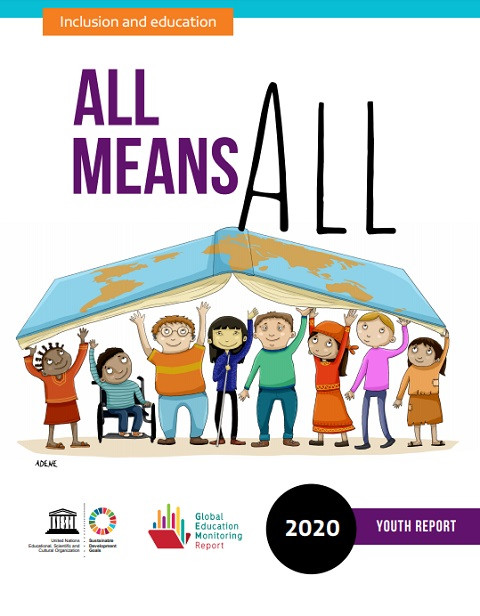 Youth Report 2020: Inclusion and Education; All Means All 出版年份: 2020 机构作者: UNESCO | Global Education Monitoring Report Team This Youth Report is designed to help you learn about the social, economic and cultural factors that cause vulnerable children, youth and adults to be discriminated against and marginalized in education. It tells the stories of the people who fight to ensure that everyone is included in education, and of those who fought to uphold their own right to education. It brings to life the recommendations of the 2020 Global Education Monitoring Report: Inclusion and education: All means all and calls on youth and teachers to share and discuss the stories and messages, to use them in campaigns and as a teaching tool in class. An open letter to education ministers is included calling, for education systems to be built back more inclusive after the school closures during Covid-19.
 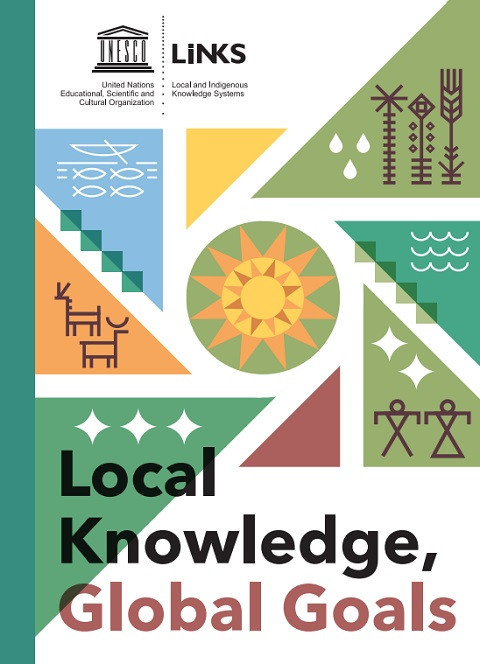 Local Knowledge, Global Goals 出版年份: 2017 作者: Douglas Nakashima | Jennifer Rubis | Peter Bates | Bárbara Ávila 机构作者: UNESCO Local and indigenous knowledge refers to the understandings, skills and philosophies developed by societies with long histories of interaction with their natural surroundings. For rural and indigenous peoples, local knowledge informs decision-making about fundamental aspects of day-to-day life. This knowledge is integral to a cultural complex that also encompasses language, systems of classification, resource use practices, social interactions, rituals and spirituality. These unique ways of knowing are important components of the world’s cultural diversity, and contribute to the achievement of Agenda 2030 and the Paris Agreement. Conocimientos locales, objetivos globales 出版年份: 2017 作者: Douglas Nakashima | Jennifer Rubis | Peter Bates | Bárbara Ávila 机构作者: UNESCO Los conocimientos locales e indígenas se refieren a las concepciones, habilidades y filosofías que las sociedades han desarrollado a lo largo de generaciones y de una larga interacción con su entorno natural. Para los pueblos rurales e indígenas, los conocimientos locales orientan la toma de decisiones sobre aspectos fundamentales de la vida cotidiana. Estos conocimientos forman parte integrante de un complejo cultural que incluye el idioma, los sistemas de clasificación, las prácticas relacionadas con el uso de los recursos, las interacciones sociales, los rituales y la espiritualidad. Estas formas de conocimiento excepcionales son elementos importantes de la diversidad cultural mundial, y contribuyen a la ejecución de la Agenda 2030 y el Acuerdo de París. Savoirs locaux, objectifs globaux 出版年份: 2017 作者: Douglas Nakashima | Jennifer Rubis | Peter Bates | Bárbara Ávila 机构作者: UNESCO Les savoirs locaux et autochtones font référence aux connaissances, compétences et philosophies développées par des sociétés interagissant depuis de multiples générations avec leur environnement naturel. Pour les populations rurales et autochtones, les savoirs locaux aident à la prise de décision autour d’aspects fondamentaux de la vie quotidienne. Ces savoirs font partie intégrante d’un complexe culturel qui comprend la langue, des systèmes de classification, des pratiques liées à l’utilisation des ressources, des interactions sociales, des rituels et la spiritualité. Ces modes de savoirs uniques sont des composantes importantes de la diversité culturelle mondiale, et contribuent à la réalisation de l’Agenda 2030 et l’Accord de Paris. A Whole New World, Reimagined by Women (The UNESCO Courier no. 2, July-September 2020) 出版年份: 2020 机构作者: UNESCO In this issue, the UNESCO Courier gives women a voice. Political scientists, journalists, sociologists, researchers, writers, and teachers have drawn the contours of the post-pandemic era – whether it is the future of museums, changes in schools, the rise of disinformation, or the challenges of scientific research.This issue paints a sobering picture of our times – highlights the fault-lines exposed by the health crisis, and shows the magnitude of the challenges ahead. It also underlines the potential for scientific, cultural and educational co-operation that this unprecedented event has revealed. If the reflections, the desire for change, and the movements of mutual aid that have emerged are not short-lived, the world really could become a more united, more sustainable and more egalitarian place.