
相关资源
探索丰富的全球公民教育资源,深化理解,促进研究、倡导、教学与学习。
共找到661条结果
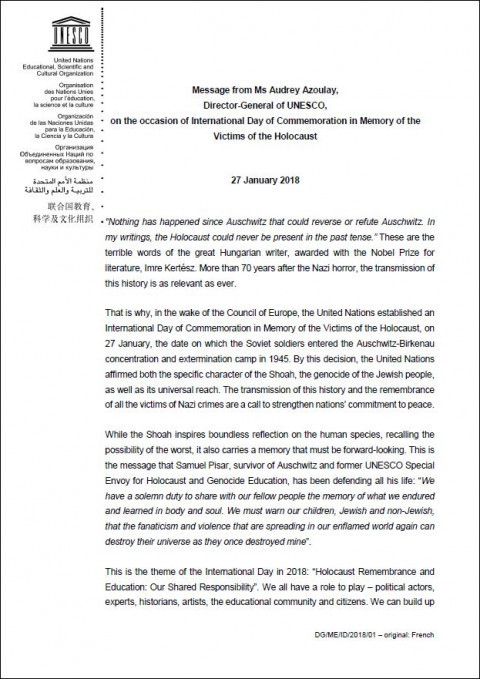 Message from Ms Audrey Azoulay, Director-General of UNESCO, on the occasion of International Day of Commemoration in Memory of the Victims of the Holocaust 出版年份: 2018 机构作者: UNESCO. Director-General, 2009-2017 (Bokova, I.G.) This message was delivered by Audrey Azoulay, Director-General of UNESCO, on the occasion of International Day of Commemoration in Memory of the Victims of the Holocaust, on 27 January 2018. Message de la Directrice générale de l'UNESCO, Audrey Azoulay, à l'occasion de la Journée internationale dédiée à la mémoire des victimes de l'Holocauste 出版年份: 2018 机构作者: UNESCO. Director-General, 2009-2017 (Bokova, I.G.) Ce message a été livré par la Directrice générale de l'UNESCO, Audrey Azoulay, à l'occasion de la Journée internationale dédiée à la mémoire des victimes de l'Holocauste, 27 janvier 2018.
  دور التربية الاسلامية في مواجهة العصبية في زمن العولمة الاجتماعية 出版年份: 2012 作者: آل جحراف، عايض بن محمد بن عايض 机构作者: Umm Al-Qura University منهج الدراسة: المنهج الوصفي. الفصل الأول:الإطار العام للدراسة. الثاني: العصبية مفهومها، أنواعها، أسبابها، آثارها السلبية. الثالث: موقف الإسلام من العصبية - لمحة تاريخية لظهور العصبية عند الأمم، موقف القرآن الكريم من العصبية وموقف السنة النبوية. الرابع: موقف العولمة الاجتماعية من العصبية - ظهور العولمة عمومًا والعولمة الاجتماعية خصوصًا، الدعوة إلى الامتزاج الاجتماعي والعوامل المؤثرة على تفعيل مؤسسات العولمة الاجتماعية وآثارها على الدول النامية والفقيرة. الخامس: المبادئ التربوية الإسلامية التي دعت إلى نبذ العصبية ومنها مبدأ المساواة، مبدأ المصير والجزاء الواحد، مبدأ حقوق الإنسان وكرامته، مبدأ التسامح والإحسان، مبدأ العدل وعدم الظلم، مبدأ الوسطية والاعتدال. السادس: دور التربية الإسلامية في مواجهة العصبية من خلال المؤسسات التربوية - الأسرة، المسجد، المدرسة، وسائل الإعلام. السابع: الاستخلاصات العامة والتوصيات والمقترحات. أهم نتائج الدراسة: 1) وجود آثار خطيرة للعصبية تؤثر على التنشئة الصالحة كالجمود وحب التقليد والحقد، والسخرية، والأنانية، وتصنيف الناس على أساس تكبر واحتقار، وما يترتب عليه من خلافات وحروب وتأثر مما يمزق جسد الأمة الإسلامية. 2) قيام مؤسسات العولمة الاجتماعية على هدف خدمة الإنسان، والدفاع عن حقوقه يتطلب احترام ثقافات وعادات وتقاليد كل بلد أو عرق أو قومية وعدم فرض مبدأ القوة والفكرة الواحدة. 3) نشر ثقافة المساواة وحقوق الإنسان والتسامح والعدل والوسطية والاعتدال والمصير والجزاء الواحد بين أفراد المجتمع منذ الصغر لكي يتربى الفرد ويشرب تلك المبادئ. 4) تلعب القدوة الحسنة والحوار الفعال في الأسرة، والمسجد، والمدرسة ووسائل الإعلام دورا فعالا في توجيه نفوس أبناء المجتمع نحو مجتمع مترابط ينبذ العصبية وآثارها السيئة. 5) تعلم مبادئ الاحترام للآخرين وتعزيزها في نفوس الأبناء يولد شخصية متوازنة تفخر بانتمائها لأمتها، وتحترم الآخرين ولا تتعدى عليهم ويمكن للمدرسة القيام بذلك من خلال التنوع في طرائق التدريس والتركيز على الأنشطة الجماعية الطلابية وتفعيلها داخل وخارج المدرسة. أهم توصيات الدراسة: 1) قيام المؤسسات الدينية، والثقافية، والإعلامية، والتربوية بدورها الفعال في تصحيح فكر المجتمع، واستخدام أساليب جذابة وفعالة لمواجهة العصبية. 2) على الدول الإسلامية القيام بعمل منظمات غير حكومية تتابع وتساعد في حل علاج مشكلات العصبية بين أفراد الأمة الإسلامية. 3) على الجامعات في المجتمعات القيام بإنشاء كراس علمية تعنى بالبحوث التي تدرس ظواهر العصبية، وتساهم في تزويد المنظمات والمؤسسات المتابعة لظاهرة العصبية بالوسائل والطرق والحلول. أهم مقترحات الدراسة: يقترح الباحث عمل دراسات عن العصبية ضد المرأة، وفي داخل المدرسة بين المعلمين أو الطلاب، وكذلك دراسة أساليب التربية النبوية في مواجهة العصبية في المجتمع المدني، ودراسة الاختلاف والتنوع البشري وربطه بالتربية الإسلامية، ودراسة لبعض المقررات المدرسة ومدى تناولها لموضوع العصبية من وجهة نظر الخبراء، وعمل دراسة عن القبلية وآثارها داخل المدرسة الثانوية في منطقة عسير باعتبارها منطقة تتميز بالتنوع القبلي. The Role of Islamic Education in Countering Tribalism in the Age of Social Globalization 出版年份: 2012 作者: آل جحراف، عايض بن محمد بن عايض 机构作者: Umm Al-Qura University Methodology: descriptive approach. Chapter I: A general framework. Chapter II: Tribalism: concept, types, causes and negative effects. Chapter III: Islam's position on tribalism - a Historical overview of the emergence of tribalism; Holy Quran’s and Sunnah’s positions; Chapter IV: Social Globalization’s Position on Tribalism - the emergence of Globalization in general and social globalization specifically; social globalization, calls for Social mixing and the factors affecting activation of social globalization institutions; The Effects of Social Globalization on the Developing and Poor Countries.Chapter V: Educational Principles that called for the rejection of tribalism”, including equality, determination and unified penalty, human rights and dignity, tolerance and philanthropy, justice and the rejection of injustice, moderation. Chapter VI: The role of Islamic Education in countering tribalism through educational institutions -the Family, the mosque, the school and the Media. Chapter VII: General conclusions and recommendations and proposals.Following the prime results and recommendations, the researcher proposes the following: “conducting studies on discrimination against women, and within school communities with regard to teachers or students, as well as studying Sunnah educational methods with regard to countering tribalism in the civil society, and studying human differences and diversity in addition to linking it to Islamic education.Also, there should be a study of some school curricula in order to examine the extent to which it addresses the issue of tribalism from the viewpoint of experts, as well as conducting a study of tribalism and its effects within the high school in Asir region as this region is characterized by tribal diversity”.
 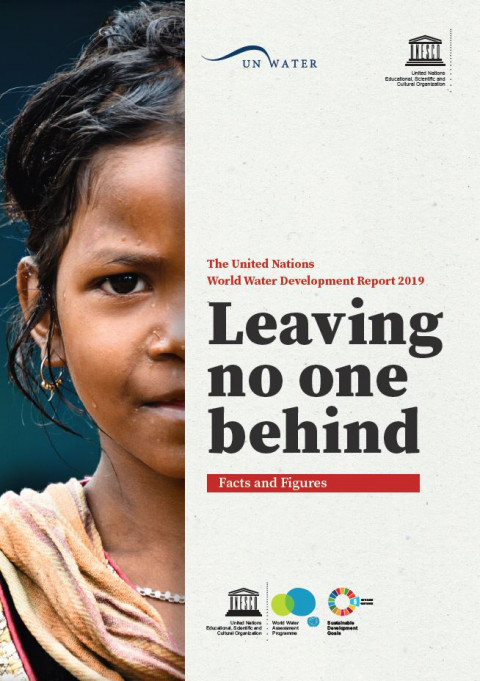 [Facts and Figures] The United Nations World Water Development Report 2019: Leaving No One Behind; Facts and Figures 出版年份: 2019 作者: Engin Koncagül | Michael Tran | Richard Connor | Stefan Uhlenbrook 机构作者: UNESCO World Water Assessment Programme (WWAP) Water availability and demandFigure 1 provides a global overview of countries experiencing different levels of water stress (the ratio of total freshwater withdrawn annually by all major sectors, including environmental water requirements, to the total amount of renewable freshwater resources, expressed as a percentage).Over 2 billion people live in countries experiencing high water stress. Recent estimates show that 31 countries experience water stress between 25% (which is defined as the minimum threshold of water stress) and 70%. Another 22 countries are above 70% and are therefore under serious water stress (UN, 2018a).Growing water stress indicates substantial use of water resources, with greater impacts on resource sustainability, and a rising potential for conflicts among users.It has been estimated that about 4 billion people, representing nearly two-thirds of the world population, experience severe water scarcity during at least one month of the year (Mekonnen and Hoekstra, 2016).
 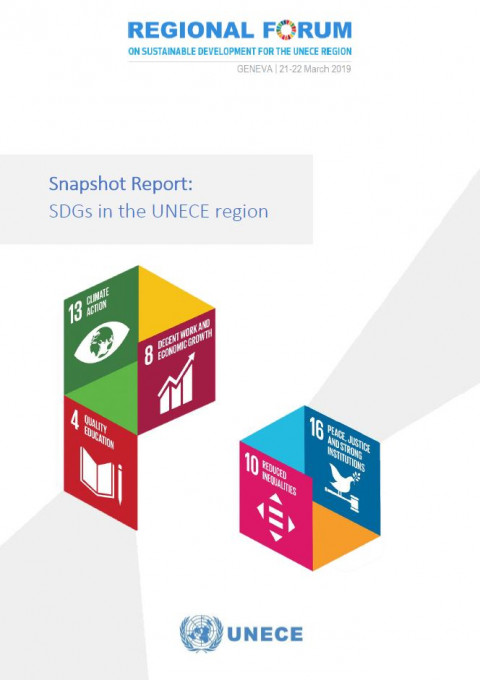 Snapshot Report: SDGs in the UNECE Region 出版年份: 2019 机构作者: United Nations Economic Commission for Europe (UNECE) This document provides a brief snapshot of some aspects of SDG performance in the UNECE region. It covers the SDGs that will be discussed at the 2019 Regional Forum on Sustainable Development for the UNECE region but it does not attempt to provide an exhaustive assessment. It only uses the available information in the UN SDG Global Database and the sources referenced there to illustrate a selected number of SDG issues. In a very few cases, when no data is available from this database and associated sources, information from other international organizations is used to provide some context to the discussions.
  Global Education Digest 2015-2017: Compiled by the Development Education Research Centre 出版年份: 2018 机构作者: Development Education Research Centre (DERC) This is the first edition the Global Education Digest, a bibliography of recent published academic and research material relevant to the field of global education. This Digest has been compiled by Development Education Research Centre (DERC) on behalf of Global Education Network Europe (GENE) in the framework of ANGEL activities. ANGEL (Academic Network on Global Education & Learning) is the academic network of global education researchers and academics. The Digest is divided into eight themes/ areas of work, and within each we have identified policy reports, books, academic articles and doctoral research related to global education. Items for inclusion were found through keyword searches of Scopus, Web of Science, Google Scholar, and British Library (including ETHOS and Proquest) databases, as well as through informal discussions with colleagues in the field. The core focus of the Digest is on literature on global education. Selected literature with a focus on related concepts, such as global citizenship, environmental education, and education for sustainable development, has also been included where these have clear links to concerns in global education.
 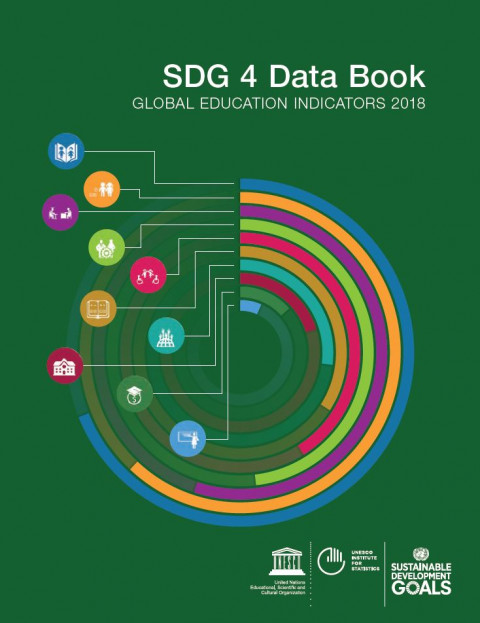 SDG 4 Data Book: Global Education Indicators 2018 出版年份: 2018 机构作者: UNESCO Institute for Statistics (UIS) This publication presents the global monitoring indicators used by countries and the international development community to monitor progress towards Sustainable Development Goal 4 (SDG 4) on education. The indicators were produced by the UNESCO Institute for Statistics (UIS), based on the latest available data.The UIS is the official source of internationally-comparable education data and the custodian agency for SDG 4 data.This mandate reflects the trust of the international community in UIS data and its proven track record in methodological work and standard-setting with national statistical offices, line ministries and technical partners in every region.This publication presents a snapshot of the data used to monitor progress towards the global education goal and targets. It complements the UIS Quick Guide to Education Indicators for SDG 4, which provides more detailed information on the development, interpretation and use of the indicators.
  Central Asia: struggle for the new future 出版年份: 2018 作者: A. Dankov The article discusses the social, economic and political prospects of Central Asia (2019-2024). Prognosis also covers the ethnic changes, migration, cultural and language diversity, urbanization, quality of life. Центральная Азия: борьба за новое будущее 出版年份: 2018 作者: A. Dankov В статье рассматриваются социальные, экономические и политические перспективы Центральной Азии (2019-2024). Прогноз также охватывает этнические изменения, миграцию, культурное и языковое разнообразие, урбанизацию, качество жизни.