
相关资源
探索丰富的全球公民教育资源,深化理解,促进研究、倡导、教学与学习。
共找到1,322条结果
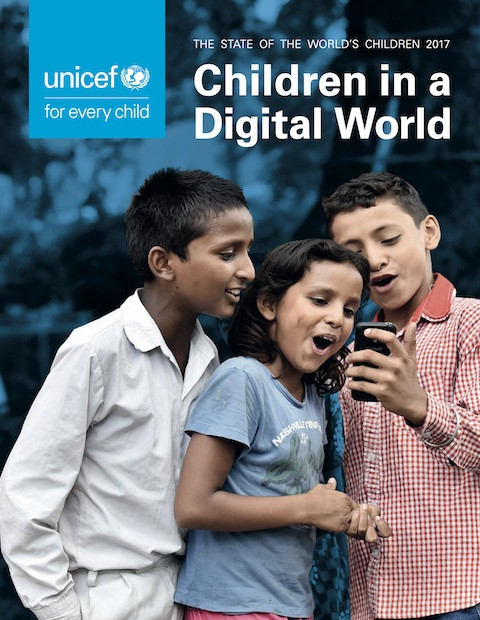 2017 年世界儿童状况:数字时代的儿童 出版年份: 2017 机构作者: United Nations Children's Fund (UNICEF) 《2017 年世界儿童状况:数字时代的儿童》探讨 了数字技术如何改变着儿童的生活,给他们带来的机 遇,及未来的发展方向。 数字技术如果能得到恰当运用并得以普及,则可 以在很大程度上改变许多儿童因贫困、种族、民族、 性别、残障、流离失所或地处偏远地区等因素而落后 的现状,他们将有机会接触到世界范围内的各种机遇, 获得必要的技能,从而在数字时代取得成功。 然而,如果普及范围得不到扩大,数字技术将带 来新的分化,儿童的潜能将无法得到充分释放。如果 我们现在不采取行动,适应迅速变化的环境,互联网 带来的威胁会让原本就处于弱势群体的那部分儿童更 容易遭受剥削、虐待甚至贩卖。同时,他们的成长还 会面临更多隐性威胁。 《2017 年世界儿童状况》报告指出:我们要迅速 采取行动,加强投资与合作,保护儿童在日趋互联的 世界中免受伤害;同时也要利用数字时代的机遇,确 保每个儿童从中受益。
 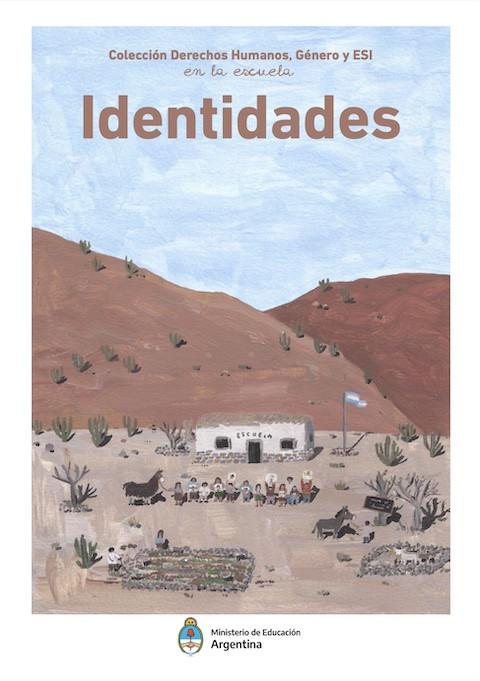 Identities 出版年份: 2021 机构作者: Argentina. Ministry of Education In these pages, it is invited to rethink the construction of identity and identities within the framework of the school, from a transversal perspective. This concept is traversed by multiple dimensions, genealogies and debates that give shape to a privileged and nodal notion for the formation of a new democratic citizenship in schools. The idea is that both students of different educational levels, as well as teachers and families feel challenged and challenged by the reflections that this concept raises. Identidades 出版年份: 2021 机构作者: Argentina. Ministry of Education En estas páginas, se invita a (re)pensar la construcción de la identidad y de las identidades en el marco de la escuela, desde una perspectiva transversal. Este concepto se encuentra atravesado por múltiples dimensiones, genealogías y debates que le dan forma a una noción privilegiada y nodal para la formación de una nueva ciudadanía democrática en las escuelas. La idea es que tanto estudiantes de los distintos niveles educativos, como las y los docentes y las familias se sientan interpeladas e interpelados por las reflexiones que suscita este concepto.
 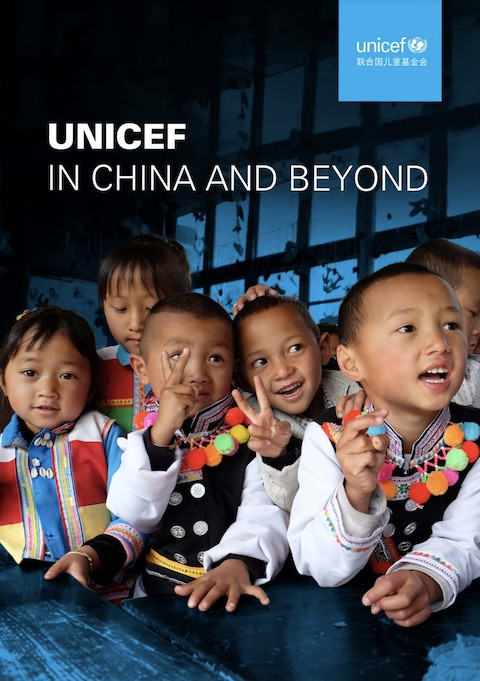 UNICEF in China and Beyond 出版年份: 2019 机构作者: United Nations Children's Fund (UNICEF) This report seeks to give an overview of UNICEF’s work in China and, through these experiences, provide a global perspective on the major development areas relevant to children today. This includes child-friendly spaces, poverty reduction and early childhood education. The publication presents a snapshot of the issues, challenges and accomplishments in health, education, child protection, and social policy and reform sectors in China. 中国经验 全球视角:联合国儿童基金会在华合作项目概览 出版年份: 2019 机构作者: United Nations Children's Fund (UNICEF) 该报告概述了联合国儿童基金会在中国所开展的项目,并通过这些项目的经验,为关乎儿童利益的主要发展领域提供全球视角,包括儿童友好家园、减贫与儿童早期教育等。这份报告还简要介绍了合作项目在卫 生保健、教育、儿童保护、社会政策与改革等领域所关注的重点、取得的成果与面临的挑战。
  Is History Teaching in Quebec Instrumentalized by Citizenship Education? (Bulletin d'histoire politique; vol. 21, no. 3) 出版年份: 2013 作者: Félix Bouvier | Philippe Chamberland | Marie-Line Belleville 机构作者: Association québécoise d'histoire politique | VLB Éditeur In 2001, the Quebec Ministry of Education made the decision to formally join, for the first time, the teaching of history and education to citizenship. Logical according to many, since implicit" since the very beginning. beginnings of public schools, in Quebec as in most Western countries”, the association had to respond to the Western context encountered by democratic societies and characterized by the increase in population movements and the globalization of the economy. In secondary school since 2005, the associated teaching of the two subjects aims to promote a harmonious living together to preserve social cohesion. However, a problem remains. history with regard to civic education has long been recognized, the attribution of responsibility for political socialization and the shaping of consciousness citizen of students to history teachers risk instrumentalizing this subject? In other words, is it not dangerous to assert, as the Assistant Deputy Minister for Preschool, Elementary and Secondary Education Pierre Bergevin does, “that now history must above all serve as education for citizenship”? This association poses the question that François Audigier evokes, namely, should we proceed from history and question the latter's contribution to citizen consciousness, or proceed from the aspects of citizen consciousness that one wishes to construct and then determine the historical objects which should be studied? The experience of comparable nations on a planetary scale makes us doubt the relevance of the association of the two disciplines. In fact, some Western democracies are worried about the quality of the civic education of their young people since the waves of industrialization and the great wars of the XIXth and XXth centuries which changed manners forever: intensification of migrations, upheavals social roles, loss of influence of religions, etc. Thus, although Great Britain has for some time taken the path taken by Quebec, France clearly dissociates the teaching of history from that of civic education. In order to understand all the ins and outs of the issue, we first provide a portrait of the context at the origin of the association of history and education for citizenship. Then, we will discuss the arguments in favor of combining the two subjects, especially in Great Britain, France and Australia. Finally, our gaze will focus on the case of Quebec and the type of privileged citizenship, in order to determine whether the teaching of history is not instrumentalised for the benefit of a citizenship education valuing the concealment of conflicts and divergences and if, to use the writings of Robert Martineau, the Ministry of Education has sacrificed the history class on the altar of citizenship education. L’enseignement de l’histoire au Québec instrumentalisé par l’éducation à la citoyenneté? (Bulletin d'histoire politique; vol. 21, no. 3) 出版年份: 2013 作者: Félix Bouvier | Philippe Chamberland | Marie-Line Belleville 机构作者: Association québécoise d'histoire politique | VLB Éditeur En 2001, le ministère de l’Éducation du Québec prenait la décision de joindre formellement, pour la première fois, l’enseignement de l’histoire et l’éducation à la citoyenneté. Logique selon plusieurs, puisqu’implicite « depuis les tout débuts de l’école publique, au Québec comme dans la plupart des pays occidentaux », l’association devait répondre au contexte occidental rencontré par les sociétés démocratiques et caractérisé par l’ac-croissement des mouvements de population et la globalisation de l’économie. Effectif au secondaire depuis 2005, l’enseignement associé des deux matières a pour dessein la promotion d’un vivre-ensemble harmonieux devant préserver la cohésion sociale. Pourtant, un problème subsiste. Tan-dis que le rôle salutaire de la formation historique en regard de l’éducation civique est reconnu depuis longtemps, le fait d’attribuer la responsabilité de la socialisation politique et du façonnement de la conscience citoyenne des élèves aux enseignants d’histoire ne risque-t-il pas d’instrumentaliser cette matière ? En d’autres mots, n’est-il pas dangereux d’affirmer, comme le fait le sous-ministre adjoint à l’éducation préscolaire et à l’enseignement primaire et secondaire Pierre Bergevin, « que maintenant l’histoire doit avant tout servir d’éducation à la citoyenneté » ? Cette association pose la question qu’évoque François Audigier, à savoir, faut-il pro-céder de l’histoire et s’interroger sur la contribution de cette dernière à la conscience citoyenne, ou procéder des aspects de la conscience citoyenne que l’on souhaite construire et déterminer alors les objets historiques dont il faut privilégier l’étude ? L’expérience de nations comparables à l’échelle planétaire nous fait douter de la pertinence de l’association des deux dis-ciplines. En fait, certaines démocraties occidentales s’inquiètent de la qualité de la formation citoyenne de leurs jeunes depuis les vagues d’industriali-sation et les grandes guerres des XIXe et XXe siècles qui ont bouleversé à jamais les mœurs : intensifi cation des migrations, bouleversements des rôles sociaux, perte d’infl uence des religions, etc. Ainsi, bien que la Grande-Bretagne prenne depuis un moment le chemin pris par le Québec, la France dissocie clairement l’enseignement de l’histoire et celui de l’édu-cation civique. Afi n de saisir l’ensemble des tenants et aboutissants de la question, nous dressons d’abord le portrait du contexte à l’origine de l’as-sociation de l’histoire et de l’éducation à la citoyenneté. Ensuite, nous aborderons les arguments en faveur de l’association des deux matières, notamment en la Grande-Bretagne, en France et en Australie. Finalement, notre regard se portera sur le cas québécois et le type de citoyenneté privi-légié, afi n de déterminer si l’enseignement de l’histoire n’est pas instru-mentalisé au profi t d’une éducation à la citoyenneté valorisant l’occulta-tion des confl its et des divergences et si, pour reprendre des écrits de Robert Martineau, le ministère de l’Éducation a sacrifi é la classe d’histoire sur l’autel de l’éducation à la citoyenneté.
  Religious Traditions and Models of Citizenship Education: The Legacy of a Normative Universe (Politique et Sociétés; vol. 34, no. 2) 出版年份: 2015 作者: Félix Mathieu | Guy Laforest 机构作者: Société québécoise de science politique This article analyzes the significant links between the citizenship education curricula of France, England and Quebec, as well as their respective religious traditions, which all stem from the central and common core of belonging that is christianity. More precisely, starting from the postulate according to which the religious fact, as a socio-cultural heritage, permeates in a deep and lasting way contemporary societies, the authors show that the values and the ideals resulting from the various religious paths are transposed more or less singularly through the normative and pedagogical universe of French, English and Quebec citizenship education programs. Traditions religieuses et modèles d’éducation à la citoyenneté : l’héritage d’un univers normatif (Politique et Sociétés; vol. 34, no. 2) 出版年份: 2015 作者: Félix Mathieu | Guy Laforest 机构作者: Société québécoise de science politique Cet article analyse les liens significatifs entre les curriculums d’éducation à la citoyenneté de la France, de l’Angleterre et du Québec, ainsi que leurs traditions religieuses respec-tives, lesquelles découlent toutes du noyau central et commun d’appartenance qu’est le christianisme. Plus précisément, en partant du postulat selon lequel le fait religieux, en tant qu’héritage socioculturel, imprègne de manière profonde et durable les sociétés contemporaines, les auteurs montrent que les valeurs et les idéaux issus des différents parcours religieux se transposent plus ou moins singulièrement à travers l’univers nor-matif et pédagogique des programmes français, anglais, puis québécois d’éducation à la citoyenneté.
  Analysis (Didactic) of a Historical Video Game: Democracy and Citizenship Education in Civilization VI (Revue de recherches en littératie médiatique multimodale; no. 9) 出版年份: 2019 作者: Vincent Boutonnet 机构作者: Groupe de recherche en littératie médiatique multimodale Civilization VI, published in 2016, is a turn-based strategy game allowing the player to go through historical eras by leading a civilisation toward cultural, economic, military or technological sophistication. This new entry introduces a civic tree presenting new gameplay with government systems and civics policies. This research is descriptive and aims at a formal analysis of the gameplay. We examine the various components and the principles of design as well as the conceptual and civics limits of such a game. We believe this game is an opportunity to analyse and talk about these limits with pupils to foster critical thinking about democracy and citizenship.