
相关资源
探索丰富的全球公民教育资源,深化理解,促进研究、倡导、教学与学习。
共找到3,780条结果
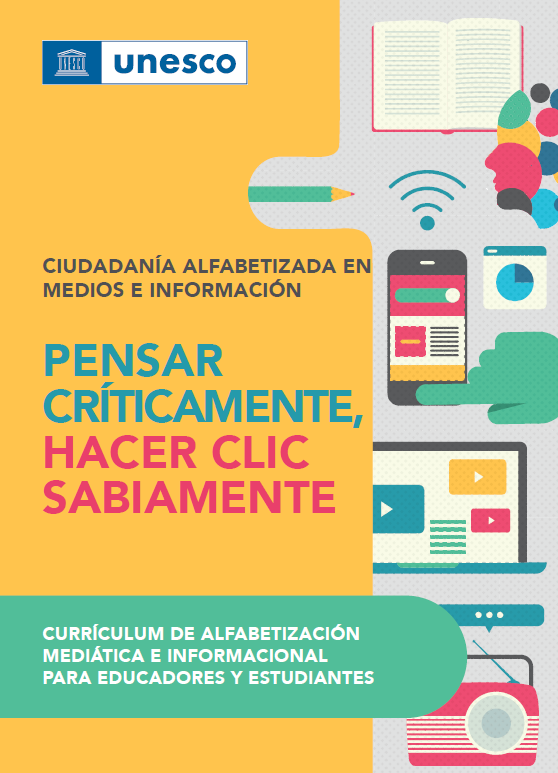 Ciudadanía alfabetizada en medios e información: pensar críticamente, hacer clic sabiamente 出版年份: 2023 作者: Alton Grizzle | Carolyn Wilson | Ramon Tuazon | C.K. Cheung | Jesus Lau | Rachel Fischer | Dorothy Gordon | Kwame Akyempong | Jagtar Singh | Paul R. Carr | Kristine Stewart | Samy Tayie | Olunifesi Suraj | Maarit Jaakkola | Gina Thésée | Curmira Gulston 机构作者: UNESCO ¿Podemos mejorar nuestras sociedades haciendo clic sabiamente?Los proveedores de contenidos como bibliotecas, archivos, museos, medios y empresas de comunicación digital pueden permitir un desarrollo inclusivo y sostenible. Sin embargo, no siempre están a la altura de estos ideales, lo que crea desafíos para los usuarios de estos servicios. Los proveedores de contenidos de todo tipo abren nuevas oportunidades para el aprendizaje permanente. Pero al mismo tiempo, plantean desafíos como la información falsa y la desinformación, el discurso de odio y la violación de la privacidad en línea, entre otros.La Alfabetización Mediática e Informacional es un conjunto de competencias que ayudan a las personas a maximizar las ventajas y minimizar los daños. La Alfabetización Mediática e Informacional abarca las competencias que permiten a las personas interactuar de manera crítica y efectiva con el contenido de las comunicaciones; las instituciones que facilitan este contenido y el uso de tecnologías digitales. Las capacidades en estos ámbitos son indispensables para la ciudadanía, independientemente de su edad o procedencia. Este Currículum pionero presenta un marco integral de competencias de Alfabetización Mediática e Informacional y ofrece a educadores y estudiantes sugerencias pedagógicas estructuradas. Cuenta con varios módulos detallados que cubren la gama de competencias necesarias para navegar por el ecosistema de comunicaciones de hoy.Este recurso vincula la Alfabetización Mediática e Informacional con cuestiones emergentes como la Inteligencia Artificial, la educación para la ciudadanía digital, la educación para el desarrollo sostenible, la alfabetización cultural y el aumento exponencial de la información falsa y la desinformación. Con el uso efectivo de este Currículum de Alfabetización Mediática e Informacional, todos pueden volverse alfabetizados mediáticos e informacionales, así como educadores pares de la Alfabetización Mediática e Informacional.
  الاستعراض الدوري الشامل وقدرته على تعزيز حرية التعبير والنفاذ إلى المعلومة وسالمة الصحفيين 出版年份: 2022 作者: Hina Jilani 机构作者: UNESCO This document introduces The Universal Periodic Review (UPR), including its function, content and guideline for practice, and evaluates its positive contributions to global human rights. The Universal Periodic Review (UPR) and its Potential to Foster Freedom of Expression, Access to Information and Safety of Journalists: Guidelines for National Human Rights Institutions (NHRIs) 出版年份: 2022 作者: Hina Jilani 机构作者: UNESCO This document introduces The Universal Periodic Review (UPR), including its function, content and guideline for practice, and evaluates its positive contributions to global human rights. El examen Periódico Universal (EPU) y su capacidad para promover la libertad de expresión, el acceso a la información y la seguridad de los periodistas : directrices para las instituciones nacionales de derechos humanos (INDH) 出版年份: 2022 作者: Hina Jilani 机构作者: UNESCO This document introduces The Universal Periodic Review (UPR), including its function, content and guideline for practice, and evaluates its positive contributions to global human rights. ’Examen périodique universel (EPU) et son potentiel pour la liberté d’expression, l’accès à l’information et la sécurité des journalistes : directives à l’intention des institutions nationales des droits de l’homme (INDH) 出版年份: 2022 作者: Hina Jilani 机构作者: UNESCO This document introduces The Universal Periodic Review (UPR), including its function, content and guideline for practice, and evaluates its positive contributions to global human rights.
 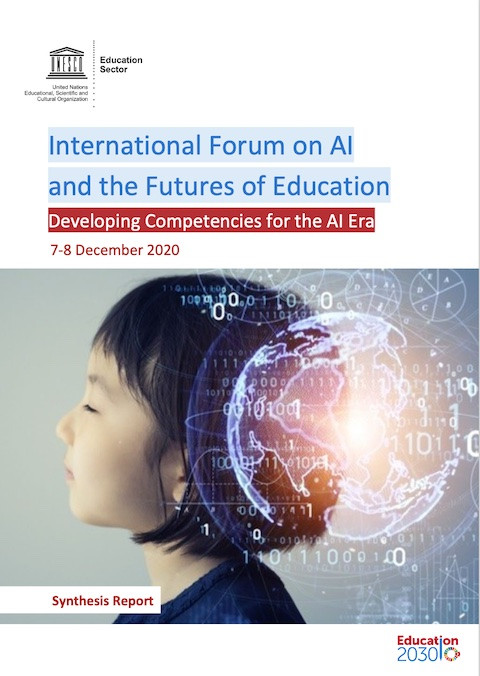 International Forum on AI and the Futures of Education: Developing Competencies for the AI Era Synthesis Report; 7-8 December 2020 出版年份: 2021 作者: Fengchun Miao | Wayne Holmes 机构作者: UNESCO This synthesis report has been developed by the UNESCO Unit for Technology and Artificial Intelligence in Education within the Future of Learning and Innovation Team, drawing on the International Forum on AI and the Futures of Education held in Beijing and simultaneously online from 7 to 8 December 2020.The Forum underlined the importance of reviewing the very purpose of education, together with the opportunity for real transformation, and the role that AI might play. It is widely acknowledged that current educational practices and educational environment are very rigid, and that the future of education should be more flexible and responsive to changing circumstances and innovation. National education authorities should identify what skills young people need to enable them to live and thrive in the new realities of a constantly changing world, and what digital transformation makes possible in the national and international context. In short, new education models are needed to put students at the centre, to move away from a focus on memorizing content, to integrate the digital and the analogue, and to foster human cognitive, socioemotional and critical skills, all of which might – with foresight and careful attention – be enabled by AI and other digital technologies.
 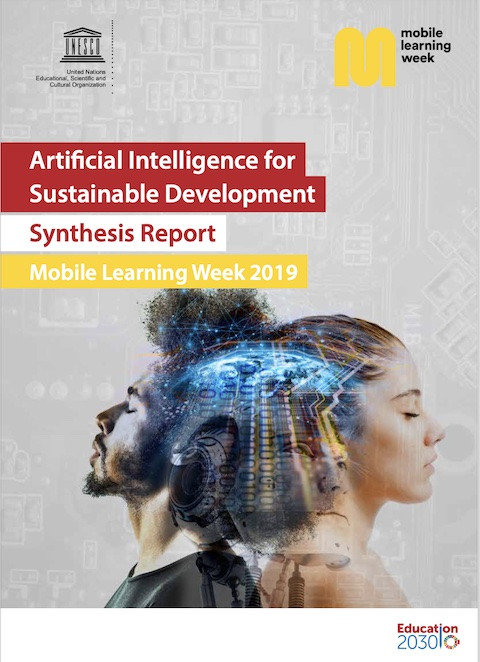 Artificial Intelligence for Sustainable Development: Synthesis Report; Mobile Learning Week 2019 出版年份: 2019 机构作者: UNESCO During the five-day event for Mobile Learning Week 2019, UNESCO gathered participants from around the world to share experiences, initiatives and plan joint actions with a view to harnessing artificial intelligence (AI) to achieve Sustainable Development Goal (SDG) 4. The report stems from the work that the speakers presented and the insights that all the participants shared at the event.
 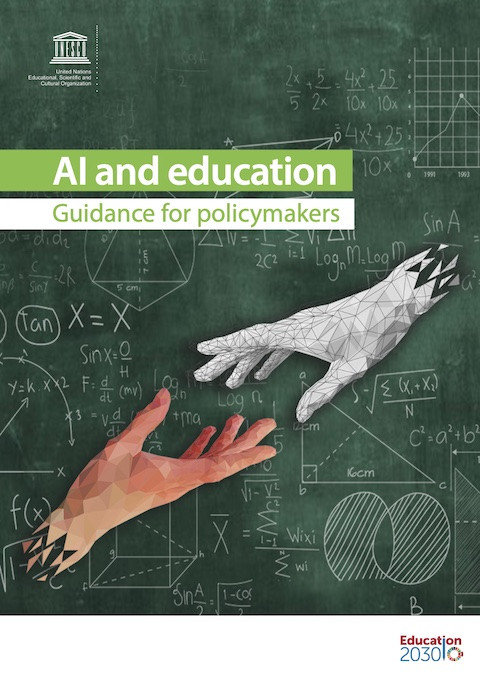 AI and Education: Guidance for Policy-Makers 出版年份: 2021 作者: Fengchun Miao | Wayne Holmes | Ronghuai Huang | Hui Zhang 机构作者: UNESCO Artificial intelligence (AI) is envisioned as a new tool to accelerate the progress towards the achievement of SDG 4. Policies and strategies for using AI in education are central to maximizing AI’s benefits and mitigating its potential risks. Fostering AI-ready policy-makers is the starting point of the policy development process.This publication offers guidance to policy-makers in understanding AI and responding to the challenges and opportunities in education presented by AI. Specifically, it introduces the essentials of AI such as its definition, techniques, technologies, capacities and limitations. It also delineates the emerging practices and benefit-risk assessment on leveraging AI to enhance education and learning, and to ensure inclusion and equity, as well as the reciprocal role of education in preparing humans to live and work with AI.The publication summarizes three approaches to the policy responses from existing practices: independent approach, integrated approach and thematic approach. In a further step, it proposes more detailed recommendations and examples for planning AI and education policies, aligned with the recommendations made in the 2019 Beijing Consensus on AI and Education. 人工智能与教育: 政策制定者指南 出版年份: 2021 作者: Fengchun Miao | Wayne Holmes | Ronghuai Huang | Hui Zhang 机构作者: UNESCO 该文件为政策制定者提供关于人工智能在教育领域内应用于发展的相关知识,包括其定义与技术一级对教学和教育的影响,并为政策制定者提供相关政策建议。
  反击社交媒体上的仇恨言论:当代的挑战 出版年份: 2021 机构作者: 联合国教科文组织 (UNESCO) | Oxford Internet Institute | European Union (EU) 本文件是牛津大学互联网研究所与联合国教科文组织合作开发的一个工具包的组成部分,该工具包包含各种现有的方法、资源及研究项目,旨在监测网络仇恨言论的发生、传播和影响,以及评估反击仇恨言论的能力和做法。